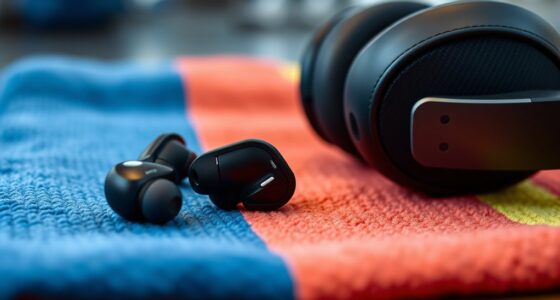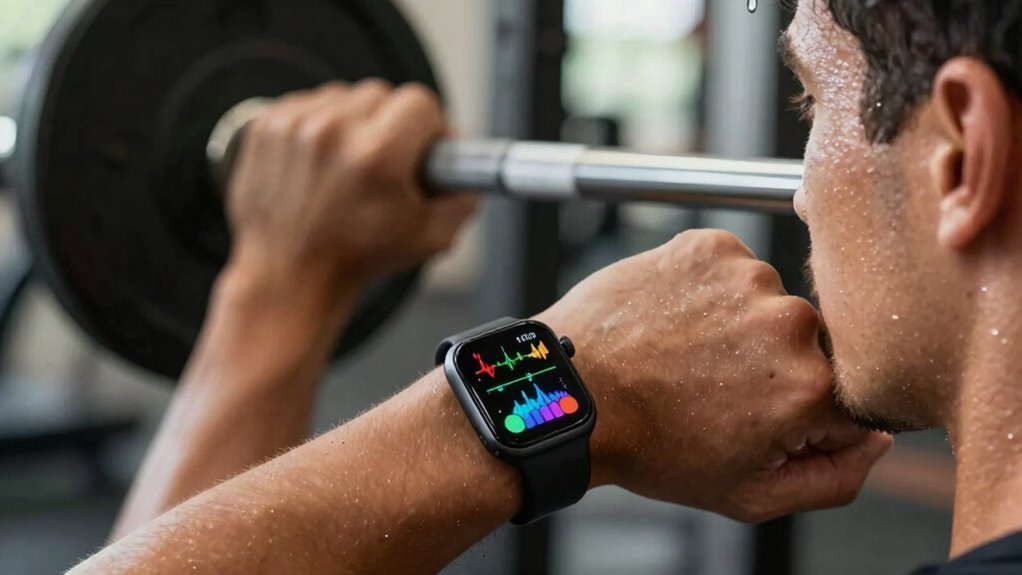

Fitness trackers can give you estimates of calorie burn, sleep duration, and activity levels, helping you stay motivated. However, they can’t accurately measure your overall progress, like muscle gain, weight loss, or fitness improvements. Factors like device fit, activity type, and individual differences affect accuracy. Plus, they don’t capture mental wellbeing or recovery. To truly understand your progress, it’s important to take into account other indicators and insights—more details await if you keep exploring.

Get workout gear delivered free — and shop member deals
- Fast, free delivery on millions of items
- Access to Prime Big Deal Days deals on October 6–7
- Prime Video, Amazon Music and more included
Key Takeaways
- Fitness trackers estimate calorie expenditure but are not precise enough to determine exact calorie deficits or surpluses.
- They monitor sleep duration and stages but cannot assess overall sleep quality or restorative rest.
- Devices do not directly measure physical progress like weight loss, muscle gain, or fitness improvements.
- Changes in appearance and body composition are better indicators of progress than device data alone.
- Trackers are useful for motivation but should be combined with professional advice and broader health assessments.
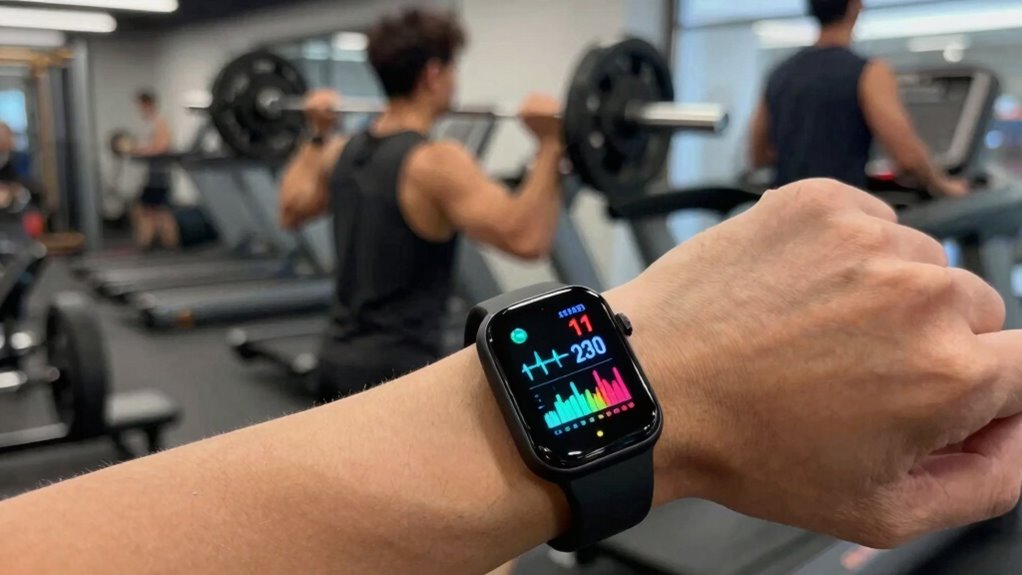
Have you ever wondered what your fitness tracker truly reveals about your health? These devices can provide a wealth of information, but they also have their limits. For example, many trackers estimate calorie expenditure based on your activity levels, heart rate, and personal data like age and weight. While this calorie estimation can be useful for getting a general idea of how much energy you’re burning, it’s not always perfectly accurate. Factors like the type of activity, intensity, and even how tightly you wear the device can influence these numbers. So, don’t rely solely on your tracker to determine whether you’re in a calorie deficit or surplus; use it as a rough guide rather than an exact measurement.
Fitness trackers offer helpful estimates, but their calorie counts are not always precise—use them as rough guides, not exact measures.
When it comes to sleep quality, your fitness tracker can offer insights into your sleep patterns, including how long you sleep and the different stages you experience—light, deep, and REM sleep. Many devices track movement and heart rate to estimate these stages, giving you a snapshot of your nightly rest. However, sleep quality is a complex process influenced by many variables like stress levels, sleep environment, and underlying health conditions. Your tracker might tell you that you’re getting enough sleep in terms of hours, but it can’t always accurately reflect the restorative quality of that sleep. If you notice frequent interruptions or poor sleep scores, it’s worth considering other factors beyond what your device shows. Additionally, understanding measurement accuracy is essential in evaluating how much trust to place in your device’s data. The accuracy of sleep tracking can be impacted by factors like device placement and individual differences in physiology.
Despite their capabilities, fitness trackers aren’t crystal balls. They can’t tell you everything about your progress. For example, weight loss or muscle gain isn’t always directly correlated with the numbers on your device. Changes in strength, endurance, mental wellbeing, and overall fitness aren’t always immediately visible or measurable through these gadgets. They also don’t account for nutrition, hydration, stress, or recovery—all essential elements of your health journey. Furthermore, body composition can influence how changes in your physique are perceived, often more accurately indicating progress than device data. Additionally, they can’t replace professional advice or medical assessments, especially if you’re dealing with health issues or trying to reach specific fitness goals.
In fact, contrast ratio plays a significant role in how clearly you can see your progress in terms of muscle definition and overall aesthetic improvements. Changes in body composition and physical appearance are often better indicators of progress than the numbers on a device. It’s also important to remember that healing time varies significantly depending on the type of piercing and individual healing processes, which can influence your overall motivation and perception of progress. In the end, fitness trackers are tools that can motivate you and help monitor certain aspects of your health. But they shouldn’t be the sole source of truth. Use the data they provide as a part of a broader picture—pay attention to how you feel, how your body responds, and when needed, consult health professionals for a more complete understanding of your progress.
fitness tracker for sleep quality
As an affiliate, we earn on qualifying purchases.
As an affiliate, we earn on qualifying purchases.
Frequently Asked Questions
How Do Fitness Trackers Measure Mental Well-Being?
Fitness trackers measure mental well-being primarily through mindfulness monitoring and stress assessment. They track your heart rate variability, sleep patterns, and activity levels to gauge stress levels and relaxation. By analyzing these metrics, they can give you insights into your mental state, helping you identify stress triggers and promote mindfulness. However, they can’t fully capture complex emotions or mental health issues, so use them as helpful tools rather than definitive assessments.
Can Trackers Accurately Assess Muscle Gain Versus Fat Loss?
Trackers can’t perfectly distinguish muscle versus fat gain because they primarily measure body composition through estimates like bioelectrical impedance or skinfolds, which are as reliable as a weather vane in a storm. They give you a general idea of changes in body composition, but won’t tell you precisely how much muscle you’ve gained versus fat lost. For accurate results, combine tracker data with strength assessments and visual progress checks.
Do Fitness Devices Account for Individual Fitness Levels?
Fitness devices do consider individual fitness levels through personalization accuracy, but their effectiveness depends on proper device calibration. When you set up your device, it adjusts to your specific data, improving tracking accuracy. However, if calibration isn’t done correctly or updated regularly, the device’s assessment of your progress may be off. So, while they do account for personal differences, maintaining calibration is key for reliable results.
Are Sleep Tracking Results Affected by External Factors?
Sleep tracking results can definitely be affected by external influences, like your sleep environment. Factors such as noise, light, temperature, or even an uncomfortable mattress can skew the data. External influences may cause your device to misinterpret rest periods or sleep quality. To get the most accurate results, optimize your sleep environment by minimizing noise and light, and maintaining a comfortable temperature. Your sleep device can’t fully account for these external factors, so interpret results with that in mind.
How Reliable Are Calorie Counts From Fitness Apps?
Imagine you’re tracking your daily calorie intake, and your fitness app estimates 2,000 calories. While many apps use calorie estimation algorithms, their accuracy varies based on input data and database quality. Some studies show app accuracy can range from 80-95%, but discrepancies happen, especially with homemade meals. So, you can rely on app estimates as a general guide, but don’t treat them as 100% precise—use them alongside other progress measures.
As an affiliate, we earn on qualifying purchases.
Conclusion
While fitness tracking offers valuable insights into your activity levels and progress, it’s not a crystal ball. It can’t measure your mental well-being, muscle strength, or overall health beyond numbers. Think of it like a map—helpful for navigation but not the destination itself. Use it as a guide, not the sole source of truth. Complement it with listening to your body and setting personal goals for a well-rounded view of your fitness journey.
As an affiliate, we earn on qualifying purchases.
activity and health monitoring band
As an affiliate, we earn on qualifying purchases.
As an affiliate, we earn on qualifying purchases.
Halloween Picks
halloween
As an affiliate, we earn on qualifying purchases.