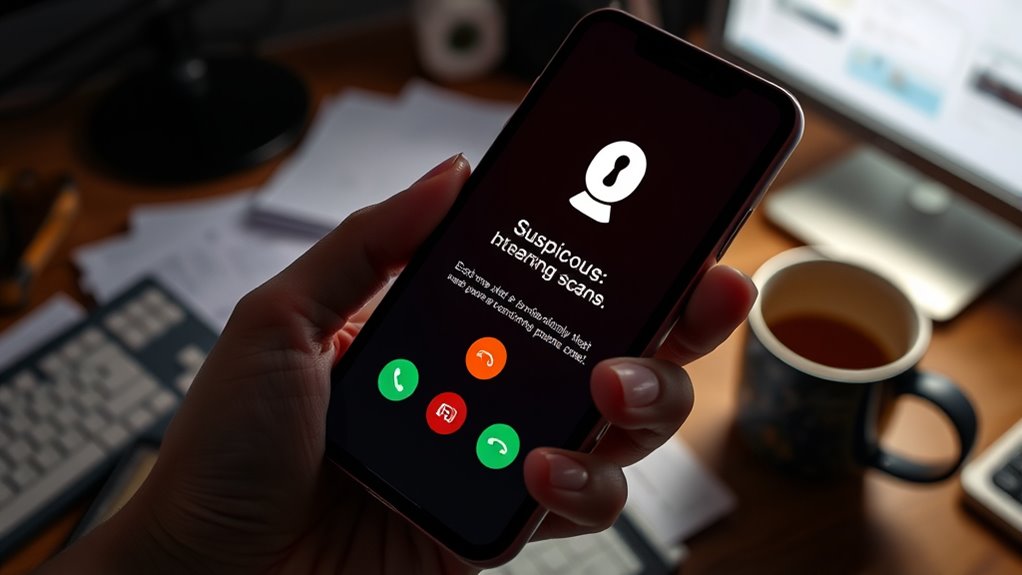

To avoid getting swindled as phone scams rise, stay cautious of callers impersonating officials or claiming urgent issues with your accounts. Never share personal or financial info unless you verify their identity through official channels. Be skeptical of pushy tactics and suspicious caller IDs. Use call-blocking tools and stay informed about common scams to recognize warning signs early. If you keep alert and follow these tips, you’ll be better prepared to protect yourself from scammers.

Get workout gear delivered free — and shop member deals
- Fast, free delivery on millions of items
- Access to Prime Big Deal Days deals on October 6–7
- Prime Video, Amazon Music and more included
Key Takeaways
- Be skeptical of unsolicited calls claiming urgent issues; verify identities through official channels before sharing personal info.
- Avoid giving out sensitive data like Social Security or bank details over the phone without confirmed verification.
- Watch for suspicious caller IDs and use call-blocking tools to filter potential scam numbers.
- Recognize common scam tactics such as impersonation, pressure, and urgent language to identify threats early.
- Stay informed about the latest scams and educate others to reduce vulnerability to social engineering tactics.

Have you noticed an increase in scam calls lately? It’s no coincidence. Scammers are becoming more sophisticated, often relying on social engineering tactics to manipulate you into revealing personal information or transferring money. Social engineering involves exploiting human psychology, making it essential to stay alert and skeptical when handling unexpected calls. The key to safeguarding yourself is understanding and practicing effective scam prevention techniques.
One of the most common social engineering tactics scammers use is impersonation. They might pose as government officials, tech support agents, or bank representatives to create a sense of urgency or authority. They often pressure you into acting quickly, claiming there’s a problem with your account or a legal issue that needs immediate resolution. Recognizing these tactics is the first step in scam prevention. Remember, legitimate institutions rarely demand sensitive information over the phone or push for immediate decisions. If you’re unsure, hang up and verify the caller’s identity through official channels.
Scammers impersonate officials to create urgency and pressure quick decisions—verify identities through official channels.
Another powerful scam prevention technique is never sharing personal or financial information over the phone unless you initiated the contact and are certain of the caller’s identity. Scammers often try to coax you into revealing your Social Security number, bank account details, or passwords. Be cautious of callers who ask for remote access to your computer or threaten legal action if you refuse to cooperate. Genuine organizations typically won’t pressure you into quick decisions or request sensitive info over the phone.
It’s also wise to educate yourself about common scam signals. Be skeptical of callers who claim you’ve won a prize, especially if they ask for money upfront or personal details to claim it. Watch out for caller IDs that appear suspicious or don’t match the supposed organization’s official contact info. Use call-blocking apps or services to filter out known scam numbers and reduce the number of unwanted calls.
Practicing scam prevention techniques also involves staying informed. Keep up with the latest scams circulating in your area or community. Sharing your knowledge with friends and family can help protect them from falling victim to social engineering scams. Remember, scammers often target vulnerable populations, so spreading awareness is a fundamental step in prevention. Additionally, understanding the role of color accuracy in projectors can help in creating a more comfortable viewing environment when avoiding visual distractions during scam calls at home.
call blocking app for scam prevention
As an affiliate, we earn on qualifying purchases.
As an affiliate, we earn on qualifying purchases.
Frequently Asked Questions
How Can I Verify if a Caller Is Legitimate?
You can verify if a caller is legitimate by checking caller ID verification and listening closely for inconsistencies in their voice. Use voice recognition tools if available, as they can help confirm identities. Always be cautious if the caller asks for personal information or pressure you to act quickly. Hang up and call back through official numbers to confirm you’re speaking with a trusted source.
What Are the Signs of a Phone Scam?
You can recognize a phone scam when the caller uses identifying fake caller IDs or claims you owe money without proof. They often pressure you with urgent threat language, making you feel scared or rushed. Be cautious if they ask for personal info or payment immediately. Trust your instincts—hang up if something feels suspicious, and verify the caller’s identity through official channels before responding.
Are There Apps to Block Scam Calls?
Yes, there are apps for call blocking and scam detection that can save you from scam calls. Ironically, they’re often more reliable than trusting your phone’s default settings. Apps like Truecaller or Hiya identify and block scam calls before they reach you, giving you peace of mind. Installing one of these tools makes it easier to stay vigilant and avoid falling for scams, proving technology’s true purpose—to save us from ourselves.
What Should I Do if I’Ve Been Scammed?
If you’ve been scammed, act quickly by reporting it to your bank and local authorities. Follow reporting procedures to help prevent others from falling victim. Seek emotional support from friends, family, or professionals, as scams can be stressful. Keep records of all communication and transactions related to the scam. Remember, you’re not alone, and taking these steps can help protect you and others from future scams.
How Often Do Scammers Change Their Tactics?
They say “the only constant is change,” and scammers prove this true through frequent shifts in tactics and variations. You’ll notice their frequency shifts and tactic variations often, as they adapt to new security measures and law enforcement efforts. To stay protected, stay informed about common scams, recognize red flags, and update your knowledge regularly, because scammers are always evolving their methods to catch you off guard.
As an affiliate, we earn on qualifying purchases.
Conclusion
Stay sharp and keep your guard up—think of your phone as a fortress, not a open door for scammers. Trust your instincts and double-check before you act, because these fraudsters are like chameleons, always changing their colors to deceive you. By staying alert and informed, you’re the lighthouse guiding your own ship safely through stormy seas. Don’t let scammers sink your confidence—arm yourself with knowledge and keep your digital world secure.
As an affiliate, we earn on qualifying purchases.
As an affiliate, we earn on qualifying purchases.
Fall Picks
fall essentials
As an affiliate, we earn on qualifying purchases.