Working out on an empty stomach can boost fat burning, improve metabolic health, and make workouts more efficient by shifting your body into a fat-utilization mode. It can also help regulate hunger and streamline your routine, especially in the mornings. However, it might cause dizziness, low energy, or increased hunger later in the day, making it unsuitable for everyone. To find out if fasted exercise fits your goals and lifestyle, explore the key benefits and potential drawbacks further.

Get workout gear delivered free — and shop member deals
- Fast, free delivery on millions of items
- Access to Prime Big Deal Days deals on October 6–7
- Prime Video, Amazon Music and more included
Key Takeaways
- Fasted exercise may enhance fat burning by increasing fat utilization during workouts.
- It can reduce hunger later in the day, aiding appetite control and diet adherence.
- Exercising on an empty stomach might cause dizziness or weakness, especially during intense sessions.
- Not suitable for everyone, particularly those sensitive to low blood sugar or with certain health conditions.
- Effectiveness varies by individual; monitoring response helps determine if fasted workouts are beneficial.

Have you ever wondered if working out on an empty stomach can boost your fat-burning potential? Many people believe that exercising in a fasted state can lead to better weight loss results. When you work out without eating beforehand, your body is more likely to tap into fat stores for energy, which is often seen as a metabolic benefit. This approach can help you burn a higher percentage of fat during your workout compared to exercising after a meal. Additionally, some find that fasted exercise helps regulate hunger throughout the day. By training in a fasted state, you might find it easier to manage your overall calorie intake, as it can curb cravings and reduce the temptation to snack unnecessarily.
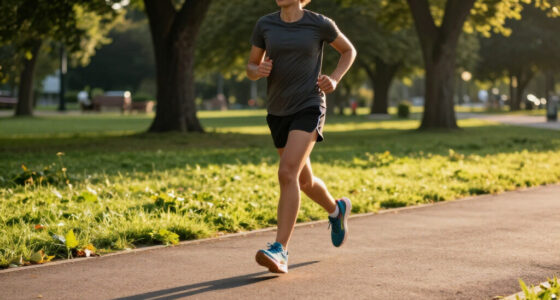
Exercising on an empty stomach may boost fat burning and help control hunger throughout the day.
On a practical level, working out on an empty stomach can streamline your routine. You don’t need to worry about digestion or feeling sluggish from a heavy meal, allowing you to jump straight into your workout. This can be especially appealing if you prefer early morning sessions or have busy schedules. The idea is that your body, in a fasted state, shifts into a fat-utilization mode, making your workout potentially more efficient for fat loss. Plus, some studies suggest that fasted cardio can lead to increased mitochondrial activity, which supports overall metabolic health. This means your body becomes more efficient at burning fat over time, even outside of exercise. Engaging in local automation and routine development can further optimize your workout schedule and recovery.
However, it’s not all upside. Exercising on an empty stomach can sometimes leave you feeling weak or dizzy, especially during high-intensity workouts or longer sessions. If your blood sugar drops too low, you might struggle to perform at your best, which could hinder your progress. For some, hunger management during fasted exercise can be tricky. You might find yourself overly hungry later in the day, leading to overeating or poor food choices. It’s essential to listen to your body and recognize how fasted exercise affects your energy levels. Some individuals may thrive on it, while others may find it unsustainable or unproductive.
Ultimately, whether fasted exercise works for you depends on your personal goals, body response, and preferences. If you’re considering it, start slowly and see how your body reacts. Pay attention to your hunger levels, energy, and performance. Combining fasted workouts with proper hydration and a balanced diet can help maximize the potential benefits, but it’s vital to be mindful of your individual needs. Remember, no single approach fits everyone, so experiment and find what aligns best with your fitness journey.
As an affiliate, we earn on qualifying purchases.
Frequently Asked Questions
Can Fasted Workouts Improve Fat Loss More Than Fed Workouts?
Fasted workouts can boost fat loss more than fed sessions by increasing your metabolic rate and encouraging your body to burn stored fat for energy. You might notice improved fat oxidation, but energy levels could dip, making intense workouts harder. While some see benefits, others find they lack stamina. It’s essential to listen to your body and find a routine that balances fat loss with maintaining your energy.
Is It Safe to Exercise Intensely Without Eating Beforehand?
Exercising intensely without eating is like trying to drive a car on empty—your energy might run out faster. It can be risky, especially if you don’t prioritize hydration strategies and consider workout timing. If you’re well-hydrated and schedule your workout at the right time, it’s safer. However, listen to your body, and avoid pushing too hard without proper fuel, as it could lead to dizziness or injury.
How Does Fasted Exercise Affect Muscle Growth and Recovery?
Fasted exercise can slow down muscle growth because your body has less muscle protein available for repair, which affects the recovery process. When you work out without eating, your body may prioritize energy from fat over muscle, making recovery harder. To support muscle growth and recovery, consider consuming a balanced meal with protein after your workout, ensuring your body has the nutrients needed for ideal muscle repair and growth.
What Are the Best Types of Workouts to Do Fasted?
Did you know that about 70% of people find low-intensity workouts more comfortable fasted? To maximize benefits, choose timing considerations that suit your schedule, like morning sessions. Opt for low to moderate workout intensity, such as walking, yoga, or light cycling, since these activities use fat as a primary fuel source without overstraining your body. This approach helps you stay energized and reduces the risk of fatigue.
Are There Specific Groups Who Should Avoid Fasted Exercise?
You should avoid fasted exercise if you’re elderly or pregnant. Elderly individuals may have increased risk of dizziness or falls, while pregnancy restrictions often recommend avoiding intense workouts without proper nutrition. Always listen to your body and consult your healthcare provider before starting fasted workouts if you fall into these groups. Prioritizing safety guarantees you get the benefits without unnecessary risks.
As an affiliate, we earn on qualifying purchases.
Conclusion
Imagine your body as a well-tuned engine, ready to race. Exercising on an empty stomach is like starting that engine with a full tank of fuel—your body taps into stored fat for energy, boosting fat loss. But be cautious; for some, it can feel like running on empty, leading to dizziness or fatigue. Whether you thrive or stumble depends on your body’s unique needs. Listen to it, and find the rhythm that keeps you moving smoothly.
As an affiliate, we earn on qualifying purchases.
As an affiliate, we earn on qualifying purchases.
Fall Picks
fall essentials
As an affiliate, we earn on qualifying purchases.