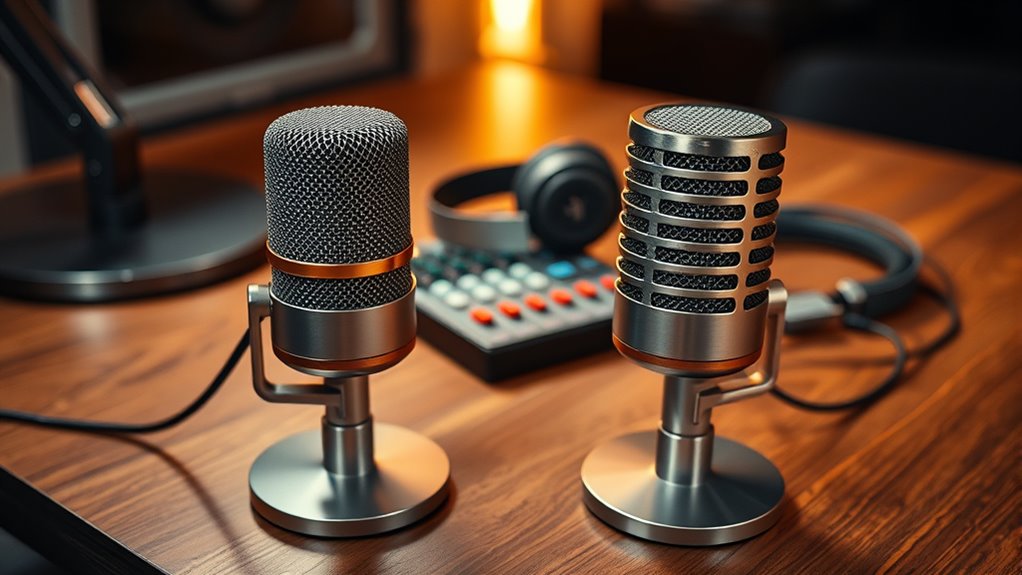

Finding the right microphone is essential for anyone serious about podcasting. The best options offer clear, professional sound, but tradeoffs often include price, complexity, and versatility. The RØDE PodMic stands out as the overall top choice for its balanced performance and durability, while the MAONO A04 USB offers excellent value for beginners. The Maono PD200W provides wireless convenience for mobile setups, but it can be more expensive. Continue reading for a detailed breakdown of these options and more to help you make an informed decision.

Get workout gear delivered free with Prime
- Fast, free delivery on millions of items
- Prime Video, Amazon Music and more included
- Member-only deals all year
Complete the kit

Key Takeaways
- The top-ranked microphones combine ease of use with professional sound quality, making them suitable for both beginners and pros.
- USB microphones tend to be more accessible but may lack some flexibility compared to XLR options, which require additional equipment.
- Wireless models like the Maono PD200W offer mobility but often come at a higher price and slightly more complex setup.
- Dynamic microphones, especially broadcast models like the RØDE PodMic, excel at rejecting background noise, ideal for noisy environments.
- Price varies widely; investing in a higher-quality mic generally yields better sound but consider your specific setup and needs first.
| MAONO A04 Gen2 XLR/USB Condenser Microphone Kit for PC and Podcast Recording |  | Best Overall Versatility for Podcasters Who Need Flexibility | Connectivity: XLR, USB, USB Type-C | Sampling Rate: 192kHz/24bit | Frequency Response: 30Hz-16kHz | VIEW ON AMAZON | See Our Full Breakdown |
| MAONO A04 USB Microphone, 192kHz/24Bit Condenser Mic Kit for PC Podcast |  | Best for Beginners and Streamers on a Budget | Connectivity: USB, USB Type-C | Sampling Rate: 192kHz/24bit | Frequency Response: 30Hz-16kHz | VIEW ON AMAZON | See Our Full Breakdown |
| FIFINE K669B USB Microphone, Condenser Recording Mic for Vocals and Meetings |  | Best for Quick Setup and Clear Voice Communication | Connection: USB-A | Cable Length: 5.9 feet | Frequency Response: 30Hz-16kHz | VIEW ON AMAZON | See Our Full Breakdown |
| FIFINE AmpliTank K688CT Podcast Microphone Kit, USB/XLR Dynamic Vocal Mic |  | Best for Versatile Recording with External Controls | Connectivity: USB, XLR | Frequency Response: 50Hz-16kHz | Signal-to-Noise Ratio: 80 dB | VIEW ON AMAZON | See Our Full Breakdown |
| RØDE PodMic Cardioid Dynamic Broadcast Microphone – White |  | Best for Broadcast-Quality Voice and Durability | Mounting Thread: Dual 3/8″ and 5/8″ | Construction: All metal | Design: Cardioid dynamic | VIEW ON AMAZON | See Our Full Breakdown |
| Maono PD200W Hybrid Wireless Podcast Microphone for PC, Dynamic XLR USB Mic |  | Best Versatile Connectivity for Flexible Podcasting | Connectivity: Wireless, USB, XLR | Microphone Type: Dynamic | Pickup Pattern: Cardioid | VIEW ON AMAZON | See Our Full Breakdown |
| RØDE PodMic USB Dynamic Broadcast Microphone, XLR + USB-C |  | Best for Versatile Broadcast-Quality Sound in a Single Microphone | Connectivity: XLR and USB-C | Built-in DSP: Yes, APHEX DSP with compression and presence | Compatibility: Mac, PC, iPad, Android | VIEW ON AMAZON | See Our Full Breakdown |
| RØDE PodMic Cardioid Dynamic Broadcast Microphone, XLR |  | Best for Broadcast-Quality Voice in Untreated Spaces | Type: Dynamic | Polar Pattern: Cardioid | Connectivity: XLR | VIEW ON AMAZON | See Our Full Breakdown |
| microphones for podcaster | Connectivity | Polar Pattern | Includes | Frequency Response |
|---|---|---|---|---|
| MAONO A04 Gen2 XLR/USB Condens | XLR, USB, USB Type-C | Cardioid | Pop filter, shock mount, adjustable arm | 30Hz-16kHz |
| MAONO A04 USB Microphone | USB, USB Type-C | Cardioid | Pop filter, foam windscreen, shock mount, adjustable arm | 30Hz-16kHz |
| FIFINE K669B USB Microphone | — | Cardioid | None | 30Hz-16kHz |
| FIFINE AmpliTank K688CT Podcas | USB, XLR | — | Boom arm, windscreen, shock mount | 50Hz-16kHz |
| RØDE PodMic Cardioid Dynamic B | — | — | — | — |
| Maono PD200W Hybrid Wireless P | Wireless, USB, XLR | — | — | — |
| RØDE PodMic USB Dynamic Broadc | XLR and USB-C | Cardioid | — | — |
| RØDE PodMic Cardioid Dynamic B | XLR | Cardioid | Swing mount | — |
More Details on Our Top Picks
MAONO A04 Gen2 XLR/USB Condenser Microphone Kit for PC and Podcast Recording
The MAONO A04 Gen2 stands out for its dual XLR and USB connectivity, making it suitable for both beginner and advanced setups. Compared with the MAONO A04 USB Microphone, it offers greater flexibility for users who want to upgrade to professional audio interfaces later. The inclusion of a pop filter, shock mount, and adjustable arm enhances its value, but the absence of an XLR cable and the need for phantom power in XLR mode are notable tradeoffs. It’s ideal for podcasters who want a single microphone that can evolve with their skills and equipment, though those solely on a budget or with simple needs might find it more complex than necessary.
Pros:- Dual XLR and USB connectivity offers maximum flexibility
- High-resolution 192kHz/24Bit audio with professional sound quality
- Comprehensive all-in-one kit including pop filter, shock mount, and adjustable arm
Cons:- XLR cable not included, adding extra cost
- Requires phantom power for XLR mode, which may complicate setup
Best for: Podcasters who want a versatile, future-proof microphone that can switch between USB and XLR for different recording environments
Not ideal for: Streamers or hobbyists who only record via USB and prefer a simpler plug-and-play setup without extra equipment
- Connectivity:XLR, USB, USB Type-C
- Sampling Rate:192kHz/24bit
- Frequency Response:30Hz-16kHz
- Polar Pattern:Cardioid
- Impedance:200 ohm
- Includes:Pop filter, shock mount, adjustable arm
Our verdict“This microphone is perfect for podcasters seeking a flexible, upgradeable solution that covers a range of recording needs.”
MAONO A04 USB Microphone, 192kHz/24Bit Condenser Mic Kit for PC Podcast
The MAONO A04 USB Microphone offers impressive sound quality for its class, delivering 192kHz/24Bit resolution that rivals more expensive options like the FIFINE K669B. Its plug-and-play design simplifies setup, making it ideal for newcomers, but it lacks the advanced features of multi-connection microphones. The included accessories—pop filter, foam windscreen, shock mount, and adjustable arm—add value, though some may find the bulky setup cumbersome, especially if space is limited. It’s best suited for podcasters starting out or those who prioritize straightforward, high-quality audio without needing XLR flexibility.
Pros:- Excellent 192kHz/24Bit audio clarity for the price
- Simple plug-and-play operation with wide device compatibility
- Includes comprehensive accessory kit for immediate use
Cons:- Limited to USB connection, restricting future upgrade options
- Accessories can feel bulky for tight workspace setups
Best for: Beginners or streamers looking for an easy-to-use, high-quality USB microphone for podcasting and content creation
Not ideal for: Podcasters seeking a professional upgrade path with XLR options or advanced audio controls
- Connectivity:USB, USB Type-C
- Sampling Rate:192kHz/24bit
- Frequency Response:30Hz-16kHz
- Polar Pattern:Cardioid
- Weight:1.35 kg
- Includes:Pop filter, foam windscreen, shock mount, adjustable arm
Our verdict“This is a strong choice for beginners who want high-quality audio with minimal fuss, but less suited for those planning advanced studio setups.”
FIFINE K669B USB Microphone, Condenser Recording Mic for Vocals and Meetings
The FIFINE K669B offers straightforward, reliable sound quality for podcasting, meetings, and streaming, with a durable metal build and a handy volume knob for quick adjustments. Its USB-A connection makes it compatible with most computers, but it’s less flexible than multi-connection models like the FIFINE AmpliTank K688CT. While it excels at producing crisp audio and is easy to use, it’s limited to a basic setup—no XLR option—and requires manual adjustment of volume controls in some software, which can be a hassle during live recordings. It’s best for users who value simplicity and durability over advanced features or multiple connection types.
Pros:- Plug-and-play setup with clear, crisp sound quality
- Robust metal construction for durability
- Volume knob for easy on-the-fly adjustments
Cons:- Limited to USB-A connection, may need adapters
- No XLR or multi-connection options for future upgrades
Best for: Casual podcasters or remote workers needing a durable, easy-to-use microphone for voice clarity
Not ideal for: Podcasters who want to expand into professional studio setups or need XLR connectivity
- Connection:USB-A
- Cable Length:5.9 feet
- Frequency Response:30Hz-16kHz
- Polar Pattern:Cardioid
- Power Supply:USB
- Includes:None
Our verdict“Ideal for those seeking a reliable, no-fuss microphone for clear voice recording, but not suitable for professional studio environments.”
FIFINE AmpliTank K688CT Podcast Microphone Kit, USB/XLR Dynamic Vocal Mic
The FIFINE AmpliTank K688CT combines USB and XLR options in a single package, making it suitable for podcasters who want both simplicity and professional flexibility. Its included boom arm, windscreen, and shock mount make it a comprehensive kit, but using the XLR connection means extra setup and external equipment—like an audio interface—are necessary, which can be a hurdle for beginners. Its mute, gain, and noise reduction controls are handy, although some features are only accessible via external mixers or interfaces. Compared with dedicated USB-only mics, it offers more versatility but demands a slightly steeper learning curve and setup time.
Pros:- Dual USB and XLR connectivity for maximum flexibility
- Includes professional accessories like boom arm and shock mount
- Features mute, gain, and noise reduction controls
Cons:- XLR setup requires external audio interface and more complex configuration
- Limited control options when using XLR without external gear
Best for: Podcasters who need a flexible, professional-grade setup with both USB convenience and XLR expansion
Not ideal for: Beginners who prefer a simple, all-in-one USB solution without additional gear or complexity
- Connectivity:USB, XLR
- Frequency Response:50Hz-16kHz
- Signal-to-Noise Ratio:80 dB
- Includes:Boom arm, windscreen, shock mount
- Features:Mute, noise reduction, volume control
- Color:Black
Our verdict“This kit suits podcasters who want to grow into a professional studio environment without sacrificing initial convenience.”
RØDE PodMic Cardioid Dynamic Broadcast Microphone – White
The RØDE PodMic is engineered for broadcast and podcasting, with an all-metal construction that promises durability. Its integrated yoke mount allows quick positioning, and the internal shock mount reduces handling noise, making it ideal for professional environments. Unlike the MAONO A04, which offers both XLR and USB options, the PodMic is strictly XLR—requiring an audio interface—but it compensates with a broadcast-quality cardioid pattern that isolates voice from background noise. Its lack of included accessories means you’ll need a stand or boom arm, and it’s less flexible for casual users. This model is best suited for those focused on long-term durability and studio-grade sound.
Pros:- All-metal construction ensures durability
- Integrated yoke mount for easy positioning
- Built-in pop filter minimizes plosives
Cons:- Requires compatible audio interface or stand, no included accessories
- Limited to XLR connection, less flexible for quick setups
Best for: Podcasters and broadcasters who prioritize rugged build quality and professional sound with a dedicated XLR setup
Not ideal for: Beginners or hobbyists who need a simple plug-and-play microphone without additional equipment
- Mounting Thread:Dual 3/8″ and 5/8″
- Construction:All metal
- Design:Cardioid dynamic
- Color:White
- Intended Use:Broadcast, podcasting
Our verdict“This microphone is ideal for seasoned podcasters seeking a durable, studio-quality XLR microphone for broadcast environments.”
Maono PD200W Hybrid Wireless Podcast Microphone for PC, Dynamic XLR USB Mic
The Maono PD200W stands out for its hybrid approach, combining wireless, USB, and XLR options in a single microphone. Compared to the RØDE PodMic USB, which offers straightforward plug-and-play convenience, the PD200W provides greater flexibility for podcasters who record in different setups or locations. Its studio-grade dynamic capsule with noise cancellation ensures clear sound, even in noisy environments, and the dual microphone support is perfect for interviews or co-hosted shows. However, its requirement for separate accessories for video sync and the RGB lighting might be unnecessary extras for some users. This pick makes the most sense for podcasters who need adaptable connectivity and long battery life without sacrificing sound quality.
Pros:- Versatile three-way connectivity (Wireless, USB, XLR) for different recording scenarios
- Studio-quality sound with noise cancellation and high SPL handling
- Supports dual microphones, ideal for interviews or co-hosted shows
- Long battery life up to 60 hours with stable wireless range
Cons:- Requires additional accessories for video or camera integration
- RGB lighting may be unnecessary for most users
Best for: Podcasters who record in various locations and need flexible, multi-connection options.
Not ideal for: Beginners seeking a simple, plug-and-play microphone without extra setup or accessories.
- Connectivity:Wireless, USB, XLR
- Microphone Type:Dynamic
- Pickup Pattern:Cardioid
- Signal-to-Noise Ratio:82dB
- Maximum SPL:128dB
- Wireless Range:60 meters
- Battery Life:up to 60 hours
- Included Accessories:Desktop stand, USB-C to USB-A&C cable, Type-C receiver, Type-C adapter cable, User manual
Our verdict“Best suited for experienced podcasters who need flexibility and mobility in their recording setup.”
RØDE PodMic USB Dynamic Broadcast Microphone, XLR + USB-C
The RØDE PodMic USB combines professional broadcast sound with the convenience of dual USB-C and XLR connections. Unlike the Maono PD200W, which offers wireless options, this model excels in studio setups where stability and straightforward operation matter most. Its onboard APHEX DSP provides compression and presence enhancements, delivering studio-quality sound directly out of the box. The built-in pop filter and shock mount help minimize noise from plosives and handling, making it ideal for serious broadcasters. However, its reliance on XLR or USB-C means it isn’t as flexible for on-the-go recording without additional equipment. This microphone is perfect for podcasters who prioritize sound fidelity and a durable build in a fixed studio environment.
Pros:- Dual XLR and USB-C connectivity for versatile use in various setups
- Built-in professional-grade audio processing with APHEX DSP
- Zero-latency monitoring with compatible audio interfaces
- Robust all-metal construction for durability
Cons:- Higher price point compared to basic USB microphones
- Requires additional equipment for XLR setup
Best for: Podcasters who want high-quality, broadcast-level sound with flexible connection options in a dedicated studio setup.
Not ideal for: Podcasters who need portable wireless solutions or are just starting and prefer a simple plug-and-play device.
- Connectivity:XLR and USB-C
- Built-in DSP:Yes, APHEX DSP with compression and presence
- Compatibility:Mac, PC, iPad, Android
- Included Accessories:Swing mount, USB-C cable, pouch
- Type:Dynamic
- Polar Pattern:Cardioid
Our verdict“Ideal for serious broadcasters or podcasters who need professional sound quality in a stable, fixed environment.”
RØDE PodMic Cardioid Dynamic Broadcast Microphone, XLR
The RØDE PodMic XLR is tailored for voice-focused recording, offering broadcast-quality sound with internal pop protection and shock mounting. Compared with the Maono PD200W, which provides more connectivity options, the PodMic excels in fixed studio setups where XLR connections are standard. Its all-metal build and internal noise reduction features ensure durability and clarity, making it a reliable choice for podcasts in untreated rooms or noisy environments. The main limitation is its lack of USB or wireless options, so it’s less suitable for those who want quick setup or portability. This microphone is best for podcasters who prioritize sound quality and durability over flexibility.
Pros:- Excellent for broadcast-quality voice recordings
- Built-in pop filter and shock mount reduce noise and plosives
- All-metal construction for durability
- Ideal for fixed studio environments
Cons:- Requires an audio interface or mixer with XLR input
- No USB or wireless connectivity, limiting portability
Best for: Podcasters recording in dedicated studios or untreated spaces who need a durable, high-quality XLR microphone.
Not ideal for: Beginners or mobile podcasters who want simple, USB-only solutions without the need for extra equipment.
- Type:Dynamic
- Polar Pattern:Cardioid
- Connectivity:XLR
- Built-in Pop Protection:Yes
- Material:All-metal
- Includes:Swing mount
Our verdict“Best suited for podcasters with dedicated studio setups seeking reliable, high-quality XLR sound.”

How We Picked
I evaluated these microphones based on their sound quality, build durability, ease of use, and value for both beginner and professional podcasters. I prioritized models with versatile connectivity options—USB, XLR, or hybrid—to suit various recording setups. Additional factors included user reviews, brand reputation, and features like background noise rejection and portability. The ranking reflects a balance between affordability and performance, ensuring each pick serves a distinct user need and offers reliable results in real-world podcast environments.| microphones for podcaster | Connectivity | Includes |
|---|---|---|
| MAONO A04 Gen2 XLR/USB Condens | XLR, USB, USB Type-C | Pop filter, shock mount, adjustable arm |
| MAONO A04 USB Microphone | USB, USB Type-C | Pop filter, foam windscreen, shock mount, adjustable arm |
| FIFINE K669B USB Microphone | — | None |
| FIFINE AmpliTank K688CT Podcas | USB, XLR | Boom arm, windscreen, shock mount |
| RØDE PodMic Cardioid Dynamic B | — | — |
| Maono PD200W Hybrid Wireless P | Wireless, USB, XLR | — |
| RØDE PodMic USB Dynamic Broadc | XLR and USB-C | — |
| RØDE PodMic Cardioid Dynamic B | XLR | Swing mount |
Factors to Consider When Choosing Microphones For Podcasters
Choosing the right microphone involves more than just looking at specs. It’s important to consider how you’ll use the microphone, your environment, and your budget. A good podcast microphone should deliver clear, natural sound while fitting comfortably into your recording setup. Here are key factors to keep in mind when selecting a microphone for podcasting.Connectivity Options
Deciding between USB, XLR, or hybrid microphones is fundamental. USB mics are plug-and-play, making them perfect for beginners, but XLR models often provide higher audio fidelity and expandability. Hybrid options give you flexibility, allowing you to start simple with USB and upgrade to XLR later without replacing your microphone. Think about your current setup and future plans when choosing connectivity to avoid costly upgrades later.
Sound Quality and Polar Pattern
Sound clarity is paramount for professional-sounding podcasts. Look for microphones with cardioid polar patterns, which focus on your voice and reject background noise, especially if recording in a less-than-ideal environment. Condenser microphones usually deliver richer sound but are more sensitive to room acoustics, while dynamic microphones excel at noise rejection. Matching the microphone type to your environment can significantly improve your final audio quality.
Build Quality and Durability
A sturdy build ensures your microphone lasts through frequent use and transportation. Metal construction often indicates higher durability, especially for mobile podcasters or those recording on the go. Consider whether you need a microphone with a shock mount or a sturdy stand to reduce handling noise and protect your investment. Cheaper plastic models may save money but can compromise longevity and sound stability.
Ease of Use and Setup
For beginners or quick setups, USB microphones with minimal configuration are ideal. If you’re comfortable with audio interfaces, XLR models can provide superior sound but require more equipment and setup time. Wireless microphones like the Maono PD200W add mobility but may involve more complex pairing and battery management. Balance your technical comfort level with your recording environment when choosing a microphone.
Price and Value
While high-end microphones deliver premium sound, they also come with higher costs. Budget options can suffice for casual or hobbyist podcasters, but investing in a mid-range or professional microphone often pays off through clearer sound and greater reliability. Focus on what features matter most to your needs—such as noise rejection, connectivity, or portability—and choose accordingly to avoid overpaying for unnecessary features.
Frequently Asked Questions
Should I choose a USB or XLR microphone for my podcast?
Choosing between USB and XLR depends on your current setup and future plans. USB microphones are simpler and ideal for beginners or those recording in quiet environments, offering quick setup with minimal equipment. XLR microphones, however, require an audio interface but provide better sound quality and expandability, making them suitable for more serious podcasters who want professional results and room to grow. Consider your comfort with audio gear and whether you plan to upgrade later when making your choice.
Is a dynamic microphone better than a condenser for podcasting?
Dynamic microphones are generally better suited for noisy environments because they reject background sounds more effectively. They tend to be more durable and less sensitive to room acoustics, making them a popular choice for broadcast-style podcasting. Condenser microphones, by contrast, produce richer, more detailed sound but are more sensitive to environmental noise and room reflections. Your choice should depend on your recording environment and desired sound quality.
Can I use a wireless microphone for professional podcasting?
Wireless microphones like the Maono PD200W offer great convenience and mobility, especially if you record in different locations or need freedom of movement. However, they often come at a higher price and can introduce latency or connection issues if not set up properly. For studio-quality, consistent recordings, wired microphones tend to be more reliable. Wireless models are better suited for on-the-go recording or dynamic setups where mobility outweighs absolute sound fidelity.
How much should I spend on a good podcast microphone?
The amount you spend should align with your goals and environment. Budget models around $50-$100 can be suitable for hobbyists or casual podcasters, offering decent sound quality. Mid-range options between $100-$300 deliver clearer audio and more durability, ideal for serious hobbyists and semi-professionals. Premium microphones over $300 often provide broadcast-grade sound and build quality, best suited for those aiming for professional-level production. Balance your budget with your needs and future growth plans.
What additional equipment might I need besides a microphone?
Most microphones require additional gear to maximize their potential. USB mics usually need only a computer, but XLR models often require an audio interface, microphone stand, pop filter, and possibly a shock mount. Acoustic treatment of your recording space can also improve sound quality significantly, especially for condenser microphones. Consider your recording environment and budget when planning extra equipment to ensure your setup is both effective and manageable.
Conclusion
For those just starting out or recording in quiet spaces, a USB microphone like the FIFINE K669B offers simplicity and good quality at a budget-friendly price. If you want a versatile, durable option with a professional sound, the RØDE PodMic is the best overall pick, especially for serious broadcasters. Budget-conscious podcasters should consider the MAONO A04 USB for its value, while those seeking wireless convenience might find the Maono PD200W worth the investment. For newcomers, the easiest setup comes from models like the FIFINE K669B, but if you aim for high-quality, durable gear, investing in a microphone like the RØDE PodMic will serve you best in the long run. Each option here is tailored to different needs, ensuring you can find a microphone that fits your podcasting journey.
Halloween Picks

12.5-Foot Lighted Halloween Inflatable Archway

10.5 ft Lighted Pumpkin and Ghost Halloween Inflatable Archway

10 ft Halloween Inflatable Archway with Built-in LEDs
As an affiliate, we earn on qualifying purchases.