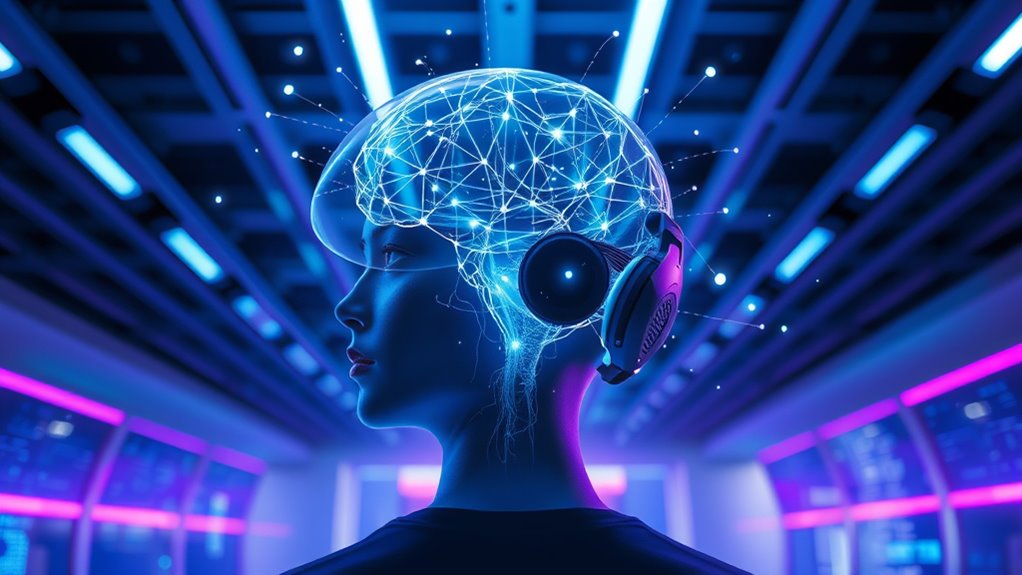

Brain-computer interfaces are quickly shifting from science fiction to reality, offering exciting possibilities for medical, military, and personal uses. While technological hurdles and ethical concerns, like privacy and autonomy, still need addressing, recent advances suggest they could become a major part of our future lives. If you look further, you’ll discover how these tools may revolutionize human capabilities and the complex challenges society faces as they become more integrated into daily life.

Get workout gear delivered free with Prime
- Fast, free delivery on millions of items
- Prime Video, Amazon Music and more included
- Member-only deals all year
Key Takeaways
- BCIs are transitioning from science fiction concepts to real-world applications with ongoing research and technological advancements.
- Ethical issues like privacy, mental autonomy, and data security pose significant challenges for widespread adoption.
- Technological hurdles include invasive procedures, signal interpretation complexity, and device safety and miniaturization.
- Current non-invasive BCIs face limitations in accuracy, affecting their reliability for practical uses.
- The future of BCIs depends on balancing innovation with ethical safeguards, addressing legal frameworks, and overcoming technical obstacles.
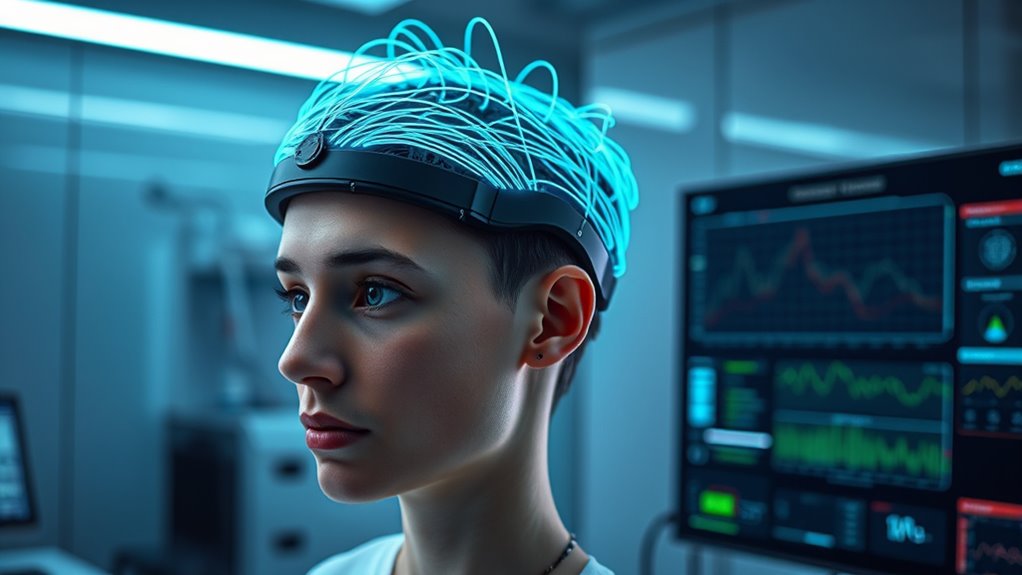
Brain-Computer Interfaces (BCIs) are systems that enable direct communication between your brain and external devices. They work by capturing neural signals and translating them into commands that computers or machines can understand. As you explore this emerging technology, you’ll find it holds immense promise for medical, military, and personal applications. However, with this potential comes a host of ethical implications and technological challenges that you need to contemplate. These issues aren’t just technical hurdles—they touch on fundamental questions about privacy, autonomy, and what it means to be human.
One of the biggest ethical concerns with BCIs is the potential for invasion of privacy. Since these devices interpret your thoughts and intentions, there’s a risk that sensitive mental data could be accessed or exploited without your consent. Imagine your brain signals being hacked or monitored by malicious actors, raising questions about how your mental autonomy is protected. This leads to debates about data ownership and consent, especially as BCI technology becomes more sophisticated and widespread. Who controls the neural data? How do we prevent misuse? Addressing these concerns requires careful regulation and transparent policies, but technology often advances faster than legal frameworks, leaving gaps that could be exploited. This is a significant ethical implication that you, as a user or developer, should be aware of. Additionally, detecting passive voice can help improve clarity and precision in discussing these complex issues.
Alongside ethical considerations, technological challenges pose significant hurdles to the widespread adoption of BCIs. Current systems often require invasive procedures, such as implants, which carry risks of infection, rejection, or long-term complications. Non-invasive options are improving, but they still struggle with accuracy and signal clarity. The brain’s signals are incredibly complex and variable, making it difficult to reliably interpret intentions with high precision. Additionally, maintaining consistent performance over time is a challenge, as neural signals can change due to factors like fatigue or emotional state. Developing algorithms capable of adapting to these variations is a key technological challenge. Power consumption, miniaturization, and ensuring safety are other hurdles that researchers are actively trying to overcome. Until these issues are addressed, BCIs will remain limited in their practicality and reliability.
non-invasive brain-computer interface devices
As an affiliate, we earn on qualifying purchases.
As an affiliate, we earn on qualifying purchases.
Frequently Asked Questions
Can BCI Technology Be Used for Mind Reading?
Yes, BCI technology can be used for thought transmission through neural decoding. It captures brain signals and translates them into understandable data, allowing some level of mind reading. While it’s not perfect and privacy concerns exist, advances are making it possible to interpret certain thoughts or intentions. So, with ongoing development, BCI could increasingly enable direct communication between minds, blurring the lines between thought and expression.
How Secure Are Brain-Computer Interfaces Against Hacking?
You should know that brain-computer interfaces aren’t completely secure yet. Neural encryption helps protect your thoughts, but hacking vulnerabilities still exist. Skilled hackers could potentially access or manipulate BCI data if proper security measures aren’t in place. Staying updated on security protocols and encryption techniques is essential, as ongoing advancements aim to make BCIs safer. Always be cautious about potential risks when using this cutting-edge technology.
Will BCIS Replace Traditional Communication Methods?
You might find that BCIs could revolutionize communication, with some estimates suggesting they could enhance speed by 20 times over traditional methods. However, ethical dilemmas and privacy concerns are major hurdles. You’ll need to contemplate how personal thoughts are protected and who controls the data. While BCIs may supplement communication now, replacing traditional methods entirely raises questions about consent, security, and the future of human interaction.
What Are the Long-Term Health Effects of BCIS?
You might experience some long-term health effects from BCIs, like changes in neuroplasticity adaptation, which could modify how your brain rewires itself over time. Additionally, increased cognitive load from using these devices may lead to mental fatigue or stress if not managed properly. While research is ongoing, it’s important to monitor these factors to ensure BCIs remain safe and beneficial in the long run.
Are BCIS Accessible and Affordable for General Use?
BCIs are becoming more accessible and affordable as technology advances. You’ll notice cost reduction in sensors and devices, making them more budget-friendly. Manufacturers are also focusing on user friendliness, so you can operate these interfaces with minimal training. While they’re not yet widespread for everyday use, ongoing innovations suggest that, soon, more people like you could benefit from affordable, easy-to-use brain-computer interfaces in daily life.
neural signal interpretation headsets
As an affiliate, we earn on qualifying purchases.
As an affiliate, we earn on qualifying purchases.
Conclusion
As you stand on the brink of this technological revolution, brain-computer interfaces are like the keys to a new universe waiting to be opened. They’re no longer just science fiction; they’re shaping your future, offering incredible possibilities from restoring lost abilities to enhancing human potential. Embrace this wave of innovation, because it’s heading straight for you—ready to transform your reality in ways you’ve only dreamed of. The future is knocking; will you open the door?
As an affiliate, we earn on qualifying purchases.
brain data privacy protection tools
As an affiliate, we earn on qualifying purchases.
As an affiliate, we earn on qualifying purchases.
Halloween Picks
halloween
As an affiliate, we earn on qualifying purchases.