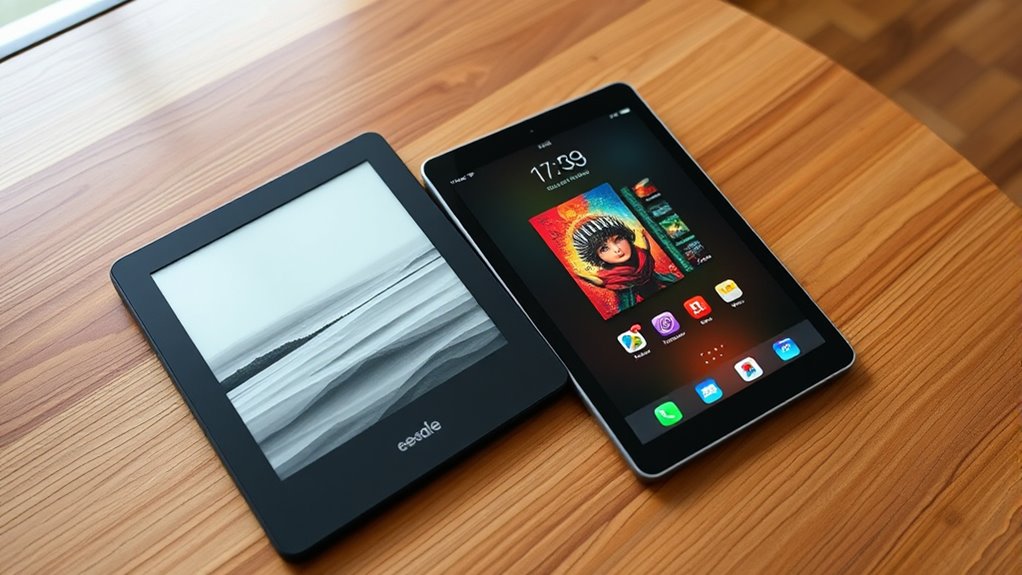

If you prioritize comfort and long-lasting battery life, e-readers with e-ink screens are your best choice, especially outdoors. They mimic paper, reduce glare, and are easier on your eyes during extended use. Tablets offer vibrant displays and multimedia options but can cause eye strain and drain faster. By understanding your needs for portability, environment, and content, you’ll find the perfect device—keep reading to discover more insights.
Key Takeaways
- E-ink e-readers provide a glare-free, paper-like display ideal for long reading sessions and outdoor use.
- Tablets support multimedia, interactive features, and customizable fonts, enhancing versatility but may cause eye fatigue.
- E-readers have longer battery life and are more portable, making them suitable for travel and extended reading.
- Tablets are better for multimedia content, web browsing, and note-taking, but tend to be bulkier with shorter battery life.
- Choose an e-reader for focused, comfortable reading; opt for a tablet if multimedia and internet access are priorities.

Musnap Ocean C 64GB+4GB 7” Color eBook Reader Supports Handwriting, 7” Color E-Ink Paper Tablet with Long Battery Life for Reading and Writing (Not Included Musnap Stylus Pen)
- Display: 7-inch color E Ink touchscreen with adjustable brightness
- Performance: Octa-core 2.2GHz processor with 4GB RAM
- Storage: 64GB internal storage for books and files
As an affiliate, we earn on qualifying purchases.
As an affiliate, we earn on qualifying purchases.
Display Technology and Reading Comfort
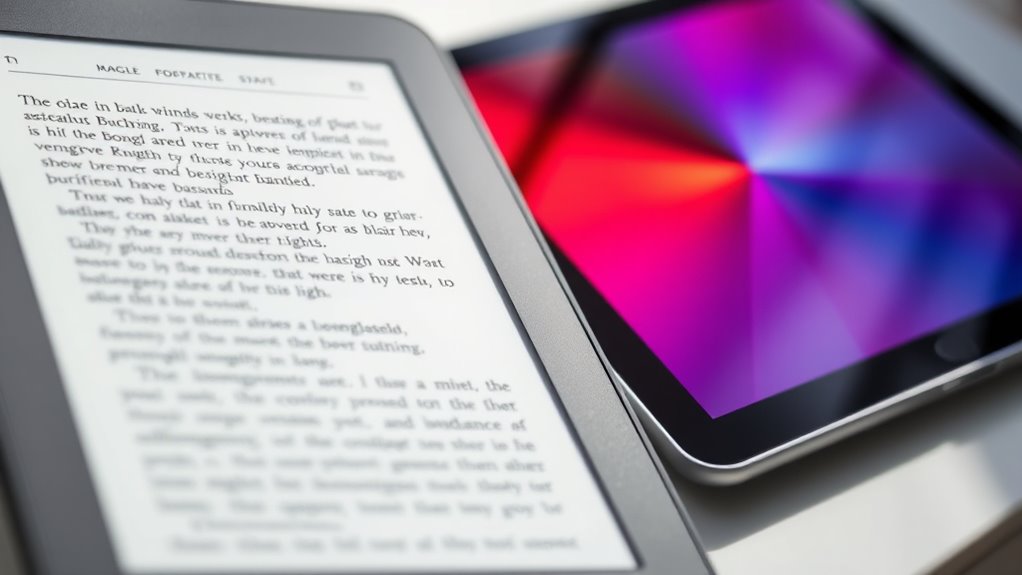
When it comes to display technology and reading comfort, e-readers and tablets offer distinct experiences. E-readers typically feature e-ink screens that closely mimic paper, reducing screen glare and making reading easier in bright sunlight. This display minimizes eye strain, allowing you to read comfortably for hours. Tablets, on the other hand, use LCD or OLED screens that are brighter and more vibrant but can cause glare under certain lighting conditions, which might lead to fatigue. Font customization is a key advantage on both devices; you can easily adjust font size, style, and spacing to suit your preferences. This flexibility enhances your reading experience, whether you prefer a larger font for comfort or a smaller one to fit more text on the screen. Additionally, the refresh rate of e-ink screens is much lower than that of tablets, which helps prevent flickering and further reduces eye fatigue during extended reading sessions. Advances in display technology continue to improve the visual quality and comfort of e-readers, making them an increasingly popular choice for avid readers. Furthermore, the screen durability of e-ink displays adds to their appeal, as they are less prone to damage from drops or scratches. Modern e-ink screens also incorporate antireflective coatings, which further enhance visibility in various lighting conditions. The choice between devices often depends on whether you prioritize reading comfort or multimedia capabilities.

7 Inch Tablet, Android Reading Tablet with 32GB Storage (Expandable to 512GB), Quad-Core Processor, 7" HD IPS Display (1024×600), Dual Cameras, Wi-Fi, Bluetooth, Lightweight Portable Design, Black
- Effortless Reading & Eye Comfort: HD IPS display with Eye Health Mode
- Smooth Performance & Expandable Storage: Quad-core processor with 32GB storage, expandable to 512GB
- Ultra-Portable Design & Dual Cameras: Lightweight, slim design with front and rear cameras
As an affiliate, we earn on qualifying purchases.
As an affiliate, we earn on qualifying purchases.
Battery Life and Portability
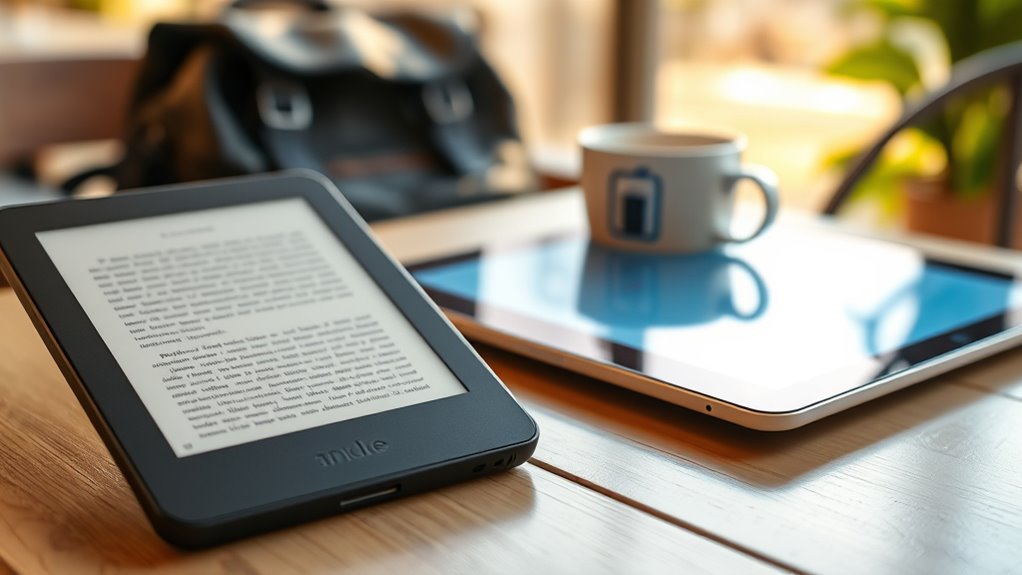
You’ll notice that e-readers typically last weeks on a single charge, while tablets usually need daily charging. Their lighter, smaller design makes e-readers easier to carry around, but tablets offer more versatility despite being bulkier. Charging convenience also varies, with e-readers often using simpler, longer-lasting batteries. Additionally, e-readers often incorporate e-ink display technology, which enhances readability and reduces eye strain during extended reading sessions. The power consumption of e-ink displays is significantly lower than that of traditional LCD screens, contributing to their impressive battery life. This technology is also praised for its low energy use, making it an energy-efficient choice for avid readers. Moreover, the durability and screen resilience of e-ink displays make them suitable for outdoor use and everyday handling. Extended battery life further adds to their appeal for those who want to read without frequent recharging.
Battery Duration Differences
Despite their compact sizes, e-readers typically boast markedly longer battery life than tablets, making them more convenient for extended reading sessions. You can enjoy days of use without frequent recharging, unlike tablets that may need daily charging. This long-lasting battery allows you to read without interruption, even on long trips. Additionally, e-readers often feature an ergonomic design that reduces hand fatigue during prolonged use. Their screens are optimized to minimize screen glare, ensuring comfortable reading in bright sunlight. In contrast, tablets often drain batteries faster due to vibrant displays and multitasking. This means you won’t have to worry about running out of power mid-read, making e-readers the better choice for extended reading comfort and convenience. Furthermore, battery efficiency is a key advantage that enhances the overall reading experience. Proper power management can extend your device’s usability even further, providing peace of mind during long reading sessions.
Device Weight and Size
E-readers are considerably lighter and more compact than tablets, making them easier to carry around for extended periods. Their ergonomic grip fits comfortably in your hand, reducing fatigue during long reading sessions. The smaller size means you can slip an e-reader into your pocket or bag effortlessly, enhancing portability. Unlike bulky tablets, e-readers are less cumbersome, so you can enjoy your favorite books without feeling weighed down. Additionally, the smaller screen size minimizes screen glare, even in bright sunlight, providing a clearer reading experience outdoors. This lightweight design combined with a comfortable grip ensures you can read for hours without discomfort. Furthermore, choosing an e-reader with durability in its construction can enhance longevity and user experience. The battery life of e-readers typically surpasses that of tablets, allowing extended use between charges. The portability of e-readers makes them a great choice for travel, commuting, or simply reading on the go. Overall, e-readers’ size and weight make them the ideal choice if portability and ease of handling matter most for your reading habits.
Charging Convenience
Have you ever worried about running out of battery during a long reading session? Battery life and charging options play a big role in your reading experience. E-readers often have impressive battery life, sometimes lasting weeks on a single charge, making them highly portable. Tablets, in contrast, usually need daily charging, but they support quick recharge features that minimize downtime. Wireless charging is becoming more common, allowing you to just place your device on a pad without fussing with cables. Consider these points:
- Long-lasting battery life for extended sessions
- Quick recharge capabilities for convenience
- Wireless charging options for easier top-ups
- Compact size enhances portability
- Battery longevity benefits from the device’s energy-efficient design, ensuring you can read longer without frequent recharging. Additionally, advancements in smart device technology are further improving battery efficiency and user experience. The power management features in modern devices help conserve energy, extending usage time between charges. Incorporating renewable energy solutions like solar-powered chargers can also help sustain your device’s power in outdoor settings.
Furthermore, the development of battery technology continues to improve, offering even longer-lasting power sources for future devices.
Choosing between an e-reader and a tablet depends on your reading habits and how much you value hassle-free charging.
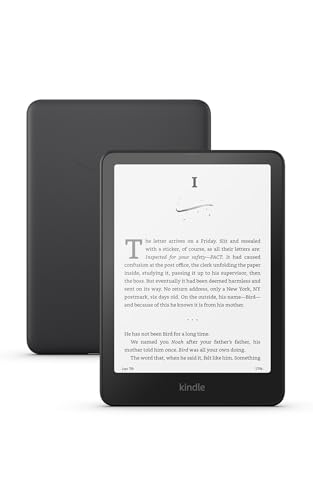
Amazon Kindle Paperwhite 16GB (newest model) – 20% faster, with new 7" glare-free display and weeks of battery life – Black
- Faster Page Turns: 25% quicker page turns
- High-Contrast Display: Next-gen 7-inch glare-free screen
- Travel-Ready Design: Ultra-thin with larger screen
As an affiliate, we earn on qualifying purchases.
As an affiliate, we earn on qualifying purchases.
Content Availability and Ecosystem
While e-readers excel at providing a focused reading experience, tablets offer a broader and more diverse content ecosystem. With tablets, you access countless apps, multimedia, and web content, making your reading experience more dynamic. However, this comes with considerations like digital rights and content licensing, which can limit access or vary by platform. You might find your favorite books, magazines, or audiobooks available across multiple services, but restrictions could apply. Additionally, the content licensing and digital rights management (DRM) policies can influence your freedom to access or share media across devices.

Jelquix 7 Inch E Book Reader with TFT Screen, Portable E Reader, Adjustable Font & Brightness with 20H Battery, Ideal for Reading & Built in Multimedia Player (16G) (16G) (8G)
- Independent Flipping Key: Easy book content preview
- Multimedia Capabilities: Music, video, and photo playback
- Adjustable Font & Brightness: Customize for comfort
As an affiliate, we earn on qualifying purchases.
As an affiliate, we earn on qualifying purchases.
Cost and Affordability
When choosing between e-readers and tablets, you’ll notice that e-readers typically cost less upfront. However, consider long-term expenses like accessories, app subscriptions, and upgrades, which can add up over time. Comparing device prices and ongoing costs helps you decide which option fits your budget best.
Device Price Comparison
E-readers generally cost less than tablets, making them a more affordable option for budget-conscious shoppers. Their lower price reflects simpler features and a focus on reading. With e-readers, you avoid high costs associated with large screens and advanced technology. Tablets, on the other hand, often come with a higher price tag due to their versatile user interface and multimedia capabilities. Plus, e-readers’ screens are designed to minimize glare, making long reading sessions easier on your eyes. If affordability is your priority, you’ll find e-readers offer excellent value without sacrificing essential reading features. Consider these points:
- Lower initial cost
- Reduced expenses on accessories
- Fewer in-app purchases
- Better suited for budget-conscious readers
Long-term Expenses
Considering the long-term expenses, e-readers typically remain more budget-friendly over time due to their lower maintenance costs and fewer required upgrades. Unlike tablets, which often need frequent software updates and can incur costs from subscription models for apps or cloud storage, e-readers generally don’t require additional spending. Many e-readers have simple, one-time purchases with minimal ongoing expenses. While tablets may offer more versatility, their higher price for initial purchase, combined with potential costs for apps and regular software updates, adds up over time. If you primarily want a device dedicated to reading, an e-reader keeps costs predictable and affordable in the long run, making it the smarter choice for budget-conscious readers.
Additional Features and Functionality
Have you ever wondered how the additional features of tablets compare to those of e-readers? Tablets offer a range of functionalities that enhance your reading experience. With advanced audio features, you can listen to audiobooks or podcasts seamlessly, making multitasking easy. Their annotation capabilities allow you to highlight text, add notes, and bookmark pages effortlessly, ideal for study or research. Meanwhile, tablets support a variety of apps, giving you access to multimedia content, web browsing, and social media. This versatility makes them suitable for more than just reading. For example:
Tablets offer multimedia, note-taking, and app access, providing a versatile reading and entertainment experience.
- Audio features for listening and multimedia
- Annotation capabilities for note-taking
- Access to apps and internet browsing
- Multimedia support like videos and images
These features provide a richer, more interactive experience compared to e-readers.
Suitability for Different Reading Environments

When choosing between e-readers and tablets, it’s important to think about where you’ll be reading most often. If you enjoy reading outdoors, an e-reader’s e-ink screen handles reading in sunlight better, reducing glare and eye strain. This makes it ideal for parks or beach days. On the other hand, tablets can struggle with glare in bright environments, making outdoor reading less comfortable. Noise disruption is another factor; if you read in noisy places like cafes or crowded areas, tablets often offer better audio features for audiobooks or background sounds. However, e-readers are quieter with no built-in speakers. Consider your typical reading environment, and choose the device that offers the best experience tailored to those conditions.
Frequently Asked Questions
How Do E-Ink Screens Affect Eye Strain Compared to LCD Screens?
E-ink screens reduce eye strain better than LCD screens because they don’t emit blue light or cause glare. Unlike LCD screens, which can tire your eyes after long reading sessions, e-ink mimics paper, providing a more natural reading experience. With less blue light exposure and glare reduction, you’ll find it easier to read comfortably for extended periods, making e-ink ideal for long reading sessions without eye fatigue.
Can Tablets Be as Comfortable as E-Readers for Long Reading Sessions?
You’ll find that tablets can be comfortable for long reading sessions, especially if they feature ergonomic design and balanced weight distribution. Studies show that 60% of users prefer lighter devices for extended use, reducing fatigue. While e-readers excel with their simple screens, tablets with adjustable brightness and ergonomic features can mimic that comfort, making them a viable option for prolonged reading without strain.
Which Device Offers a Better Reading Experience in Bright Sunlight?
You’ll find e-readers offer a better reading experience in bright sunlight because of their excellent sunlight readability and minimal screen glare. Their e-ink screens reflect ambient light, making it easy to read without straining your eyes. Tablets, on the other hand, often struggle with screen glare and are harder to see clearly outdoors, especially under direct sunlight. So, for bright outdoor reading, e-readers are the superior choice.
Are There Any Health Concerns Associated With Prolonged Use of Tablets or E-Readers?
Prolonged use of tablets or e-readers can lead to eye fatigue and sleep disruption. You might notice blurry vision, dry eyes, or headaches from staring at screens too long. To protect your health, take regular breaks, use blue light filters, and avoid screens before bedtime. Staying mindful of these habits helps reduce eye strain and minimizes sleep disturbances, ensuring your reading remains enjoyable and healthy.
How Do Updates and App Availability Impact the Reading Experience?
Software updates and app ecosystems directly influence your reading experience by enhancing functionality and fixing bugs. When your device receives regular software updates, you enjoy improved performance and new features that make reading more seamless. Access to a vast app ecosystem ensures you can find a variety of reading apps, dictionaries, and note-taking tools. Staying current with updates keeps your device secure, reliable, and optimized for an enjoyable reading experience.
Conclusion
Ultimately, whether you choose an e-reader or a tablet depends on what you value most in your reading experience. You might find yourself surprised by how a simple device can change your reading habits or how a tablet’s versatility opens up new possibilities. Sometimes, the best choice isn’t what you expect—it’s the one that fits your lifestyle perfectly. So, consider what truly matters to you, and your ideal reading companion might just be waiting to be discovered.