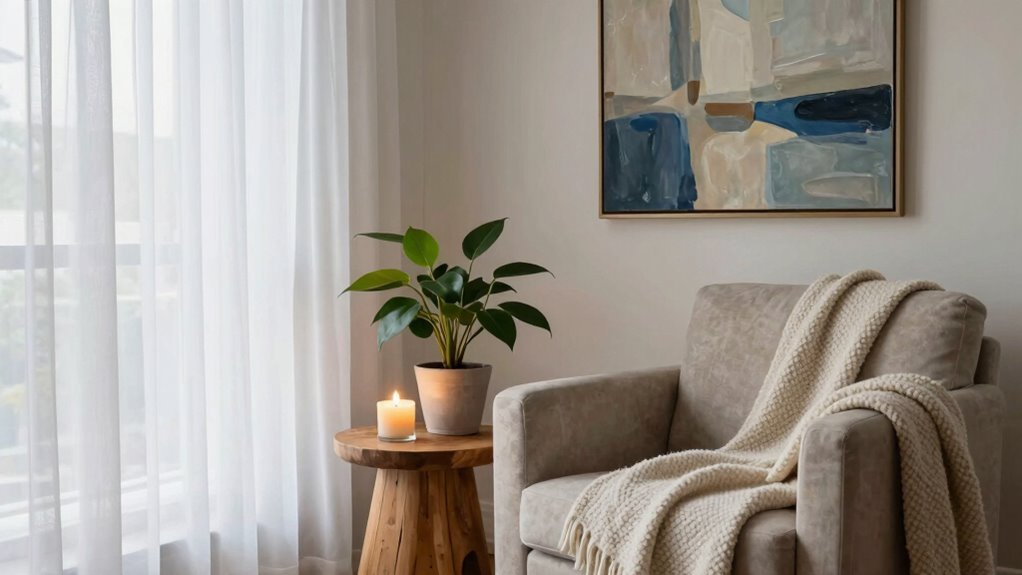

To create a more intentional recovery space at home, focus on thoughtful design that promotes calm and stability. Use soft, neutral colors, natural textures, and soothing decor to foster tranquility. Set up a dedicated corner for mindfulness activities with comfortable seating and calming visuals. Keep the area organized and reduce clutter to clear mental noise. Choose lighting that supports relaxation and incorporate natural elements like plants or water features. Explore further to discover how each detail enhances your healing environment.
Listen free for 30 days with Audible
Thousands of audiobooks and originals — cancel anytime.
As an affiliate, we earn on qualifying purchases.
Key Takeaways
- Use soft, neutral colors, natural textures, and calming artwork to foster tranquility and positive energy.
- Designate a dedicated corner with comfortable seating for mindfulness practices like meditation or journaling.
- Incorporate gentle lighting, natural sunlight, and decluttered spaces to promote relaxation and mental clarity.
- Add meaningful decor elements such as plants, stones, or water features to enhance mood and reduce anxiety.
- Ensure the environment supports stability by organizing recovery tools and minimizing distractions for focused routines.
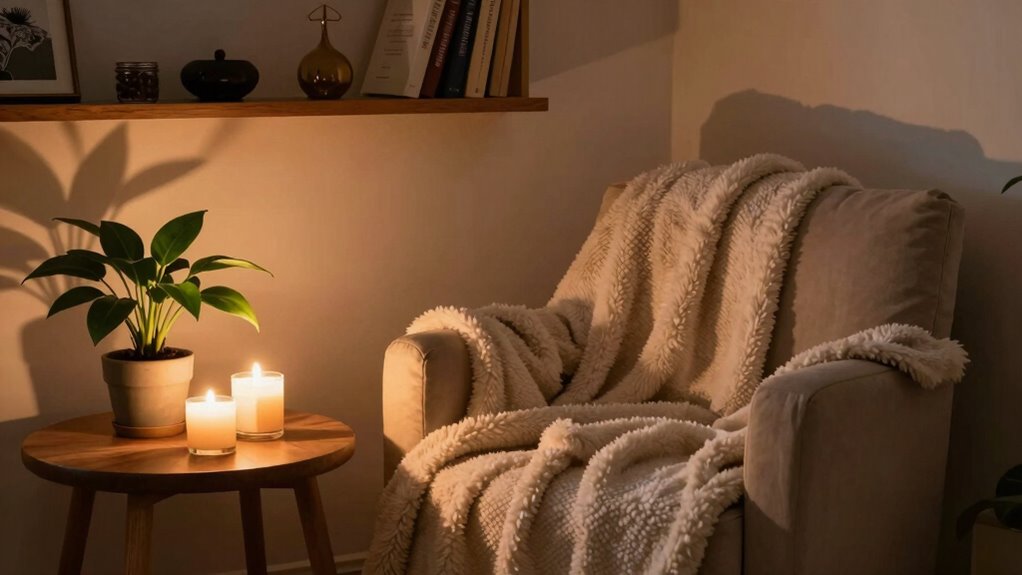
Have you ever considered how your environment influences your recovery journey? The way you design your space can *crucially* impact your mood, focus, and overall well-being. Creating a more intentional recovery space at home isn’t about drastic changes; it’s about thoughtfully shaping your environment to support your healing process. One effective way to do this is by incorporating mindful decor—simple, meaningful elements that foster tranquility and positive energy. Think about adding soft, neutral tones to your walls, soothing artwork, or natural textures like wood and plants. These touches can help create a calming atmosphere that encourages relaxation and mindfulness. When your surroundings feel peaceful and intentional, it becomes easier to establish calming routines that reinforce your recovery. Consistent routines, such as morning meditation, gentle stretching, or journaling, anchor your day and foster a sense of stability. By integrating these into your environment, you make it easier to stick with them. For example, designate a corner of your space as a dedicated area for mindfulness practices, equipped with comfortable seating, calming visuals, and minimal distractions. This intentional setup signals your brain that it’s time to unwind and focus inward, making your routines more effective. Additionally, incorporating intentional decor can enhance your space’s purposefulness and promote healing. Lighting plays a *crucial* role, so opt for soft, warm lights or natural sunlight whenever possible. This type of lighting nurtures a peaceful ambiance and can help regulate your circadian rhythm, supporting better sleep and overall health. Decluttering your space also makes a profound difference, as a tidy environment reduces stress and mental noise. Keep only what’s necessary and meaningful, and create designated spots for your recovery tools like journals, meditation cushions, or essential oils. Incorporating elements of nature—plants, stones, or water features—since they’re proven to elevate mood and reduce anxiety. These additions turn your space into a sanctuary, a place where healing can flourish. Creating a mindful environment involves paying attention to how each element influences your emotional state and adjusting accordingly. Using home design principles like door swings, stair proportions, and thoughtful planning can also optimize your space for comfort and function. Interestingly, understanding the impact of environmental factors can help you make more informed choices about your space’s layout and decor. When you consider the importance of color accuracy in your environment, it can further enhance the calming effects of your space. Remember, the goal isn’t perfection but intentionality; every choice should serve your recovery process. By cultivating mindful decor and establishing calming routines, you create an environment that nurtures your mental and emotional health. Over time, this space becomes a reflection of your commitment to healing and growth, making your recovery journey more supportive and sustainable. Your home isn’t just a shelter—it’s a *crucial* partner in your healing, designed with purpose to uplift and empower you every step of the way.
meditation cushion and chair set
As an affiliate, we earn on qualifying purchases.
As an affiliate, we earn on qualifying purchases.
Frequently Asked Questions
How Do I Personalize My Recovery Space Effectively?
To personalize your recovery space effectively, focus on space customization by adding items that bring you comfort and calm, like favorite photos or soothing colors. Use personalization techniques such as incorporating meaningful symbols or scents that relax you. Keep your space clutter-free and adaptable, allowing you to change it as your needs evolve. This creates an environment that truly reflects your personality, helping you feel more grounded and supported during recovery.
What Are Common Mistakes to Avoid in Designing This Space?
Avoid common mistakes that can turn your recovery space into a chaotic storm. Don’t ignore color psychology; choose calming hues that promote relaxation. Clutter management is essential—keep the area tidy to foster peace and clarity. Overloading the space with too many decorations or distractions can backfire. Instead, aim for simplicity and intentional design, creating a sanctuary that feels like a gentle harbor, not a whirlwind of chaos.
How Often Should I Update or Refresh My Recovery Environment?
You should refresh your recovery environment every few months to keep it calming and inspiring. Consider updating decorative lighting or adding new aromatherapy options to refresh the space’s ambiance. Rotate your essential oils or incense to prevent scent fatigue, and experiment with different lighting styles to create new moods. Regular updates keep your environment engaging, making it easier to relax and focus on your recovery journey.
Can I Combine Relaxation and Productivity in the Same Space?
Yes, you can combine relaxation and productivity in the same space. Start with mindful decor that fosters calm and focus, then add ambient lighting to switch moods effortlessly. As you shift from work to unwind, subtle changes in lighting or decor can signal your brain to relax or focus. This seamless blend creates a versatile environment, making your recovery space both soothing and functional without feeling cluttered.
What Tools or Accessories Enhance Recovery Space Functionality?
You can enhance your recovery space with essential oils and adjustable lighting. Essential oils like lavender or eucalyptus promote relaxation and reduce stress, creating a calming atmosphere. Adjustable lighting allows you to control brightness, helping you wind down or energize as needed. Combining these tools makes your space more functional and soothing, encouraging better recovery and mindfulness. Incorporate a diffuser and dimmable lights to optimize your environment effortlessly.
soothing ambient lighting for relaxation
As an affiliate, we earn on qualifying purchases.
As an affiliate, we earn on qualifying purchases.
Conclusion
By intentionally designing your recovery space, you create a sanctuary where healing and peace can flourish. Remember, it’s not just about the physical setup but also about cultivating a mindful environment that nurtures your well-being. When you put effort into making your space truly yours, you’ll find it’s easier to unwind and recharge. After all, a well-thought-out space can be your best friend in times of need—sometimes, it’s the little things that make a big difference.
As an affiliate, we earn on qualifying purchases.
As an affiliate, we earn on qualifying purchases.
Fall Picks
fall essentials
As an affiliate, we earn on qualifying purchases.