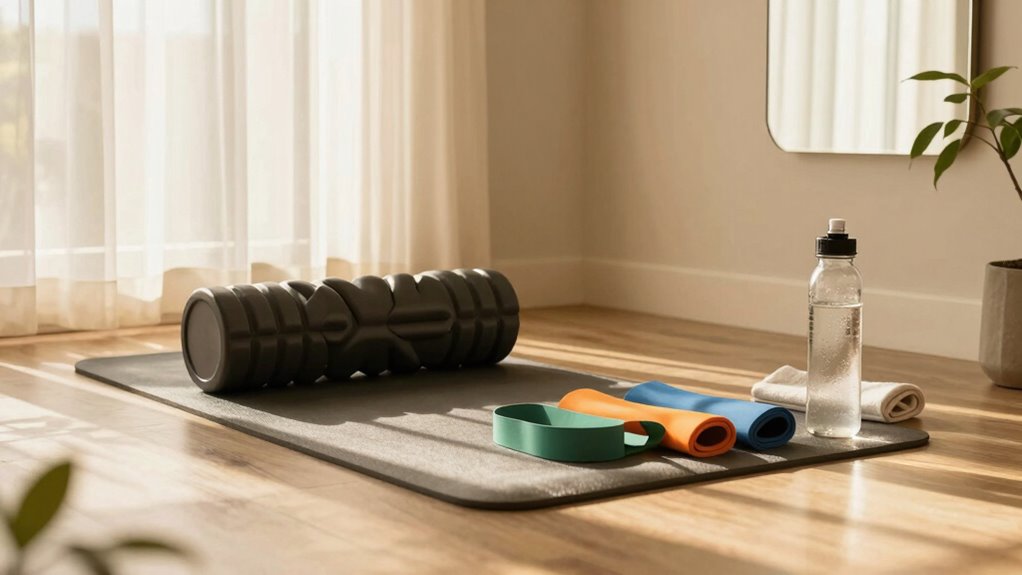

Recovery is often the missing piece in many home fitness plans because it allows your muscles to repair and grow stronger, preventing fatigue and injuries. Skipping rest or active recovery hinders progress, slows muscle repair, and can lead to burnout. Incorporating proper rest helps you rebuild energy and improve strength and endurance. Stay with us to discover how integrating smart recovery strategies can boost your home workouts and long-term results.

Get workout gear delivered free — and shop member deals
- Fast, free delivery on millions of items
- Access to Prime Big Deal Days deals on October 6–7
- Prime Video, Amazon Music and more included
Key Takeaways
- Many overlook recovery, risking injury and stagnation, despite its vital role in muscle repair and progress.
- Without proper rest, muscles can’t fully recover, leading to decreased performance and increased fatigue.
- Recovery enhances mental focus and technique, which are often neglected in home routines.
- Incorporating active recovery prevents burnout and maintains workout variability, essential for continuous gains.
- Home plans often emphasize workout frequency over recovery, missing the balance needed for sustainable progress.

Recovery is an essential part of any successful home fitness plan because it allows your muscles to repair and grow stronger. Many people overlook this step, focusing solely on workouts, but skipping proper recovery can hinder progress. When you give your body time to rest, your muscles rebuild more effectively, leading to improved strength and endurance. Recovery isn’t just about preventing injury; it’s about maximizing the benefits of your efforts. During recovery periods, your nervous system also resets, which can enhance your mind muscle connection. When you’re well-rested, you become more aware of how your muscles respond during exercises, making each movement more intentional and effective.
Recovery boosts strength, endurance, and mind-muscle connection—essential for effective, injury-free home fitness.
Incorporating recovery into your routine isn’t just about taking days off. It’s about creating a balance that includes active recovery, such as light stretching, yoga, or low-intensity walking, which promotes blood flow and helps reduce soreness. This approach supports workout variability, preventing plateaus and keeping your training fresh. When you vary your workouts, you engage different muscle groups and avoid overtraining specific areas. Recovery days give your muscles time to adapt to these varied stimuli, ensuring you don’t burn out or develop imbalances. This balance between effort and rest is essential for sustainable progress. Additionally, incorporating landscaping elements into your outdoor space can create a relaxing environment that encourages restorative activities like outdoor yoga or meditation.
Many home fitness enthusiasts focus heavily on intensity, often pushing themselves to the limit without considering the importance of recovery. This can lead to fatigue, decreased performance, and even injury. Instead, recognize that recovery is an active process that enhances your ability to perform better in future workouts. During rest periods, your muscles repair microscopic tears, and your energy stores replenish. Without sufficient recovery, these processes slow down, and your gains can stagnate. Additionally, when you’re properly rested, your mind muscle connection improves, allowing you to focus more on form and technique, which reduces the risk of injury and ensures you’re targeting muscles effectively. Incorporating rest and recovery strategies into your routine can also help prevent burnout and promote mental well-being, making your fitness journey more sustainable. Understanding the importance of muscle recovery can help you optimize your training schedule for better results over time.
Ultimately, recovery should be viewed as an integral part of your home fitness plan, not an afterthought. Prioritize quality rest, incorporate active recovery, and embrace workout variability to keep your muscles healthy and your mind engaged. When you listen to your body and give it the time it needs to recover, you’ll find that your strength, flexibility, and overall performance advance more steadily. Recovery isn’t just a break; it’s a strategic tool to help you reach your fitness goals faster and safer.
As an affiliate, we earn on qualifying purchases.
Frequently Asked Questions
How Long Should Recovery Periods Last After Different Workouts?
Recovery periods vary based on your workout intensity. For light exercises, take 24 hours; for moderate sessions, 48 hours; and for intense training, up to 72 hours. During recovery, focus on nutrition strategies to replenish energy and repair muscles, and prioritize mental relaxation to reduce stress. Listening to your body helps prevent injuries and guarantees you’re ready for your next workout, making recovery a crucial part of your fitness journey.
Can Recovery Be Achieved Without Taking Rest Days?
Yes, you can achieve recovery without full rest days by focusing on active recovery, like light stretching or walking. Proper nutrition planning fuels your body and promotes muscle repair, while mental relaxation reduces stress and prevents burnout. Incorporate these practices regularly, listen to your body, and avoid overtraining. This balanced approach helps your muscles recover effectively, keeping you energized and preventing injury without necessarily taking complete rest days.
What Are the Signs of Overtraining Due to Insufficient Recovery?
You might notice you’re overtraining when fatigue hits hard, motivation drops, and your performance stalls. Insomnia, irritability, or frequent injuries are warning signs. To combat this, focus on nutrition strategies that support recovery and build mental resilience. Ignoring these signs only leads to burnout, so listen to your body, incorporate proper rest, and prioritize recovery to keep progressing without risking harm.
How Does Sleep Impact Recovery in Home Fitness Routines?
Sleep influences your recovery profoundly. When your sleep quality improves, your body repairs muscles and replenishes energy more effectively. Adequate rest duration guarantees you don’t skip essential recovery phases, preventing overtraining. Without good sleep, you may feel fatigued and less motivated, hindering progress. Prioritize consistent sleep routines to maximize your home fitness gains, allowing your body to fully recover and perform at its best during workouts.
Are Recovery Techniques Effective Without Professional Guidance?
Recovery techniques can be effective without professional guidance if you follow solid nutrition plans and pay attention to mental health. While expert advice helps optimize results, many proven methods like stretching, rest, and mindful practices work well on their own. Focus on listening to your body, maintaining balanced nutrition, and managing stress. These elements support recovery, making your home fitness routines more effective even without professional supervision.
As an affiliate, we earn on qualifying purchases.
Conclusion
Remember, recovery isn’t just a break; it’s essential for progress. Studies show that incorporating proper rest can improve strength gains by up to 20%. Skipping recovery can lead to burnout or injury, setting back your goals. So, listen to your body, prioritize rest days, and give yourself time to recover. When you do, you’ll find your workouts become more effective, and your fitness journey becomes much more sustainable. Recovery truly is the missing piece to *release* your full potential.
As an affiliate, we earn on qualifying purchases.
As an affiliate, we earn on qualifying purchases.
Fall Picks
fall essentials
As an affiliate, we earn on qualifying purchases.