
Fingerprint and iris scanners work by capturing unique physical features for secure verification. Fingerprint scanners analyze ridges and valleys on your fingertip, creating a digital template stored securely. Iris scanners use specialized cameras to map the pattern of your iris, which is distinct to each person. Both methods compare live scans to their stored templates for quick, contactless identification. If you want to see how these advanced systems operate and their benefits, keep exploring further.
Key Takeaways
- Fingerprint scanners analyze unique ridge patterns and minutiae points to verify individual identity.
- Iris scanners capture detailed patterns of the colored part of the eye for accurate recognition.
- Both methods create biometric templates stored securely for quick matching during authentication.
- Fingerprint sensors often use optical, capacitive, or ultrasonic technology to capture fingerprint details.
- Iris scanners utilize infrared light to capture high-contrast iris features resistant to environmental changes.

Biometric ID systems are revolutionizing the way we verify identities by using unique physical or behavioral traits, such as fingerprints, facial features, or iris patterns. These systems provide a quick, secure, and often contactless way to confirm who you are, making them increasingly common in everything from smartphones to airport security. Among the most prevalent methods are facial recognition and voice authentication, both of which analyze distinctive traits to guarantee accurate identification. When you look into a device that uses facial recognition, a camera captures your facial features, then software maps key points—like the distance between your eyes, the shape of your jaw, or the contours of your cheekbones. This digital map creates a biometric template stored securely on the device or server. When you try to unlock your phone or access a secure area, the system compares your live facial image to the stored template. If they match within a certain threshold, access is granted. This process is fast, often taking only a second, and reduces the need for passwords or PINs, making your interactions more seamless. These systems rely on advanced algorithms** that adapt to changes in your appearance or voice over time, maintaining accuracy even when you grow a beard, change your hairstyle, or experience a cold that affects your voice. Voice authentication works similarly but uses your voice as the biometric trait. When you enroll, your voice is recorded and analyzed for unique characteristics such as pitch, tone, speech pattern, and cadence. These elements form a voiceprint that is stored securely. Later, when you attempt to access a system, you simply speak a phrase, and the software compares your current voice to the stored voiceprint. Because your voice has subtle but consistent qualities, voice authentication can reliably distinguish you from others. It’s particularly useful in hands-free scenarios, like making phone calls or using virtual assistants. Both facial recognition and voice authentication rely on advanced algorithms that adapt to changes in your appearance or voice over time, maintaining accuracy even when you grow a beard, change your hairstyle, or experience a cold that affects your voice. While fingerprint and iris scanners are also common, facial recognition and voice authentication excel in situations where contactless verification is preferable. These biometric methods are less invasive and faster, making them popular choices for modern security systems. They also present unique challenges, such as potential vulnerability to spoofing or privacy concerns, but ongoing advances in AI and sensor technology** continue to improve their reliability. Ultimately, these biometric ID methods work by capturing and analyzing the distinctive features that make you uniquely you, providing a more efficient and secure way to verify identities in today’s digital world.

Fingerprint Reader Biometric Authentication – DigitalPersona URU4500 USB – Fingerprint Scanner – Original HID Brand
- Brand and Model: DigitalPersona URU4500 USB
- Replacement for Old Model: Red Logo DigitalPersona URU4500
- Brand Origin: Original HID Brand
As an affiliate, we earn on qualifying purchases.
As an affiliate, we earn on qualifying purchases.
Frequently Asked Questions
How Accurate Are Biometric Identification Systems?
You’ll find biometric identification systems quite accurate, but their reliability depends on sensor quality and environmental factors. They typically have low false acceptance rates, meaning they rarely grant access to imposters. However, sensor reliability can vary, causing occasional misreads or false rejections. Overall, with advanced technology, these systems offer high accuracy, but it’s essential to maintain and calibrate sensors regularly to guarantee consistent performance.
Can Biometric Data Be Hacked or Stolen?
Like Pandora’s box, biometric data can be hacked or stolen if not properly protected. You’re vulnerable to false acceptance if hackers bypass security with fake fingerprints or iris images. However, strong data encryption helps safeguard your information, making theft more difficult. Always stay vigilant, use secure systems, and verify the biometric provider employs advanced security measures to reduce the risk of your sensitive data falling into the wrong hands.
What Are Privacy Concerns With Biometric IDS?
You might worry about privacy concerns with biometric IDs because they raise issues around data privacy and ethical considerations. Your biometric data, once collected, could be misused or stored insecurely, risking identity theft. It’s crucial to reflect on how your biometric information is protected, who has access, and whether organizations follow ethical practices. Being aware of these concerns helps you make informed decisions about sharing your biometric data.
How Quickly Can Biometric Authentication Occur?
Biometric authentication happens in the blink of an eye, like lightning slicing through a storm. You’ll notice the speed of recognition is almost instantaneous, with latency in verification typically under a second. Fingerprint and iris scans are designed for quick responses, ensuring you’re verified swiftly. This rapid process makes biometric IDs ideal for fast-paced environments, where every second counts, and efficiency is key to seamless security and access.
Are Biometric Systems Affected by Injuries or Disabilities?
Injuries or disabilities can impact biometric system accuracy, especially if they modify fingerprint or iris features. You might experience difficulty if an injury affects your fingerprint ridges or iris clarity, leading to false rejections. Disability considerations are essential, so systems often include alternative authentication methods. This approach ensures you can still access secure areas without compromising security, accommodating various injury impacts and disabilities effectively.

IRISPen Reader 8 : Pen Scanner|Document Scanner for Dyslexia|OCR 48 Languages Offline |Reading Pen| Scanner Dyslexia|Text to Speech Offline 5 Languages Offline|Photo OCR 15 Langues|No WiFi Needed
- Color Touch Screen: Fully offline for data security
- No WiFi Needed: Secure OCR on the Pen
- Multi-language OCR: Supports 48 languages offline
As an affiliate, we earn on qualifying purchases.
As an affiliate, we earn on qualifying purchases.
Conclusion
Biometric IDs are transforming security worldwide. Did you know that fingerprint scanners alone are estimated to be used by over 1.4 billion people globally? This shows just how essential these technologies are becoming in everyday life. By understanding how fingerprint and iris scanners work, you can better appreciate their role in protecting your identity. As technology advances, these methods will only become more reliable, making your personal data safer and more secure.
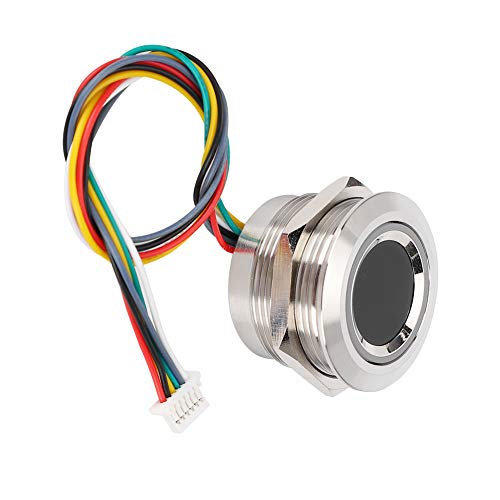
Capacitive Fingerprint Module for Safety Box Access Control Assistance
- Wide Application Range: Suitable for access control and safety boxes
- Easy Installation: Fool-proof, tool-free setup
- Integrated Image & Algorithm: Enhanced security with professional performance
As an affiliate, we earn on qualifying purchases.
As an affiliate, we earn on qualifying purchases.

Continuous Biometric Authentication Systems: An Overview (SpringerBriefs in Computer Science)
As an affiliate, we earn on qualifying purchases.
As an affiliate, we earn on qualifying purchases.