
GPS works by connecting your device to satellites orbiting Earth that send encrypted signals with precise timing and location data. Your receiver detects signals from at least four satellites, then uses triangulation to calculate your exact position through complex calculations. Continuous synchronization, corrections for atmospheric errors, and ground control adjustments keep signals accurate. If you want to see how this incredible system consistently guides your travels, there’s even more fascinating technology behind it.
Key Takeaways
- GPS satellites orbit Earth, transmitting encrypted signals with position and time data to receivers worldwide.
- Receivers decode signals from multiple satellites to calculate precise location via triangulation.
- Accurate timing from onboard atomic clocks and synchronized ground control ensures measurement reliability.
- Error correction techniques filter atmospheric and environmental disturbances, maintaining high positioning accuracy.
- Continuous system monitoring, calibration, and orbit adjustments sustain GPS accuracy and system integrity.

SMA26 Plus GNSS Receivers Base&Rover RTK GPS Land Survey Equipment with Permanent Survey Software, Connect with Drone/UAV, 1cm Accuracy,PPP/NTRIP/UHF Radio/BT, IP67, Ideal for Construction and Mapping
- Wide Protocol Compatibility: Supports multiple radio protocols and standards
- Tilt Compensation: Accurate measurements up to 2.5cm at 30° tilt
- High Compatibility & Versatility: Supports PPP, PPK, RTK for various applications
As an affiliate, we earn on qualifying purchases.
As an affiliate, we earn on qualifying purchases.
The Role of Satellites in GPS Functionality

Satellites play a crucial role in GPS functionality by providing the signals that enable your device to determine your precise location. These satellites orbit the Earth at high altitudes, following specific paths called satellite orbits, which guarantee global coverage. As they orbit, they continuously transmit radio signals containing information about their position and the current time. To keep these signals secure and prevent interference, they use signal encryption, making sure only authorized devices can access the data. This constant stream of encrypted signals allows your GPS receiver to triangulate your position accurately. Without satellite orbits and secure signal encryption, your device wouldn’t be able to pinpoint your location with such precision. This satellite infrastructure forms the backbone of the entire GPS system. Additionally, the high refresh rates of these signals ensure your location data remains up-to-date, enabling real-time navigation. The integration of satellite technology with ground control stations helps maintain the accuracy and reliability of the system worldwide. Moreover, advancements in satellite technology continue to improve the overall performance and resilience of GPS services, demonstrating the importance of space-based systems in modern navigation.

Garmin inReach® Mini 2, Satellite Communicator, Orange
- Compact and Lightweight: Enables global two-way messaging and SOS
- Bluetooth Enabled: Supports wireless connectivity
- Water Resistant: Suitable for outdoor use
As an affiliate, we earn on qualifying purchases.
As an affiliate, we earn on qualifying purchases.
How GPS Receivers Detect and Interpret Signals
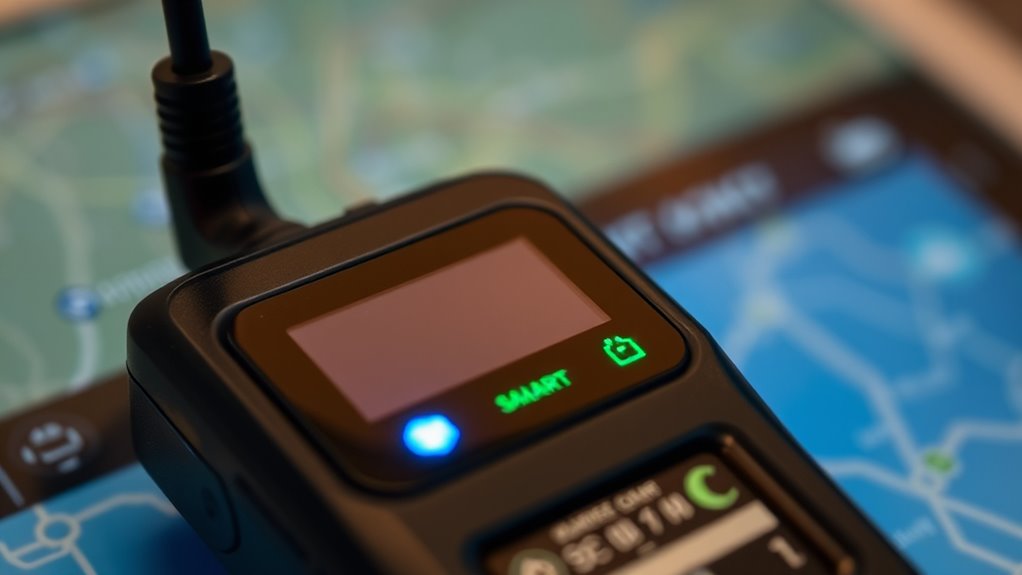
When your GPS receiver turns on, it begins scanning the sky for signals from satellites. These signals carry essential data, including timing and satellite position. Your receiver detects these signals using built-in antennas, then performs signal decoding to extract useful information. It filters out noise and interference to focus on clear signals, ensuring accurate data interpretation. The receiver compares the timing of signals from multiple satellites to determine your position. It continuously updates this information as new signals arrive, refining your location in real-time. Proper signal decoding and data interpretation are critical for accurate navigation. Without this process, the device wouldn’t understand the information from satellites, making precise location impossible. Additionally, the receiver employs error correction techniques to enhance the reliability of the data it interprets, which helps account for various sources of signal distortion. These techniques often involve redundant data and sophisticated algorithms to ensure accuracy despite environmental challenges. Moreover, the integration of precise timing allows for synchronization of signals, significantly improving positioning accuracy in various conditions. Furthermore, advancements in satellite technology continue to improve the overall accuracy and reliability of GPS systems.

Handheld GPS for Hiking, Rugged and Waterproof Handheld GPS Navigator, 3.2" Sunlight Readable Screen, Compact Satellite Handheld GPS with USA Topo Map, Multi-GNSS Support, Extra Battery Life
- Compact and Lightweight: Anti-slip design with 3.2" sunlight-readable screen
- Multi-GNSS Support: Supports GPS, Galileo, Beidou, QZSS for accuracy
- Precise Location Tracking: Within 6 ft accuracy for navigation
As an affiliate, we earn on qualifying purchases.
As an affiliate, we earn on qualifying purchases.
Triangulation: The Key to Precise Location Detection
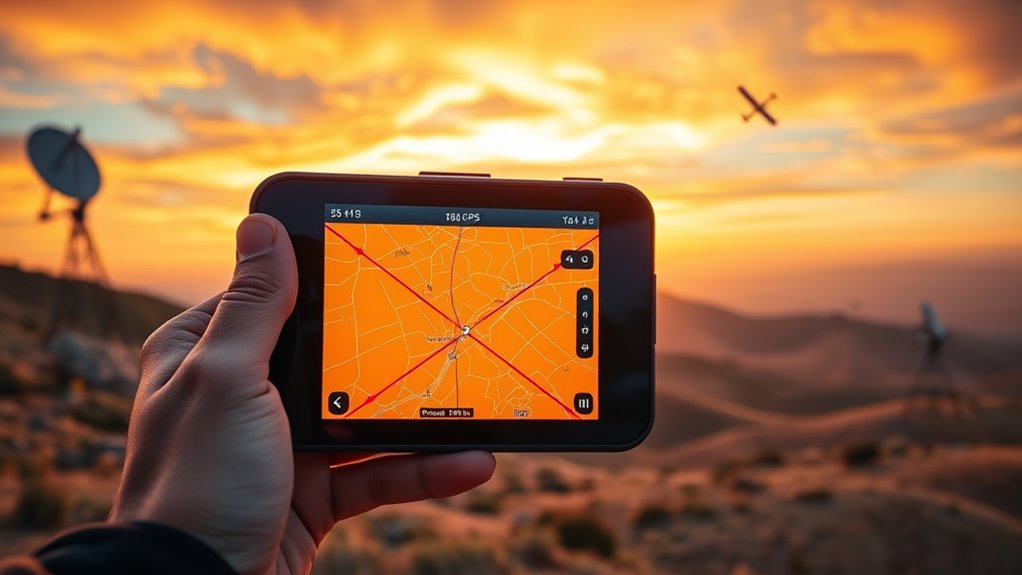
Triangulation relies on satellite signal timing to determine how far you are from each satellite. By calculating these distances, your GPS receiver can pinpoint your exact location. This method forms the foundation for accurate, real-time navigation. Additionally, understanding the signal transmission process helps explain how these measurements are obtained with precision. Recognizing the role of timing accuracy highlights the importance of synchronized signals for reliable positioning. Precise clock synchronization across satellites is essential to maintain the integrity of these measurements and ensure dependable location data.
Satellite Signal Timing
Ever wonder how GPS devices pinpoint your location with such remarkable accuracy? It all comes down to satellite signal timing, which measures how long signals take to reach you. Precise timing guarantees your device calculates your position correctly. Factors like urban canyons and atmospheric delay can interfere, causing slight delays in signal transmission. These issues are accounted for through sophisticated algorithms, allowing your GPS to maintain accuracy even in challenging environments. Satellite timing relies on atomic clocks onboard each satellite, providing nanosecond precision. When signals arrive, your device compares the timestamps to determine distance. This process is the backbone of triangulation, enabling your device to locate you within meters, whether you’re in a city or remote area. Atomic clock accuracy is essential to ensure the reliability of these measurements.
Distance Calculation Method
To determine your exact location, GPS devices use a method called triangulation, which calculates distances from multiple satellites. This process relies on precise distance measurement, where signals transmitted from satellites help your device estimate how far away each one is. By comparing the time it takes for signals to reach your receiver, your device can determine the distance to each satellite accurately. These distances form the basis for location estimation, enabling the GPS to pinpoint your position on Earth. With at least four satellites in view, the device can solve for latitude, longitude, and altitude, ensuring your location is precise. This triangulation method is the core of GPS technology, making real-time navigation and location tracking reliable and highly accurate.

ZORIDA Cell Phone Signal Booster for All US Carriers, Boosts 5G 4G LTE 3G, Cell Phone Booster 72dB High Gain Antennas, Cellular Signal Booster Verizon, AT&T, T-Mobile, App Support FCC Approved
- Signal Boosting Without Carrier Registration: Fewer dropped calls and faster data
- Compatible with All US Carriers & 5G: Supports Verizon, AT&T, T-Mobile, and more
- Wide Coverage for Small Spaces: Up to 2000 sq ft for homes or studios
As an affiliate, we earn on qualifying purchases.
As an affiliate, we earn on qualifying purchases.
Synchronization and Timekeeping in GPS Systems

Synchronization and precise timekeeping are essential for the accuracy of GPS systems, as even tiny discrepancies in clock timing can lead to significant position errors. To achieve this, GPS satellites are equipped with atomic clocks that keep incredibly accurate time. These clocks require strict time synchronization with ground control stations through complex communication networks, ensuring all satellites share a unified time reference. This synchronization allows your GPS receiver to calculate distances precisely by comparing signals’ travel times. Without atomic clocks and rigorous time synchronization, errors would accumulate rapidly, making reliable positioning impossible. Key points include:
- The role of atomic clocks in maintaining accuracy
- How ground stations synchronize satellite clocks
- The importance of minimizing clock drift
- The impact of precise timing on position calculation
- Security Zone Info plays a crucial role in maintaining the integrity of time synchronization and preventing malicious interference that could disrupt GPS accuracy. Additionally, time transfer protocols are vital for ensuring continuous and reliable synchronization across the satellite network. These protocols often utilize specialized signals to maintain synchronization even in challenging conditions. Furthermore, advancements in atomic clock technology continue to enhance the overall reliability and precision of GPS systems.
Correcting Signal Errors for Accurate Positioning

To get accurate positioning, you need to understand how GPS systems correct signal errors. You’ll learn how they mitigate interference and calibrate satellite signals to improve precision. These steps are essential for reliable and exact location data. Additionally, connected equipment in modern home gyms often utilize GPS technology for accurate tracking of outdoor activities and workouts. By continuously refining algorithms and employing error correction techniques, GPS systems can adapt to changing environmental conditions, ensuring consistent accuracy even in challenging settings. Incorporating signal processing methods further enhances the system’s ability to maintain precise positioning under various circumstances. Moreover, advancements in system calibration help to fine-tune the GPS signals, reducing discrepancies caused by atmospheric disturbances. Advanced navigation algorithms also play a crucial role in enhancing positional accuracy and reliability.
Signal Interference Mitigation
Signal interference can substantially disrupt GPS accuracy, but advances in mitigation techniques help rectify these errors. Modern systems combat issues like signal jamming and multipath propagation, which distort signals and cause position errors. Signal jamming deliberately blocks signals, while multipath causes signals to bounce off surfaces, confusing receivers. To counter these problems, GPS devices now use advanced algorithms to identify and reject jamming signals. They also analyze signal characteristics to differentiate direct signals from reflected ones. Additionally, multiple frequency bands are utilized to improve reliability. These improvements ensure your GPS stays accurate even in challenging environments.
- Detecting and filtering out jamming signals
- Reducing errors caused by multipath reflections
- Using multi-frequency signals for better accuracy
- Employing real-time signal analysis techniques
Satellite Signal Calibration
Accurate GPS positioning relies on precise calibration of satellite signals, which often contain errors due to atmospheric conditions, satellite clock inaccuracies, and orbital deviations. To correct these issues, the system continuously monitors signal strength and performs orbit adjustments, ensuring satellites stay in proper positions. Signal strength can fluctuate because of atmospheric interference, so calibration involves filtering out these variations to maintain reliable data. Orbit adjustments are essential when satellites drift from their designated paths, which can cause errors in location calculations. Ground control stations regularly update satellite clocks and perform orbit corrections, transmitting this data to your receiver. This ongoing calibration process helps minimize errors, ensuring your GPS provides accurate positioning despite environmental and technical challenges. Additionally, electric dirt bikes and other advanced technologies demonstrate the importance of precise calibration and performance optimization in modern systems.
The Importance of Ground Stations and Control Centers

Ground stations and control centers play a crucial role in the GPS system by actively managing and monitoring the satellites orbiting Earth. They guarantee that satellite data remains accurate and reliable through precise ground station operations and control center functions. These centers track satellite positions, check their health, and update their onboard clocks, maintaining system integrity. Without these operations, satellites could drift or malfunction, disrupting navigation signals. The control centers also coordinate satellite launches and decommissioning, safeguarding the network’s stability. Additionally, they analyze data to correct signal errors caused by atmospheric conditions or orbital shifts. This constant oversight guarantees your GPS device receives precise location information, keeping your travels smooth and accurate.
- Regular satellite health checks
- Precise orbit adjustments
- Time synchronization across satellites
- Managing satellite launches and decommissioning
Enhancements in GPS Technology: From Civil to Military Uses

Advancements in GPS technology have expanded its capabilities beyond civilian navigation, substantially enhancing military operations. Civil applications now benefit from more precise positioning, improving everything from mapping to emergency response. Meanwhile, military advancements have led to highly secure and resilient GPS signals, ensuring reliable communication and navigation in combat zones. These improvements include encrypted signals that prevent jamming and spoofing, safeguarding military systems against interference. Enhanced accuracy also allows for precise missile guidance and troop movement coordination. As a result, GPS has become crucial for national security and defense strategies. The dual development of civil applications and military advancements demonstrates how GPS technology continues to evolve, with each sector pushing for greater precision, security, and reliability.
Future Innovations and the Evolution of Global Positioning

As technology continues to evolve, the future of global positioning is poised for groundbreaking innovations that will further enhance accuracy, security, and integration. You can expect augmented reality to transform how you navigate, overlaying directions seamlessly onto your real-world view. Wearable technology will become smarter, providing real-time updates without needing to check your device. Future GPS systems may incorporate quantum computing, making location data even faster and more precise. Additionally, advancements will improve security against spoofing and hacking, ensuring your data stays safe. These innovations will create a more intuitive, immersive experience, making navigation effortless and more integrated into daily life.
- Augmented reality guiding your steps in real time
- Wearable tech with built-in GPS for continuous tracking
- Quantum-enhanced positioning for unmatched precision
- Enhanced cybersecurity safeguarding your location data
Frequently Asked Questions
How Does GPS Work Indoors or Underground?
Indoor positioning and underground navigation can be tricky because GPS signals weaken indoors or underground. You rely on alternative methods like Wi-Fi, Bluetooth beacons, or inertial sensors to determine your location. These technologies work together to provide accurate positioning when GPS can’t, helping you navigate malls, airports, or tunnels. So, even without direct GPS signals, you can still find your way efficiently with indoor positioning tools.
What Are the Limitations of GPS in Urban Canyons?
You’re fighting an uphill battle with GPS in urban canyons, where skyscraper interference creates urban canyon challenges. Tall buildings block satellite signals, making your device struggle to pinpoint your location accurately. This can lead to lost signals or delays, especially in dense city centers. You might feel like you’re chasing your tail, as GPS accuracy diminishes amid the skyscrapers, making navigation tricky and sometimes frustrating.
How Secure Is GPS Against Signal Spoofing or Jamming?
GPS is vulnerable to signal spoofing and jamming, but measures exist to enhance security. You’re protected by jamming countermeasures that detect interference and alert you to potential threats. Signal spoofing is harder to defend against, but advanced encryption and authentication methods help verify signals’ authenticity. While no system is completely foolproof, ongoing improvements aim to make GPS more secure against malicious interference, keeping your navigation safer.
Can GPS Be Used Effectively in Remote or Polar Regions?
Think of GPS as your loyal compass, even in the coldest, most remote regions. Satellite coverage extends into polar areas, enabling effective polar navigation and remote region tracking. While signals can weaken near the poles, advanced systems and auxiliary technologies help maintain accuracy. So, you can rely on GPS for navigation in these challenging regions, making your journeys safer and more precise, no matter how far north or south you go.
How Does GPS Integrate With Other Navigation Systems?
You can see how GPS integrates with other navigation systems through integrating sensors like gyroscopes and accelerometers, which enhance accuracy during signal loss. Cross-system compatibility allows GPS to work seamlessly with inertial navigation, GLONASS, Galileo, and BeiDou, providing reliable positioning worldwide. This integration guarantees your device maintains precise navigation, even in challenging environments, by combining multiple sources for a thorough, resilient system that adapts to various conditions.
Conclusion
Now that you understand how GPS guides your journeys, you see how satellites, signals, and synchronization work seamlessly behind the scenes. This sophisticated system constantly corrects errors, ensuring your location is precise and reliable. As technology evolves, GPS continues to advance, aiding both civilians and soldiers. Remember, it’s this incredible interplay of signals, stations, and systems that makes navigation straightforward, secure, and so superbly seamless—showcasing the spectacular science behind your travels.