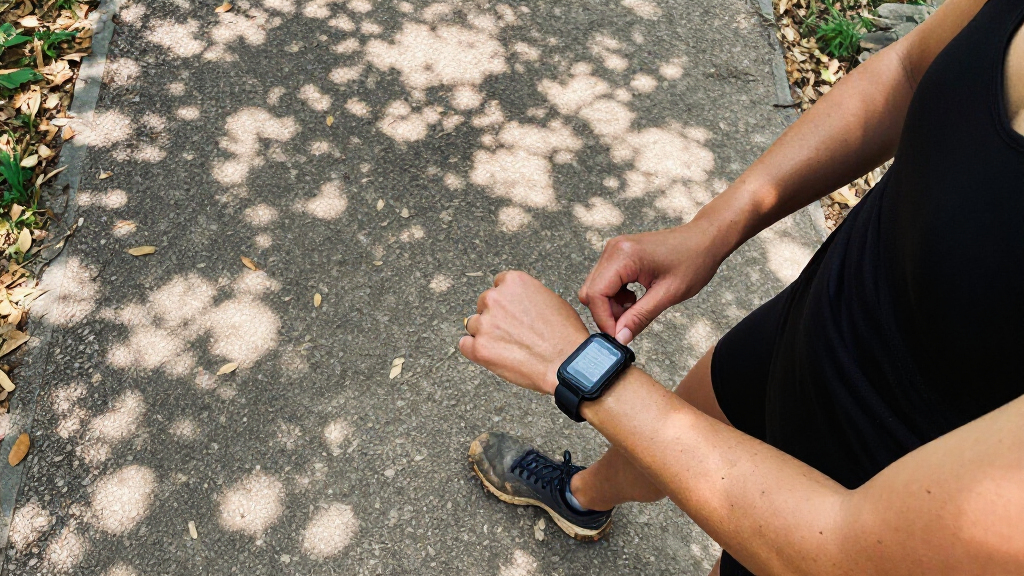
The best fitness trackers for runners pair dependable run tracking with features that fit the way you train. I’d put the Garmin Forerunner 970 first for runners who want advanced training and triathlon tools, while the Forerunner 265 stands out for training features in a more focused running watch. For simpler run tracking, the Forerunner 165 is a more approachable choice. The tradeoffs are between running-specific data, smartwatch versatility, screen-free simplicity, and the cost and complexity of advanced features. Read on for how all 15 options compare and which type of runner each one suits.

Get workout gear delivered free with Prime
- Fast, free delivery on millions of items
- Prime Video, Amazon Music and more included
- Member-only deals all year
Complete the kit



Key Takeaways
- Running-specific watches lead this lineup: Garmin’s Forerunner models and the Polar Pacer are more directly aimed at run training than general-purpose trackers.
- The Forerunner 970 is the most capable pick here, but its advanced tools may be more than a casual runner needs; the Forerunner 165 keeps the experience more accessible.
- Watch size changes the fit, not just the look: the 42mm Forerunner 265S offers a smaller alternative to the 46mm Forerunner 265.
- Everyday versatility comes with a tradeoff: the vívoactive and Venu options serve broader fitness and smartwatch routines, while Forerunners put running closer to the center.
- Screenless and simple trackers suit different priorities: WHOOP and Fitbit Air emphasize a low-profile approach, while the Inspire 3 and budget-oriented trackers offer displays or straightforward activity tracking.
| WHOOP 5.0 Screenless Fitness, Health, and Sleep Wearable with 12-Month Peak Membership |  | Best for Recovery-Focused Runners | Display: Screenless | Membership: 12-month WHOOP Peak membership | Battery life: 14+ days | VIEW LATEST PRICE | See Our Full Breakdown |
| Garmin Forerunner 970 GPS Running and Triathlon Smartwatch |  | Best Premium Running Watch | Case size: 47mm | Display: AMOLED touchscreen with buttons | Lens and bezel: Sapphire lens; Carbon Gray DLC titanium bezel | VIEW LATEST PRICE | See Our Full Breakdown |
| Garmin Forerunner 265S Running Smartwatch, 42mm, Whitestone/Neo Tropic |  | Best Compact Training Watch | Case size: 42mm | Weight: 39 g | Display: AMOLED touchscreen | VIEW LATEST PRICE | See Our Full Breakdown |
| Garmin Forerunner 165 GPS Running Smartwatch, 43 mm, Black |  | Best for Beginner Runners | Case size: 43mm | Display: AMOLED touchscreen with traditional button controls | GPS: Built-in GPS | VIEW LATEST PRICE | See Our Full Breakdown |
| Garmin vívoactive 5 Health & Fitness GPS Smartwatch, 42mm, Black |  | Best for Running and Everyday Fitness | Case size: 42mm | Display: AMOLED, 390 x resolution listed | Weight: 1.31 ounces | VIEW LATEST PRICE | See Our Full Breakdown |
| Fitness Tracker Watch with Heart Rate Monitor, Pedometer, Sleep Tracking, and IP68 Waterproofing |  | Best for Basic Run and Daily-Activity Tracking | Sport modes: 9 | GPS: Via smartphone | Battery life: 5–7 days | VIEW LATEST PRICE | See Our Full Breakdown |
| Google Fitbit Air Screenless Activity Tracker, Obsidian |  | Best Screenless Pick for All-Day Wear | Display: Screenless | Battery life: Up to 7 days | Quick charging: Up to 1 day of battery life in 5 minutes | VIEW LATEST PRICE | See Our Full Breakdown |
| Bakoor C60 Fitness Tracker with 1.1-Inch AMOLED Display |  | Best Value-Feature Mix for Phone-Carrying Runners | Display: 1.1-inch AMOLED touchscreen | Sports modes: 25 | GPS: Connected GPS | VIEW LATEST PRICE | See Our Full Breakdown |
| Garmin vívoactive 5 GPS Smartwatch, 42 mm, Ivory |  | Best Everyday GPS Smartwatch for Runners | Display: AMOLED touchscreen | Case size: 42 mm | GPS: Built-in | VIEW LATEST PRICE | See Our Full Breakdown |
| Garmin Forerunner 965 GPS Running and Triathlon Smartwatch, 47 mm, Black/Powder Gray |  | Best Premium Running and Triathlon Pick | Display: AMOLED touchscreen | Case size: 47 mm | GPS: Built-in multi-band GNSS with SatIQ technology | VIEW LATEST PRICE | See Our Full Breakdown |
| Google Fitbit Inspire 3 Fitness and Health Tracker with Small and Large Bands |  | Best Compact Tracker for Casual Runners | GPS: Via smartphone | Exercise modes: 40+ | Tracked metrics: Heart rate, sleep duration, stress, and blood oxygen | VIEW LATEST PRICE | See Our Full Breakdown |
| Garmin Forerunner 265 GPS Running Smartwatch, 46 mm, Black/Powder Gray |  | Best Overall for Training-Focused Runners | Display: 1.3-inch AMOLED touchscreen | Case size: 46 mm | GPS: Multi-band GNSS with SatIQ technology | VIEW LATEST PRICE | See Our Full Breakdown |
| Garmin Venu 4 GPS Fitness Smartwatch, 45 mm, Black Silicone Band |  | Best for Runners Who Want a Multisport Daily Watch | Display: Bright, colorful display | Case size: 45 x 45 x 12.5 mm | Case material: Stainless steel | VIEW LATEST PRICE | See Our Full Breakdown |
| Garmin Forerunner 55 GPS Running Watch with Daily Suggested Workouts, Black |  | Best for New Runners | GPS: Built-in | Battery life: Up to 2 weeks smartwatch mode; up to 20 hours GPS mode | Heart-rate monitoring: Wrist-based; not a medical device | VIEW LATEST PRICE | See Our Full Breakdown |
| Polar Pacer GPS Fitness Smartwatch for Runners, Black | 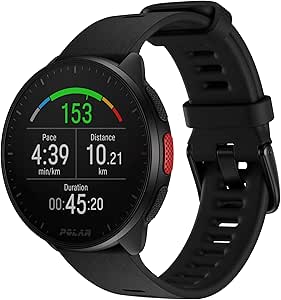 | Best Lightweight Watch for Long Training Sessions | Weight: 40 g | Display: Always-on MIP color display | GPS: Yes | VIEW LATEST PRICE | See Our Full Breakdown |
| fitness trackers for runner | Battery life | GPS | Water resistance | Display |
|---|---|---|---|---|
| WHOOP 5.0 Screenless Fitness | 14+ days | — | — | Screenless |
| Garmin Forerunner 970 GPS Runn | Up to 15 days in smartwatch mode; up to 26 hours in GPS mode | Multi-band GPS with built-in maps | 50 meters | AMOLED touchscreen with buttons |
| Garmin Forerunner 265S Running | Up to 15 days in smartwatch mode; up to 24 hours in GPS mode | Multi-band GNSS with SatIQ | 50 meters | AMOLED touchscreen |
| Garmin Forerunner 165 GPS Runn | Up to 11 days in smartwatch mode; up to 19 hours in GPS mode | Built-in GPS | 50 meters | AMOLED touchscreen with traditional button controls |
| Garmin vívoactive 5 Health & F | Up to 11 days in smartwatch mode | Built-in | — | AMOLED, 390 x resolution listed |
| Fitness Tracker Watch with Hea | 5–7 days | Via smartphone | IP68; listed depth 50 meters | — |
| Google Fitbit Air Screenless A | Up to 7 days | Via smartphone | 50 meters | Screenless |
| Bakoor C60 Fitness Tracker wit | Up to 7 days | Connected GPS | IP68 | 1.1-inch AMOLED touchscreen |
| Garmin vívoactive 5 GPS Smartw | Up to 11 days in smartwatch mode; up to 5 days with always-on display | Built-in | 50 meters | AMOLED touchscreen |
| Garmin Forerunner 965 GPS Runn | Up to 23 days in smartwatch mode; up to 31 hours in GPS mode | Built-in multi-band GNSS with SatIQ technology | 50 meters | AMOLED touchscreen |
| Google Fitbit Inspire 3 Fitnes | — | Via smartphone | 50 meters; IP68 | — |
| Garmin Forerunner 265 GPS Runn | Up to 13 days smartwatch mode; up to 20 hours GPS mode | Multi-band GNSS with SatIQ technology | 50 meters | 1.3-inch AMOLED touchscreen |
| Garmin Venu 4 GPS Fitness Smar | Up to 12 days | Built-in GPS | 50 meters | Bright, colorful display |
| Garmin Forerunner 55 GPS Runni | Up to 2 weeks smartwatch mode; up to 20 hours GPS mode | Built-in | 50 meters | — |
| Polar Pacer GPS Fitness Smartw | Up to 35 hours training mode; up to 100 hours power-save mode | Yes | 50 meters | Always-on MIP color display |
More Details on Our Top Picks
WHOOP 5.0 Screenless Fitness, Health, and Sleep Wearable with 12-Month Peak Membership
The WHOOP 5.0 takes a different approach from the Garmin Forerunner watches here: it leaves the screen off and centers the experience on recovery, sleep, and all-day health trends. For runners who want to judge whether to push or rest using patterns in HRV, resting heart rate, and sleep, its app-based insights and AI coaching can add useful context to a training week. The included PowerPack charges while the band stays on your wrist, and its 14+ days of battery life supports continuous tracking with fewer charging interruptions.
That focus comes with real compromises. Unlike the Forerunner 165, it has no built-in display for checking pace or run data mid-session, and the supplied details do not list built-in GPS. It also requires a 12-month membership, making ongoing access part of the commitment. I’d choose it for recovery guidance, not as my primary running watch.
Pros:- Tracks HRV, resting heart rate, sleep, recovery, stress, and other health metrics around the clock.
- Screenless design supports unobtrusive overnight wear.
- 14+ days of battery life, with wrist-based charging using the included PowerPack.
- App-based personalized insights, AI coaching, and WHOOP Journal.
Cons:- Requires a 12-month WHOOP Peak membership.
- No display for viewing live run metrics on the wrist.
- Built-in GPS is not listed in the supplied product details.
Best for: Runners who already record runs elsewhere and want continuous sleep, recovery, and stress insights to inform training decisions.
Not ideal for: Runners who want to see pace and workout data on their wrist or need a standalone GPS running watch.
- Display:Screenless
- Membership:12-month WHOOP Peak membership
- Battery life:14+ days
- Monitoring:Heart rate, resting heart rate, HRV, respiratory rate, blood oxygen, skin temperature, sleep, recovery, and stress
- Included accessories:SuperKnit band and waterproof wireless PowerPack
- PowerPack water resistance:IP68; up to 10 meters for 2 hours
- App features:AI coaching, health insights, and WHOOP Journal
- Connectivity:Apple Health, Google Health Connect, Natural Cycles, Withings, Peloton, Strava, and more
Our verdict“Choose WHOOP 5.0 if recovery and sleep guidance matter more to you than seeing running data on your wrist.”
Garmin Forerunner 970 GPS Running and Triathlon Smartwatch
The Garmin Forerunner 970 is the most performance-oriented pick in this group, built for runners and triathletes who want detailed training feedback as well as navigation. Its multi-band GPS and full-color maps are a stronger fit for unfamiliar routes than the built-in GPS on the Forerunner 165, while metrics such as running economy and tolerance give experienced athletes more ways to interpret training load. The sapphire lens and titanium bezel add a more durable premium build, and the AMOLED screen keeps maps and workout data easy to read.
That capability may be more than a casual runner needs. The 47mm case may also feel substantial beside the smaller Forerunner 265S, and GPS battery life is listed at up to 26 hours, not the 15 days available in smartwatch mode. Some running metrics need a separately sold HRM 600, while calling and voice assistant features require a paired phone. I’d pick it for advanced training and route support, not simplicity.
Pros:- Multi-band GPS with built-in full-color maps supports accurate tracking and route guidance.
- Running economy, tolerance, and wrist-based power provide advanced training context.
- Sapphire lens and titanium bezel offer a durable, premium construction.
- AMOLED touchscreen, physical buttons, and integrated LED flashlight.
Cons:- Some advanced metrics, including step speed loss, require the separately sold HRM 600.
- Phone calls and voice assistant features require a paired smartphone.
- The 47mm case and broad feature set may be excessive for runners who want a compact, straightforward watch.
Best for: Experienced runners and triathletes who want advanced training metrics, multi-band GPS, and on-watch maps in one premium device.
Not ideal for: New runners or athletes seeking a smaller, simpler watch; some advanced metrics also depend on separately purchased accessories.
- Case size:47mm
- Display:AMOLED touchscreen with buttons
- Lens and bezel:Sapphire lens; Carbon Gray DLC titanium bezel
- GPS:Multi-band GPS with built-in maps
- Battery life:Up to 15 days in smartwatch mode; up to 26 hours in GPS mode
- Water resistance:50 meters
- Additional features:LED flashlight, microphone, speaker, and ECG app
- Connectivity:Bluetooth
Our verdict“Choose the Forerunner 970 if you want advanced run analysis and mapped GPS routes and are comfortable with a larger, premium watch.”
Garmin Forerunner 265S Running Smartwatch, 42mm, Whitestone/Neo Tropic
The Garmin Forerunner 265S brings serious running tools to a lighter, smaller case, making it the strongest fit here for runners who find larger watches cumbersome. At 39 g and 42mm, it is more compact than the 47mm Forerunner 970 while still offering an AMOLED touchscreen, physical controls, multi-band GNSS, and SatIQ. The latter helps balance positioning accuracy with battery use, while Training Readiness and race strategy planning give runners practical ways to shape sessions and prepare for an event.
Compared with the Forerunner 165, the 265S adds more advanced training guidance and multi-band positioning, which can matter when a race plan or reliable tracking is a priority. The tradeoff is that it is still a sports smartwatch rather than a basic tracker, and its health metrics are estimates, not medical measurements. Safety features rely on a paired phone with network coverage, and the 42mm screen may be small for runners who prefer a larger display. I’d favor it over the 970 when compact fit matters more than premium materials and higher-end extras.
Pros:- Compact 42mm case and 39 g weight suit smaller wrists.
- Multi-band GNSS with SatIQ balances positioning accuracy and battery use.
- Training Readiness, HRV status, and personalized race strategy planning support structured training.
- Up to 15 days of battery life in smartwatch mode.
Cons:- Safety features require a paired smartphone and network coverage.
- Health metrics are estimates rather than medical-grade measurements.
- Its smaller case may make run data harder to read than on a larger watch.
Best for: Runners with smaller wrists who want multi-band GPS, structured training insights, and race-planning features in a lightweight watch.
Not ideal for: Runners who prefer a large display, need standalone safety connectivity, or want premium materials and the 970’s broader feature set.
- Case size:42mm
- Weight:39 g
- Display:AMOLED touchscreen
- GPS:Multi-band GNSS with SatIQ
- Battery life:Up to 15 days in smartwatch mode; up to 24 hours in GPS mode
- Water resistance:50 meters
- Training features:Training Readiness, HRV status, and personalized race strategy planning
- Activity profiles:More than 30
Our verdict“Choose the Forerunner 265S if you want advanced Garmin running guidance in a lighter, smaller package than the Forerunner 970.”
Garmin Forerunner 165 GPS Running Smartwatch, 43 mm, Black
The Garmin Forerunner 165 is a straightforward choice for runners who want dependable GPS tracking and useful guidance without the deeper training feature set of the Forerunner 265S or 970. It pairs wrist-based heart rate and built-in GPS with adaptive workout suggestions, recovery insights, and an AMOLED touchscreen. Buttons alongside the touch controls make it practical to operate during a run, and its 43mm case offers a middle ground between the compact 265S and larger 47mm 970.
Its main appeal is approachable running support, not extensive performance analysis. The 265S offers multi-band GNSS and more advanced training tools, while the 165 lists built-in GPS without that positioning system. Battery life reaches up to 11 days in smartwatch mode and 19 hours in GPS mode, shorter than the 265S’s stated figures. Safety features need a compatible phone and network coverage, and Garmin Pay depends on location and supported payment networks. I’d recommend it as a capable first running watch, but not for athletes seeking the most detailed metrics.
Pros:- Built-in GPS and wrist-based heart rate cover core run tracking without needing a separate sensor.
- Adaptive workout suggestions and recovery insights can help structure regular training.
- AMOLED touchscreen plus physical buttons offers two ways to control the watch.
- More than 25 activity profiles extend its usefulness beyond running.
Cons:- GPS battery life is listed at up to 19 hours, below the Forerunner 265S’s up to 24 hours.
- Safety features require a compatible smartphone and network coverage.
- Garmin Pay availability depends on supported countries and payment networks.
Best for: New and recreational runners who want on-watch GPS, adaptive workout suggestions, and recovery guidance without advanced race analytics.
Not ideal for: Competitive runners who want multi-band GPS, richer training-readiness tools, or longer stated battery life than the 165 provides.
- Case size:43mm
- Display:AMOLED touchscreen with traditional button controls
- GPS:Built-in GPS
- Battery life:Up to 11 days in smartwatch mode; up to 19 hours in GPS mode
- Water resistance:50 meters
- Activity profiles:More than 25
- Storage:4 GB
- Compatibility:Android and iPhone
Our verdict“Choose the Forerunner 165 for an approachable GPS running watch with adaptive guidance, and step up to the 265S for more advanced training tools.”
Garmin vívoactive 5 Health & Fitness GPS Smartwatch, 42mm, Black
The Garmin vívoactive 5 suits buyers who run regularly but want a broader health-and-fitness watch rather than a running-first training tool. Its built-in GPS, AMOLED display, and workout benefit and recovery time features cover core run tracking, while more than 30 sports apps, sleep coaching, and Body Battery make it useful between sessions too. Music storage and contactless payments add everyday convenience, and the dedicated wheelchair mode gives this model an inclusive feature set that stands apart from the Forerunner watches.
For training-focused runners, the Forerunner 265S is the stronger choice: it offers multi-band GNSS, Training Readiness, and personalized race strategies. The vívoactive 5 instead favors versatility and general wellness over detailed race preparation. Its 42mm case keeps it compact, but the display may feel small to runners who want a larger readout. It also needs smartphone pairing for full functionality, and health data are estimates rather than medical-grade readings. I’d choose it for mixed workouts and daily health tracking, not focused race coaching.
Pros:- Built-in GPS supports outdoor run tracking.
- Body Battery, sleep coaching, and HRV status add health and recovery context between runs.
- More than 30 sports apps and dedicated wheelchair mode support varied activities.
- Music storage, Garmin Pay, and up to 11 days of smartwatch battery life broaden everyday usefulness.
Cons:- Lacks the Forerunner 265S’s listed multi-band GNSS and personalized race strategy planning.
- Full functionality and notifications require smartphone pairing.
- Health metrics are estimates, not medical-grade measurements.
Best for: Runners who mix road workouts with other activities and want sleep, energy, music, and fitness features in one compact watch.
Not ideal for: Racers who want multi-band GPS, advanced race planning, or the Forerunner line’s more specialized running tools.
- Case size:42mm
- Display:AMOLED, 390 x resolution listed
- Weight:1.31 ounces
- GPS:Built-in
- Battery life:Up to 11 days in smartwatch mode
- Connectivity:Bluetooth, USB, and Wi-Fi
- Special features:Body Battery, sleep coaching, music storage, Garmin Pay, and wheelchair mode
- Input:Buttons and touchscreen
Our verdict“Choose the vívoactive 5 if you want one watch for running, general fitness, and everyday health tracking rather than race-specific coaching.”
Fitness Tracker Watch with Heart Rate Monitor, Pedometer, Sleep Tracking, and IP68 Waterproofing
This is a straightforward pick for runners who want basic activity and heart-rate tracking without stepping up to a GPS-focused Garmin. It records distance, steps, active time, sleep, and heart rate, while its nine sport modes and stopwatch can help with simple workouts. Unlike the Bakoor C60, it does not list route recording or a touchscreen display, so it is better suited to uncomplicated runs than runners who want richer workout feedback. GPS relies on a paired phone, which means carrying your handset for route tracking. The 5–7-day battery estimate and IP68 rating suit regular wear, but some settings and notifications depend on the phone app. Choose it for basic tracking and reminders; skip it if you want detailed running data or to leave your phone behind.
Pros:- Tracks heart rate, sleep, steps, distance, calories, and active time.
- Nine sport modes plus a stopwatch and sedentary reminder support simple workout routines.
- IP68 water resistance suits sweaty runs and rainy conditions.
- Listed battery life is 5–7 days with a two-hour charge.
Cons:- GPS depends on a paired smartphone, so it cannot record a phone-free route.
- Some notification and goal settings require the companion app.
- Displays notifications but cannot make calls or send text messages.
Best for: Casual runners who want a simple tracker for heart rate, steps, sleep, and basic sport modes, and are comfortable carrying a phone for GPS.
Not ideal for: Runners who want built-in GPS, detailed training analysis, or a tracker that can make calls or send messages.
- Sport modes:9
- GPS:Via smartphone
- Battery life:5–7 days
- Charging time:2 hours
- Water resistance:IP68; listed depth 50 meters
- Tracking:Heart rate, sleep, steps, calories, distance, and active time
- Compatibility:Android 4.0 or later; iOS 8.0 or later
- Band material:Silicone
Our verdict“Choose this for simple running and everyday activity tracking, but pick the Bakoor C60 for more sports modes or a Garmin for built-in GPS.”
Google Fitbit Air Screenless Activity Tracker, Obsidian
The Fitbit Air suits runners who prefer a lightweight, screenless tracker they can keep on for workouts, sleep, and the rest of the day. Its optical and motion sensors track activity and heart rate, with additional health metrics, while the adjustable band is designed for continuous wear. That makes it a different proposition from the Garmin vívoactive 5, whose AMOLED screen and built-in GPS are more useful for checking run data on the wrist. The Air instead uses phone-connected GPS, so route tracking means bringing a compatible phone. Battery life reaches up to seven days, and a five-minute charge can add up to a day of use. Runners who want on-wrist stats or independent GPS should look elsewhere; personalized coaching also requires a separate Google Health Premium subscription.
Pros:- Screenless design and adjustable performance band support all-day and overnight wear.
- Tracks activity, heart rate, sleep, and additional health metrics.
- Up to seven days of battery life, with a quick charge that adds up to a day in five minutes.
- Water resistant to 50 meters.
Cons:- GPS requires a connected smartphone.
- No display for checking running data directly on the tracker.
- Personalized coaching features require a separate Google Health Premium subscription.
Best for: Runners who prioritize a low-profile tracker for continuous activity and sleep tracking and already carry a compatible phone on runs.
Not ideal for: Runners who want a screen for pace and workout stats, built-in GPS, or personalized coaching without a separate subscription.
- Display:Screenless
- Battery life:Up to 7 days
- Quick charging:Up to 1 day of battery life in 5 minutes
- Water resistance:50 meters
- GPS:Via smartphone
- Sensors:Optical heart rate monitor, 3-axis accelerometer, gyroscope, device temperature sensor, and red and infrared SpO2 sensors
- Band fit:One size, adjustable for 130–210 mm
- Compatibility:Android 11.0 or higher; iOS 16.4 or higher
Our verdict“Pick the Fitbit Air if comfort and continuous tracking matter more than an on-wrist display or standalone GPS.”
Bakoor C60 Fitness Tracker with 1.1-Inch AMOLED Display
The Bakoor C60 packs a color touchscreen and 25 sports modes into a tracker aimed at runners who want more than basic step counting. Connected GPS can record workout routes when a compatible phone is paired, and notifications, weather, reminders, and remote camera control add everyday utility. Against the simpler Fitness Tracker Watch with Heart Rate Monitor, the C60 offers a broader set of modes and a more informative display; against the Garmin vívoactive 5, it gives up built-in GPS and Garmin’s broader running and training tools. Its health readings—including blood pressure and breathing rate—are stated for reference, not medical use. With up to seven days of battery life, it is a feature-rich companion for phone-carrying runners, but not the pick for dependable phone-free route tracking.
Pros:- 1.1-inch AMOLED touchscreen makes workout information easier to view than on a basic tracker.
- Offers 25 sports modes and connected GPS route recording.
- Tracks heart rate, sleep, steps, calories, distance, and exercise time.
- Up to seven days of battery life and IP68 water resistance.
Cons:- GPS route recording requires a paired smartphone.
- Health measurements are for reference and are not a substitute for medical advice.
- No warranty is listed in the supplied product information.
Best for: Budget-conscious recreational runners who want a touchscreen, many activity modes, and route recording while carrying a phone.
Not ideal for: Runners who need built-in GPS, advanced training guidance, or medical-grade health measurements.
- Display:1.1-inch AMOLED touchscreen
- Sports modes:25
- GPS:Connected GPS
- Battery life:Up to 7 days
- Standby time:Up to 15 days
- Charging time:About 2 hours
- Water resistance:IP68
- Compatibility:Android 5.0 or later; iOS 9.0 or later
Our verdict“Choose the C60 for a wide feature set and phone-assisted route tracking; choose the Garmin vívoactive 5 if built-in GPS and stronger running tools matter more.”
Garmin vívoactive 5 GPS Smartwatch, 42 mm, Ivory
The vívoactive 5 is the strongest middle ground here for runners who want built-in GPS and a capable everyday smartwatch without moving to a dedicated, larger running model. Its more than 30 sports apps cover varied workouts, while health and sleep tracking, training tools, notifications, music storage, and Garmin Pay make it useful beyond a run. Compared with the Bakoor C60, its built-in GPS avoids relying on a phone to record routes; compared with the Forerunner 965, it is less focused on maps, multisport racing, and detailed running metrics. The AMOLED display is easy to read, and battery life is listed at up to 11 days in smartwatch mode, falling to five with the always-on display. It suits general fitness and regular running, but dedicated training plans may call for a Forerunner.
Pros:- Built-in GPS records routes without requiring a phone.
- More than 30 sports apps accommodate running and a range of other activities.
- Up to 11 days of battery life in smartwatch mode.
- Combines AMOLED display, health tracking, music storage, notifications, and Garmin Pay.
Cons:- Always-on display use reduces listed battery life to up to five days.
- Less specialized for running analysis and navigation than the Forerunner 965.
- Health metrics are estimates rather than exact measurements.
Best for: Runners who want built-in GPS, a bright smartwatch display, and health and lifestyle features for daily wear.
Not ideal for: Competitive runners and triathletes who want full-color maps, advanced running dynamics, or more specialized race-training tools.
- Display:AMOLED touchscreen
- Case size:42 mm
- GPS:Built-in
- Sports apps:More than 30
- Battery life:Up to 11 days in smartwatch mode; up to 5 days with always-on display
- Water resistance:50 meters
- Health tracking:Heart rate, stress, sleep, HRV status, menstrual cycle, pregnancy tracking, and hydration
- Smart features:Notifications, music storage, and Garmin Pay
Our verdict“Pick the vívoactive 5 for a well-rounded GPS smartwatch that handles regular runs and daily life, not for the deepest running analysis.”
Garmin Forerunner 965 GPS Running and Triathlon Smartwatch, 47 mm, Black/Powder Gray
The Forerunner 965 is the most training-focused option in this group, built for runners and triathletes who want advanced GPS, navigation, and workout feedback rather than a general-purpose activity tracker. Its multi-band GNSS and SatIQ technology support route tracking, while full-color maps with turn-by-turn directions can help on unfamiliar routes. Training readiness, HRV status, VO2 max, and wrist-based running dynamics give more context than the everyday-focused vívoactive 5; multisport profiles also suit athletes moving between running, swimming, and cycling. The 47 mm case and broad feature set may be more watch than a casual runner needs. Battery life reaches up to 23 days in smartwatch mode, but GPS use is listed at up to 31 hours. Health and training metrics are estimates, so use them as guidance rather than exact measurements.
Pros:- Multi-band GPS with SatIQ supports detailed route tracking.
- Full-color maps and turn-by-turn directions aid navigation on unfamiliar routes.
- Training readiness, HRV status, VO2 max, and wrist-based running metrics provide workout context.
- Button controls complement the AMOLED touchscreen, including during active workouts.
Cons:- The 47 mm case may feel large for runners who prefer a compact watch.
- GPS battery life is listed at up to 31 hours, well below smartwatch-mode endurance.
- Health and training metrics are estimates, not exact measurements.
Best for: Experienced runners, marathon trainees, and triathletes who want multi-band GPS, maps, and detailed training and recovery data.
Not ideal for: Casual runners seeking a smaller, simpler tracker or anyone who does not need navigation and advanced workout analysis.
- Display:AMOLED touchscreen
- Case size:47 mm
- GPS:Built-in multi-band GNSS with SatIQ technology
- Maps:Full-color built-in maps with turn-by-turn directions
- Battery life:Up to 23 days in smartwatch mode; up to 31 hours in GPS mode
- Sports profiles:Running, triathlon, duathlon, brick workouts, swimrun, and customizable multisport profiles
- Training metrics:Training readiness, training status, VO2 max, HRV status, and wrist-based running dynamics and power
- Water resistance:50 meters
- Controls:Buttons and touchscreen
Our verdict“Choose the Forerunner 965 if you will use its maps, advanced GPS, and training tools; casual runners can get a simpler fit from the vívoactive 5.”
Google Fitbit Inspire 3 Fitness and Health Tracker with Small and Large Bands
The Fitbit Inspire 3 suits runners who want everyday health tracking in a slim band rather than a full running watch. It records heart rate, sleep, stress, and blood oxygen, while automatic exercise tracking can capture activity when you forget to start a session. Its more than 40 exercise modes and 50-meter water resistance also make it useful beyond running. Compared with the Garmin Forerunner 55, though, it is less suited to runners who want to leave their phone behind: its GPS depends on a nearby smartphone. The simpler form also means fewer dedicated running tools than the Garmin. I’d choose it for casual runs and broad wellness tracking, but skip it if route and pace data from built-in GPS are a priority. Some features and notifications depend on location, eligibility, or membership.
Pros:- Tracks heart rate, sleep, stress, and blood oxygen alongside activity.
- More than 40 exercise modes and automatic exercise tracking.
- Water-resistant to 50 meters.
- Includes small and large silicone bands.
Cons:- GPS requires a nearby smartphone.
- Some features and notifications depend on location, eligibility, or membership requirements.
Best for: Casual runners who want a lightweight daily tracker for activity, sleep, and health metrics and usually carry a smartphone on runs.
Not ideal for: Runners who want phone-free GPS route and pace tracking or dedicated training guidance; the Inspire 3 relies on a smartphone for GPS.
- GPS:Via smartphone
- Exercise modes:40+
- Tracked metrics:Heart rate, sleep duration, stress, and blood oxygen
- Display and input:Touchscreen
- Water resistance:50 meters; IP68
- Band material and sizes:Silicone; small and large bands included
- Connectivity:Bluetooth
- Compatibility:iOS 16.4 or higher; Android 11.0 or higher
Our verdict“Choose the Inspire 3 for compact everyday tracking and casual runs, but pick the Garmin Forerunner 55 for built-in GPS and more running-focused tools.”
Garmin Forerunner 265 GPS Running Smartwatch, 46 mm, Black/Powder Gray
The Garmin Forerunner 265 is the strongest fit here for runners who want training guidance and detailed positioning, not just a record of each outing. Its multi-band GPS with SatIQ can balance location accuracy and battery use, while training readiness, recovery, and HRV insights help put workouts in context. The AMOLED touchscreen gives the data a vivid presentation, and physical buttons offer an alternative during runs. Compared with the more basic Forerunner 55, the 265 provides a deeper training picture and more activity profiles; that extra capability also makes it a more involved choice. Battery life reaches up to 20 hours in GPS mode, so longer events and frequent GPS use call for planning. I’d pick it over the Polar Pacer for its training-readiness tools and display, while runners who want simpler essentials may prefer the 55.
Pros:- Multi-band GPS with SatIQ technology balances positioning accuracy and battery use.
- Training readiness, recovery, and HRV insights add context to workout planning.
- AMOLED touchscreen works alongside traditional button controls.
- More than 30 activity profiles support training beyond running.
Cons:- GPS battery life is up to 20 hours, which may require planning for long events or frequent GPS use.
- Incident detection and Assistance require a compatible smartphone and network coverage.
- Garmin Pay depends on supported countries and payment networks.
Best for: Regular runners following structured training who want multi-band GPS, recovery context, and personalized workout suggestions in one watch.
Not ideal for: New or occasional runners who mainly need pace, distance, and basic GPS; the Forerunner 55 covers those needs with a simpler feature set.
- Display:1.3-inch AMOLED touchscreen
- Case size:46 mm
- GPS:Multi-band GNSS with SatIQ technology
- Battery life:Up to 13 days smartwatch mode; up to 20 hours GPS mode
- Activity profiles:30+
- Controls:Touchscreen and buttons
- Water resistance:50 meters
- Connectivity:Bluetooth, USB, and Wi-Fi
Our verdict“Choose the Forerunner 265 for structured run training and advanced GPS; choose the Forerunner 55 if you want core running tools without the added training layer.”
Garmin Venu 4 GPS Fitness Smartwatch, 45 mm, Black Silicone Band
The Garmin Venu 4 makes more sense for runners who want a polished daily smartwatch that can also handle run tracking. Built-in GPS means it can record outdoor sessions without a phone, while more than 80 sports apps, personalized sleep insights, and training plans support a broader routine. Its stainless steel case and bright display give it a more lifestyle-oriented feel than the Forerunner 265, which puts training readiness, recovery, and running-specific metrics closer to the center. The Venu 4 adds a built-in flashlight and can make or take calls when paired with a smartphone, but those extras do not replace the 265’s more explicit training focus. I’d choose this model for one watch across workdays and varied activities; runners seeking a dedicated training instrument should compare it closely with the 265.
Pros:- Built-in GPS tracks outdoor runs without relying on a phone.
- More than 80 sports apps cover activities beyond running.
- Up to 12 days of battery life in smartwatch mode.
- Stainless steel case, built-in flashlight, and smartphone calling when paired.
Cons:- Some health metrics are estimates and are not intended as medical measurements.
- Making and taking calls requires a paired smartphone.
- Its broad smartwatch and multisport focus may be less suitable than the Forerunner 265 for runners seeking dedicated training-readiness tools.
Best for: Runners who mix road runs with other sports and want a durable-looking smartwatch for health tracking and daily features.
Not ideal for: Runners who prioritize dedicated training-readiness and recovery guidance over smartwatch styling and broad activity features.
- Display:Bright, colorful display
- Case size:45 x 45 x 12.5 mm
- Case material:Stainless steel
- GPS:Built-in GPS
- Battery life:Up to 12 days
- Sports apps:More than 80
- Water resistance:50 meters
- Controls and connectivity:Buttons and touchscreen; Bluetooth
Our verdict“Choose the Venu 4 if you want GPS running alongside broad everyday smartwatch features; choose the Forerunner 265 for a more training-centered running experience.”
Garmin Forerunner 55 GPS Running Watch with Daily Suggested Workouts, Black
The Garmin Forerunner 55 covers the essentials that make a running watch useful: built-in GPS for distance, pace, and routes, plus wrist-based heart rate and daily suggested workouts. Its race-planning and training tools give newer runners structure without requiring the more layered training insights of the Forerunner 265. It also lasts up to two weeks in smartwatch mode, with up to 20 hours of GPS use, so routine charging need not become part of the training plan. The tradeoff is a simpler feature set: compared with the 265’s multi-band GPS and readiness insights, the 55 offers fewer advanced tools for runners refining a structured plan. Wrist heart-rate data is not a medical measurement, and some customization requires Garmin smartphone apps. I’d choose it as a practical first GPS watch, not as the most advanced option in this lineup.
Pros:- Built-in GPS tracks distance, pace, and route without a phone.
- Daily suggested workouts draw on training history, fitness level, and recovery time.
- Up to two weeks of battery life in smartwatch mode and up to 20 hours in GPS mode.
- Supports running, cycling, swimming, HIIT, and other activity profiles.
Cons:- Wrist-based heart-rate monitoring is not a medical device.
- PacePro is not compatible with on-device courses.
- Custom watch faces, apps, and widgets require Garmin Connect and Connect IQ on a compatible smartphone.
Best for: New runners who want phone-free GPS, pace and route tracking, and suggested workouts to build a consistent routine.
Not ideal for: Experienced runners who want multi-band GPS and advanced training-readiness or recovery insights; the Forerunner 265 offers more depth.
- GPS:Built-in
- Battery life:Up to 2 weeks smartwatch mode; up to 20 hours GPS mode
- Heart-rate monitoring:Wrist-based; not a medical device
- Activity profiles:Running, cycling, track run, virtual run, pool swim, Pilates, HIIT, breathwork, and more
- Water resistance:50 meters
- Connectivity:Bluetooth
- Band and case materials:Silicone band; resin case
- Phone compatibility:Android and iOS smartphones
Our verdict“Choose the Forerunner 55 for straightforward GPS running and beginner-friendly workout suggestions; step up to the Forerunner 265 for deeper training insights.”
Polar Pacer GPS Fitness Smartwatch for Runners, Black
At 40 g, the Polar Pacer is a light, running-centered option for people who want core workout data without a bulky watch. Its always-on MIP color display keeps pace, distance, time, and laps visible, while GPS and optical heart-rate monitoring cover the basics of a run. The advertised up to 35 hours of training battery is a useful fit for frequent GPS sessions, and power-save mode extends that figure further. Compared with the Garmin Forerunner 55, the Pacer emphasizes a lightweight build and Polar Flow training and recovery tools; the 55 offers daily suggested workouts and a longer stated smartwatch-mode battery life. Polar’s button controls keep interaction simple, but there is no touchscreen. I’d choose it for a light, focused running watch, while runners wanting a broader Garmin training ecosystem may prefer the 55 or 265.
Pros:- Lightweight 40 g design is comfortable for regular running.
- Tracks running time, pace, distance, and laps.
- GPS and optical heart-rate monitoring support workout tracking.
- Up to 35 hours in training mode and up to 100 hours in power-save mode.
Cons:- Training-mode battery life is up to 35 hours, less than the power-save figure may suggest for active GPS use.
- Button-only controls may not suit runners who prefer touchscreen navigation.
- Training and recovery tools work with the Polar Flow app.
Best for: Runners who prefer a lightweight watch with an always-on display, physical controls, and training and recovery tools through Polar Flow.
Not ideal for: Runners who want a touchscreen, daily suggested workouts, or a more extensive Garmin training feature set.
- Weight:40 g
- Display:Always-on MIP color display
- GPS:Yes
- Heart-rate monitor:Optical
- Battery life:Up to 35 hours training mode; up to 100 hours power-save mode
- Controls:Push buttons
- Water resistance:50 meters
- Connectivity:Bluetooth
Our verdict“Choose the Polar Pacer for a light, button-controlled running watch with an always-on display; choose the Forerunner 55 for daily suggested workouts and Garmin’s training tools.”
How We Picked
I ranked these options around what changes a runner’s day-to-day experience: whether the device is built for run tracking, how accessible its training tools are, how comfortable its size and form are for regular wear, and how useful it remains outside workouts. I gave more weight to running-focused watches when the goal is structured training, and to broader fitness trackers when simplicity or all-day wellness tracking is the clearer fit.
The order reflects those differences rather than treating every feature as equally useful. The Forerunner 970 leads for its advanced running and triathlon positioning, while the Forerunner 265 and 165 offer progressively more focused alternatives. General-purpose Garmin watches, Polar, Fitbit, WHOOP, and lower-cost tracker options rank according to how well their strengths match particular runner needs; they may be a better fit for some buyers, but they are not interchangeable with a dedicated running watch.
Factors to Consider When Choosing Fitness Trackers For Runners
Before choosing, decide what you want the tracker to do during a run and what you expect from it the rest of the day. A runner who follows structured workouts has different needs from someone who mainly wants distance and activity records. These choices can prevent paying for features you will rarely use—or buying a simple tracker that leaves you wanting more.
Choose GPS That Matches Your Run Tracking Needs
Start by asking whether you want to record a route and pace without carrying your phone. A device’s GPS positioning and running features matter most for outdoor training, while a basic tracker may be enough if you mainly count activity or run with a phone. Do not assume that every fitness tracker marketed to runners offers the same depth of run data. If you train on mapped routes, check whether the specific model supports the navigation and workout functions you actually plan to use. For treadmill sessions, look at how the device handles indoor workouts rather than relying on its outdoor GPS credentials. Paying for advanced location features makes less sense if most of your runs are short, familiar loops.
Match Training Tools to Your Running Experience
Training guidance can be helpful when you follow a plan, but extra metrics do not automatically make a watch a better coach. Beginners may benefit more from clear workout recording and a manageable interface than from a long list of performance measures. Experienced runners are more likely to value structured workouts, training insights, or triathlon support. A common mistake is choosing the model with the most data before deciding which data will affect your next workout. If you already use a coach or training app, check whether the watch’s tools complement that system rather than duplicating it. Choose a simpler model if you would rather spend time running than interpreting metrics.
Get the Size and Wearing Style Right
A tracker must feel comfortable enough to wear through workouts and daily routines, so case size and band fit deserve attention. Smaller watches can suit runners with narrow wrists or anyone who dislikes a bulky device, while larger displays may be easier to read at a glance. Screenless wearables appeal to people who prefer less visual distraction, but they are not the right choice if you want to check pace directly on your wrist. Consider whether you will wear the device overnight too, since a fit that feels fine during a run may bother you during sleep. Check band sizing and replacement options before buying, especially if your wrist falls near the ends of the supplied range.
Decide How Much Smartwatch Functionality You Want
Some runners want a watch mainly for training; others want one device for workouts, health tracking, and everyday use. General-purpose models can make sense if you want broader fitness features, but their wider focus may mean fewer running-specific tools than a dedicated Forerunner. Screenless trackers reduce wrist distractions, though they shift more of the experience to a companion app. Think about whether you need notifications or a bright display during runs, or whether those features will pull your attention away. Avoid paying for broad smartwatch functions if your priority is simply recording runs. Conversely, a dedicated running watch may feel unnecessarily specialized if you want one wearable for several kinds of daily activity.
Check Battery Expectations Against Your Routine
Battery needs depend on more than the length of a single run. Frequent GPS workouts, all-day wear, overnight tracking, and display settings can all affect how often you need to charge. A runner who spends long stretches outdoors should treat battery management as part of the buying decision, while a casual runner may be comfortable charging more often. Look at the manufacturer’s stated battery modes for the exact model, since advertised figures can vary with settings and use. A common mistake is comparing headline battery claims without checking whether they refer to GPS use or everyday watch mode. Pick a routine you can maintain; a tracker that is often uncharged will not provide useful training records.
Set a Feature Budget Before Comparing Models
More advanced watches can add training, navigation, and multisport features, but those tools only earn their place if you use them. Write down the few functions that would change how you plan or review runs before comparing models. This makes it easier to distinguish meaningful upgrades from features that sound appealing but do not suit your routine. Subscription-based or app-centered wearables also call for a long-term check: consider whether their ongoing service model fits how you want to access your data. For a first tracker, a straightforward device can be a better learning tool than a feature-heavy one. Pay more only when a specific capability solves a real training or comfort problem for you.
Frequently Asked Questions
Do I need a dedicated GPS running watch if I already carry my phone?
Not necessarily. A phone can record runs, but a watch can make pace and workout information easier to check without handling a device mid-run. The difference matters most if you follow structured sessions, want wrist-based run data, or prefer to leave your phone behind. If you mainly run casually and already like your phone’s tracking setup, a simpler fitness tracker may be enough. Choose a dedicated GPS watch when its convenience and running tools solve a problem you actually have.
Should I choose the Forerunner 265S or the standard Forerunner 265?
The main distinction presented in this lineup is size: the 265S is 42mm, while the standard 265 is 46mm. I’d start with wrist comfort and how easy you want the display to be to read, rather than assuming the larger model is automatically better. A smaller case may feel less intrusive for all-day wear, while a larger watch may suit runners who prefer more screen area. Compare the exact model specifications before buying, since size variants can differ in details. If you are unsure, prioritize a fit you will be happy wearing on every run.
Is a screenless tracker a good choice for marathon training?
It can suit a runner who values low-profile activity and wellness tracking, but it is less convenient if you want to check pace or workout progress on your wrist. Marathon training often involves planned sessions, so consider how you will follow those workouts and review your run data. A screenless wearable may work alongside a phone or another device, but that can make the setup less direct. For real-time run feedback, a dedicated running watch is usually the clearer fit among these options. Pick screenless only if its reduced-display approach matches how you train.
When does it make sense to pay for a premium running watch?
A premium model makes sense when you can name specific features that support your routine, such as advanced training tools or triathlon-focused use. Runners who mainly need basic run recording may not gain much from moving up to a more capable watch. Consider how often you will use the added tools, not just whether they appear on a feature list. Also account for comfort and learning time: a more complex device can be less appealing if you prefer a simple interface. If the upgrade does not change how you train or review workouts, a more focused model may be a better choice.
Can a general fitness tracker replace a running watch?
It can for some runners, particularly those who want general activity tracking and uncomplicated workout records rather than detailed training tools. The gap becomes more relevant when you want dedicated run features, structured workouts, or a watch designed around running and multisport use. Consider how often you run outdoors, whether you need route tracking without your phone, and how much feedback you want during a session. A general tracker may also be more appealing if you want one device for broader daily wellness tracking. Choose based on your training habits, not the label on the box.
Conclusion
For the broadest set of running and triathlon tools, I’d choose the Garmin Forerunner 970 as best overall and best premium. Runners who want a focused training watch without stepping up to the most advanced option should compare the Forerunner 265, while the Forerunner 165 is my best beginner pick for a more approachable running-watch direction. The 265S is the lineup’s smaller-case alternative, and the Polar Pacer is worth a look for runners seeking a watch positioned specifically for running. For broader everyday fitness use, consider the vívoactive 5 or Venu 4; for a screenless approach, compare WHOOP and Fitbit Air. My best-value direction is the Forerunner 165 for runners who want a dedicated GPS running watch without prioritizing the most advanced tools. Match the device to the runs you actually do, and the right choice becomes much clearer.