
The best virtual cycling components depend on whether you need a complete indoor bike, a smart trainer, or an upgrade to your existing setup. My best overall pick is the Wahoo KICKR CORE 2 with Zwift Cog and Click for its straightforward virtual shifting and broad appeal; the Wahoo KICKR BIKE PRO stands out as a premium all-in-one option, while the Elite Avanti adds Wi-Fi and precise power measurement to a direct-drive trainer. The main tradeoffs are setup cost and space, compatibility with your bike and apps, and whether features like simulated gradients or power-meter pedals matter to your riding. A trainer may offer the best balance for many riders, while an indoor bike makes more sense if you want a dedicated setup. Read on for the full comparison and recommendations by rider type.

Get workout gear delivered free with Prime
- Fast, free delivery on millions of items
- Prime Video, Amazon Music and more included
- Member-only deals all year
Complete the kit



Key Takeaways
- The KICKR CORE 2 with Zwift Cog and Click is the most balanced starting point: virtual shifting is built into the package, while the 11-speed cassette version suits riders who prefer conventional drivetrain compatibility.
- The KICKR BIKE PRO is a different kind of upgrade: it replaces the bicycle-and-trainer combination with a dedicated indoor bike and tilting grade simulation, but takes more space and calls for a larger commitment.
- Direct-drive trainers dominate this lineup for immersive training: options such as the Elite Avanti, Wahoo KICKR V6, and ThinkRider XXPRO provide resistance and gradient simulation without relying on a tire-on-roller contact point.
- Virtual cycling components can improve more than resistance: the ThinkRider VS200 adds virtual transmission control, the Tacx Alpine changes climbing posture, and Favero power pedals can bring measurement to compatible bikes and training setups.
- Compatibility matters as much as headline power: check bike fit, cassette or Cog requirements, app connections, and whether a component works with your existing trainer before choosing higher output or extra features.
| ThinkRider VS200 Virtual Transmission Controller and Cassette for X2Max and XXPRO Bike Trainers |  | Best Virtual Shifting Add-On for ThinkRider Owners | Compatible trainers: ThinkRider X2Max and XXPRO | Resistance adjustment: 60 levels | Resistance mechanism: Electromagnetic | VIEW LATEST PRICE | See Our Full Breakdown |
| Wahoo KICKR BIKE PRO Smart Indoor Bike with Tilting Grade Simulation |  | Best Premium All-in-One Virtual Cycling Bike | Maximum power output: 2,500 W | Power accuracy: ±1% | Grade simulation: Up to 20% uphill and 15% downhill | VIEW LATEST PRICE | See Our Full Breakdown |
| ThinkRider XXPRO Smart Bike Trainer, 2500W, 25% Gradient, ANT+ and Bluetooth |  | Best for Steep Virtual Climbs | Maximum power: 2,500 W | Maximum simulated gradient: 25% | Power accuracy: ±1%; no calibration required | VIEW LATEST PRICE | See Our Full Breakdown |
| Elite Rivo Direct Drive Smart Bike Trainer with Zwift Cog and Click |  | Best for Easy Storage and Virtual Shifting | Type: Direct-drive bicycle trainer | Power accuracy: ±2.5% | Maximum power: 2,100 W | VIEW LATEST PRICE | See Our Full Breakdown |
| Favero Assioma PRO MX-2 Dual-Sensing MTB Power Meter Pedals |  | Best Virtual Cycling Power Meter for MTB and Gravel | Compatibility: SPD cleats; MTB and gravel | Connectivity: Bluetooth and ANT+ | Power accuracy: ±1% | VIEW LATEST PRICE | See Our Full Breakdown |
| Wahoo KICKR CORE 2 Smart Bike Trainer with Zwift Cog and Click Shifting |  | Best Overall for Zwift Virtual Shifting | Trainer type: Direct drive | Shifting: Zwift Cog and Click shifter | Bike compatibility: 8- to 13-speed bikes | VIEW LATEST PRICE | See Our Full Breakdown |
| Favero Assioma PRO RS-2 Dual-Sided Road Cycling Power Meter Pedals |  | Best for Bike-to-Bike Power Tracking | Compatibility: SPD-SL; Shimano SM-SH10, SM-SH11, and SM-SH12 cleats | Measurement: Dual-sided power | Accuracy: ±1% | VIEW LATEST PRICE | See Our Full Breakdown |
| Saris M2 Smart Indoor Electromagnetic Bike Trainer |  | Best Wheel-On Option | Trainer type: Wheel-on smart trainer | Resistance mechanism: Electronic electromagnetic | Accuracy: ±5% | VIEW LATEST PRICE | See Our Full Breakdown |
| Garmin Tacx Alpine Gradient Simulator for Indoor Training |  | Best for Simulated Climbs and Descents | Product type: Indoor cycling gradient simulator | Simulated uphill grade: Up to 25% | Simulated downhill grade: Down to −10% | VIEW LATEST PRICE | See Our Full Breakdown |
| Wahoo KICKR V6 Smart Bike Trainer with Zwift Cog and Click |  | Best Premium Direct-Drive Trainer | Connectivity: 2.4 GHz Wi-Fi | Maximum resistance: 2,200 watts | Power accuracy: ±1% | VIEW LATEST PRICE | See Our Full Breakdown |
| Garmin Tacx Nēra Indoor Smart Trainer with Zwift Cog and Click |  | Best for Ready-to-Use Virtual Shifting | Compatible bike speeds: 8 to 13 speed | Power and cadence accuracy: Within 1% | Connectivity: Built-in Wi-Fi | VIEW LATEST PRICE | See Our Full Breakdown |
| Elite Avanti Smart Trainer – Direct Drive Bike Trainer, ±1% Power Accuracy, WiFi & Bluetooth, 2100W, 18% Gradient |  | Best for High-Resistance Training | Power accuracy: ±1% | Maximum power: 2,100 W | Maximum gradient: 18% | VIEW LATEST PRICE | See Our Full Breakdown |
| Wahoo KICKR CORE 2 Smart Bike Trainer with 11-Speed Cassette |  | Best for Cassette-Based Training | Power: 1,800 W | Power accuracy: ±2% | Maximum grade: 16% | VIEW LATEST PRICE | See Our Full Breakdown |
| CYCPLUS R200 Smart Bike Trainer, 2200W |  | Best for High Peak Power | Peak power: 2,200 W | Maximum torque: 80 N·m | Power accuracy: ±1% | VIEW LATEST PRICE | See Our Full Breakdown |
| Garmin Tacx Nēra Indoor Smart Trainer |  | Best for Motion and Ride Feel | Model number: 010-02418-60 | Power and cadence accuracy: Within 1% | Connectivity: Built-in Wi-Fi | VIEW LATEST PRICE | See Our Full Breakdown |
| virtual cycling component | Connectivity | Warranty | Power accuracy |
|---|---|---|---|
| ThinkRider VS200 Virtual Trans | — | 1 year | — |
| Wahoo KICKR BIKE PRO Smart Ind | Wi-Fi, Bluetooth, and ANT+ | 1 year manufacturer warranty | ±1% |
| ThinkRider XXPRO Smart Bike Tr | ANT+ and Bluetooth | — | ±1%; no calibration required |
| Elite Rivo Direct Drive Smart | 2.4 GHz Wi-Fi and dual Bluetooth | — | ±2.5% |
| Favero Assioma PRO MX-2 Dual-S | Bluetooth and ANT+ | — | ±1% |
| Wahoo KICKR CORE 2 Smart Bike | Wi-Fi | 2 years | — |
| Favero Assioma PRO RS-2 Dual-S | Bluetooth and ANT+ | — | — |
| Saris M2 Smart Indoor Electrom | ANT+ FE-C and Bluetooth | Limited lifetime | — |
| Garmin Tacx Alpine Gradient Si | Bluetooth | — | — |
| Wahoo KICKR V6 Smart Bike Trai | 2.4 GHz Wi-Fi | 1 year | ±1% |
| Garmin Tacx Nēra Indoor Smart | Built-in Wi-Fi | 1-year limited | — |
| Elite Avanti Smart Trainer | Wi-Fi, Bluetooth Smart, ANT+ FE-C | — | ±1% |
| Wahoo KICKR CORE 2 Smart Bike | Built-in Wi-Fi | 1 year manufacturer | ±2% |
| CYCPLUS R200 Smart Bike Traine | BLE and ANT+ | 2 years | ±1% |
| Garmin Tacx Nēra Indoor Smart | Built-in Wi-Fi | 1-year limited | — |
More Details on Our Top Picks
ThinkRider VS200 Virtual Transmission Controller and Cassette for X2Max and XXPRO Bike Trainers
The VS200 is a focused upgrade for riders who already own a compatible ThinkRider X2Max or XXPRO trainer and want virtual gear changes without replacing the trainer. Its 60 electromagnetic resistance levels allow finer adjustment than a simple gear-step controller, while the included shifter and virtual cassette form a matched set. Compared with the Elite Rivo’s Zwift Cog and Click, this is a narrower choice: it is tied to specific ThinkRider trainers rather than offering a more broadly described trainer package. Setup also takes extra effort, since the ThinkRider Tools app must be used before riding, and the recommended large-chainring, middle-sprocket arrangement may not suit every bike. The light 8 g unit and 30-minute auto-sleep are useful touches, but compatibility is the deciding factor.
Pros:- Provides 60 electromagnetic resistance adjustment levels
- Includes both the virtual cassette and shifter
- Lightweight 8 g design with a 30-minute auto-sleep function
- Designed to work with ThinkRider X2Max and XXPRO trainers
Cons:- Compatibility is limited to the listed ThinkRider trainer models
- Requires configuration through the ThinkRider Tools app before use
- Recommended setup specifies the large chainring and middle sprocket
Best for: ThinkRider X2Max or XXPRO owners who want app-configured virtual shifting and adjustable resistance without changing trainers.
Not ideal for: Riders using another trainer brand, or anyone who wants a ready-to-ride controller without app setup and drivetrain-position instructions.
- Compatible trainers:ThinkRider X2Max and XXPRO
- Resistance adjustment:60 levels
- Resistance mechanism:Electromagnetic
- Included components:One virtual cassette and one virtual shifter
- Material and color:Plastic; black
- Dimensions:3.55 × 3.55 × 1.6 in
- Weight:8 g
- Battery feature:Auto-sleep after 30 minutes of inactivity
- Warranty:1 year
Our verdict“Choose the VS200 if you own a compatible ThinkRider trainer and want a dedicated virtual shifting control, but skip it if you need a cross-brand solution.”
Wahoo KICKR BIKE PRO Smart Indoor Bike with Tilting Grade Simulation
The KICKR BIKE PRO is the most immersive all-in-one choice here: its integrated motor changes the bike’s physical angle to reflect climbs and descents, rather than relying on resistance alone. With up to 20% uphill and 15% downhill simulation, it offers a broader grade range than the Elite Rivo’s 18% climb simulation and avoids the need to mount a separate bicycle on a trainer. Virtual shifting, app connectivity, and ±1% power accuracy suit riders who want a dedicated indoor setup with detailed workout control. That convenience comes with a substantial footprint and a 42 kg frame, so it is less practical to move or store than the foldable Elite Rivo. Its stated rider-height range also excludes some users, making fit a real prerequisite rather than a minor detail.
Pros:- Physical tilt simulates climbs up to 20% and descents up to 15%
- Virtual shifting supports custom gear mapping
- Connects to training apps and devices through Wi-Fi, Bluetooth, and ANT+
- Lists ±1% power accuracy and a 2,500 W maximum output
Cons:- At 42 kg, it is heavy to move and takes substantial space
- Listed rider height range is limited to 5 ft through 6 ft 4 in
- A dedicated indoor bike is less flexible than a trainer used with an existing bicycle
Best for: Dedicated indoor cyclists who want a complete training bike, physical climb-and-descent movement, and broad app connectivity in a fixed training space.
Not ideal for: Riders who need to store equipment between sessions, fall outside the listed 5 ft to 6 ft 4 in height range, or prefer using their own bike on a trainer.
- Maximum power output:2,500 W
- Power accuracy:±1%
- Grade simulation:Up to 20% uphill and 15% downhill
- Rider height range:5 ft to 6 ft 4 in
- Connectivity:Wi-Fi, Bluetooth, and ANT+
- Weight:42 kg
- Dimensions:47 × 37 × 29 in
- Maximum load capacity:250 lb
- Warranty:1 year manufacturer warranty
Our verdict“Pick the KICKR BIKE PRO if physical grade movement and an integrated indoor-bike setup matter more than portability or using your own bike.”
ThinkRider XXPRO Smart Bike Trainer, 2500W, 25% Gradient, ANT+ and Bluetooth
For riders who rank hill simulation above compact storage or a built-in virtual shifting kit, the ThinkRider XXPRO stands out with a stated 25% maximum gradient—higher than the Elite Rivo’s 18% and the KICKR BIKE PRO’s 20% uphill simulation. Its direct-drive design, ±1% data accuracy, and self-generating power give it a strong training-focused profile, while ANT+ and Bluetooth connect it to compatible devices and apps. Unlike the VS200, which adds virtual shifting to a compatible ThinkRider trainer, the XXPRO is the trainer itself. The tradeoff is setup fit: the listed bike type is road bike and wheel size is 26 inches, so buyers should verify their bicycle matches those specifications. It also lacks the grade-driven physical bike tilt offered by the KICKR BIKE PRO.
Pros:- Simulates gradients up to 25%, exceeding the listed climb limits of the Elite Rivo and KICKR BIKE PRO
- Direct-drive design lists ±1% data accuracy with no calibration required
- Self-generating power supports operation without relying on the included adapter
- Connects through ANT+ and Bluetooth to compatible devices and apps
Cons:- Listed for road bikes and 26-inch wheels, which may narrow compatibility
- Does not provide the physical grade tilting offered by the KICKR BIKE PRO
- Virtual shifting is not listed as an included feature
Best for: Road-bike riders who want a direct-drive trainer with steep virtual gradients, accurate power data, and ANT+ or Bluetooth connections.
Not ideal for: Riders seeking physical bike tilt, a wide range of stated bike compatibility, or a trainer setup that clearly accommodates wheel sizes beyond the listed 26 inches.
- Maximum power:2,500 W
- Maximum simulated gradient:25%
- Power accuracy:±1%; no calibration required
- Connectivity:ANT+ and Bluetooth
- Resistance mechanism:Electromagnetic
- Listed bike type and wheel size:Road bike; 26 in
- Load capacity:242 lb
- Dimensions:19.49 × 18.9 × 20.87 in
- Power source:Self-generating; power adapter included
Our verdict“Choose the XXPRO for steep virtual climbs and accurate direct-drive training if your road bike matches its listed compatibility.”
Elite Rivo Direct Drive Smart Bike Trainer with Zwift Cog and Click
The Elite Rivo pairs a direct-drive trainer with the Zwift Cog and Click, giving riders 24 virtual gears without derailleur adjustments. That makes it a more turnkey shifting option than the ThinkRider XXPRO, where virtual shifting is not listed as part of the trainer, and a more portable choice than the 42 kg KICKR BIKE PRO. Foldable legs and a carry handle make storage and transport easier after a session. Its limits are more modest: power accuracy is ±2.5%, maximum output is 2,100 W, and simulated climbs reach 18%, below the XXPRO’s 25% gradient. The stated 8–12-speed drivetrain compatibility and 110 kg load capacity also rule out some bikes and riders, so check those figures before choosing it.
Pros:- Includes Zwift Cog and Click with 24 virtual gears
- Automatic resistance control simulates climbs up to 18%
- Wi-Fi and dual Bluetooth support connections to cycling apps and devices
- Foldable legs and an integrated carry handle aid storage and transport
Cons:- ±2.5% power accuracy is less precise than the ±1% listed for the ThinkRider XXPRO
- Maximum 2,100 W output and 18% gradient are below the XXPRO’s listed limits
- Compatibility is limited to 8–12-speed drivetrains and a 110 kg maximum load
Best for: Zwift-focused riders who want included virtual shifting, automatic resistance changes, and a direct-drive trainer that is easier to store than a full indoor bike.
Not ideal for: Riders who need a gradient above 18%, power output beyond 2,100 W, a drivetrain outside 8–12 speeds, or a load capacity above 110 kg.
- Type:Direct-drive bicycle trainer
- Power accuracy:±2.5%
- Maximum power:2,100 W
- Maximum simulated gradient:18%
- Connectivity:2.4 GHz Wi-Fi and dual Bluetooth
- Drivetrain compatibility:8–12 speed
- Axle compatibility:Quick-release 130–135 mm; thru-axle 142 × 12 mm
- Maximum load capacity:110 kg
- Included components:Riser block, Zwift Cog and Click
Our verdict“Pick the Rivo if included Zwift virtual gears and easier storage matter more than the steeper gradients and tighter power accuracy of the ThinkRider XXPRO.”
Favero Assioma PRO MX-2 Dual-Sensing MTB Power Meter Pedals
The Favero Assioma PRO MX-2 adds measured power to a virtual cycling setup without replacing the bike or trainer. Its SPD-compatible pedal format suits mountain and gravel bikes, while Bluetooth and ANT+ let it send data to compatible training apps and devices. At ±1% accuracy, it matches the listed accuracy of the ThinkRider XXPRO trainer, but serves a different role: the pedals measure rider output and can move between bikes, whereas a trainer supplies indoor resistance and simulated terrain. The modular body can be changed to a PRO RS setup, though road use requires that compatible pedal body. Battery life of at least 160 hours limits charging interruptions, but charging depends on the included magnetic connectors rather than a conventional direct cable connection.
Pros:- SPD-compatible design is suited to MTB and gravel riding
- Measures power with ±1% accuracy and reports multiple cycling metrics
- Bluetooth and ANT+ support connections to compatible devices
- At least 160 hours of use per charge and a modular pedal body
Cons:- Charging requires the included magnetic connector system
- Road use requires a compatible PRO RS pedal body
- Power-meter pedals do not provide the resistance or gradient simulation of trainers such as the Elite Rivo
Best for: Mountain and gravel riders who want transferable pedal-based power data for indoor apps and outdoor rides, with SPD cleat compatibility.
Not ideal for: Road cyclists who want a ready-to-use road pedal body, or buyers seeking a trainer that creates resistance and simulated climbs rather than measuring pedal power.
- Compatibility:SPD cleats; MTB and gravel
- Connectivity:Bluetooth and ANT+
- Power accuracy:±1%
- Power metrics:Power, cadence, L/R balance, PCO, PP, PS, TE, and rider position
- Pedal body material:6061-T6 aluminum
- Battery life:At least 160 hours per charge
- Charging:Integrated rechargeable batteries with magnetic connectors
- Temperature compensation range:-10°C to 55°C
- Included accessories:SPD cleats, magnetic charging connectors, USB Type-C cable, washers, greasing tools kit, and cleaning cloth
Our verdict“Choose the PRO MX-2 if you need accurate, transferable power data for SPD-equipped MTB or gravel bikes, not if your main need is indoor resistance simulation.”
Wahoo KICKR CORE 2 Smart Bike Trainer with Zwift Cog and Click Shifting
The KICKR CORE 2 is my strongest all-round pick for riders who want a smart trainer and virtual shifting in one setup. Its included Zwift Cog and Click supports 8- to 13-speed bikes, avoiding the need to match a trainer cassette to a bike’s gearing. Electronic resistance gives structured workouts and hard efforts a road-like feel, while Wi-Fi supports pairing and automatic updates. Compared with the KICKR V6, it gives up some peak resistance and the V6’s stated power accuracy, but it also supports a broader range of bike speeds. The tradeoff is dependence on a working Wi-Fi network for those connected features, and it remains a dedicated indoor trainer rather than a portable power-measurement option like the Favero Assioma PRO RS-2.
Pros:- Zwift Cog and Click shifter are included
- Supports 8- to 13-speed bikes
- Electronic resistance suits structured sessions and hard efforts
- Wi-Fi supports pairing and automatic updates
Cons:- Wi-Fi is required for Wi-Fi pairing and automatic updates
- Maximum power is lower than the KICKR V6’s listed 2,200 watts
Best for: Zwift riders with an 8- to 13-speed bike who want virtual shifting and structured workouts from a single direct-drive trainer.
Not ideal for: Riders who need to train without Wi-Fi for pairing and updates, or who want a pedal-based power meter they can move between bikes.
- Trainer type:Direct drive
- Shifting:Zwift Cog and Click shifter
- Bike compatibility:8- to 13-speed bikes
- Maximum power:1,800 W
- Connectivity:Wi-Fi
- Resistance mechanism:Electronic
- Weight:13.6 kg
- Warranty:2 years
Our verdict“Choose the KICKR CORE 2 if you want a versatile Zwift-ready direct-drive trainer with broad bike-speed compatibility rather than the V6’s higher resistance ceiling.”
Favero Assioma PRO RS-2 Dual-Sided Road Cycling Power Meter Pedals
The Assioma PRO RS-2 takes a different approach to virtual cycling than a trainer: it measures your pedaling power on the bike and sends data to a compatible computer or phone. Its dual-sided measurement and stated ±1% accuracy give riders detailed power and balance information, while Bluetooth and ANT+ make it practical across different setups. Unlike the Saris M2, it does not provide indoor resistance or connect a wheel to a training app as a trainer; its advantage is that pedal installation lets you move the measurement system between compatible bikes. The rechargeable battery is rated for at least 160 hours per charge. This is a specialized component, though: road use requires SPD-SL cleats, and MTB use requires a compatible PRO MX pedal body.
Pros:- Dual-sided power measurement with stated ±1% accuracy
- Bluetooth and ANT+ connect to compatible computers and smartphones
- Pedal format can be moved between compatible bikes
- At least 160 hours of use per charge
Cons:- Road setup requires SPD-SL-compatible cleats
- MTB setup requires a compatible PRO MX pedal body
- Measures power but does not supply trainer resistance
Best for: Road cyclists who want dual-sided power data for indoor app sessions and outdoor rides, especially those who switch between compatible bikes.
Not ideal for: Riders looking for a complete indoor trainer, or cyclists whose shoes and setup are not compatible with SPD-SL cleats.
- Compatibility:SPD-SL; Shimano SM-SH10, SM-SH11, and SM-SH12 cleats
- Measurement:Dual-sided power
- Accuracy:±1%
- Connectivity:Bluetooth and ANT+
- Battery life:At least 160 hours per charge
- Operating temperature:−10°C to 55°C
- Metrics:Power, cadence, left/right balance, PCO, power phase, pedal smoothness, torque effectiveness, and rider position
Our verdict“Pick the Assioma PRO RS-2 if portable, dual-sided power data matters more to you than having resistance built into an indoor trainer.”
Saris M2 Smart Indoor Electromagnetic Bike Trainer
The Saris M2 suits riders who want app-connected indoor sessions without removing the rear wheel. Its wheel-on design keeps setup straightforward compared with direct-drive options such as the Wahoo KICKR CORE 2, which requires removing the rear wheel to mount the bike. Electromagnetic resistance and ANT+ FE-C or Bluetooth connectivity let it work with compatible cycling apps, and the included quick-release skewer helps with setup. The tradeoff is that the wheel-on format does not offer the same direct-drive arrangement, and its stated ±5% accuracy is less precise than the ±1% figure listed for the Favero pedals. Noise is another practical drawback: the product data lists 69 decibels at 20 mph. It makes more sense for convenient indoor riding than riders prioritizing quiet, highly precise training.
Pros:- Wheel-on setup avoids removing the rear wheel
- ANT+ FE-C and Bluetooth connect to compatible cycling apps
- Electromagnetic resistance supports indoor workouts
- Steel quick-release skewer is included
Cons:- Listed noise level is 69 decibels at 20 mph
- Listed accuracy is ±5%, less precise than the Favero Assioma PRO RS-2’s ±1%
- Product data lists one resistance setting
Best for: Cyclists who want to keep their rear wheel installed and connect an existing bike to indoor training apps with minimal drivetrain changes.
Not ideal for: Riders who prioritize quieter sessions or more precise power measurement than the listed ±5% accuracy.
- Trainer type:Wheel-on smart trainer
- Resistance mechanism:Electronic electromagnetic
- Accuracy:±5%
- Connectivity:ANT+ FE-C and Bluetooth
- Noise level:69 decibels at 20 mph
- Wheel size:29 inches
- Load capacity:300 lbs
- Warranty:Limited lifetime
Our verdict“Choose the Saris M2 if easy wheel-on setup matters more than quieter operation or the tighter power accuracy offered by higher-end components.”
Garmin Tacx Alpine Gradient Simulator for Indoor Training
The Tacx Alpine is an add-on for riders who want indoor terrain to change their bike position, not just their resistance. It raises or lowers the front end to represent gradients from 25% uphill to −10% downhill, with a motion base and compatible-app steering adding physical movement to a virtual ride. That makes it a more immersive companion than a basic trainer setup like the Saris M2, which supplies resistance but does not move the bike’s front end. The Alpine is not a standalone trainer, however: it works only with the Tacx NEO 3M and 2T. Steering also depends on a compatible app, so riders outside that equipment and software setup will not get the full feature set. Its appeal is substantial, but its compatibility limits are unusually narrow.
Pros:- Simulates uphill grades up to 25% and downhill grades down to −10%
- Motion base moves the front of the bike
- Interactive steering works with compatible apps
- Supports seated and out-of-saddle climbing
Cons:- Compatible only with Tacx NEO 3M and 2T trainers
- Interactive steering requires a compatible app
- Adds a 24 lb component to the indoor setup
Best for: Tacx NEO 3M or 2T owners who want physical front-end movement and interactive steering during indoor rides.
Not ideal for: Cyclists with other trainer models, or anyone seeking a standalone smart trainer rather than a trainer accessory.
- Product type:Indoor cycling gradient simulator
- Simulated uphill grade:Up to 25%
- Simulated downhill grade:Down to −10%
- Compatible trainers:Tacx NEO 3M and 2T
- Connectivity:Bluetooth
- Control:Buttons and compatible app
- Dimensions:12.4 × 18.7 × 29.6 in
- Weight:24 lb
Our verdict“The Tacx Alpine is a strong fit for NEO 3M or 2T owners seeking physical gradient simulation, but it is not a practical choice for other trainer systems.”
Wahoo KICKR V6 Smart Bike Trainer with Zwift Cog and Click
The KICKR V6 is the more performance-focused choice beside the KICKR CORE 2: it lists a 2,200-watt maximum resistance, ±1% power accuracy, automatic calibration, and simulated grades up to 20%. The included Zwift Cog and Click add virtual shifting for most 8- to 12-speed bikes, while Wi-Fi supports its connected setup. Compared with the CORE 2, the V6 offers a higher resistance ceiling and a stated accuracy figure, but accepts a narrower range of bike speeds and weighs 18 kg. Its AXIS feet allow side-to-side movement, adding a little motion that the CORE 2 product data does not list. This makes the V6 a better match for demanding, data-conscious training than a simple entry setup, though its one-year warranty is shorter than the CORE 2’s two years.
Pros:- Maximum resistance of 2,200 watts
- Power accuracy listed as ±1%
- Automatic calibration and Wi-Fi connectivity
- Zwift Cog, Click, and AXIS feet are included
Cons:- Compatible with most 8- to 12-speed bikes, a narrower range than the CORE 2
- Listed weight is 18 kg
- One-year warranty, shorter than the CORE 2’s two-year warranty
Best for: Dedicated indoor riders with a compatible 8- to 12-speed bike who want high resistance, stated power accuracy, and automatic calibration.
Not ideal for: Riders with 13-speed bikes or those who prioritize a longer listed warranty and a lighter trainer over the V6’s higher resistance ceiling.
- Connectivity:2.4 GHz Wi-Fi
- Maximum resistance:2,200 watts
- Power accuracy:±1%
- Maximum simulated grade:20%
- Bike compatibility:Most 8- to 12-speed bikes
- Resistance mechanism:Electromagnetic
- Item weight:18 kg
- Warranty:1 year
Our verdict“Choose the KICKR V6 over the CORE 2 if you want its higher resistance ceiling and listed ±1% accuracy and your bike fits its 8- to 12-speed compatibility.”
Garmin Tacx Nēra Indoor Smart Trainer with Zwift Cog and Click
The pre-installed Zwift Cog and Click make this Nēra the easiest of these five to set up for virtual shifting: you can use the handlebar controls without fitting a traditional cassette. Its 1% power and cadence accuracy also suits riders who want detailed training data, while built-in multidirectional motion adds some side-to-side movement that the more conventional Wahoo KICKR CORE 2 does not list. That movement and the foldable legs make this a more ride-feel-focused pick, though its 54.5-pound weight makes frequent carrying a chore. Zwift and ROUVY virtual-shifting features require an active membership, so this is less appealing if you want to train without a subscription. Compared with the Elite Avanti, the Nēra emphasizes movement and a ready-to-use Zwift setup rather than published high-resistance and gradient figures.
Pros:- Zwift Cog and Click come pre-installed for virtual shifting and handlebar control.
- Power and cadence accuracy within 1% support precise training feedback.
- Multidirectional motion adds movement that fixed trainers do not provide.
- Foldable legs and a carry handle help with storage and repositioning.
Cons:- At 54.5 pounds, it is cumbersome to move regularly.
- Using the listed Zwift and ROUVY features requires an active membership.
Best for: Zwift or ROUVY riders with an 8- to 13-speed bike who want virtual shifting included and value trainer movement.
Not ideal for: Riders who frequently carry or store their trainer, or who want virtual-shifting features without an active platform membership.
- Compatible bike speeds:8 to 13 speed
- Power and cadence accuracy:Within 1%
- Connectivity:Built-in Wi-Fi
- Weight:54.5 pounds
- Virtual shifting:Pre-installed Zwift Cog and Zwift Click
- Included setup hardware:Quick release skewer, adapters, 5 mm hex key, and hardware
- Warranty:1-year limited
Our verdict“Choose this Nēra if you want a motion-enabled trainer with Zwift virtual shifting ready to go, and skip it if low weight or subscription-free use matters more.”
Elite Avanti Smart Trainer – Direct Drive Bike Trainer, ±1% Power Accuracy, WiFi & Bluetooth, 2100W, 18% Gradient
The Elite Avanti is the strongest fit here for riders who want demanding climbs and hard efforts: it lists up to 2,100 W and an 18% gradient, with ±1% power accuracy for structured sessions. Its Zwift Cog and Click supply 24 virtual gears, while Wi-Fi, Bluetooth, and ANT+ give it broader connection options than the CYCPLUS R200’s listed BLE and ANT+. Quick-release and thru-axle support also suits riders switching among road, gravel, and mountain bikes. The tradeoff is a 13 kg frame that is not especially convenient to move, and the listed standalone mode offers limited resistance control without power or an app. Compared with the Garmin Tacx Nēra with Zwift Cog and Click, Avanti prioritizes resistance range and multi-protocol connectivity over multidirectional motion.
Pros:- Up to 2,100 W resistance and an 18% simulated gradient suit hard efforts and steep virtual climbs.
- ±1% power accuracy supports detailed workout targets.
- Zwift Cog and Click provide 24 virtual gears without requiring a cassette.
- Wi-Fi, Bluetooth Smart, and ANT+ FE-C support a wide range of apps and devices.
Cons:- The 13 kg trainer is cumbersome to transport or store frequently.
- Standalone operation offers limited resistance control.
Best for: Structured-training riders who want virtual shifting, high simulated climbing resistance, and compatibility with multiple bike axle formats.
Not ideal for: Cyclists who need a lightweight trainer for frequent transport or expect full resistance control without an app or power.
- Power accuracy:±1%
- Maximum power:2,100 W
- Maximum gradient:18%
- Trainer weight:13 kg
- Connectivity:Wi-Fi, Bluetooth Smart, ANT+ FE-C
- Virtual gears:24 with Zwift Cog and Click
- Adapter compatibility:130–135 mm QR; 142 × 12 mm thru-axle
Our verdict“Pick the Avanti for high-resistance workouts and broad connectivity, but choose a lighter or more self-contained setup if portability or standalone control leads your priorities.”
Wahoo KICKR CORE 2 Smart Bike Trainer with 11-Speed Cassette
The KICKR CORE 2 suits riders who want a direct-drive setup that arrives with a conventional 11-speed cassette, rather than the Cog-based virtual shifting included with the Elite Avanti or Garmin Tacx Nēra Cog model. That makes it a straightforward match for many 11-speed bikes, and its stated 8- to 13-speed compatibility leaves room for other setups, though the supplied cassette may not match the bike without extra parts. Built-in Wi-Fi supports pairing and automatic updates, while the 1,800 W ceiling and 16% maximum grade cover a wide range of indoor sessions. Its ±2% power accuracy is less precise on paper than the ±1% figures listed for the Avanti and CYCPLUS R200. The included cassette is useful if it fits, but this model is less plug-and-play for riders seeking virtual shifting.
Pros:- Includes an 11-speed cassette and spacer for a ready-to-fit compatible bike.
- Direct-drive resistance supports smooth indoor riding.
- Built-in Wi-Fi handles pairing and automatic updates.
- Listed compatibility covers 8- to 13-speed setups.
Cons:- The included 11-speed cassette may not match the rider’s drivetrain.
- ±2% power accuracy is less precise on paper than the ±1% trainers in this group.
- No Zwift Cog or Click is listed, so virtual shifting is not part of the supplied setup.
Best for: Riders with an 11-speed bike who prefer a traditional cassette-driven direct-drive trainer and want built-in Wi-Fi.
Not ideal for: Cyclists seeking included virtual shifting, or riders whose drivetrain needs a cassette other than the supplied 11-speed model.
- Power:1,800 W
- Power accuracy:±2%
- Maximum grade:16%
- Connectivity:Built-in Wi-Fi
- Cassette included:11-speed cassette and 1.8 mm spacer
- Cassette compatibility:8 to 13 speeds
- Weight:13.6 kg
- Warranty:1 year manufacturer
Our verdict“Choose the KICKR CORE 2 if your bike suits its included cassette and you prefer conventional shifting; look to the Avanti or Cog-equipped Nēra for included virtual gears.”
CYCPLUS R200 Smart Bike Trainer, 2200W
With 2,200 W peak power, ±1% accuracy, and gradient simulation up to 19%, the CYCPLUS R200 posts the highest stated power ceiling in this group. That makes it a compelling specification-led option for riders who want a demanding range of resistance, while its BLE and ANT+ links cover common app connections. The main catch for virtual cycling is that virtual shifting is not ready out of the box: the BC2 Shifter is sold separately, and shifting cannot be used in ERG mode. The cassette is also not included, unlike the cassette-equipped Wahoo KICKR CORE 2. Compared with the Elite Avanti, the R200 lists a higher peak power and gradient, but gives up the Avanti’s built-in Cog and Click and Wi-Fi connectivity. Its two-year warranty is longer than the listed one-year coverage on the other trainers here.
Pros:- 2,200 W peak power and up to 19% gradient simulation offer a wide resistance range.
- ±1% power accuracy supports focused training.
- BLE and ANT+ connect with compatible cycling apps.
- Two-year warranty exceeds the one-year coverage listed for the Garmin and Wahoo trainers here.
Cons:- Cassette is not included.
- Virtual shifting requires the separately sold BC2 Shifter.
- Virtual shifting is not compatible with ERG mode.
Best for: Riders who prioritize high peak resistance and steep simulated gradients, and are comfortable sourcing a cassette and optional shifter.
Not ideal for: Beginners seeking a complete virtual-shifting setup or ERG workouts with virtual gears.
- Peak power:2,200 W
- Maximum torque:80 N·m
- Power accuracy:±1%
- Gradient simulation:Up to 19%
- Connectivity:BLE and ANT+
- Virtual shifting:Requires separately sold CYCPLUS BC2 Shifter; not compatible with ERG mode
- Cassette:Not included
- Warranty:2 years
Our verdict“Choose the R200 for its high stated power and gradient range if you can supply the cassette and accept the optional, ERG-incompatible virtual-shifting setup.”
Garmin Tacx Nēra Indoor Smart Trainer
This Tacx Nēra is the motion-focused choice: its multidirectional movement adds a more natural feel than the fixed setup described for the Wahoo KICKR CORE 2. It also lists power and cadence accuracy within 1%, built-in Wi-Fi, and a pre-installed cassette, so riders can get to training without sourcing that part separately. The distinction from the Nēra with Zwift Cog and Click is practical: this version includes a cassette, not the listed virtual-shifting controls. That may suit riders who want to use their bike’s existing shifting, but it is less convenient for a Zwift virtual-gear setup. At 54.5 pounds, it is also a substantial piece of equipment despite its foldable legs and handle. Zwift Ready options are available only in select regions, which limits that route for some buyers.
Pros:- Multidirectional motion adds movement for a more natural indoor ride feel.
- Power and cadence accuracy within 1% support data-focused training.
- Pre-installed cassette reduces setup work for compatible bikes.
- Built-in Wi-Fi connects to compatible training platforms.
Cons:- At 54.5 pounds, it is heavy to carry and reposition.
- Zwift Ready options are available only in select regions.
- Unlike the other Nēra in this group, this version does not list Zwift Cog and Click.
Best for: Riders who want a motion-enabled trainer, accurate power and cadence data, and a pre-installed cassette for conventional shifting.
Not ideal for: Riders who want Zwift Cog and Click included, or who need a light trainer they can carry between rooms often.
- Model number:010-02418-60
- Power and cadence accuracy:Within 1%
- Connectivity:Built-in Wi-Fi
- Weight:54.5 pounds
- Included drivetrain component:Pre-installed cassette
- Dimensions:24.76 inches long
- Included hardware:Quick release skewer, adapters, 5 mm hex key, and hardware
- Warranty:1-year limited
Our verdict“Choose this Nēra for motion and cassette-based riding, but pick the Cog-and-Click version if virtual shifting is the priority.”
How We Picked
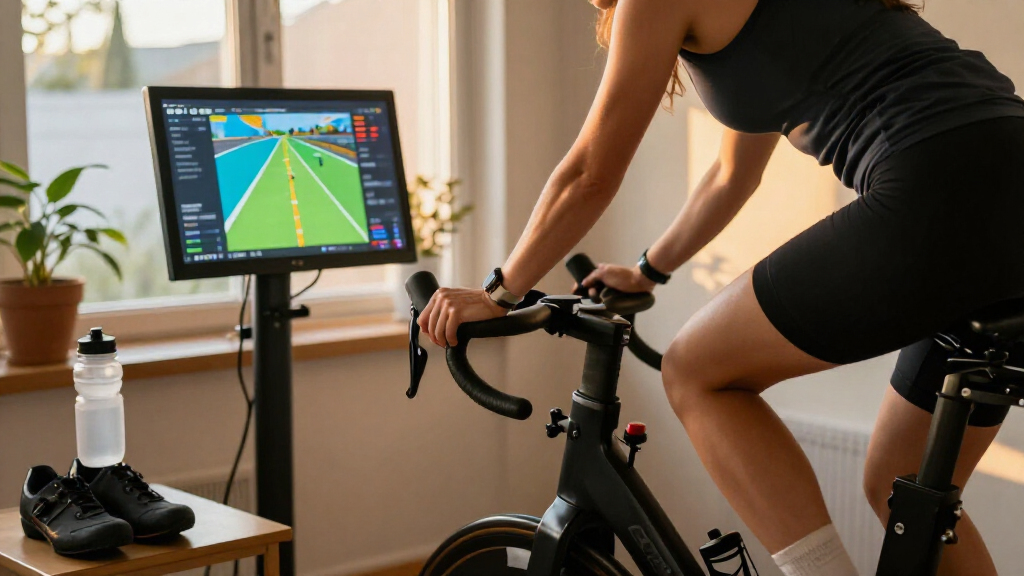
I ranked these virtual cycling components by how well each one contributes to a useful, connected indoor riding setup—not by power claims alone. I weighed the training experience, power and gradient capabilities where stated, connection options, setup demands, and the role each product can fill. I also looked at whether a component is a standalone solution or an add-on that depends on other equipment.
The ranking favors products that offer a strong mix of practical compatibility, immersive control, and everyday usability. The KICKR CORE 2 with Zwift Cog and Click leads as a broadly useful trainer package; the KICKR BIKE PRO is the premium dedicated-bike choice, not the default for every rider. Other trainers rank according to their feature mix and stated capabilities, while power pedals, gradient simulators, and the VS200 are judged by the narrower upgrades they provide. Buyers should confirm current app, bike, and accessory compatibility before ordering, especially when combining components from different brands.
Factors to Consider When Choosing Best Virtual Cycling Components
Before choosing a component, decide what part of your setup you are trying to improve. A more immersive trainer will not fix a poor bike fit, and power pedals add measurement rather than resistance control. These factors can help you avoid paying for features that duplicate equipment you already own.
Start With the Job You Need the Component to Do
Separate your goal into resistance, shifting, measurement, or riding position before comparing models. A smart trainer controls resistance and can react to virtual terrain, while power-meter pedals focus on measuring your effort. The ThinkRider VS200 addresses virtual transmission control, and the Tacx Alpine is an add-on for gradient simulation rather than a trainer. A dedicated indoor bike such as the KICKR BIKE PRO replaces much of the bike-and-trainer arrangement. A common mistake is buying a specialized component when the real need is a complete compatible training setup.
Check Compatibility Across the Whole Setup
Compatibility is a chain: the bike, drivetrain, trainer, virtual shifting controls, and training app all need to work together. Confirm the rear axle standard and frame clearance for a direct-drive trainer, then check whether the included Cog or cassette fits your intended use. The KICKR CORE 2 appears here in both a Zwift Cog and Click version and an 11-speed cassette version, so identify which arrangement matches your bike and preferences. Also check whether power pedals or gradient accessories connect to the devices and apps you already use. Buying on a familiar brand name alone can leave you with an extra adapter or a feature you cannot use.
Choose Virtual Shifting or Keep Your Existing Drivetrain
Virtual shifting can simplify indoor gear changes and reduce dependence on the bike’s rear cassette, but it changes how you interact with the drivetrain. It is attractive for riders who mainly use a compatible virtual cycling platform and want a consistent indoor setup. A cassette-based trainer may suit riders who want familiar mechanical shifting or expect to move the trainer among bikes with standard drivetrains. Neither setup is automatically more realistic: the right choice depends on your habits, bike compatibility, and platform support. Check whether the shift controls are included and whether another household bike can use the same configuration.
Treat Power and Gradient Figures as Part of the Story
Maximum wattage and simulated gradient describe capability, but most buyers will get more value from stable resistance control, accurate enough power data for their training, and a setup that connects reliably. Compare stated figures only after deciding whether you regularly sprint at high power or train on steep virtual climbs. The ThinkRider XXPRO lists 2500W and 25% gradient, while the Elite Avanti lists 2100W and 18% gradient; those numbers help distinguish their stated limits, not settle every question about ride quality. Accuracy claims, such as the Avanti’s stated ±1%, may matter more to structured training than a higher maximum output. Look for the capability you will actually use rather than treating the largest specification as the best fit.
Plan for Space, Setup, and Household Use
A trainer keeps your own bike in use but still needs a stable footprint, storage plan, and a place to leave the bike mounted or removed. A dedicated indoor bike can make indoor sessions simpler, yet it requires room and may be less convenient to share if riders need different fits. Add-ons such as the Tacx Alpine bring more movement and equipment to the training area, so account for clearance and mounting needs. Before buying, measure the available floor space and check how the equipment will be stored when not in use. If several people will ride, prioritize easy adjustment and clear compatibility over features tailored to one rider.
Decide When an Upgrade Justifies Another Component
Build the setup around the component that resolves your biggest limitation, then add accessories only when they provide a clear benefit. Power pedals can be useful if you want measurement that travels with compatible bikes, but they do not replace a smart trainer’s resistance control. A gradient simulator adds a climbing cue, though it may matter less if your sessions are mostly flat intervals. The VS200 can make sense as a virtual transmission upgrade for supported ThinkRider trainers, not as a standalone training solution. Avoid paying twice for overlapping functions, and verify that each add-on works with your trainer and software before expanding the system.
Frequently Asked Questions
Should I choose the KICKR CORE 2 with Zwift Cog and Click or the 11-speed cassette version?
Choose the Cog and Click version if you want virtual shifting and your preferred training platform supports the setup. Pick the cassette version if conventional shifting better matches your bike or you want to keep the indoor drivetrain familiar. Check the exact cassette and drivetrain compatibility before buying, particularly if you plan to share the trainer between bikes. The two packages solve different setup preferences, so neither is a universal upgrade over the other. Your intended app and shifting habits should decide the choice.
Is a dedicated indoor bike worth choosing over a smart trainer?
A dedicated bike makes sense if you want an indoor-only setup, do not want to mount and remove your outdoor bike, or need a training station that can be adjusted for different riders. The KICKR BIKE PRO also offers tilting grade simulation, which gives it a different riding experience from a standard trainer. A smart trainer is usually the more adaptable route if you want to keep using your own bicycle and familiar fit. Compare available floor space, setup time, and how often you ride indoors before committing to a dedicated bike. Do not assume the indoor bike will automatically match your outdoor fit without adjustment.
Can I use power-meter pedals instead of a smart trainer?
No: power-meter pedals measure effort, while a smart trainer supplies controllable resistance and can respond to virtual terrain. The Favero Assioma PRO RS-2 and PRO MX-2 may suit riders who want power measurement with compatible road or mountain-bike setups. They can complement a trainer, but they do not provide the trainer’s resistance changes on their own. Check pedal, cleat, shoe, and bike compatibility as well as the devices and apps that receive their data. Choose pedals for portable measurement, not as a substitute for indoor resistance control.
Do I need a gradient simulator if my smart trainer already changes resistance?
Not necessarily. A smart trainer can increase resistance to represent a climb, while a gradient simulator changes the bike’s physical angle or riding position. The Tacx Alpine and the KICKR BIKE PRO address this physical movement in different ways. Riders who mainly care about effort and structured intervals may be satisfied with resistance changes alone. If body position and a more climb-like feel matter to you, check accessory compatibility and space requirements before adding a simulator. Avoid assuming every trainer supports every gradient device.
What should I check before pairing a trainer from one brand with accessories from another?
Check the exact model’s supported connection standards, app support, mounting method, and any required accessories. ANT+ and Bluetooth can connect many training devices, but shared wireless standards alone do not guarantee that every feature works together. Verify whether the accessory sends data to the trainer, the training app, or both, and whether the intended function is supported in your software. For physical add-ons, confirm mounting and clearance requirements as well. When compatibility details are unclear, consult the manufacturers’ current compatibility information before choosing a mixed-brand setup.
Conclusion
For most riders building a connected indoor setup, my best overall pick is the Wahoo KICKR CORE 2 with Zwift Cog and Click; choose its 11-speed cassette version instead if conventional shifting better fits your bikes. The Elite Avanti is my best value-oriented choice for buyers drawn to its stated power accuracy and Wi-Fi connectivity, while the Wahoo KICKR BIKE PRO is the best premium pick for a dedicated indoor bike with tilting grade simulation. Beginners who want a direct-drive trainer package can start with the CORE 2, after checking app and bike compatibility. For specific needs, consider Favero power pedals for portable measurement, the Tacx Alpine for simulated climbing movement, or the ThinkRider VS200 for virtual transmission control on compatible trainers. Match the component to the job you need done, then confirm the rest of your setup supports it.