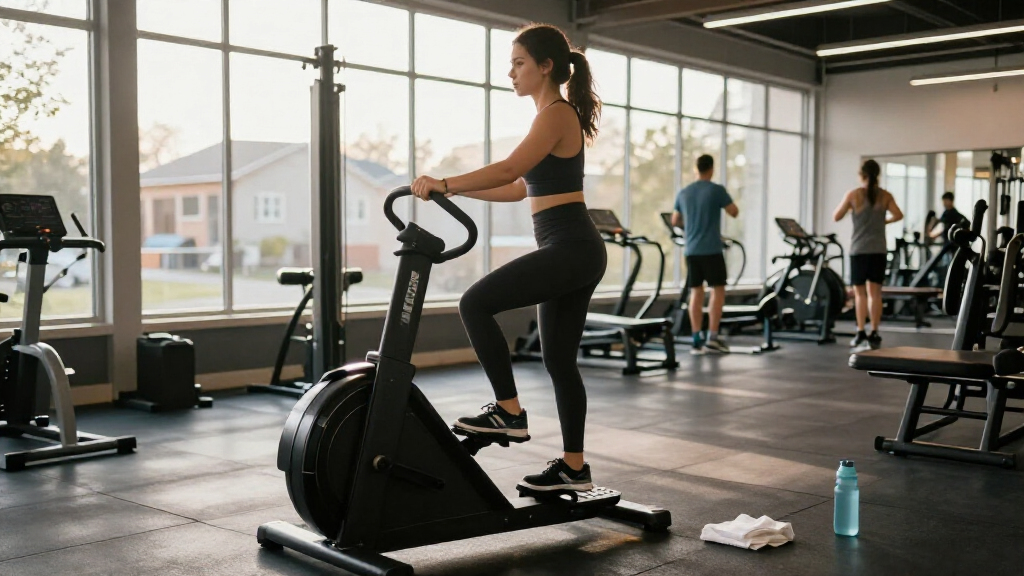
Among the best VersaClimber machines in this lineup, I’d put the Body-Solid Endurance CL300 first for buyers who prioritize a sturdier, more gym-oriented machine. The SOLE CC81 is a strong alternative for shoppers seeking a more premium stepper-style setup, while the RELIFE Folding Stair Stepper suits homes where storage space matters. The main tradeoff is between a compact, accessible design and a more substantial machine built for frequent training. Features such as folding frames, workout displays, and coaching tools also separate these options, but they do not replace checking fit and stability. Read on for the full breakdown and a pick matched to your space, experience, and workout priorities.

Get workout gear delivered free with Prime
- Fast, free delivery on millions of items
- Prime Video, Amazon Music and more included
- Member-only deals all year
Complete the kit



Key Takeaways
- The Body-Solid Endurance CL300 leads this comparison for buyers who favor a more substantial, gym-oriented design over easier storage.
- The RELIFE folding model stands out for space-conscious homes, though a folding design may not suit buyers seeking the most solid-feeling setup.
- The SOLE CC81 is the premium-leaning alternative for shoppers drawn to a stepper-style format rather than a basic vertical-climber setup.
- Computer and coaching features vary across the lineup: Ader includes a five-function mini computer, while Stamina emphasizes smart coaching.
- There is no single best fit for every home: the Body-Solid BFMC10, PETSOLA, and Ader options make buyers weigh simplicity, footprint, and workout feedback differently.
| RELIFE Folding Stair Stepper Vertical Climber for Home Gym |  | Best for Compact Storage | Model: CT02 | Frame material: Alloy steel | Weight capacity: 330 pounds | VIEW LATEST PRICE | See Our Full Breakdown |
| PETSOLA Indoor Vertical Climber Exercise Machine |  | Best for a Simple Climbing-Style Routine | Brand: PETSOLA | Frame material: Steel | Color: Deluxe | VIEW LATEST PRICE | See Our Full Breakdown |
| Body-Solid BFMC10 Mountain Climber Vertical Climber |  | Best for Simple Workout Tracking | Model: BFMC10Bt | Machine type: Vertical climber and stepper | Frame material: Alloy steel | VIEW LATEST PRICE | See Our Full Breakdown |
| Ader Vertical Climber with Five-Function Mini Computer |  | Best for Five-Metric Workout Feedback | Brand: Ader Sporting Goods | Color: Silver | Computer functions: Steps, distance, count, calories, and time | VIEW LATEST PRICE | See Our Full Breakdown |
| Body-Solid Endurance CL300 Vertical Climber Exercise Machine |  | Best Premium Training Features | Model: CL300 | Frame material: Alloy steel | Resistance: 16 levels of adjustable magnetic resistance | VIEW LATEST PRICE | See Our Full Breakdown |
| SOLE CC81 Vertical Climber Stepper Machine |  | Best for High-Capacity Training | Model: CC81 | Resistance mechanism: Magnetic (eddy current braking) | Resistance levels: 20 | VIEW LATEST PRICE | See Our Full Breakdown |
| Stamina Cardio Climber with Smart Coaching |  | Best for Guided Workouts and Easier Storage | Model number: 55-2125 | Resistance type: Magnetic | Resistance levels: 8 | VIEW LATEST PRICE | See Our Full Breakdown |
| VersaClimber machine | Model | Frame material | Warranty |
|---|---|---|---|
| RELIFE Folding Stair Stepper V | CT02 | Alloy steel | 1 year |
| PETSOLA Indoor Vertical Climbe | — | Steel | 6 months from date of purchase |
| Body-Solid BFMC10 Mountain Cli | BFMC10Bt | Alloy steel | 3 years on frame; 1 year on parts |
| Ader Vertical Climber with Fiv | — | — | — |
| Body-Solid Endurance CL300 Ver | CL300 | Alloy steel | — |
| SOLE CC81 Vertical Climber Ste | CC81 | — | 5 years on parts; 2 years in-home labor |
| Stamina Cardio Climber with Sm | — | — | — |
More Details on Our Top Picks
RELIFE Folding Stair Stepper Vertical Climber for Home Gym
I’d pick the RELIFE CT02 for a home gym where storage space matters more than detailed workout tracking. Its folding frame and 30-pound listed weight make it easier to put away than the larger Body-Solid Endurance CL300, though the CL300 offers magnetic resistance and preset programs that this RELIFE does not list. Four metal guide rails and five height settings give buyers practical stability and a way to adjust the climbing motion. The 330-pound capacity is also specified, unlike several compact options in this group. The tradeoff is a simpler workout experience: no console metrics or resistance settings are listed, and assembly is required. I’d also plan for possible lubrication if operation becomes noisy.
Pros:- Folds for more compact storage
- Four metal guide rails are designed to add stability
- Five height settings allow movement adjustment
- Listed weight capacity of 330 pounds
Cons:- Assembly is required
- Lubrication may be needed for smooth, quiet operation
- No resistance settings or workout display metrics are specified
Best for: Home exercisers with limited storage space who want a foldable climber with a stated 330-pound capacity and adjustable height settings.
Not ideal for: Buyers who want workout tracking, adjustable resistance, or a clearly documented range of training programs.
- Model:CT02
- Frame material:Alloy steel
- Weight capacity:330 pounds
- Height settings:5
- Dimensions:23.8 x 8.3 x 63.78 inches
- Item weight:30 pounds
- Warranty:1 year
Our verdict“Choose the RELIFE if fold-away storage and a stated capacity matter more to you than resistance controls or workout data.”
PETSOLA Indoor Vertical Climber Exercise Machine
The PETSOLA Indoor Vertical Climber is a straightforward choice for buyers who want a steel-framed machine for climbing-style cardio without relying on a detailed console. Its described movement engages the legs, core, and arms, giving it a fuller-body purpose than a basic stepper. Compared with the Body-Solid BFMC10, however, PETSOLA provides no listed display metrics or adjustable settings, so it offers less information for tracking sessions or tailoring the motion. The compact design is suited to home routines, but the product data leaves key fit questions unanswered: dimensions and maximum user weight are not specified. Its six-month warranty is also shorter than the one-year coverage listed for the RELIFE. I’d treat it as a simpler, less documented option rather than a feature-rich training station.
Pros:- Climbing motion is described as engaging legs, core, and arms
- Compact design is intended for home use
- Steel frame is designed to provide a stable feel
Cons:- Dimensions and maximum user weight are not specified
- Resistance and workout tracking details are not specified
- Six-month warranty is shorter than the RELIFE’s listed one-year warranty
Best for: Home users who want a compact steel-framed climber for basic full-body cardio and do not need a tracking console.
Not ideal for: Buyers who need confirmed machine dimensions, a specified weight limit, adjustable resistance, or detailed workout tracking before purchasing.
- Brand:PETSOLA
- Frame material:Steel
- Color:Deluxe
- Workout style:Indoor climbing-style cardio
- Targeted areas:Legs, core, and arms
- Warranty:6 months from date of purchase
Our verdict“Pick PETSOLA for a basic home climbing routine, but skip it if you need clear fit specifications or workout data.”
Body-Solid BFMC10 Mountain Climber Vertical Climber
I’d shortlist the Body-Solid BFMC10 for buyers who want a foldable climber with basic session feedback. Its display tracks time, distance, and calories, a useful advantage over the PETSOLA, which lists no tracking details. Adjustable settings and a non-slip foot platform add flexibility and footing support, while the compact, foldable design suits rooms where a permanently set-up machine is inconvenient. This is still a simpler machine than the Endurance CL300: the CL300 specifies 16 magnetic resistance levels, multiple handle positions, and preset console programs, none of which are listed for the BFMC10. Its product information also omits dimensions and maximum user weight, so it is harder to judge fit in advance. The warranty is more clearly stated than PETSOLA’s, with separate frame and parts coverage.
Pros:- Combines upper-body climbing with lower-body stepping
- Folds for storage in a home gym
- Display tracks time, distance, and calories
- Adjustable settings and a non-slip foot platform support workout customization and footing
Cons:- Resistance levels are not specified
- Maximum user weight and machine dimensions are not provided
- Offers fewer listed training controls than the Endurance CL300
Best for: People seeking a foldable climber with basic workout metrics and adjustable settings for a home training area.
Not ideal for: Buyers who want specified resistance levels, a known weight capacity, or confirmed dimensions before choosing a machine.
- Model:BFMC10Bt
- Machine type:Vertical climber and stepper
- Frame material:Alloy steel
- Display metrics:Time, distance, and calories
- Adjustability:Adjustable settings; details not specified
- Warranty:3 years on frame; 1 year on parts
Our verdict“Choose the BFMC10 if you want foldable storage and basic workout tracking without the CL300’s more extensive resistance and console features.”
Ader Vertical Climber with Five-Function Mini Computer
The Ader Vertical Climber earns its place for buyers who want a folding machine with more workout counters than the simpler PETSOLA. Its mini computer records steps, distance, count, calories, and time, giving users several ways to follow a session without moving up to the Endurance CL300’s 15 programs and broader console data. A two-sided base is described as stable and folds for storage, pairing a clear home-use benefit with basic workout feedback. The limits are less clear than the feature list: no dimensions, weight capacity, resistance settings, or warranty details are provided. That makes it harder to compare fit and training range with the RELIFE, which at least lists a capacity and height settings. I’d favor Ader for its five-function computer, not for buyers who need detailed build or adjustment specifications.
Pros:- Mini computer tracks five workout metrics
- Folding base supports easier storage
- Rock-climbing motion is intended to combine cardio and strength work
Cons:- Dimensions and maximum user weight are not specified
- Resistance settings are not listed
- Warranty details are not provided
Best for: Home exercisers who want a folding climber and several basic workout counters without needing preset training programs.
Not ideal for: Buyers who need a stated weight capacity, machine dimensions, adjustable resistance, or clearly documented warranty coverage.
- Brand:Ader Sporting Goods
- Color:Silver
- Computer functions:Steps, distance, count, calories, and time
- Base:Two-sided, stable, folding design
- Number of items:1
- Workout style:Rock-climbing simulation for cardio and strength training
Our verdict“Choose Ader for its five-function workout computer and foldable base, but look elsewhere if fit and resistance specifications are a priority.”
Body-Solid Endurance CL300 Vertical Climber Exercise Machine
Among these five, the Body-Solid Endurance CL300 has the most fully specified training setup: 16 magnetic resistance levels, three handle positions, and 15 console programs. Those controls make it a stronger fit for users who want to vary effort and grip rather than repeat one basic climbing motion. Its console also reports pulse, watts/calories, time, speed, and distance. Compared with the foldable RELIFE and BFMC10, the CL300 is a much larger, heavier machine, at 46 × 44 × 88 inches and 151 pounds, so it needs a dedicated space. The product data lists parts availability for five years, but gives conflicting frame warranty durations; I would verify that detail before buying. This is the feature-led choice, not the compact one.
Pros:- Sixteen adjustable magnetic resistance levels
- Three handle positions offer grip options
- Console includes 15 programs and multiple workout metrics
- Designed for low-impact upper-body, lower-body, and core cardio
Cons:- Large 46 × 44 × 88-inch footprint requires dedicated space
- At 151 pounds, it is substantially heavier than the RELIFE and other compact options
- Frame warranty duration is inconsistent in the supplied product data
Best for: Dedicated home-gym users who want multiple resistance levels, handle positions, console programs, and a broad set of workout metrics.
Not ideal for: People with limited floor or ceiling space, or buyers who prefer a lightweight folding climber for storage.
- Model:CL300
- Frame material:Alloy steel
- Resistance:16 levels of adjustable magnetic resistance
- Handle positions:3
- Arm range:1–19 inches
- Console programs:15
- Console metrics:Pulse, watts/calories, time, speed, distance
- Weight and dimensions:151 pounds; 46 × 44 × 88 inches
- Warranty and parts availability:Frame warranty listed inconsistently as lifetime or 15 years; 5 years on parts; parts availability 5 years
Our verdict“Choose the CL300 if you have room for a full-size machine and want more resistance and console features than the compact climbers provide.”
SOLE CC81 Vertical Climber Stepper Machine
The SOLE CC81 is the strongest fit here for buyers who want adjustable magnetic resistance and a high-capacity frame in a full-size climber. Its 20 resistance levels allow finer adjustments than the Stamina Cardio Climber’s eight, which helps when several people share the machine or training intensity changes over time. Adjustable handlebars and an 18-inch stride support a more tailored climbing position, while the LCD, tablet holder, and water bottle holder keep workout essentials close. The tradeoff is its substantial footprint: at 59 × 31 × 86 inches and 120 kg, it is harder to place and move than the wheel-equipped Stamina. I’d choose the CC81 for sturdy, progressive home training, but skip it if ceiling clearance or room to maneuver is limited.
Pros:- 20 magnetic resistance levels offer more adjustment options than the Stamina Cardio Climber’s eight
- Steel frame is rated for users up to 400 lbs
- Adjustable handlebars and an 18-inch maximum stride support a more tailored workout position
- LCD, tablet holder, and water bottle holder keep basic workout information and essentials nearby
Cons:- Large 59 × 31 × 86-inch footprint calls for substantial floor and ceiling clearance
- At 120 kg, it is difficult to relocate once assembled
- Its extra resistance range and heavy-duty capacity may be unnecessary for buyers seeking a simpler climber
Best for: Households seeking a sturdy climber with fine-grained resistance adjustment and a frame rated for users up to 400 lbs.
Not ideal for: Apartment users or anyone who needs to move equipment between workouts, given the machine’s large dimensions and 120 kg weight.
- Model:CC81
- Resistance mechanism:Magnetic (eddy current braking)
- Resistance levels:20
- Maximum stride length:18 inches
- Display:5 × 3-inch LCD
- Dimensions:59 × 31 × 86 inches
- Item weight:120 kg
- Maximum user weight:400 lbs
- Warranty:5 years on parts; 2 years in-home labor
Our verdict“Choose the SOLE CC81 if you want a sturdy, high-capacity climber with finely adjustable resistance and have room to leave it set up.”
Stamina Cardio Climber with Smart Coaching
The Stamina Cardio Climber suits buyers who want a low-impact workout with app-guided sessions and a machine that can be rolled aside after use. Its eight levels of magnetic resistance provide basic intensity adjustment, though the SOLE CC81’s 20 levels give users more room to fine-tune effort. The müüv app adds workout guidance, while padded grips and textured pedals offer practical contact points during a session. Built-in wheels make this a more flexible choice for shared rooms than the heavy, 120 kg SOLE, although the supplied details do not give a folded footprint or machine weight. The main compromise is the 90-day parts warranty, which is shorter than the CC81’s five-year parts coverage. Pick Stamina for guided routines and easier repositioning, not for the broadest resistance range or longest parts protection.
Pros:- Low-impact stepping combines lower-body movement with upper-body handlebars
- Eight levels of quiet magnetic resistance support basic workout adjustments
- müüv app provides guided workout options
- Built-in wheels, padded grips, textured pedals, and a phone holder add practical convenience
Cons:- Parts warranty lasts only 90 days, compared with five years on the SOLE CC81
- Eight resistance levels offer less fine adjustment than the SOLE CC81’s 20
- No machine dimensions or weight are provided here, making space planning harder
Best for: Home exercisers who want app-guided, low-impact cardio and need wheels to move their climber between workouts.
Not ideal for: Buyers who want many resistance increments or longer parts coverage; the Stamina has eight levels and a 90-day parts warranty.
- Model number:55-2125
- Resistance type:Magnetic
- Resistance levels:8
- Monitor:LCD
- App:müüv
- Storage:Built-in wheels
- Parts warranty:90 days
- Frame warranty:5 years
Our verdict“Choose the Stamina if guided sessions and wheeled storage matter more to you than a wide resistance range or longer parts coverage.”
How We Picked
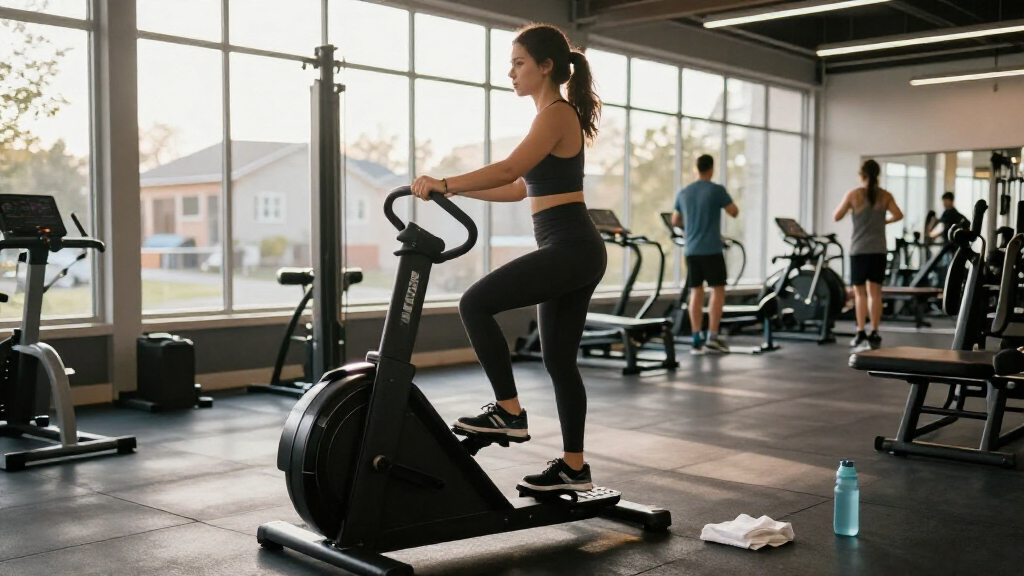
I ranked these machines around the practical questions that shape a home cardio purchase: how substantial the design appears, how easy it may be to fit into a home gym, what workout feedback is provided, and whether the machine’s format suits frequent training. I also looked at differences that affect day-to-day use, such as folding construction, stepper-style movement, and included computer or coaching features. Those details matter because a feature only helps when it fits the buyer’s space and preferred routine.
The Body-Solid Endurance CL300 ranks first for its more gym-oriented positioning, while the RELIFE earns a distinct place for storage-conscious buyers and the SOLE CC81 for those seeking a more premium stepper-style option. The remaining models are ranked by how clearly their design or included features serve a particular need, not by assuming that more features automatically make a better machine. Since specifications and fit can vary by model, buyers should verify current dimensions, user limits, assembly needs, and warranty details before choosing.
| VersaClimber machine | Model | Frame material |
|---|---|---|
| RELIFE Folding Stair Stepper V | CT02 | Alloy steel |
| PETSOLA Indoor Vertical Climbe | — | Steel |
| Body-Solid BFMC10 Mountain Cli | BFMC10Bt | Alloy steel |
| Ader Vertical Climber with Fiv | — | — |
| Body-Solid Endurance CL300 Ver | CL300 | Alloy steel |
| SOLE CC81 Vertical Climber Ste | CC81 | — |
| Stamina Cardio Climber with Sm | — | — |
Factors to Consider When Choosing Best VersaClimber Machines
Choosing a vertical climber is less about picking the longest feature list and more about matching the machine to your home, body, and training habits. I’d settle the practical fit questions first, then compare feedback features and design extras.
Match the Frame to Your Space and Storage Routine
Measure the machine’s full operating footprint, not only the space it occupies when stored. Leave clearance for arm movement, stepping, and getting on or off without bumping nearby furniture. A folding climber can help in a shared room, but only if folding and moving it are tasks you will realistically do after each workout. Buyers sometimes focus on stored dimensions and overlook ceiling height or the room needed for a full climbing motion. If the machine will stay set up, a larger, more substantial frame may be a better trade than a folding feature. Check the maker’s current assembly and storage instructions before buying.
Decide How Much Training Feedback You’ll Use
A basic computer can help track workout time or other displayed metrics, while a coaching feature may offer more direction during sessions. Neither one guarantees that the machine tracks the measures you care about, so check exactly what the display reports and whether its information is easy to read while exercising. If you already follow a training app or use a watch, a built-in display may add little. On the other hand, new exercisers may value prompts that make it easier to begin a repeatable routine. Avoid paying extra for digital features before deciding how you will use them. The Ader and Stamina options illustrate the difference between a simple multi-function computer and a coaching-oriented feature set.
Prioritize Fit, Adjustability, and Comfortable Movement
Arm reach, stride motion, and the machine’s adjustment range can shape comfort more than its overall feature count. Check the manufacturer’s stated user-height and weight guidance, and look for clear information about how the handles and stepping motion accommodate different bodies. If multiple people will use the climber, adjustment should be straightforward enough that it will not discourage shared use. A machine that feels too short or awkward can limit movement even if it fits neatly into a room. When product details do not answer a fit question, ask the seller or manufacturer rather than guessing from photos. This check is especially useful when comparing compact home models with more gym-oriented designs.
Understand the Difference Between a Climber and a Stepper-Style Machine
Vertical climbers and stepper-style machines can both support demanding cardio, but their movement patterns and feel are not identical. Think about whether you want a coordinated arm-and-leg climbing action or a stepping-led workout before choosing a format. A different mechanism can change how naturally the exercise fits your routine, even when both machines occupy a similar category. Do not select by name alone; review product images, operating instructions, and any available demonstration to understand the movement. The SOLE CC81’s stepper-style positioning makes this distinction especially relevant in this roundup. If you have mobility or joint concerns, seek appropriate professional guidance before choosing an exercise motion.
Treat Stability and Maintenance as Buying Criteria
A home climber needs to feel secure during repeated movement, so frame construction and the maker’s setup guidance deserve attention. Check what tools assembly requires, whether routine tightening or lubrication is specified, and how replacement parts and service are handled. A foldable or more compact design may simplify storage while asking for more care around setup and locking mechanisms. Buyers can also overlook floor protection and noise, which matter in apartments or shared living spaces. Review the warranty terms and confirm that they apply to the intended home use. A clear maintenance plan is more useful than assuming a machine will need no upkeep.
Choose for Training Frequency, Not an Imagined Routine
Before selecting a model, estimate how often it will be used and who will use it. Frequent or shared use may justify prioritizing a sturdier design and service support over compact storage or extra coaching features. Occasional sessions in a small home may call for a simpler machine that can be moved or put away without hassle. A common mistake is buying for an ambitious future schedule rather than the routine you can sustain now. Consider whether you want short cardio intervals, longer steady sessions, or a machine that supports both. Let that intended use determine which compromises are acceptable.
Frequently Asked Questions
Is a folding vertical climber a good choice for a small apartment?
It can be, particularly if the machine needs to share space with daily activities. First check both its folded and in-use dimensions, plus the clearance needed for climbing movement. Consider its weight and the effort required to fold or move it, since a machine that is inconvenient to store may stay in the way. Also check the floor surface and whether the manufacturer recommends a mat. In this lineup, the RELIFE folding model is the clearest space-conscious option, but storage convenience should not outweigh fit or stability.
Should I choose the Body-Solid Endurance CL300 or the SOLE CC81?
I’d start with the movement style and the role you expect the machine to play at home. The Endurance CL300 is the more gym-oriented pick in this comparison, while the SOLE CC81 is a stepper-style alternative for buyers who prefer that format. Check each model’s dimensions, user guidance, and operating motion rather than assuming one suits everyone because of its positioning. If you want a more substantial-feeling training setup, the CL300 is the stronger starting point. If stepper-style movement is what you want, the CC81 may make more sense.
Do I need a climber with a computer or coaching feature?
No; those features are useful only if they support the way you train. A basic computer can make it easier to track session information, while a coaching feature may offer more structure for someone who prefers guidance. If you already use a watch, phone, or training app, built-in feedback may be less valuable. Compare the exact metrics or prompts provided, since feature labels alone do not explain what appears during a workout. The Ader and Stamina models offer different approaches to feedback, so choose based on the kind of support you will actually use.
What should I verify before ordering a vertical climber online?
Confirm the machine’s assembled dimensions, user-height and weight guidance, and the space required for full movement. Check what assembly involves, whether delivery includes room-of-choice placement, and how returns work for a large fitness machine. Review warranty coverage for home use and find out how parts or service requests are handled. If the product page does not explain adjustment range or movement style, ask the maker before ordering. These checks can prevent a machine from arriving that does not fit your body, room, or expectations.
Which type of climber makes sense for a beginner?
A beginner may benefit most from a machine that fits comfortably, feels manageable to mount, and has straightforward controls. Coaching or workout feedback can help some people follow a routine, but it is not a substitute for a comfortable movement pattern or a safe setup. Start by checking fit guidance and reviewing how the machine operates, then decide whether built-in training prompts matter to you. The Stamina model’s coaching emphasis may appeal to buyers who want more direction, while a simpler option may suit someone who prefers to set their own pace. If you have health concerns or are new to strenuous exercise, consult a qualified professional before starting.
Conclusion
For the best overall balance in this roundup, I’d choose the Body-Solid Endurance CL300, especially for a buyer prioritizing a more gym-oriented machine. The best value-minded fit is the RELIFE folding climber for someone who needs storage flexibility and accepts the tradeoffs of a compact design. For a best premium-leaning pick, consider the SOLE CC81 if its stepper-style movement matches your preference. Beginners who want more workout direction should look at the Stamina Cardio Climber with Smart Coaching, while buyers who want a straightforward display may prefer the Ader. If your priority is a different balance of compactness or basic climbing function, compare the PETSOLA and Body-Solid BFMC10 against your space and fit needs. Before deciding, verify current dimensions, user guidance, warranty, and assembly details for the exact model.