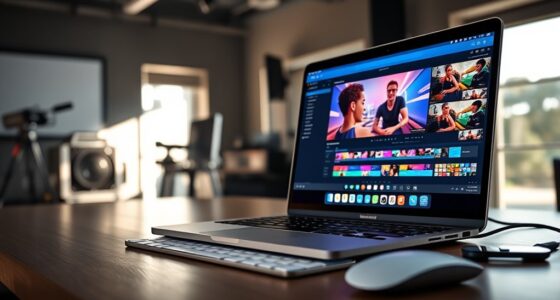
4TB MacBook Pro laptops are aimed at buyers who need large local storage for video, audio, design files, or offline work. My best overall pick is the 16-inch MacBook Pro with M5 Max, 128GB memory, and 4TB SSD, which pairs the requested capacity with high-end graphics and memory for demanding workloads. The M5 Max 4TB configuration is another strong fit for users who want flagship performance, while the 2020 Intel model with 4TB is the only listed option that offers that capacity in a smaller, older-generation package. The main tradeoffs are paying for storage you may not need, choosing between a portable 14-inch model and a larger screen, and weighing newer Apple silicon against an older Intel machine. Read on for the full breakdown and guidance on whether a 4TB configuration is the right choice.

Get workout gear delivered free with Prime
- Fast, free delivery on millions of items
- Prime Video, Amazon Music and more included
- Member-only deals all year
Complete the kit



Key Takeaways
- Only two listed laptops have 4TB SSDs: both are M5 Max configurations with 128GB memory, so buyers seeking 4TB and current high-end performance have a narrow shortlist.
- The 2020 Intel MacBook Pro is the 4TB capacity outlier in a 13-inch body, but its older processor generation makes it a different proposition from the newer Apple silicon models.
- The 2TB M5 Pro 14-inch model is the most direct alternative for buyers who want a newer compact Pro laptop but can keep some projects on external storage.
- More memory and graphics power matter only when the workload can use them: the 128GB M5 Max models suit demanding creative and technical work better than everyday office tasks.
- Screen size changes the practical choice: the 16-inch models favor a larger workspace, while 14-inch options are easier to carry and can reduce the need for a separate travel display.


| 4tb macbook pro laptop | Display | Storage | Processor | Memory |
|---|---|---|---|---|
| Apple MacBook Pro 16-inch with | 16.2-inch Liquid Retina XDR | 2TB SSD | M5 Max, 18-core CPU | 128GB unified memory |
| Apple MacBook Pro 13-inch | 13.3-inch LED, 3840 × 2160 pixels | 4TB SSD | Intel Core i5-1038NG7, 2GHz, 4 cores | 32GB LPDDR4X, 2666MHz |
| Apple 2024 MacBook Pro Laptop | 14-inch Liquid Retina XDR | 1TB SSD | M4 Pro | 48GB unified memory |
| Apple MacBook Pro Laptop with | 14.2-inch Liquid Retina XDR with nano-texture glass | 1TB SSD | M5 Pro, 15-core CPU | 24GB |
| Apple 2026 MacBook Pro Laptop | 16.2-inch Liquid Retina XDR | 1TB SSD | M5 Pro, 18-core CPU | 48GB unified memory |
| Apple 16-inch MacBook Pro with | 16.2-inch Liquid Retina XDR | 4TB SSD | — | — |
| Apple MacBook Pro Laptop with | 16.2-inch Liquid Retina XDR | 4TB SSD | Apple M5 Max, 18-core CPU, 40-core GPU | 128GB unified memory |
| Apple 2026 MacBook Pro Laptop | 14.2-inch Liquid Retina XDR | 2TB SSD | — | — |
More Details on Our Top Picks
Apple MacBook Pro 16-inch with M5 Max, 18-core CPU, 40-core GPU, 128GB RAM, 2TB SSD, Space Black
For buyers comparing 4TB MacBook Pro laptops, this M5 Max model is a performance-focused alternative, not a capacity match: its 2TB SSD holds half as much as the roundup’s 4TB configurations. Its 18-core CPU, 40-core GPU, and 128GB unified memory make it better suited than the 14-inch M4 Pro for demanding graphics, AI work, and large projects that benefit from abundant memory. The 16.2-inch Liquid Retina XDR screen and broad port selection also favor a desk-based creative setup. The tradeoff is straightforward: buyers who need a large internal archive will get more room from the 4TB M5 Max alternatives, while this laptop offers the same kind of high-end chip configuration with less storage. Its size also makes it less convenient to carry daily.
Pros:- M5 Max with a 40-core GPU suits demanding graphics and AI workloads.
- 128GB unified memory gives large projects room to run.
- 16.2-inch Liquid Retina XDR display provides a spacious, high-contrast workspace.
- Thunderbolt 5, HDMI, and SDXC support a broad range of peripherals and media.
Cons:- 2TB SSD falls short of the 4TB capacity central to this roundup.
- Large 16-inch chassis is less convenient for frequent travel.
- High-end CPU, GPU, and memory may be unnecessary for lighter everyday tasks.
Best for: Creative professionals and AI developers who prioritize GPU power and 128GB of memory over having 4TB of internal storage.
Not ideal for: Photographers, video editors, or researchers who need to keep large working libraries on the laptop and want 4TB built in.
- Processor:M5 Max, 18-core CPU
- Graphics:40-core GPU
- Display:16.2-inch Liquid Retina XDR
- Memory:128GB unified memory
- Storage:2TB SSD
- Ports:Three Thunderbolt 5, MagSafe 3, SDXC, HDMI, headphone jack
- Wireless:Wi-Fi 7, Bluetooth 6
- Color:Space Black
Our verdict“Choose this model if M5 Max graphics and 128GB memory matter more than matching the 4TB storage of the roundup’s leading configurations.”
Apple MacBook Pro 13-inch (2020), Intel Core i5 2.0 GHz, 32 GB RAM, 4 TB SSD, Space Gray (Renewed)
This is the only option here that pairs 4TB of internal storage with a compact 13-inch design, but it reaches that capacity through a renewed 2020 Intel model rather than a current Apple silicon configuration. That makes it a very different proposition from the 4TB M5 Max laptops: you get ample room for files, but a four-core Intel Core i5 and integrated Iris Plus graphics are a less compelling fit for demanding modern creative work. Its 32GB of memory helps with multitasking, and the 1.4kg body is easier to carry than the 16-inch alternatives. The condition and accessories also deserve attention: it is renewed, not Apple-certified, and accessories may be non-original. I’d shortlist it for storage capacity and portability, not for cutting-edge performance or long-term future headroom.
Pros:- 4TB SSD matches the storage capacity sought in this roundup.
- 32GB memory supports substantial multitasking for an older laptop.
- 13.3-inch size and 1.4kg weight are more portable than the 16-inch models.
- Renewed listing specifies a battery exceeding 80% of original capacity.
Cons:- Older four-core Intel processor and integrated graphics trail the M-series alternatives for demanding workloads.
- Renewed condition means it is pre-owned and not Apple-certified.
- Compatible accessories may be non-original.
Best for: Budget-conscious mobile users who need 4TB of local storage for documents, media, or archives and can work within the limits of an older Intel Mac.
Not ideal for: Professionals running intensive video, 3D, or AI workloads, or buyers who want a new Apple silicon MacBook Pro with a current-generation chip.
- Model year:2020
- Processor:Intel Core i5-1038NG7, 2GHz, 4 cores
- Memory:32GB LPDDR4X, 2666MHz
- Storage:4TB SSD
- Display:13.3-inch LED, 3840 × 2160 pixels
- Graphics:Integrated Intel Iris Plus
- Weight:1.4kg
- Condition:Renewed; battery exceeds 80% of original capacity
Our verdict“Pick this renewed 2020 model if built-in 4TB storage and a lighter body matter more than current-generation performance.”
Apple 2024 MacBook Pro Laptop with M4 Pro, 14-inch Liquid Retina XDR Display, 48GB RAM, 1TB SSD, Space Black
The 14-inch M4 Pro is a sensible choice for professionals who want a capable MacBook Pro without the footprint of the 16-inch M5 Max models, but it is not a 4TB-storage pick: its 1TB SSD offers one quarter of the capacity buyers are seeking. Its 48GB unified memory and M4 Pro chip give it a stronger workload profile than the renewed Intel 13-inch model, while the smaller screen and body make it easier to fit into a mobile routine. The Liquid Retina XDR display and ports including HDMI and SDXC are useful for editing and connecting equipment without relying on a hub. Compared with the 14-inch M5 Pro option, this model has more memory listed, but its older-generation chip and limited storage make it less suited to buyers focused on maximum capacity or newer hardware.
Pros:- M4 Pro chip is suited to demanding professional workflows.
- 48GB unified memory exceeds the 24GB configuration in the 14.2-inch M5 Pro option.
- 14-inch Liquid Retina XDR display balances workspace and portability.
- HDMI and SDXC join Thunderbolt 5 for flexible connections.
Cons:- 1TB SSD is well below the 4TB capacity sought in this roundup.
- Smaller display offers less working area than the 16.2-inch models.
- M4 Pro is an older chip generation than the M5 Pro alternatives listed.
Best for: Mobile professionals who need substantial memory and pro-level performance in a 14-inch MacBook Pro, and are comfortable keeping large files externally.
Not ideal for: Buyers who require 4TB built in, want a 16-inch screen, or need the latest-generation chip in this lineup.
- Processor:M4 Pro
- Display:14-inch Liquid Retina XDR
- Memory:48GB unified memory
- Storage:1TB SSD
- Ports:Three Thunderbolt 5, MagSafe 3, SDXC, HDMI, headphone jack
- External displays:Up to two with M4 Pro
- Color:Space Black
Our verdict“Choose this 14-inch M4 Pro for a compact, memory-rich work machine if external storage can cover the gap to 4TB.”
Apple MacBook Pro Laptop with M5 Pro, 15-core CPU, 16-core GPU, 14.2-inch Nano-Texture Display, 24GB Memory, 1TB SSD, Space Black
Among these non-4TB configurations, this 14.2-inch M5 Pro stands apart through its nano-texture display, which may suit workspaces with distracting reflections better than the standard glossy screens on the M4 Pro and 16-inch models. Its 15-core CPU and 16-core GPU offer a current-generation performance platform, while the smaller chassis keeps the setup more manageable than the 16-inch M5 Pro or M5 Max choices. Capacity is the limiting factor: the 1TB SSD is a quarter of the 4TB target, and 24GB of memory is less than the 48GB in the 14-inch M4 Pro and 16-inch M5 Pro. This pick makes more sense for portable professional work under bright lights than for large media libraries or memory-heavy projects. It also uses Thunderbolt 4 rather than Thunderbolt 5.
Pros:- Nano-texture glass is a distinguishing option for reflection-prone workspaces.
- M5 Pro chip provides a current-generation 15-core CPU and 16-core GPU.
- 14.2-inch format is more manageable to carry than the 16-inch models.
- Ports include HDMI, SDXC, MagSafe 3, and a headphone jack.
Cons:- 1TB SSD does not meet the roundup’s 4TB storage focus.
- 24GB memory is lower than the 48GB configurations listed here.
- Three Thunderbolt 4 ports are a generation behind the Thunderbolt 5 options.
Best for: Professionals who work in bright rooms or under strong overhead lighting and value a compact screen with reduced reflections.
Not ideal for: Buyers who need 4TB internal storage, higher memory capacity for large projects, or Thunderbolt 5 connectivity.
- Processor:M5 Pro, 15-core CPU
- Graphics:16-core GPU
- Display:14.2-inch Liquid Retina XDR with nano-texture glass
- Memory:24GB
- Storage:1TB SSD
- Battery life:Up to 24 hours
- Ports:Three Thunderbolt 4, MagSafe 3, SDXC, HDMI, headphone jack
Our verdict“Choose this M5 Pro if a reflection-reducing screen and compact size outweigh the need for 4TB storage or more memory.”
Apple 2026 MacBook Pro Laptop with M5 Pro Chip, 16.2-inch Liquid Retina XDR Display, 48GB RAM, 1TB SSD, Wi-Fi 7, Space Black
This 16.2-inch M5 Pro is the better fit than the 14-inch nano-texture model for buyers who want a roomy display and 48GB of unified memory, but neither configuration addresses the main 4TB requirement: this one has a 1TB SSD. Its 18-core CPU and 20-core GPU give it a newer, stronger listed chip configuration than the 14.2-inch M5 Pro with 24GB memory, while the larger screen is useful for timelines, canvases, and side-by-side windows. Wi-Fi 7, Bluetooth 6, and Thunderbolt 5 add current connectivity. The compromise is mobility: at 4.71 pounds, it is heavier than the compact 14-inch models, and its storage is far below the 4TB M5 Max alternatives. I’d pick it for screen area and memory, not for a large onboard media library.
Pros:- 16.2-inch Liquid Retina XDR display offers a broad workspace.
- 48GB unified memory supports more demanding multitasking than the 24GB M5 Pro configuration.
- 18-core CPU and 20-core GPU provide a strong M5 Pro platform.
- Thunderbolt 5, Wi-Fi 7, and Bluetooth 6 offer up-to-date connectivity.
Cons:- 1TB SSD is far below the 4TB capacity sought in this roundup.
- Listed weight of 4.71 pounds makes it less suited to frequent carrying.
- M5 Pro is a step below the M5 Max configurations for GPU-heavy workloads.
Best for: Video editors, designers, and developers who want a large screen, 48GB memory, and a current M5 Pro chip for work that can live on external storage.
Not ideal for: Travelers seeking a lightweight daily laptop or professionals who need 4TB of internal project storage.
- Processor:M5 Pro, 18-core CPU
- Graphics:20-core GPU
- Display:16.2-inch Liquid Retina XDR
- Memory:48GB unified memory
- Storage:1TB SSD
- Wireless:Wi-Fi 7, Bluetooth 6
- Ports:Three Thunderbolt 5, MagSafe 3, SDXC, HDMI, headphone jack
- Weight:4.71 pounds
Our verdict“Pick this model for a large M5 Pro workspace and 48GB memory if you can use external storage instead of requiring 4TB onboard.”
Apple 16-inch MacBook Pro with M5 Max, 18-core CPU, 40-core GPU, 128GB memory, 4TB SSD, Space Black
This configuration is the clearest fit for professionals who need 4TB of fast internal storage alongside substantial processing headroom. Its M5 Max chip and 128GB unified memory suit demanding creative and technical workloads, while the 16.2-inch Liquid Retina XDR display gives detailed work ample screen space. Compared with the similarly equipped 16-inch M5 Max with 2TB SSD, this model doubles the listed storage, which can reduce dependence on external drives for large project libraries. The tradeoff is that its configure-to-order specification may be harder to find, and the larger chassis is less appealing for frequent travel than the 14-inch M5 Pro. Apple also notes that Apple Intelligence features are in beta and can vary by region and language.
Pros:- 4TB SSD provides substantial internal space for large projects and media libraries.
- M5 Max with an 18-core CPU and 40-core GPU is specified for demanding professional workloads.
- 128GB unified memory supports memory-intensive creative and technical tasks.
- 16.2-inch Liquid Retina XDR display lists 1600-nit peak brightness and a 1,000,000:1 contrast ratio.
Cons:- Configure-to-order availability may limit which specifications are readily available.
- The 16-inch size is less convenient for buyers who prioritize a compact travel laptop.
- Apple Intelligence features are in beta and may vary by region or language.
Best for: Video editors, 3D artists, and machine-learning professionals who need 4TB internal storage and 128GB of unified memory for large active projects.
Not ideal for: Frequent travelers or buyers with lighter workloads who would rather carry the 14-inch M5 Pro, or who do not need 4TB and 128GB memory.
- Chip:Apple M5 Max
- CPU:18-core
- GPU:40-core
- Unified memory:128GB
- Storage:4TB SSD
- Display:16.2-inch Liquid Retina XDR
- Peak brightness:1600 nits
- Color:Space Black
Our verdict“Choose this M5 Max configuration if you need 4TB of internal storage and 128GB of memory more than a smaller, easier-to-carry MacBook Pro.”
Apple MacBook Pro Laptop with M5 Max, 16.2-inch Display, 128GB Memory, 4TB SSD, Space Black
This M5 Max model pairs the roundup’s 4TB storage and 128GB memory with a clearly specified set of connections: three Thunderbolt 5 ports, HDMI, SDXC, MagSafe 3, and a headphone jack. That makes it a strong match for desktop-style setups and camera workflows where adapters can interrupt work. Its M5 Max, 18-core CPU, and 40-core GPU match the core configuration of the Apple 16-inch M5 Max with 4TB SSD, so the supplied details do not establish a performance advantage over that option. Instead, this listing stands out for its explicit Wi-Fi 7 and Bluetooth 6 specifications. The 16.2-inch display and all-day battery-life claim support mobile professional work, but its size and premium-class hardware are unnecessary for buyers whose projects fit the 14-inch M5 Pro’s 2TB SSD.
Pros:- 4TB SSD and 128GB unified memory provide substantial capacity for demanding projects.
- Three Thunderbolt 5 ports, HDMI, and SDXC support a wide range of professional peripherals.
- M5 Max includes an 18-core CPU and 40-core GPU.
- Wi-Fi 7 and Bluetooth 6 are specified for wireless connectivity.
Cons:- The 16.2-inch size may be cumbersome for frequent commuting.
- Its powerful configuration is more than many general-purpose users need.
- The supplied product data does not specify display brightness or the power adapter.
Best for: Creative professionals who need 4TB internal storage, 128GB memory, and direct connections for external displays, camera cards, and Thunderbolt accessories.
Not ideal for: Buyers seeking a lightweight everyday laptop, or professionals whose workloads do not need M5 Max performance and 128GB memory.
- Processor:Apple M5 Max, 18-core CPU, 40-core GPU
- Display:16.2-inch Liquid Retina XDR
- Memory:128GB unified memory
- Storage:4TB SSD
- Ports:Three Thunderbolt 5, MagSafe 3, SDXC, HDMI, headphone jack
- Wireless:Wi-Fi 7, Bluetooth 6
- Battery life:All-day
- Color:Space Black
Our verdict“Pick this listing when you need a 4TB M5 Max MacBook Pro with an explicitly detailed port selection for a connected professional setup.”
Apple 2026 MacBook Pro Laptop with M5 Pro Chip, 14.2-inch Liquid Retina XDR Display, 24GB RAM, 2TB SSD, Space Black
This is the lineup’s more portable, lower-capacity alternative: a 14.2-inch MacBook Pro with a 2TB SSD, not a 4TB configuration. Its M5 Pro chip, 24GB unified memory, and listed connectivity make it a capable fit for professional work, but buyers choosing strictly by internal storage should favor either 16-inch M5 Max with 4TB model instead. The smaller display and 2TB drive make more sense for people who value a more compact machine and keep less active material on the laptop. Compared with those M5 Max options, this model has less listed memory and storage, so it is not the right substitute for huge project libraries or workloads that call for 128GB. It still offers Thunderbolt 5, HDMI, and SDXC connections.
Pros:- 14.2-inch Liquid Retina XDR display offers a more compact format than the 16.2-inch M5 Max options.
- M5 Pro has a 15-core CPU and 16-core GPU for professional creative and technical tasks.
- 2TB SSD provides more built-in storage than the listed 1TB M5 Pro alternatives.
- Three Thunderbolt 5 ports, HDMI, and SDXC support common professional accessories.
Cons:- It has a 2TB SSD, so it does not meet the roundup’s 4TB storage focus.
- 24GB unified memory is far below the 128GB in the M5 Max configurations.
- Its smaller display provides less workspace than the 16.2-inch models.
Best for: Creative professionals who want a 14-inch MacBook Pro with M5 Pro performance and 2TB of internal storage, and can keep larger archives elsewhere.
Not ideal for: Buyers who specifically require 4TB internal storage, 128GB memory, or the M5 Max configurations’ greater listed CPU and GPU resources.
- Chip:Apple M5 Pro
- CPU:15-core
- GPU:16-core
- Display:14.2-inch Liquid Retina XDR
- Unified memory:24GB
- Storage:2TB SSD
- Wireless:Wi-Fi 7, Bluetooth 6
- Ports:Three Thunderbolt 5, MagSafe 3, SDXC, HDMI, headphone jack
Our verdict“Choose this 14-inch M5 Pro only if portability and a 2TB drive suit you better than the 4TB capacity and higher memory of the M5 Max models.”

How We Picked
I ranked these eight configurations by how well they serve buyers searching specifically for a 4TB MacBook Pro, while also recognizing that several listed models have smaller SSDs. Storage capacity and generation came first: the two 4TB M5 Max models lead because they combine the requested capacity with current high-performance silicon, while the 2020 Intel laptop earns a distinct place for buyers who need 4TB in a smaller, older system. I then weighed memory, graphics capability, screen size, and portability against the kinds of workloads each configuration can support.
Models with 1TB or 2TB storage are included as alternatives rather than true 4TB matches. They rank according to whether their newer chips, display sizes, and memory make them sensible choices for buyers willing to use external storage or cloud workflows. I did not treat maximum specifications as automatic advantages: a high-end chip and large memory allocation are valuable for sustained creative or technical work, but can be unnecessary for general use. The resulting order favors a close match to the search, then practical alternatives with clearly different strengths.
| 4tb macbook pro laptop | Processor | Ports |
|---|---|---|
| Apple MacBook Pro 16-inch with | M5 Max, 18-core CPU | Three Thunderbolt 5, MagSafe 3, SDXC, HDMI, headphone jack |
| Apple MacBook Pro 13-inch | Intel Core i5-1038NG7, 2GHz, 4 cores | — |
| Apple 2024 MacBook Pro Laptop | M4 Pro | Three Thunderbolt 5, MagSafe 3, SDXC, HDMI, headphone jack |
| Apple MacBook Pro Laptop with | M5 Pro, 15-core CPU | Three Thunderbolt 4, MagSafe 3, SDXC, HDMI, headphone jack |
| Apple 2026 MacBook Pro Laptop | M5 Pro, 18-core CPU | Three Thunderbolt 5, MagSafe 3, SDXC, HDMI, headphone jack |
| Apple 16-inch MacBook Pro with | — | — |
| Apple MacBook Pro Laptop with | Apple M5 Max, 18-core CPU, 40-core GPU | Three Thunderbolt 5, MagSafe 3, SDXC, HDMI, headphone jack |
| Apple 2026 MacBook Pro Laptop | — | Three Thunderbolt 5, MagSafe 3, SDXC, HDMI, headphone jack |
Factors to Consider When Choosing 4tb Macbook Pro Laptops
Choosing a MacBook Pro with 4TB storage is not just a capacity decision. I would first work out how much data needs to stay on the laptop, then match the chip, memory, and screen size to the work you actually do. These broader checks can prevent paying for an oversized configuration—or buying a smaller SSD that becomes inconvenient after a few large projects.
Decide Whether 4TB Must Be Built In
Built-in storage is most useful when project files need to stay available away from a desk, on location, or without a reliable internet connection. Before choosing 4TB, estimate the space used by active projects, applications, caches, and the files you expect to add over the next few years. Separate active work from archives: finished media or older projects may be better suited to external drives or a network archive. External storage can lower the laptop’s internal capacity needs, but it adds cables, handling, and another device to protect and carry. A common mistake is buying 4TB because a current drive is nearly full without checking whether duplicated downloads or old exports are the real cause. If you routinely move large files between locations, built-in capacity can justify its footprint; if most files stay at a workstation, a smaller SSD may be a more practical fit.
Match the Chip and Memory to the Workload
Storage capacity does not make a laptop faster at rendering, compiling, or handling large creative projects; the processor, graphics hardware, and memory do that work. The 128GB M5 Max configurations in this lineup are aimed at sustained, memory-heavy tasks such as complex video projects, 3D work, and demanding software workflows. A buyer mainly writing, browsing, or working with standard office files is unlikely to benefit from that much memory or flagship graphics capability. Memory is also less convenient to change later than external storage, so choose it based on realistic workload needs rather than a vague wish to future-proof. Compare the M5 Pro options with the M5 Max models by asking whether your applications use the added graphics and memory, not simply which chip sounds more powerful. Paying for unused capability can leave less budget for peripherals, backup drives, or a suitable display setup.
Choose Screen Size for Where You Work
A 16-inch MacBook Pro gives timelines, code, design canvases, and side-by-side windows more room, which can make long sessions easier without an external monitor. A 14-inch model is more convenient for frequent travel and smaller desks, though dense interfaces may feel more constrained. Screen size also affects the role of the laptop: a 16-inch machine can function as a more complete mobile workstation, while a smaller model is easier to pair with a home or studio display. Consider the bag and accessories you already carry, since the laptop’s footprint matters every day rather than only during purchase. Avoid choosing the largest screen solely because it looks like the premium option; portability may be more valuable if you commute or travel often. Buyers who mostly work at one desk may prefer the larger workspace, while frequent travelers should weigh that benefit against carrying bulk.
Treat the 2020 Intel Model as a Different Kind of Purchase
The 13-inch 2020 Intel model stands apart from the Apple silicon configurations, so its 4TB capacity should not be treated as proof that it is the closest overall match. Its smaller size and listed 32GB RAM may appeal to someone who prioritizes local storage in a compact refurbished machine, but buyers should verify the unit’s condition, included accessories, battery state, and seller return terms. Also check that the software and peripherals you rely on remain compatible with the Intel platform and that the expected support horizon suits your plans. Refurbished status can make a configuration accessible, but it also introduces condition and longevity questions absent from a new system. Compare its total usefulness against a newer 1TB or 2TB model plus external storage rather than judging by SSD capacity alone. It is best considered by buyers with a clear reason to accept the older generation, not as the default 4TB recommendation.
Plan for Backup and Project Redundancy
A 4TB internal SSD provides working space, not protection from loss. Important work should have a second copy on a separate drive or a suitable backup system, because a laptop failure, accidental deletion, or theft can still affect files stored internally. Video, photography, and audio projects can consume storage quickly when source material, working files, and exports all remain on the machine. Set a routine for moving completed projects into an archive so active storage does not become cluttered. If you travel with sensitive or irreplaceable work, consider how backups will be made when you are away from your usual network or desk. Buyers sometimes treat a larger SSD as a substitute for a backup; it is better understood as convenience and capacity, with redundancy planned separately.
Frequently Asked Questions
Which laptops in this roundup actually have a 4TB SSD?
The listed 4TB configurations are the 16-inch MacBook Pro with M5 Max and 128GB memory, the M5 Max model with a 16.2-inch display and 4TB SSD, and the 2020 Intel 13-inch model. The two M5 Max options are the strongest matches for buyers who want 4TB alongside current high-end performance. The Intel model is an older refurbished configuration, so its capacity does not make it equivalent in generation or workload capability. Check the exact product configuration before ordering, since several other entries have 1TB or 2TB drives. If you can work with external storage, those lower-capacity models may still meet your needs.
Is a 2TB MacBook Pro a sensible alternative to a 4TB model?
It can be, if most files are either temporary or stored on an external drive, shared server, or cloud service. The 2TB M5 Pro 14-inch option in this roundup offers a newer compact configuration, but it leaves less room for large libraries and multiple active projects than the 4TB M5 Max models. Think about the size of active work, not just the total size of every file you own. Also account for project caches and exports, which can use more space than expected. If you work offline with large media libraries, 4TB is more convenient; if your workflow is desk-based, 2TB plus a planned archive may be enough.
Should I choose the older 4TB Intel MacBook Pro or a newer model with less storage?
Choose the Intel model only if its 4TB internal capacity and compact format outweigh the benefits of a newer Apple silicon system for your particular work. Before buying a refurbished unit, verify condition, battery details, seller terms, and whether your key software still supports the Intel platform. A newer M5 Pro model with 1TB or 2TB may be a better long-term fit if performance, platform compatibility, and portability matter more than keeping every file on the laptop. External storage can narrow the capacity gap, though it adds equipment to manage. Compare the complete workflow rather than treating the larger SSD as the only meaningful specification.
Do I need the M5 Max and 128GB memory to make use of a 4TB SSD?
No. The 4TB figure describes storage capacity, while the M5 Max chip and 128GB memory affect processing and memory-heavy tasks. You may need a large SSD for extensive photo, video, audio, or project libraries without needing flagship graphics or unusually high memory. Conversely, a demanding compute workflow can benefit from M5 Max performance even if active files live on external storage. Match each specification to a real bottleneck: storage for file capacity, memory for large working sets, and chip capability for compute and graphics. Paying for all three at once only makes sense when your work can benefit from them.
Is the 16-inch model worth choosing over a 14-inch MacBook Pro?
The 16-inch model is appealing when the laptop itself needs to provide a roomy workspace for editing, design, coding, or multitasking. A 14-inch option is easier to carry and can be more comfortable for frequent travel, though it offers less screen area for dense work. Decide where you spend most of your working hours and whether you regularly connect to an external display. A large built-in screen can reduce dependence on a monitor away from home, while the smaller model keeps the mobile setup lighter. Screen size is a daily-use choice, so weigh it against your travel habits rather than selecting by specification alone.
Conclusion
Best overall: I recommend the 16-inch M5 Max MacBook Pro with 128GB memory and 4TB SSD for buyers who want the requested capacity with high-end capability for demanding work. Best value: there is no clear low-cost new 4TB option in this lineup; the 2020 Intel model is a capacity-focused refurbished alternative for buyers comfortable with its age and condition checks. Best premium: choose either 4TB M5 Max configuration when large local project libraries and heavy workloads both matter, with screen size guiding the choice between them. Best for beginners: a newer M5 Pro model with 1TB or 2TB is a more approachable fit for general creative and everyday work if you do not need 4TB locally. Best for specific needs: frequent travelers should prioritize a 14-inch configuration, while buyers who work with large projects on location should favor the 4TB M5 Max models. My main recommendation is to buy 4TB only when local capacity will make a regular difference to your workflow; otherwise, a smaller SSD and a deliberate storage plan may suit you better.