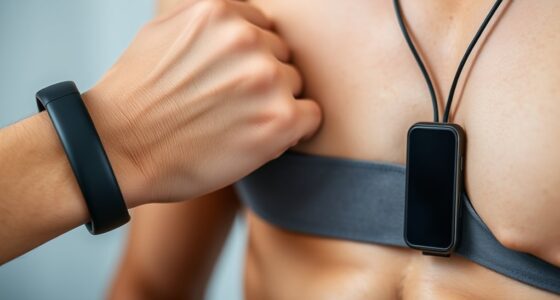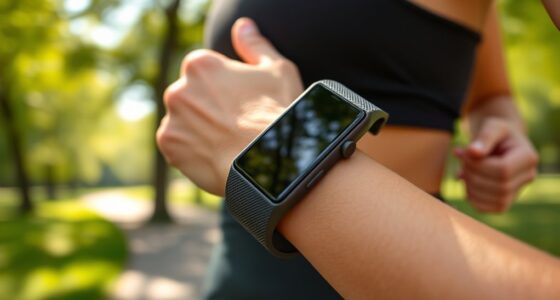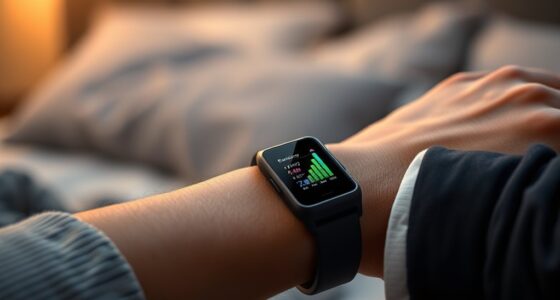
Fitness trackers for kids can be a helpful way to motivate activity and promote healthy habits, especially when used with parental oversight. They turn exercise into a fun, interactive experience and offer features like challenges and rewards. However, it’s important to balance their use to avoid increasing screen time or distractions. Proper guidance and monitoring guarantee the devices support overall well-being. Keep exploring to discover how to make the most of these tools effectively.
Key Takeaways
- Fitness trackers can motivate kids to stay active through gamified challenges and rewards.
- Parental oversight is essential to prevent overuse and manage screen time associated with device syncing.
- When integrated into a broader health routine, trackers support healthy habits and goal-setting.
- Proper monitoring ensures devices promote movement without becoming a distraction or excessive screen time.
- Their long-term effectiveness depends on balanced use, active parental involvement, and framing activity as fun and rewarding.
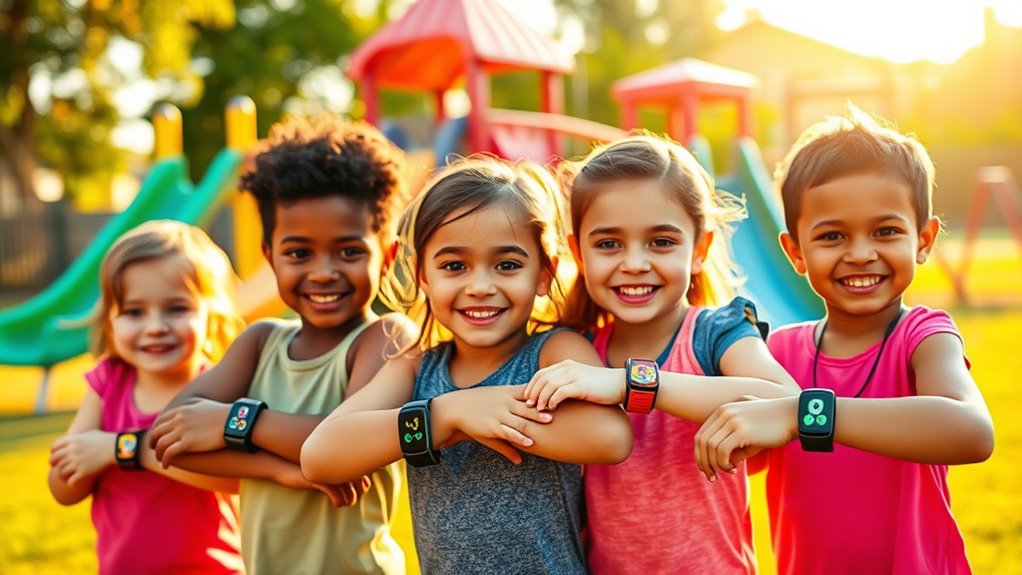
Are fitness trackers a smart way to motivate kids to stay active? It’s a question many parents ask as they consider whether these gadgets are beneficial or just another distraction. Fitness trackers can be a helpful tool for encouraging kids to move more, but it’s important to understand how they fit into your overall approach to health. One concern is that kids already spend a lot of time on screens, whether it’s gaming, watching videos, or scrolling through social media. Introducing a fitness tracker might seem like adding to their screen time, but if used correctly, it can actually promote physical activity instead of more sedentary behavior. Many trackers sync with mobile apps, which can sometimes lead to increased screen time, but they also offer features that keep kids engaged in a positive way. For example, gamified challenges or rewards can motivate your child to reach daily activity goals, turning exercise into a fun, interactive experience rather than a chore.
Parental monitoring plays an essential role here. When you set boundaries and actively oversee your child’s use of the fitness tracker, you can prevent it from becoming a source of excessive screen time. It’s vital to establish rules around when and how the device is used, especially during homework, family time, or bedtime. Monitoring helps guarantee the tracker serves its purpose—promoting movement—without encouraging compulsive checking or overuse. Many devices include parental controls that allow you to view activity logs, set limits, or even pause tracking during certain times, giving you peace of mind that your child’s screen and device usage remain balanced.
Using fitness trackers effectively involves more than just giving your kid a device and hoping they’ll become more active. It’s about integrating it into a broader conversation about health, screen time, and habits. You can encourage your child to set achievable goals, celebrate milestones, and understand that fitness is about more than just numbers on a screen. By actively participating in their activity routines and monitoring how they engage with the device, you reinforce the message that staying active is fun and rewarding. Remember, the device is a tool—its success depends on your involvement and guidance. When used thoughtfully, fitness trackers can motivate kids to move more, stay healthier, and develop lifelong habits, as long as you keep a close eye on screen time and maintain active parental monitoring.
Frequently Asked Questions
Are Fitness Trackers Suitable for Very Young Children?
Fitness trackers can be suitable for very young children if you guarantee parental guidance and consider age appropriateness. You should select devices designed specifically for young kids, which often have simplified features and safety features. Keep an eye on how your child interacts with the tracker, and set limits to prevent overuse. With proper supervision, these devices can encourage healthy habits without replacing active play or real-world interactions.
How Accurate Are Fitness Trackers for Kids?
Fitness trackers for kids can vary in data accuracy and device reliability. While they often provide useful insights into activity levels, some models may overestimate or underestimate steps and calories. You should keep in mind that these devices are not always perfectly reliable, especially for young children. Use them as motivation rather than precise measurement tools, and always consider their data within the context of overall health and activity habits.
Can Fitness Trackers Replace Physical Activity Supervision?
No, fitness trackers can’t substitute parental oversight, even if some see them as somewhat unnecessary. You need to actively supervise your child’s physical activity to ensure they’re engaging safely and appropriately. Fitness trackers can be helpful tools for motivation and monitoring, but they shouldn’t be relied on solely. Your involvement and guidance are essential to promote healthy habits, prevent overexertion, and address any concerns that technology alone can’t detect.
What Privacy Concerns Exist With Kids’ Fitness Trackers?
Imagine a vault protecting your child’s data, but sometimes, vulnerabilities open the door. Privacy concerns with kids’ fitness trackers revolve around data security, risking sensitive information leaking. You actively monitor your child’s activity, yet it’s vital to be aware that these devices collect personal data. You should make certain the manufacturer prioritizes privacy, so you can confidently balance the benefits of tracking with the need for safeguarding your child’s information.
Do Fitness Trackers Help Improve Kids’ Long-Term Health Habits?
Yes, fitness trackers can help improve your kid’s long-term health habits by providing motivation strategies like goal-setting and progress tracking. When you stay involved through encouragement and guidance, your child feels supported and inspired to stay active. This active parental involvement boosts their commitment, making it more likely they’ll develop healthy routines that last a lifetime. Combining technology with your support makes a lasting impact on their well-being.
Conclusion
Ultimately, fitness trackers for kids can be a guiding light, inspiring them to chase their dreams with energy and joy. Imagine their little eyes lighting up as they see their progress, feeling proud as they conquer each step. But remember, these devices are just tools—what truly matters is the love and encouragement you give. With your support, they’ll grow stronger, healthier, and more confident, ready to face the adventure of life with a smile.