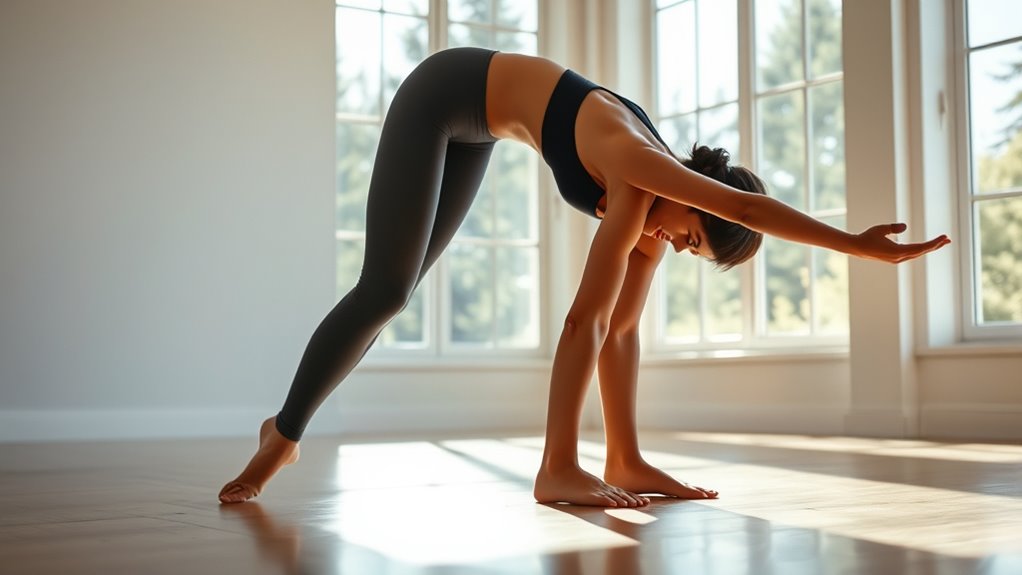

A daily stretching routine with simple moves can considerably boost your flexibility and reduce stress. Focus on gentle stretches like hamstring stretches, shoulder rolls, and hip flexor openers, holding each for 15-30 seconds. Warm up with light activity first, and breathe deeply as you stretch, avoiding pain. Consistency is key for long-term benefits such as better posture, improved mobility, and relaxation—keep going, and you’ll uncover even more ways to enhance your well-being.

Get workout gear delivered free — and shop member deals
- Fast, free delivery on millions of items
- Access to Prime Big Deal Days deals on October 6–7
- Prime Video, Amazon Music and more included
Key Takeaways
- Warm up with light activity like walking before stretching to prevent injury and improve flexibility.
- Incorporate gentle stretches targeting major muscle groups, holding each for 15-30 seconds with deep breaths.
- Focus on slow, controlled movements without bouncing or pushing into pain for safe, effective flexibility gains.
- Dedicate 5-10 minutes daily to stretching routines to see consistent improvements in mobility and stress relief.
- Support your routine with proper posture and mindful breathing to maximize relaxation and long-term benefits.

Have you ever wondered how a simple daily routine can boost your flexibility, reduce stress, and improve overall well-being? Incorporating regular stretching into your day can have a profound impact on your body and mind. The benefits of stretching go beyond just feeling good; it enhances blood flow, increases range of motion, and helps prevent injuries. When you stretch regularly, you’re supporting your muscles and joints, making everyday movements easier and more comfortable. Plus, stretching can be a powerful stress reliever, helping you clear your mind and relax tense muscles. By dedicating just a few minutes each day, you set yourself up for better posture, improved athletic performance, and a calmer, more focused mindset.
However, to maximize these benefits, it’s essential to understand common stretching mistakes. Many people tend to stretch too quickly or aggressively, which can lead to strains or muscle tears. Avoid bouncing or jerking movements, as these can cause more harm than good. Instead, stretch slowly and hold each position for at least 15-30 seconds, allowing your muscles to relax and lengthen naturally. Another mistake is ignoring discomfort; stretching should never be painful. If you feel sharp pain, ease off immediately. Also, neglecting to warm up beforehand can make stretching less effective and increase injury risk. It’s best to do a light warm-up, like walking or gentle arm circles, before deep stretches. Additionally, understanding the importance of contrast ratio can help you gauge how well your muscles and joints are responding to your stretching routine.
To develop a safe and effective stretching routine, start with simple stretches targeting major muscle groups—your hamstrings, calves, hip flexors, shoulders, and back. Focus on your breathing, inhaling deeply and exhaling slowly as you stretch. This helps your muscles relax even further. Incorporate these stretches into your daily schedule, perhaps in the morning to energize you or in the evening to unwind. Consistency is key; even five to ten minutes a day can lead to noticeable improvements in flexibility and stress levels over time. Remember, stretching isn’t about pushing your limits but about nurturing your body and mind gently and intentionally.
Frequently Asked Questions
How Long Should Each Stretch Be Held for Optimal Benefits?
For ideal benefits, you should hold each stretch for about 15 to 30 seconds, focusing on proper stretch duration and holding time. This allows your muscles to relax and lengthen effectively without risking overstretching or injury. Repeat each stretch 2-3 times, maintaining steady breathing. Remember, consistency is key. As you progress, gradually increase holding time to enhance flexibility and muscle elasticity safely.
Can Stretching Help Prevent Sports Injuries Effectively?
Think of stretching as your secret weapon against injuries. Yes, it can help prevent sports injuries by enhancing muscle recovery and flexibility, making your body more resilient. Regular stretching prepares your muscles for activity, reduces strain, and supports injury rehabilitation if needed. When you stretch consistently, you’re not just improving flexibility—you’re strengthening your defenses, ensuring your body stays agile and less prone to unexpected strains or tears.
Is It Better to Stretch Before or After Workouts?
You should stretch after your workout to maximize post exercise benefits, but incorporating some pre workout routines helps warm up muscles and reduce injury risk. Dynamic stretches before exercise prepare your body, while static stretches afterward improve flexibility and aid recovery. Balancing both guarantees your muscles stay healthy and responsive, making your fitness routine more effective. So, stretch before to activate, and after to relax and stretch your muscles fully.
Are There Any Stretches Suitable for Beginners?
Imagine a gentle breeze caressing your muscles as you start your day. For beginner-friendly stretches, try gentle stretching techniques like neck rolls, shoulder shrugs, and hamstring stretches. These moves are designed to ease your body into flexibility without strain. You’ll feel your muscles relax and loosen, building confidence gradually. Keep your movements slow and controlled, and you’ll find stretching becomes a calming, enjoyable part of your routine.
How Can I Track My Progress in Flexibility?
You can track your flexibility progress by regularly measuring your flexibility with simple flexibility measurements, like noting how far you can stretch or reach. Keep a progress journal to record these measurements and any improvements over time. This way, you’ll see your growth, stay motivated, and understand which stretches work best for you. Consistent tracking helps you stay focused and celebrate your flexibility milestones.
Conclusion
Incorporating this daily stretching routine isn’t just about increasing flexibility; it’s about nurturing your body’s silent strength. Every stretch you do is a step toward a more resilient, graceful you—like planting seeds of vitality that bloom over time. So, keep moving, stay committed, and remember: the smallest effort today can open a stronger tomorrow. After all, what’s more powerful than the simple act of caring for yourself? Your future self will thank you.
Fall Picks
fall essentials
As an affiliate, we earn on qualifying purchases.