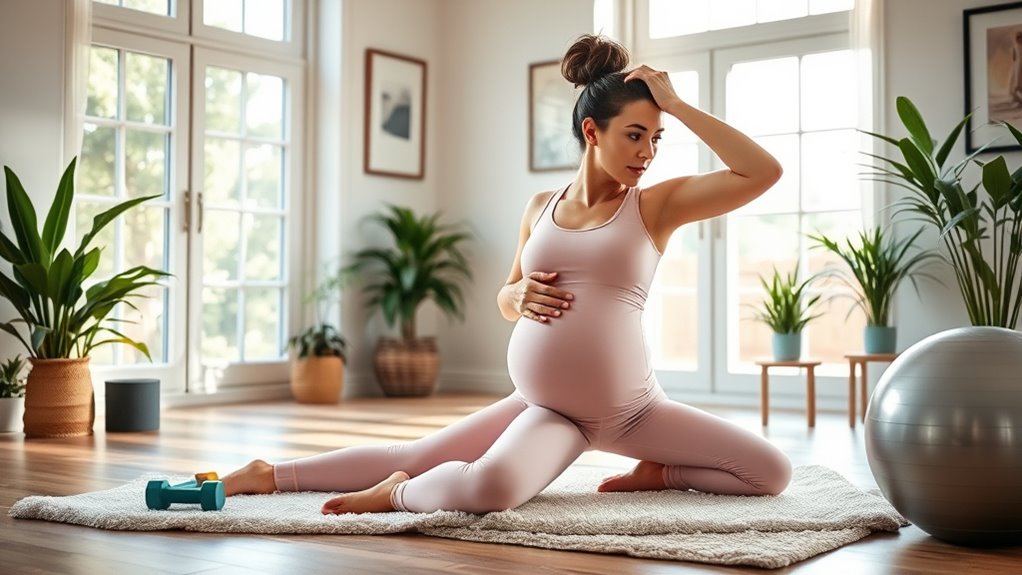

To stay fit during pregnancy at home, focus on gentle, safe exercises like walking, prenatal yoga, and pelvic floor workouts. Keep your environment comfortable, stay hydrated, and avoid high-impact activities or lying flat after the first trimester. Listening to your body and consulting your healthcare provider regularly guarantees safety. Incorporating proper nutrition and consistent, moderate activity can support your well-being; continue exploring for more tips to make this journey easier.

Get workout gear delivered free — and shop member deals
- Fast, free delivery on millions of items
- Access to Prime Big Deal Days deals on October 6–7
- Prime Video, Amazon Music and more included
Key Takeaways
- Engage in gentle activities like walking, prenatal yoga, and stretching, avoiding high-impact or risky exercises.
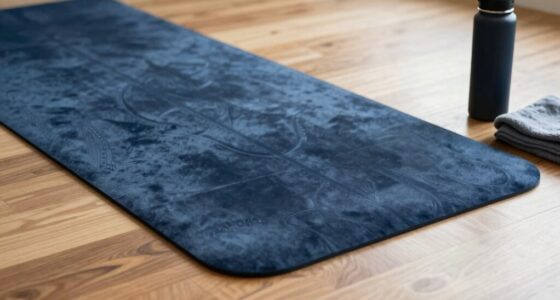
- Create a dedicated, comfortable space with a yoga mat for consistent, moderate workouts at home.
- Incorporate pelvic floor exercises such as Kegels to strengthen muscles for postpartum support.
- Prioritize proper hydration, balanced nutrition, and avoid processed foods or excessive caffeine during pregnancy.
- Always consult your healthcare provider before starting new exercise routines and listen to your body’s signals.

Staying fit during pregnancy is essential for your health and your baby’s development, and you can do it comfortably from home. Engaging in safe exercises helps improve your mood, increase energy levels, and prepare your body for childbirth and postpartum recovery. But to truly support your pregnancy journey, paying attention to prenatal nutrition is just as important. Eating a balanced diet rich in fruits, vegetables, lean proteins, and whole grains fuels your body and provides the vital nutrients your baby needs to grow. Hydration is key, so drink plenty of water throughout the day. Avoid processed foods and excessive caffeine, which can impact your health and that of your baby.
Maintaining a balanced diet and staying hydrated supports a healthy pregnancy and postpartum recovery.
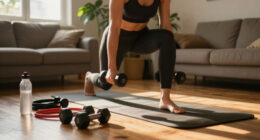
When it comes to exercising at home, start slow and listen to your body. Gentle activities like walking, prenatal yoga, or stretching routines are excellent options. These exercises can help reduce common pregnancy discomforts such as back pain and swelling while promoting better sleep and circulation. Incorporate pelvic floor exercises, like Kegels, to strengthen muscles that will support your postpartum recovery. Remember to avoid high-impact or risky exercises, especially if you experience dizziness, shortness of breath, or discomfort. Always consult your healthcare provider before beginning any new workout routine to ensure it’s safe for your specific pregnancy. Including safe exercise practices can help you stay active without risking your health or your baby’s well-being.
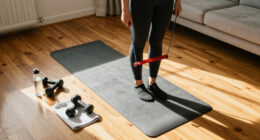
Creating a comfortable space at home makes sticking to your fitness routine easier. Set aside a dedicated area with a yoga mat or comfortable flooring, and use online videos or apps designed for prenatal workouts. Keep your movements gentle, and avoid lying flat on your back after the first trimester, as this can restrict blood flow. Focus on maintaining good posture during activities, and take frequent breaks if you feel tired. Consistency is more important than intensity, so aim for moderate activity most days of the week.
Postpartum recovery is another key reason to stay active during pregnancy. Regular, gentle exercises help your body bounce back after childbirth, reducing the risk of complications like diastasis recti or pelvic floor issues. Proper prenatal nutrition supports a quicker recovery by replenishing your energy reserves and promoting healing. Staying mindful of your body’s signals, and don’t push yourself too hard. Rest when needed, and gradually ease back into more active routines once your healthcare provider clears you. Staying committed to these practices will not only benefit your pregnancy but also set the foundation for a healthier postpartum period.
As an affiliate, we earn on qualifying purchases.
Frequently Asked Questions
Can I Start Exercising if I Was Inactive Before Pregnancy?
Yes, you can start exercising even if you were inactive before pregnancy, but it’s important to do so cautiously. Begin with gentle activities and gradually increase your activity level to build your pre-pregnancy fitness safely. Always listen to your body, and consult your healthcare provider before starting any new exercise routine. This approach helps ensure a safe, comfortable experience as you boost your fitness during pregnancy.
Are There Specific Exercises to Avoid During Pregnancy?
Yes, you should avoid exercises that involve high impact, lying flat on your back after the first trimester, and activities with a risk of falling or abdominal trauma. Focus on safe options like pelvic floor exercises and gentle core strengthening. Always listen to your body, stop if you feel discomfort, and consult your healthcare provider to tailor exercises to your pregnancy. Safety is key for you and your baby.
How Can I Stay Motivated to Exercise at Home?
To stay motivated to exercise at home, create a pregnancy workout routine that feels doable and enjoyable. Set small, achievable goals and celebrate progress. Use motivation strategies like tracking your workouts, playing your favorite music, or working out with a partner or online community. Reminding yourself of the benefits for your health and your baby helps keep you committed. Consistency turns exercise into a rewarding part of your pregnancy journey.
What Are Signs to Stop Exercising Immediately?
Listen to your body because it’s your best guide. If you experience heavy bleeding, sudden dizziness, chest pain, or severe shortness of breath, stop exercising immediately—these are signs of pregnancy complications or excessive exercise intensity. Also, if you feel contractions, fluid leakage, or persistent pain, don’t push through. Your safety is the compass that keeps your pregnancy journey smooth and healthy.
Is It Safe to Do High-Impact Workouts While Pregnant?
You should generally avoid high-impact workouts during pregnancy, especially if you’re new to exercise or have any complications. Instead, opt for prenatal yoga or low-impact cardio, which are safer and gentle on your body. These activities help maintain fitness without risking injury or discomfort. Always listen to your body, stay hydrated, and consult your healthcare provider before starting any new exercise routine during pregnancy.
pregnancy pelvic floor exercise kit
As an affiliate, we earn on qualifying purchases.
As an affiliate, we earn on qualifying purchases.
Conclusion
Staying active during pregnancy can boost your energy and improve your mood. Did you know that women who exercise regularly during pregnancy are 25% less likely to develop gestational diabetes? Remember to listen to your body, choose safe exercises, and consult your healthcare provider. With consistent effort and mindful movement, you can stay fit and healthy for both you and your baby. Keep moving safely, and enjoy this special journey!
As an affiliate, we earn on qualifying purchases.
As an affiliate, we earn on qualifying purchases.
Evergreen bestsellers Picks
bestsellers
As an affiliate, we earn on qualifying purchases.