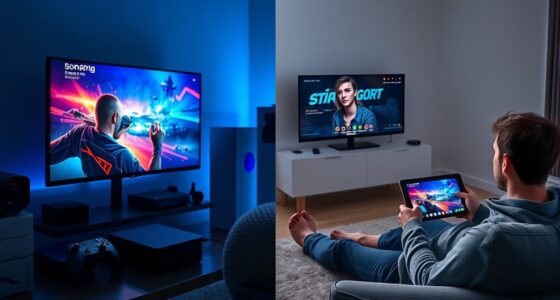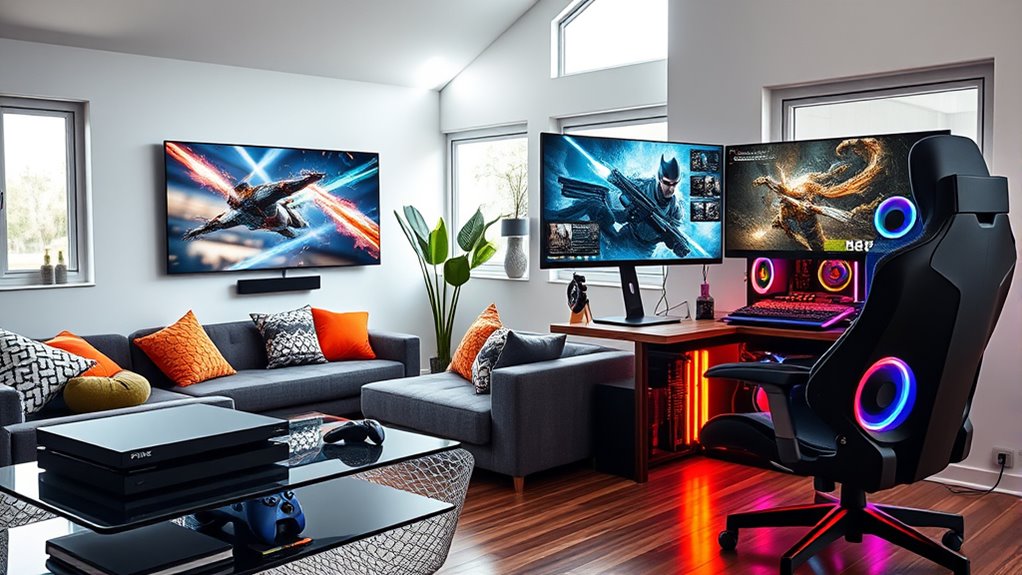

Choosing between console and PC gaming depends on your priorities. If you want a simple, plug-and-play experience with less setup, a console might be right for you. If you prefer customization, better performance, and upgrade options, then a PC could be a better fit. Consoles are usually cheaper upfront, while PCs offer more flexibility and a broader game library. To discover which suits your style best, explore the details ahead.
Key Takeaways
- Consoles offer a simple, plug-and-play experience ideal for ease of use and quick setup.
- PCs provide extensive customization, upgrades, and a broader game library for personalized gaming.
- Budget considerations differ: consoles have lower initial costs, while PCs may require larger upfront investments.
- For high-end performance and competitive gaming, PCs typically deliver better graphics and faster refresh rates.
- Choose based on your priorities: convenience and multiplayer fun favor consoles; performance and flexibility favor PCs.

When choosing between console and PC gaming, your decision often hinges on your priorities, budget, and gaming preferences. If you crave a straightforward setup with minimal fuss, consoles might be the way to go. They offer a plug-and-play experience, so you can turn on your device, insert a game, and start playing almost immediately. However, if you’re someone who values game customization, PCs provide a level of flexibility that consoles simply can’t match. With a PC, you can tweak graphics settings, remap controls, and even install mods to enhance your gameplay. This level of customization allows you to tailor your gaming experience precisely to your liking, making each session more personal and engaging.
Hardware upgrades are another critical factor in your decision. Consoles come with fixed hardware, which means you’re limited to the specifications and performance the manufacturer provides. While this keeps things simple and ensures compatibility, it also means you might need to buy a new console when newer, more powerful models come out. PCs, on the other hand, are highly upgradeable. You can swap out graphics cards, increase RAM, or install faster SSDs to improve performance over time. This upgradeability can extend your system’s lifespan and help you keep up with the latest games’ demands, often at a lower long-term cost compared to constantly purchasing new consoles.
PCs are highly upgradeable, allowing for performance improvements and longer system lifespan.
Price is a significant consideration. Consoles are generally more affordable upfront, especially since you don’t need to worry about buying additional peripherals or upgrades initially. Plus, many popular games are priced similarly across platforms, making it easier to budget. PCs, however, require a larger initial investment, especially if you aim for high-end hardware. But the upside is that you can build or upgrade your PC gradually, spreading out costs and customizing it to fit your budget and gaming needs over time. Additionally, PCs tend to have a broader library of games, including indie titles, older classics, and emulators, giving you more options beyond what’s available on consoles.
Finally, consider your gaming style. If you prefer multiplayer experiences with friends on the same couch, consoles excel with their ease of setup and consistent performance. If you’re into competitive gaming or want the highest possible graphics and performance, a gaming PC might serve you better. Additionally, the high refresh rates supported by gaming monitors and projectors can significantly enhance your gameplay, especially in fast-paced titles. Ultimately, your choice depends on what aspects matter most—cost, customization, performance, or convenience—and how much time and money you’re willing to invest in your gaming setup.
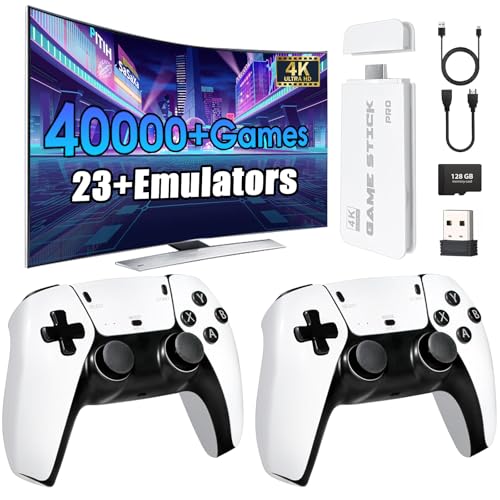
2026 New Retro Gaming Console with 23 Emulators and 40000+ Games, Plug and Play Video Games for TV, 4K HDMI Retro Game Stick with Dual 2.4G Wireless Controllers 128GB
40000+ Classic Games & 23 Built-in Emulators:This retro gaming console comes with a 128GB TF card preloaded with…
As an affiliate, we earn on qualifying purchases.
As an affiliate, we earn on qualifying purchases.
Frequently Asked Questions
Can I Upgrade a Console Like a PC?
You can’t upgrade a console like a PC due to hardware limitations. Consoles offer some console customization, but they are designed with fixed components, so you can’t swap out parts or improve performance markedly. If you want to upgrade your gaming setup easily, a PC provides flexibility to enhance hardware over time, ensuring you get the latest tech and better gaming experiences without the restrictions found in most consoles.
Which Platform Has Better Multiplayer Options?
You’ll find that PC gaming often offers better multiplayer options thanks to extensive cross-platform play, allowing you to team up with friends on different systems. Many popular multiplayer titles support cross platform play, giving you more players and smoother matchmaking. Consoles, however, excel with exclusive titles that can enhance multiplayer experiences. Ultimately, your choice depends on whether you prioritize versatile multiplayer options or exclusive games.
Do Consoles Support VR Gaming?
Yes, some consoles support VR gaming. You’ll find that console compatibility with VR headsets varies, but PlayStation consoles like PS4 and PS5 offer dedicated VR headset availability, such as the PlayStation VR. While Xbox consoles don’t currently support official VR headsets, you can still enjoy immersive experiences on compatible PlayStation devices. Keep in mind, the selection of VR options is more limited on consoles compared to PC gaming.
How Long Do Consoles Typically Last Before Replacement?
Think of your console as a trusty steed, ready for battle but with a lifespan. Generally, consoles last about 5 to 7 years, depending on hardware durability and how well you care for them. As technology advances, newer models emerge, urging you to upgrade. Proper maintenance can extend your console’s longevity, but eventually, hardware wear and tear mean it’s time for a replacement to keep your gaming experience smooth and exciting.
Are Game Prices Generally Higher on PC or Console?
Game prices are usually higher on consoles, especially for physical copies, which tend to be more expensive than their PC digital storefront counterparts. On PC, you often find discounts and sales more frequently through digital platforms like Steam or Epic Games Store. Plus, PC players can access cheaper games and avoid the premium prices often associated with console physical copies, making gaming more affordable overall.

KOTIN G60B Prebuilt Gaming PC, GeForce RTX 5070 12GB GDDR7, AMD Ryzen 7 9700X, 32GB DDR5 6000MHz, 1TB PCIe 4.0 SSD, 360mm Liquid Cooler, 11.3 Inch Smart Display, WiFi 7, ARGB Tower for 4K Gaming
1440p RTX and 4K Ready: GeForce RTX 5070 12GB GDDR7 with DLSS 4 Multi Frame Generation, ray tracing…
As an affiliate, we earn on qualifying purchases.
As an affiliate, we earn on qualifying purchases.
Conclusion
So, whether you prefer the simplicity of a console or the endless customization of a PC, remember—your choice might just depend on how much you enjoy tinkering or relaxing. Ironically, consoles promise effortless gaming but can leave you craving more, while PCs offer unlimited options but come with headaches. In the end, it’s all about what fits your style. After all, the “right” choice might just be the one that keeps you hooked—whether it’s easy or complex.

Evounic Gaming Desktop PC Computer Liquid Cooled 12-Core Processor, GeForce RTX 4060 GDDR6, 64GB RAM, 512GB NVMe SSD + 1TB HDD, WiFi 6 & BT 5.4, 7× ARGB Fans, 650W PSU, Windows 11
Gaming PC / Prebuilt Gaming PC / Gaming Desktop: Professionally built white gaming desktop PC designed for smooth…
As an affiliate, we earn on qualifying purchases.
As an affiliate, we earn on qualifying purchases.

USB 3.0 Hub, VIENON 4-Port USB Hub USB Splitter USB Expander for Laptop, Xbox, Flash Drive, HDD, Console, Printer, Camera,Keyborad, Mouse(Not for Charging)
【4-ports at Same Time】:This USB hub can easily expand one of your computer’s USB ports into four port(Does…
As an affiliate, we earn on qualifying purchases.
As an affiliate, we earn on qualifying purchases.