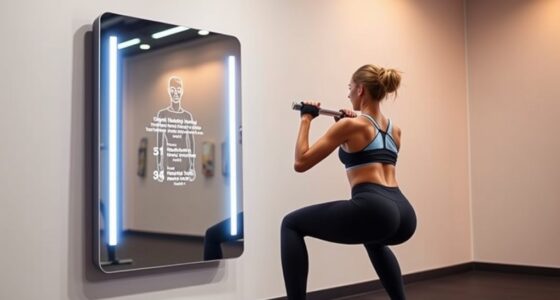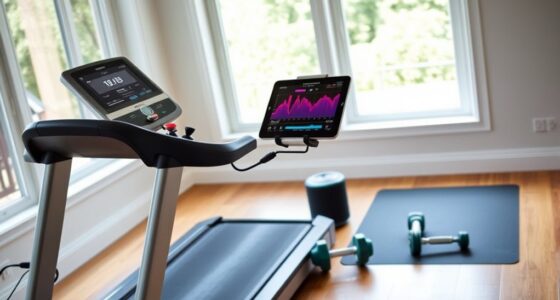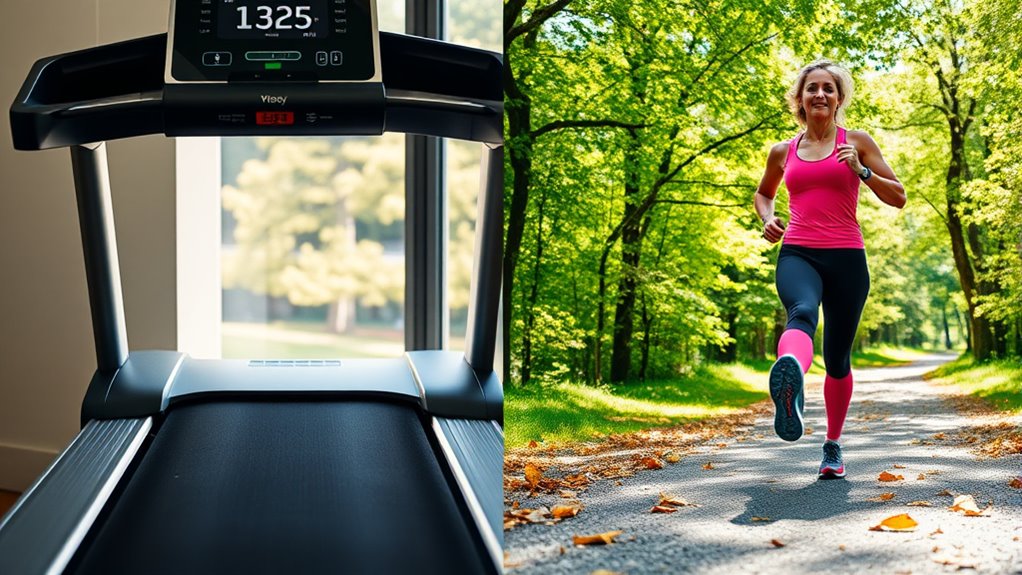

Treadmill and outdoor running differ mainly in technology: treadmills offer features like adjustable speed, incline, and built-in workout programs, giving you control over your pace and environment. Outdoor running relies on natural terrain and weather with less tech support but provides real-world conditions and scenery. Both methods improve fitness; choose based on your goals and preferences. To discover more about how these options compare and what suits you best, keep exploring these differences.
Key Takeaways
- Treadmills feature adjustable speed and incline controls for precise, consistent workouts; outdoor running relies on natural terrain and pacing.
- Treadmills often include built-in screens and tracking technology; outdoor running depends on external devices like GPS watches for data collection.
- Treadmill technology can simulate various running conditions with programmable workouts; outdoor running offers real-world terrain and environmental variability.
- Both methods track metrics like distance, time, and calories, but treadmill data can be more integrated with fitness apps and devices.
- Treadmill running provides a controlled, weather-independent environment; outdoor running offers natural scenery and environmental engagement.
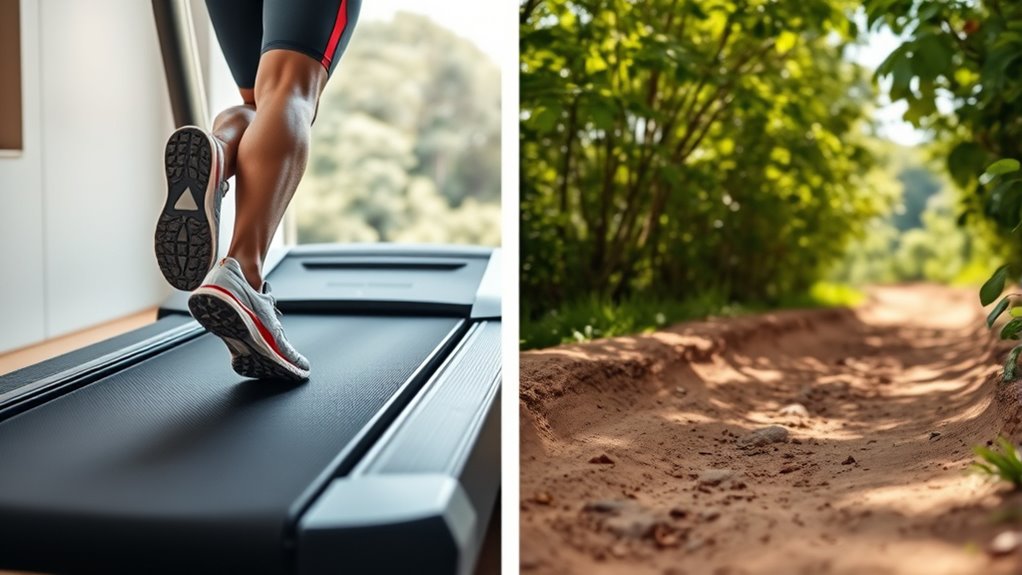
When it comes to running, choosing between a treadmill and outdoor terrain can profoundly impact your workout experience. Your decision can influence not only how often you hit the pavement or treadmill but also your overall training consistency. Treadmills provide a controlled environment, allowing you to stick to a regular schedule regardless of weather or daylight. This consistency helps you maintain your training routine without interruptions, which is essential for progressing toward your fitness goals. On the other hand, outdoor running introduces variables like wind, temperature, and uneven surfaces, which can sometimes make sticking to a strict schedule more challenging. However, these environmental factors also add a level of unpredictability that can keep your routine fresh and engaging, preventing boredom that might derail your commitment. Additionally, incorporating comparative advantage principles into your training choices can help optimize your effort and results by aligning your environment with your specific goals. Environmental impact is another key consideration when choosing between treadmill and outdoor running. Running outdoors involves minimal energy consumption beyond your own effort, making it a more eco-friendly option. You’re not relying on electricity or machinery, which reduces your carbon footprint. Plus, outdoor running often takes place in parks or natural settings, supporting local ecosystems and encouraging a connection with nature. Treadmills, especially those in commercial gyms or home setups, depend on electricity, which can contribute to environmental concerns depending on the source of power. Manufacturing and maintaining these machines also have an environmental footprint, from resource extraction to disposal. Despite these differences, both treadmill and outdoor running share foundational training principles. They can improve cardiovascular health, build leg strength, and boost mental well-being. The key is to understand how each environment interacts with your goals and lifestyle. For example, if you’re training for a race, outdoor running might better simulate race conditions, helping you adapt to real-world terrain and pacing. Conversely, if you’re seeking convenience and a consistent training schedule, a treadmill might be more suitable. Both modes of running can be integrated into your routine, offering variety and flexibility. Ultimately, your choice depends on your priorities. If training consistency and minimizing environmental impact matter most, treadmill running offers significant benefits. But if you value outdoor exposure and environmental sustainability, hitting the trails or pavement might be the better option. Both methods can complement each other, ensuring you stay active and motivated regardless of external factors. The best approach is to consider your personal goals, environment, and lifestyle to create a balanced, enjoyable running routine.
Frequently Asked Questions
How Do Weather Conditions Affect Outdoor Running Performance?
Weather conditions considerably impact your outdoor running performance. You need weather adaptation to handle heat, cold, rain, or wind, which can cause fatigue or safety concerns. Terrain variability also plays a role, making your run more challenging or easier depending on the surface. Preparing for these factors helps you stay consistent and prevent injuries, ensuring you enjoy your outdoor runs regardless of the weather or terrain changes.
Can Treadmill Running Improve Outdoor Running Endurance?
Running on a treadmill can substantially boost your outdoor endurance, transforming your stamina like a superhero’s strength. Indoor motivation helps you stay consistent, while the controlled environment builds your aerobic capacity. Although outdoor scenery is inspiring, treadmill training sharpens your pace and endurance, making each outdoor run feel easier. With regular treadmill workouts, you’ll find yourself conquering outdoor distances with confidence and resilience.
What Are the Safety Considerations for Outdoor Versus Treadmill Running?
When running outdoors, you need to prioritize safety by choosing proper footwear to prevent injuries and avoid uneven surfaces. Hydration strategies are essential, especially in hot weather, so carry water or plan routes with access to water stations. Stay aware of your surroundings, weather conditions, and traffic. On a treadmill, safety involves securing the machine and maintaining good posture, but outdoor running demands extra vigilance to stay safe.
How Does Running Surface Impact Injury Risk?
They say, “A smooth sea never made a skilled sailor,” and the same applies to running surfaces. Your running biomechanics change with different surfaces, affecting injury risk. Hard surfaces like concrete can increase impact, raising injury chances, while softer terrains like grass or trails absorb shock, aiding injury prevention. Choosing the right surface helps you stay injury-free and improves your overall running efficiency.
Are There Differences in Calorie Burn Between Treadmill and Outdoor Running?
You burn roughly the same calories running on a treadmill or outdoors, but subtle differences exist. Treadmill calorie measurement is often more accurate because it tracks your pace and heart rate directly, reflecting your energy expenditure precisely. Outdoor running might slightly increase calorie burn due to factors like wind resistance and uneven terrain, which demand more effort. Overall, both methods offer effective ways to boost your calorie burn and fitness.
Conclusion
Whether you hit the pavement or the treadmill, remember both paths lead to improved health. Think of treadmill running as a trusty indoor treadmill—steady and predictable—while outdoor running is like exploring uncharted terrain, full of surprises. I once swapped a rainy outdoor run for a treadmill, and it reminded me how each offers unique benefits. Whichever you choose, keep moving—your journey to fitness is a marathon, not a sprint.