
TL;DR
Scientists have proposed establishing a quarantine zone on the Moon for alien life forms to prevent possible contamination of Earth. The idea is currently under discussion among space and biosafety experts, with no formal plans yet. This development raises important questions about planetary protection and future space exploration protocols.
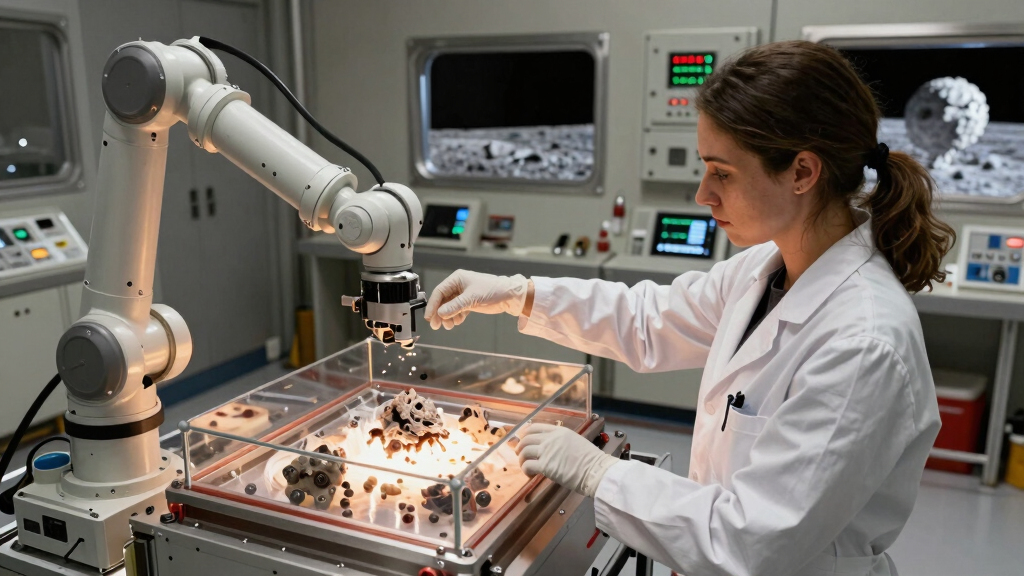
Scientists have proposed establishing a dedicated quarantine zone on the Moon to contain alien life forms, aiming to prevent their accidental or intentional arrival on Earth. This initiative comes amid increasing interest in asteroid and planetary sample missions, which may carry extraterrestrial organisms. The proposal is currently in the discussion stage among space agencies and biosafety experts, with no official implementation yet.
The proposal suggests that any extraterrestrial life discovered during future lunar missions or asteroid sample returns could be contained on the Moon, away from Earth. Advocates argue that this approach could mitigate the risk of biological contamination, which could have unknown ecological or health impacts. The idea is based on the principle of planetary protection, which aims to prevent cross-contamination between celestial bodies.
Experts involved in the discussion include astrobiologists, space agencies, and biosafety authorities. According to Dr. Emily Carter, a leading astrobiologist at the Space Research Institute, ‘The Moon could serve as a natural quarantine zone, given its lack of a substantial atmosphere and biosphere, making it an ideal site for containment.’ However, she also noted that practical challenges, such as establishing a secure quarantine infrastructure, remain significant.
There are currently no concrete plans to build such facilities, and the proposal has yet to be formally adopted by any space agency. Critics warn that logistical, ethical, and legal issues need thorough consideration before proceeding with lunar quarantine measures.
Implications for Future Space Missions and Planetary Protection
This proposal highlights the growing importance of biosafety in space exploration, especially as missions increasingly target celestial bodies that might harbor life. If implemented, quarantine measures on the Moon could set a precedent for handling extraterrestrial biological material, influencing international space law and protocols. The approach could help prevent potential pandemics or ecological disruptions caused by alien organisms, though it also raises questions about planetary stewardship and ethical boundaries in space.
space biosafety containment suit
As an affiliate, we earn on qualifying purchases.
As an affiliate, we earn on qualifying purchases.
Background on Space Biosafety and Lunar Missions
Over the past decade, advances in space technology have increased the likelihood of discovering extraterrestrial life, whether on Mars, icy moons, or through asteroid sample returns. International treaties, such as the Outer Space Treaty, emphasize protecting celestial bodies from contamination, but specific protocols for alien life are still evolving. The Moon has been a focus of exploration since the Apollo era, with recent missions aiming to establish a sustainable presence. The idea of quarantining biological samples or organisms on the Moon has been discussed sporadically but has gained renewed attention amid new scientific discoveries and mission plans.
In 2020, NASA and ESA announced plans for sample return missions from asteroids, which could carry unknown biological material. The potential for discovering alien life has prompted calls for stricter containment measures, including the possibility of lunar quarantine zones, though these remain theoretical at this stage.
“The Moon could serve as a natural quarantine zone, given its lack of a substantial atmosphere and biosphere, making it an ideal site for containment.”
— Dr. Emily Carter, Astrobiologist at the Space Research Institute

Metal Earth Apollo Lunar Module 3D Metal Model Kit Fascinations
HOBBY MODEL KIT – Unassembled model packed in an envelope with easy to follow instructions. Ideal for ages…
As an affiliate, we earn on qualifying purchases.
As an affiliate, we earn on qualifying purchases.
Unanswered Questions About Implementation and Risks
It is not yet clear whether space agencies will move forward with establishing quarantine facilities on the Moon. Key concerns include how to securely contain alien life, legal jurisdiction, and potential risks of contamination during transport or containment failures. The scientific community continues to debate the feasibility and safety of such measures, and no formal plans have been announced.
extraterrestrial sample containment container
As an affiliate, we earn on qualifying purchases.
As an affiliate, we earn on qualifying purchases.
Next Steps in Developing Lunar Quarantine Protocols
Discussions among international space agencies, biosafety authorities, and scientists are ongoing. The next steps include detailed feasibility studies, risk assessments, and the development of international guidelines. If consensus is reached, pilot projects or simulations could be initiated within the next few years to test containment strategies. The proposal remains in the early stages, with significant hurdles yet to be addressed before any practical implementation.

JOANLAB DS-900S Lab Infrared Sterilizer, 825℃ 240W
【Safely Replaces Open Flames】Engineered for laboratory safety, this sterilizer eliminates the risks of alcohol burners. It provides rapid,…
As an affiliate, we earn on qualifying purchases.
As an affiliate, we earn on qualifying purchases.
Key Questions
Could alien life on the Moon pose a threat to Earth?
At present, there is no evidence that extraterrestrial organisms exist on the Moon, and the idea of a threat remains hypothetical. However, scientists advocate caution to prevent potential biological contamination during future missions.
What are the main challenges of establishing a lunar quarantine zone?
Challenges include designing secure containment facilities, ensuring safe transport of samples, legal jurisdiction issues, and ethical considerations related to planetary protection and contamination prevention.
Is this proposal officially supported by space agencies?
No, the idea is currently under discussion among scientists and space agencies but has not yet received formal endorsement or funding.
Could such quarantine measures delay space exploration efforts?
Implementing quarantine protocols could add logistical steps and costs, potentially delaying some missions. However, proponents argue that safety measures are essential to prevent unintended consequences.
Source: rss