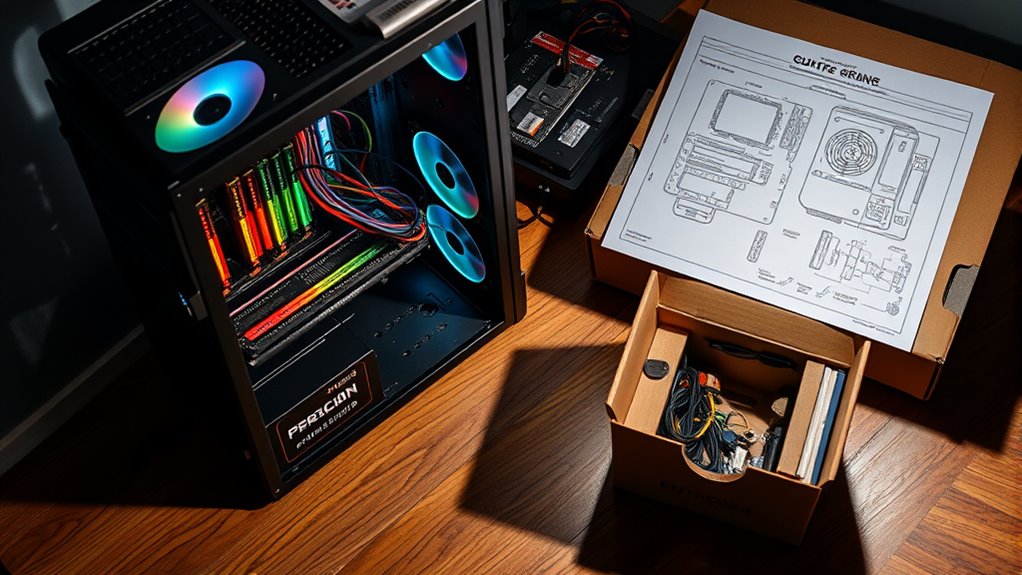

Choosing to build your own PC lets you customize components to fit your needs, often saving money and gaining a sense of achievement. You’ll have the flexibility to upgrade parts over time, but it can take time, effort, and some technical skills. Buying pre-built systems offer convenience, support, and quick setup, which suits those who prefer simplicity. To weigh all factors and discover which path suits you best, consider what’s most important for your experience and goals.

Get workout gear delivered free — and shop member deals
- Fast, free delivery on millions of items
- Access to Prime Big Deal Days deals on October 6–7
- Prime Video, Amazon Music and more included
Key Takeaways
- Building offers cost savings and customization, allowing tailored components and future upgrades based on budget and needs.
- Pre-built systems provide convenience, quick setup, warranties, and dedicated support, ideal for those with limited technical skills.
- Building a PC enhances technical knowledge and personal satisfaction but requires time, patience, and troubleshooting skills.
- Pre-built options typically come at a higher initial cost but include comprehensive support, minimizing setup effort.
- Building enables selection of energy-efficient parts, potentially reducing long-term operating costs and supporting sustainability goals.
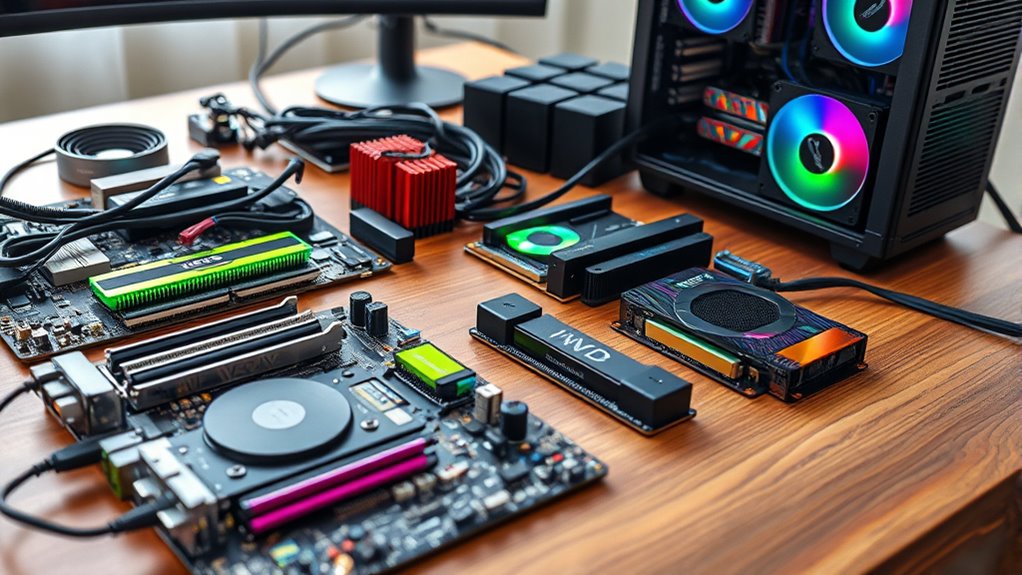
Deciding whether to build or buy a PC can be a pivotal choice that impacts your performance, budget, and overall satisfaction. When weighing your options, budget considerations play a significant role. Building your own PC can often be more cost-effective because you select each component based on your needs and budget, avoiding unnecessary expenses. You have the flexibility to allocate funds toward the parts that matter most, whether that’s a powerful graphics card, ample storage, or a high-quality processor. On the other hand, buying a pre-built system might come with a higher initial cost, but it often includes warranties, customer support, and the convenience of a ready-to-use setup. If your primary concern is saving money and tailoring your PC precisely to your financial constraints, building might be the smarter choice.
Building your own PC can save money by tailoring components to your needs and budget.
Customization options are another key factor. When you build your own PC, you gain complete control over every component—motherboard, CPU, RAM, storage, GPU, and cooling solutions. This level of customization allows you to optimize your system for specific tasks, whether gaming, video editing, or software development. You can upgrade parts as needed, ensuring your PC evolves with your growing demands. Conversely, pre-built systems tend to come with fixed configurations, limiting your ability to modify or upgrade later. While manufacturers sometimes offer customization at the point of purchase, it’s often less extensive than what you can achieve through building your own system.
Building your own PC also invites a sense of personal achievement and learning. You get to understand how each component works together, which can be rewarding and empowering if you enjoy tech. Plus, you’re more likely to identify and fix issues yourself, saving on repair costs and reducing downtime. However, it requires time, patience, and a willingness to troubleshoot. Buying a pre-built system simplifies the process; you simply choose a model that fits your needs and budget, and it’s delivered ready to use. This route appeals to those who prefer convenience and minimal hassle, especially if you’re not comfortable assembling hardware or troubleshooting technical problems.
Additionally, building your own PC provides an opportunity to incorporate energy-efficient components, which aligns with sustainable practices and can reduce long-term operating costs. Ultimately, your decision hinges on your priorities. If you want maximum control, customization, and potential savings, building your own PC is compelling. But if convenience, warranty support, and speed matter more, buying a pre-built system might be the better option. Both paths have their merits, so consider what aligns best with your budget, technical comfort, and long-term goals.
As an affiliate, we earn on qualifying purchases.
Frequently Asked Questions
How Long Does It Typically Take to Build a Custom PC?
Building your own PC typically takes about 2 to 6 hours, depending on your assembly time and component readiness. If you’re experienced, you might finish faster, around 2-3 hours. However, if you’re new, it could take longer as you double-check connections and troubleshoot. Having all components prepared and organized helps speed up the process. Patience and attention to detail are key to a smooth build.
What Are the Common Mistakes to Avoid When Building a PC?
Did you know that 60% of PC build issues stem from component compatibility errors? To avoid common mistakes, double-check all parts for compatibility before installing. Use an anti-static wrist strap to prevent static electricity damage, which is a leading cause of component failure. Also, don’t rush the process; take your time to make sure all connections are secure and aligned properly. These steps help you build a reliable, problem-free PC.
Can I Upgrade My Built PC Easily in the Future?
Yes, you can upgrade your built PC easily if you choose components with modular design and upgrade compatibility in mind. Modular cases make it simple to swap parts, while compatible motherboards and power supplies guarantee future upgrades go smoothly. Planning ahead and selecting parts designed for easy upgrades help you extend your PC’s lifespan without hassle, saving you time and money as your needs evolve.
How Much Experience Is Needed to Assemble a PC Confidently?
Assembling a PC is like riding a bike—you gain confidence with practice. If you have beginner skills and basic technical knowledge, you can confidently build your own PC with patience and careful research. Start with simple tutorials, understand components, and take your time. While more experience makes it easier, even newcomers can succeed by following guides and asking for help when needed.
What Warranties Are Available for Individual PC Components?
You’ll find manufacturer warranties vary for individual pc components, typically covering defects and failures. These warranties often range from one to three years, depending on the brand and component type. You get detailed component coverage, ensuring repairs or replacements if issues arise. Always check the specific manufacturer’s warranty policy before purchasing, so you know what’s covered and how to claim support, giving you peace of mind for your build.
As an affiliate, we earn on qualifying purchases.
Conclusion
Deciding whether to build or buy your PC is like choosing your own adventure—each path has its ups and downs. Building gives you control and satisfaction, much like crafting a work of art, but it takes time and effort. Buying offers convenience and speed, like grabbing a ready-made meal. Consider what matters most to you—customization or convenience—and make the choice that fits your needs best. Either way, your perfect PC is just a decision away.
As an affiliate, we earn on qualifying purchases.
As an affiliate, we earn on qualifying purchases.
Fall Picks
fall essentials
As an affiliate, we earn on qualifying purchases.