TL;DR

Get workout gear delivered free with Prime
- Fast, free delivery on millions of items
- Prime Video, Amazon Music and more included
- Member-only deals all year
AI is increasingly integrated into drug discovery processes, showing promise in accelerating development and reducing costs. While significant progress has been made, challenges remain, and the path forward involves further innovation and regulation.
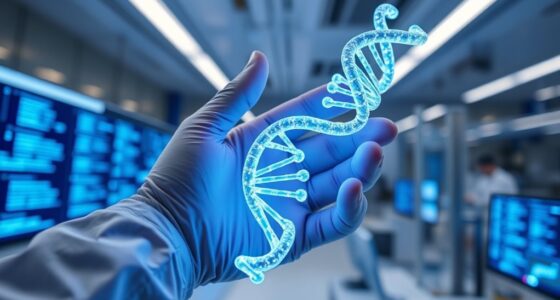
Artificial intelligence is now a key component in drug discovery, with recent advances enabling faster identification of potential drug candidates. Major pharmaceutical companies and startups are leveraging AI tools to streamline the process, marking a significant shift in how new medicines are developed. This development matters because it could reduce costs, shorten timelines, and improve success rates in bringing new drugs to market.
Over the past few years, AI algorithms—particularly machine learning models—have been employed to analyze vast datasets, including biological, chemical, and clinical information. Companies like Atomwise, Recursion Pharmaceuticals, and Novartis have reported successful pilot projects where AI predicted effective compounds more rapidly than traditional methods. For example, Atomwise claimed its AI platform identified promising drug candidates for Ebola and multiple sclerosis within months, significantly faster than conventional approaches.
Despite these successes, AI’s application in drug discovery is still in early stages. Challenges include data quality and availability, regulatory hurdles, and the need for validation through clinical trials. Experts emphasize that AI tools are currently best suited for early-stage research, such as target identification and compound screening, rather than replacing the entire drug development pipeline.
Why AI’s Role in Drug Discovery Is a Turning Point
This integration of AI into drug discovery could transform the pharmaceutical industry by dramatically reducing the time and cost associated with bringing new drugs to market. It offers the potential to identify effective treatments for complex diseases more efficiently and to personalize medicines based on genetic and biological data. However, the benefits depend on overcoming current limitations, including data privacy concerns and regulatory acceptance. Overall, AI’s role could lead to more innovative therapies and improved patient outcomes, making it a pivotal development in healthcare.
AI-powered drug discovery software
As an affiliate, we earn on qualifying purchases.
As an affiliate, we earn on qualifying purchases.
Recent Advances and Industry Adoption of AI in Pharma
Since 2020, there has been a surge in AI-driven initiatives within the pharmaceutical sector. Notable examples include the partnership between Moderna and AI firms to accelerate vaccine development, and DeepMind’s AlphaFold project, which predicts protein structures with unprecedented accuracy—an essential step in drug design. These efforts are complemented by increased investment, with venture capital funding for AI biotech startups reaching new heights. Regulatory agencies like the FDA are also beginning to develop frameworks for evaluating AI-based tools, though comprehensive guidelines are still in progress.
While early successes have garnered attention, critics caution that the transition from pilot projects to widespread clinical application remains complex. Data sharing restrictions and the need for rigorous validation are significant hurdles. Nonetheless, the momentum suggests that AI will become an integral part of the drug discovery landscape in the coming years.
As an affiliate, we earn on qualifying purchases.
Unresolved Challenges and Regulatory Gaps
While promising, AI in drug discovery faces unresolved issues including data quality and sharing, validation processes, and regulatory approval pathways. It is not yet clear how quickly these challenges will be addressed or how widespread adoption will become, especially for late-stage clinical development and approval.
protein structure prediction software
As an affiliate, we earn on qualifying purchases.
As an affiliate, we earn on qualifying purchases.
Next Steps for AI-Driven Drug Development
Future developments will likely include more collaborative efforts between industry and regulators to establish standards for AI validation. Ongoing clinical trials utilizing AI-guided candidate selection will provide further evidence of effectiveness. Additionally, advances in data sharing and integration, along with increased investment, are expected to accelerate AI’s role in drug discovery over the next few years.
As an affiliate, we earn on qualifying purchases.
Key Questions
How is AI currently used in drug discovery?
AI is mainly used for target identification, predicting drug efficacy, and screening potential compounds rapidly, reducing the time needed for early-stage research.
What are the main challenges facing AI in this field?
Key challenges include data quality and availability, regulatory approval processes, and validation of AI predictions through clinical trials.
Will AI replace human researchers in drug discovery?
Currently, AI is seen as a tool to augment human expertise, not replace it. It helps streamline tasks but requires expert oversight for validation and decision-making.
When might AI-driven drugs reach the market?
Some AI-identified candidates are already in clinical trials, but widespread commercial use is expected to take several more years, depending on validation and regulatory approval.
How will regulation adapt to AI in drug discovery?
Regulatory agencies are developing frameworks for AI validation, but clear guidelines for approval processes are still emerging.
Source: hn
Columbus Day / Indigenous Peoples' Day Picks
long weekend sales
As an affiliate, we earn on qualifying purchases.