TL;DR

Get workout gear delivered free with Prime
- Fast, free delivery on millions of items
- Prime Video, Amazon Music and more included
- Member-only deals all year
A Fit&Well report describes a writer’s 30-day trial of weighted vests and the knee swelling and training plateau they experienced after increasing load alongside running distance and speed. The report cites trainer Holly Haywood’s advice to start light, progress gradually, prioritize technique and avoid wearing a vest on long runs; it does not present clinical evidence that vests preserve muscle or bone density.
A Fit&Well report on weighted-vest exercise recounts a 30-day test in which the writer developed swollen knees and a fitness plateau after adding vest weight while also running farther and faster. The account offers practical cautions, but it does not establish that weighted vests preserve muscle or bone density; those potential benefits are presented as general rationale rather than findings from the trial.
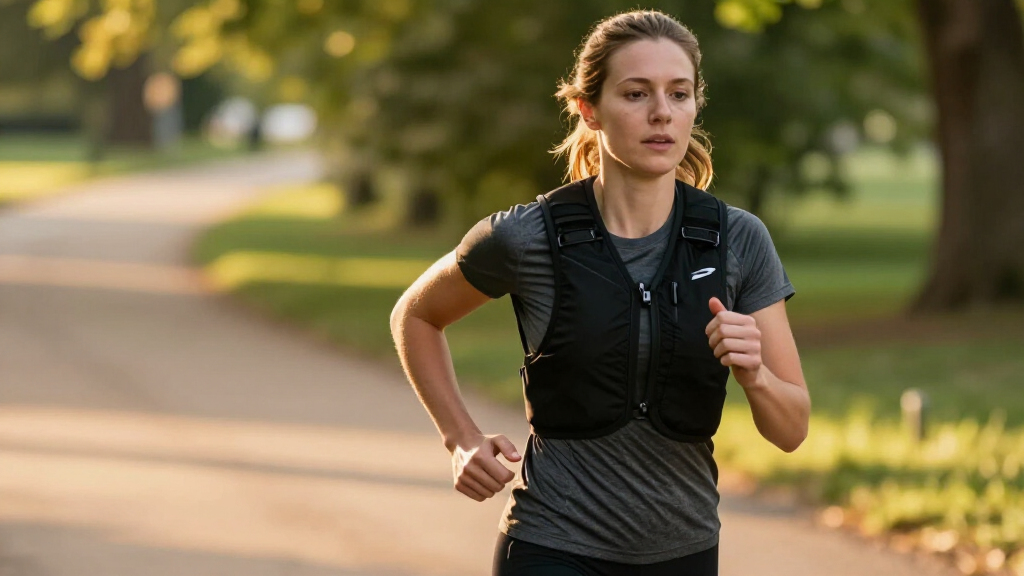
The writer tested a 6-pound G-Vest Run and a 10-pound G-Vest Icon, both from U.S. brand OMORPHO, while training for a marathon. The trial lasted 30 days. The writer says they wore a vest for workouts and increased running distance, speed or frequency at the same time, rather than changing only one element of training.
The resulting knee swelling and plateau prompted the writer to reassess how the vest was being used. The report’s central lesson is to start with a light load and add resistance in small steps only when movement remains comfortable and technique stays sound. Trainer Holly Haywood, lead instructor at London health club chain Third Space, recommends beginning at no more than 5% of body weight for resistance training. The report’s author suggests an even lighter 1% to 2% starting point for running, based on their experience, not a cited clinical standard.
Haywood advises against using a vest on long runs and says added load can place extra strain on the knees, hips and ankles if a vest is too heavy or worn incorrectly. The writer found the vest more useful for bodyweight movements such as push-ups, dips and pull-ups, where it added resistance without requiring more repetitions. Haywood’s guidance is to establish good movement patterns first and change only one training variable at a time.
Safer Ways to Add Training Load
The report matters to readers considering a vest because it distinguishes adding resistance from simply making a workout harder in several ways at once. More load can increase exercise demand, but increasing vest weight, distance, pace and frequency together makes it difficult to tell how the body is responding and may increase stress on joints or compromise form.
That caution is especially relevant for people who run or walk for long periods. Haywood says a weighted vest makes the body work harder and can increase calories burned, while warning that excess or poorly fitted load can strain joints. These are trainer comments reported by Fit&Well, not proof that a vest is suitable for every person or that it prevents injury. The writer’s knee symptoms are a personal account, not evidence of a predictable outcome for all users.
The headline’s reference to preserving muscle and bone density should also be read carefully. The article discusses load-bearing exercise as a potential way to address age-related muscle loss and bone weakening, but the 30-day product test did not measure changes in muscle mass or bone density. Readers should not treat the account as clinical evidence that a particular vest produces those outcomes.
As an affiliate, we earn on qualifying purchases.
What the 30-Day Trial Tested
Weighted vests have drawn attention from athletes and social media personalities, according to the Fit&Well report. Its underlying account is a personal equipment test, not a controlled research study: one writer used two vest models while preparing for a marathon. The report does not describe a comparison group, clinical measurements or a method for assessing bone density or muscle preservation.
The writer’s training load changed in several ways during the trial. In retrospect, they say they should have kept distance and pace consistent while introducing a light vest. Haywood recommends building vest use much as a runner builds mileage, beginning with a 15-to-20-minute brisk treadmill walk. If that feels comfortable, the report suggests adjusting one factor, such as incline or speed, in a later session rather than raising several demands at once.
For strength-style exercises, the same progression principle applies: learn the movement and maintain sound form before adding load. The writer says the fitted design of the tested vest allowed them to perform several bodyweight exercises without it striking the floor or limiting movement. That observation describes those particular products and the writer’s experience, not a general assessment of every vest.
“The general recommendation, like with most resistance training, is to start light and gradually build up as strength and comfort with the vest improve.”
— Holly Haywood, lead instructor at Third Space, as quoted by Fit&Well
adjustable weighted vest for strength training
As an affiliate, we earn on qualifying purchases.
As an affiliate, we earn on qualifying purchases.
Benefits Not Measured in the Trial
The report does not establish whether weighted-vest exercise preserves muscle mass or bone density. It provides no clinical measurements, study design or evidence that the tested products affect those outcomes. The proposed benefits are background framing, while the main evidence in the account is one writer’s experience and a trainer’s recommendations.
It is also unclear how the writer’s knee swelling related to the vest alone, because they were marathon training and changed several aspects of their workouts at once. The source gives no medical assessment of the swelling and does not report a diagnosis. It does not specify a publication date, either. Haywood’s suggested starting percentages and progression are advice attributed to her in this report, not a universal prescription for people with different health histories or fitness levels.
lightweight weighted vest for bodyweight exercises
As an affiliate, we earn on qualifying purchases.
As an affiliate, we earn on qualifying purchases.
Progress Slowly and Watch Form
The report gives no follow-up findings from the writer and no further test schedule. Its practical recommendation is to begin with a short, manageable session, keep other training demands steady and assess whether the vest affects comfort or technique. Increase only one factor at a time, and reduce the load or stop using the vest if it causes joint discomfort. People with pre-existing health concerns, pain or uncertainty about appropriate loading can seek advice from a qualified trainer or health professional before changing their routine.
Any claim about long-term muscle or bone effects would require evidence beyond this product trial. For now, the source supports a cautious reading: a vest can add resistance to exercise, but the report does not show that it preserves muscle or bone density, nor does it define a safe approach for every individual.
weighted vest for walking and gym workouts
As an affiliate, we earn on qualifying purchases.
As an affiliate, we earn on qualifying purchases.
Key Questions
Did the Fit&Well trial show that weighted vests preserve muscle or bone density?
No. The report describes a 30-day personal test and does not report measurements of muscle mass or bone density. It raises those outcomes as a possible rationale for load-bearing exercise, not as a result of the trial.
What starting weight did the trainer recommend?
Holly Haywood recommended starting at no more than 5% of body weight for resistance training and increasing gradually if technique remains sound. Fit&Well’s writer suggested starting at 1% to 2% for running based on personal experience; that lower figure was not presented as a formal guideline.
Should people wear weighted vests on long runs?
Haywood advises against long runs with a vest, citing the added strain that excessive or incorrectly worn load can place on the knees, hips and ankles. The report’s writer also describes stopping a long run after experiencing substantial fatigue.
How should someone introduce a vest into workouts?
The report recommends starting with a short, manageable activity, such as a 15-to-20-minute brisk walk, and changing only one variable at a time. Maintain good form and stop or reduce the load if discomfort develops. Seek professional advice if you have health concerns or are unsure what is appropriate.
Source: rss
Fall Picks
fall essentials
As an affiliate, we earn on qualifying purchases.