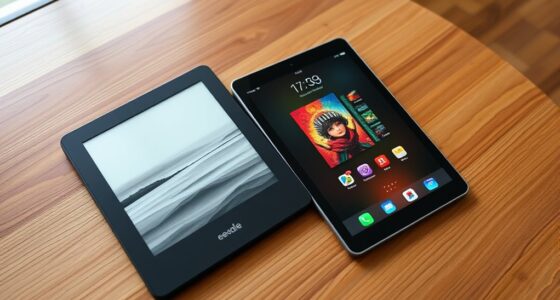

Turn your old gadgets into something useful and fun by repurposing them for new purposes. You can transform outdated smartphones into security cameras, use broken tablets as digital photo frames, or create vintage-style home decor displays. With a little creativity, old cameras can become art projects, and devices can serve as smart home hubs. If you’re curious about turning clutter into clever solutions, there’s plenty more inspiring ideas to explore below.
Key Takeaways
- Repurpose old tablets as smart home hubs with customized software and wall mounts for centralized device control.
- Transform broken tablets into digital photo frames by disabling functions and setting up slideshows for personal displays.
- Use vintage cameras for artistic photography projects, experimenting with lighting, film types, and manual focus techniques.
- Create decorative vintage tech displays with retro gadgets like radios and TVs, enhancing home decor with lighting and storytelling.
- Extend device lifespan through energy-efficient settings, regular updates, and proper calibration to optimize performance and security.
Transforming Old Smartphones Into Security Cameras
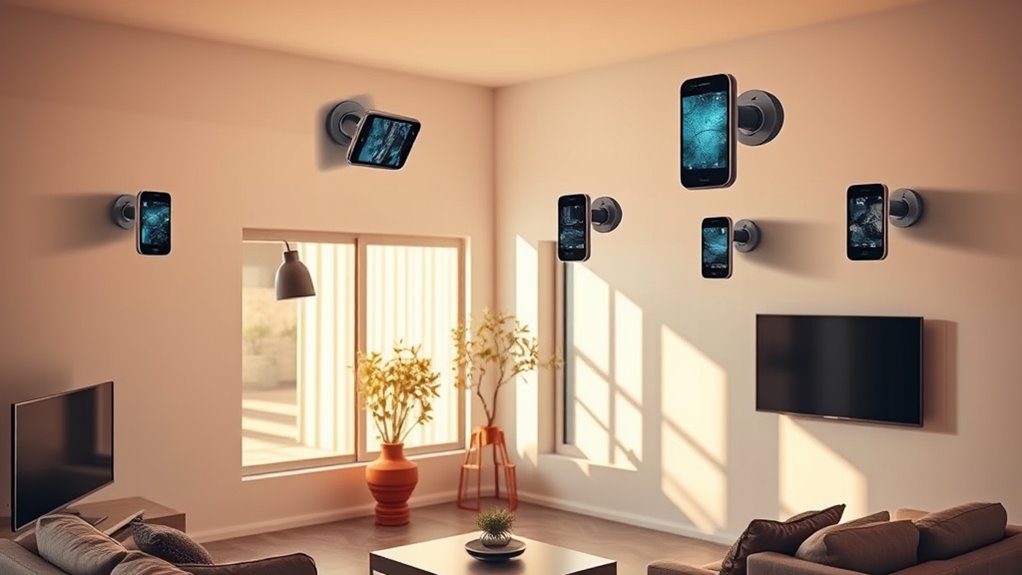
If you have an outdated smartphone gathering dust, you can easily repurpose it as a security camera. Setting up your device as a security camera involves a straightforward security camera setup. Download a trusted security camera app that supports live streaming and motion detection. Once installed, position your phone in a strategic spot to monitor an entryway or room. Enable motion detection alerts to get instant notifications whenever movement is detected. This way, you can keep an eye on your property without extra expenses. Make sure your Wi-Fi connection is stable for smooth video feed and alerts. With minimal effort, your old smartphone becomes a vigilant security tool, providing peace of mind and enhancing your home security system. Additionally, selecting a device with good color accuracy can improve the clarity of the video footage captured. Ensuring your device has a good camera resolution can further enhance the quality and detail of the footage. To optimize your setup, consider power management strategies to keep your device charged if used for extended periods. Implementing energy-efficient settings can help reduce power consumption and extend usage time. Properly maintaining your device’s battery health can extend its usability as a security camera over time.
Repurposing Broken Tablets as Digital Photo Frames

Even broken tablets can find new life as charming digital photo frames. You don’t need a fully functional device to showcase your favorite memories. Simply disable the broken tablet’s main functions and set it to display slideshow mode. Its tablet displays can deliver vibrant images and smooth progressions, making it a perfect digital photo frame. Use free or inexpensive apps to automate photo rotations and adjust settings for ideal viewing. Place the tablet in a stand or frame to create a dedicated display area. This approach not only repurposes your old device but also adds a personal touch to your home decor. Broken tablets become functional art pieces that keep your cherished moments in sight, offering a practical and creative way to extend their usefulness. By focusing on Free Floating concepts, you can further customize your display setup and integrate eco-friendly practices into your repurposing project. Additionally, considering pinball machines as decorative elements or conversation starters can add a nostalgic or playful touch to your space while emphasizing creative reuse.
Creating a Vintage Tech Display for Home Decor

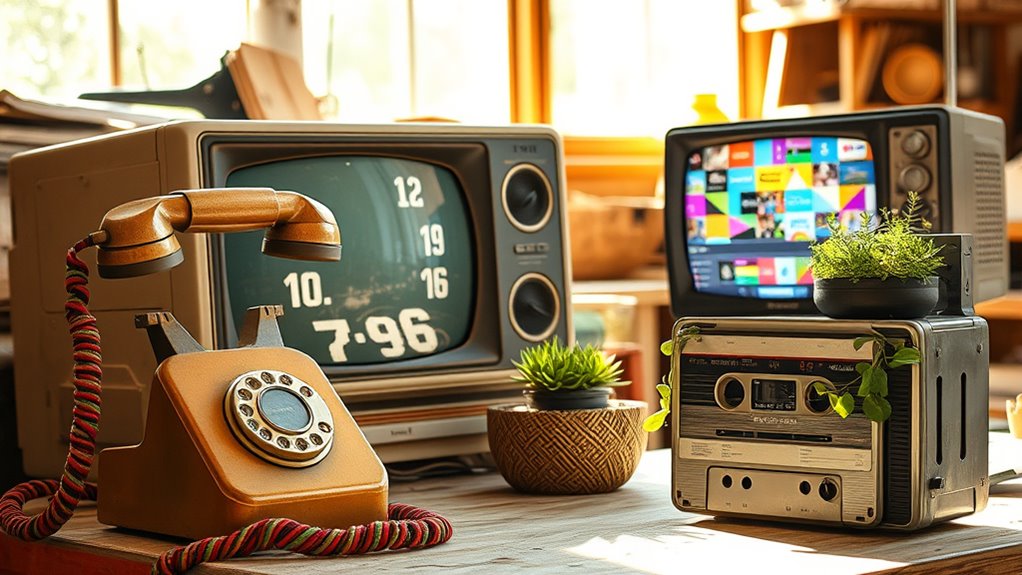
Transforming obsolete gadgets into vintage tech displays adds a nostalgic charm to your home decor. Arrange old radios, vintage TVs, and early computers on shelves or mantels to create a captivating retro display. Group similar items for a cohesive look, or mix different pieces for an eclectic vibe. Clean and polish each gadget to enhance their visual appeal, highlighting their unique design features. Use lighting to accentuate the retro display, creating a warm, inviting atmosphere. Incorporate signage or labels with fun facts about each device for an engaging touch. This approach transforms your space into a nostalgic decor haven, making your home feel cozy and historically rich. Plus, it’s a perfect conversation starter, celebrating the beauty of old tech in a stylish, meaningful way. Incorporating connected equipment and smart tech elements can modernize your vintage display, blending the past with the future of wellness and lifestyle habits.
Using Old Cameras for Unique Art Projects
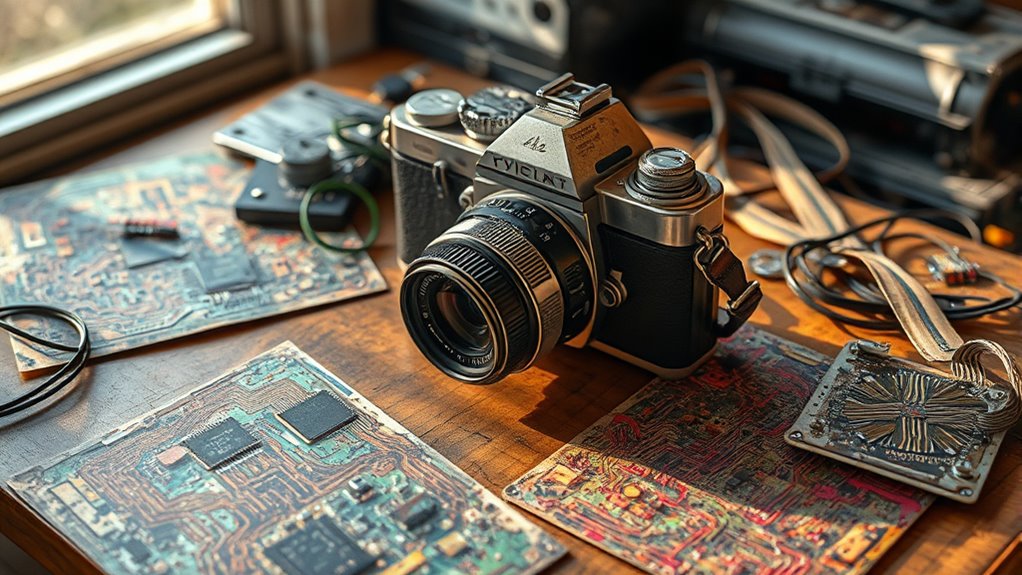
Old cameras can become powerful tools for creating striking portraits with vintage charm. Experiment with light techniques to produce unique effects, or try macro film photography to capture intricate details. These methods let you transform obsolete gadgets into inspiring art projects that stand out. Additionally, exploring different film types can further enhance the distinctive qualities of your images. Incorporating film selection strategies can help you achieve desired aesthetic results and expand your creative possibilities. For example, choosing the right film type can influence the color palette and grain, giving your photos a more authentic and artistic feel. Understanding conversion kits and their compatibility can also inspire new ways to repurpose old cameras and accessories creatively. Moreover, knowing the net worth of various personalities can sometimes spark ideas for themed projects or conceptual art pieces.
Vintage Camera Portraits
Using vintage cameras for portrait projects allows you to create truly distinctive and nostalgic images that stand out from digital photos. These cameras produce rich film grain, giving your portraits a textured, timeless quality. Manual focus forces you to slow down and consider each shot carefully, adding intentionality to your work. To maximize your results, keep these tips in mind:
- Embrace film grain for authentic, textured portraits that evoke a sense of history.
- Use manual focus to develop a keen eye and control depth of field.
- Experiment with natural lighting to enhance the vintage feel and create mood. Additionally, understanding ventilation considerations can help you preserve your equipment and ensure a comfortable shooting environment. Incorporating proper film storage practices can also extend the lifespan of your vintage films and maintain optimal image quality. Regular maintenance and cleaning techniques are essential for keeping your cameras in top condition and preventing issues that could affect your photos.
Proper camera maintenance can further prevent malfunctions, ensuring your equipment remains reliable over time.
Experimental Light Techniques
Vintage cameras aren’t just for capturing portraits—they can also serve as powerful tools for experimenting with light in creative art projects. By attaching LED illumination sources to your old camera or surrounding it with colorful LED strips, you can explore dynamic lighting effects. Use color modulation to shift hues and create mood, transforming simple images into vibrant, abstract visuals. Adjust the intensity and timing of the LED lights to produce flickering or pulsing effects that add depth and movement. You might also experiment with bouncing or diffusing the LED light through various materials to achieve unique textures. This approach allows you to push the boundaries of traditional photography, turning obsolete cameras into experimental light art tools that deliver unexpected, enthralling results.
Macro Film Photography
Discover the creative potential of macro film photography by repurposing your outdated cameras to capture intricate, close-up images that reveal hidden textures and details. Using film grain and chemical processing, you can produce unique images with a tactile, vintage feel. To get started, keep these tips in mind:
- Use a macro lens or close-up filters to focus on tiny subjects like leaves or insects.
- Experiment with different film types to vary the film grain and mood.
- Develop your film carefully through chemical processing to enhance contrasts and highlight fine details.
Turning Outdated Devices Into Smart Home Hubs

You can turn old tablets into smart home hubs by repurposing them with the right software. Installing popular smart home platforms makes it easy to control your devices from one central point. Connecting your smart gadgets to the hub streamlines automation and enhances your home’s functionality. Additionally, utilizing home automation techniques can optimize device performance and simplify daily routines.
Repurposing Old Tablets
Old tablets can become powerful smart home hubs with a little creativity and some simple setup. To optimize their performance, consider factors like battery longevity and screen calibration. First, make sure the device is charged or connected to power so it stays active. Second, calibrate the screen to improve touch responsiveness and visibility, making navigation easier. Third, disable unnecessary apps and background processes to conserve battery life and keep the device running smoothly. Additionally, installing smart home integration apps can expand their functionality and compatibility with various devices. This way, your old tablet can seamlessly control lights, thermostats, and security cameras. You can also mount it on a wall for a dedicated control panel. With thoughtful adjustments, your outdated tablet becomes a reliable, user-friendly smart home hub that enhances convenience and efficiency. Regular updates and security patches can also help protect the device from vulnerabilities and prolong its usefulness. Incorporating local automation features can further improve responsiveness and reduce reliance on internet connectivity, making your setup more robust and secure. Exploring vintage tech preservation techniques can help maintain the device’s longevity while integrating it into your modern smart home setup. Additionally, optimizing device settings for performance enhancement can ensure smoother operation and a better user experience.
Installing Smart Software
Installing smart software is the key to transforming your outdated device into a fully functional smart home hub. Start by downloading reliable installation software designed for your device’s operating system. This software guides you through the setup process, guaranteeing compatibility and peak performance. Before proceeding, check for any firmware updates; these updates improve stability, security, and device capabilities. Updating firmware ensures your device can handle new features and integrations. Follow the instructions carefully to avoid errors during installation. Once the smart software is installed and firmware is up to date, your device will be ready to serve as a central controller for your smart home ecosystem. With this setup, your old tech becomes a powerful, versatile hub that maximizes your home automation potential.
Connecting Smart Devices
Once your smart software is installed and your device’s firmware is up to date, the next step is to connect your smart devices to transform your outdated gadget into a central smart home hub. Focus on seamless wireless pairing and device synchronization to guarantee everything works smoothly. Here are key tips:
- Use compatible apps to facilitate wireless pairing, reducing setup time.
- Keep firmware updated on all devices for better synchronization and security.
- Test each device’s connection individually before integrating into the hub to troubleshoot issues early.
Crafting DIY Gadgets and Toys From Repurposed Tech
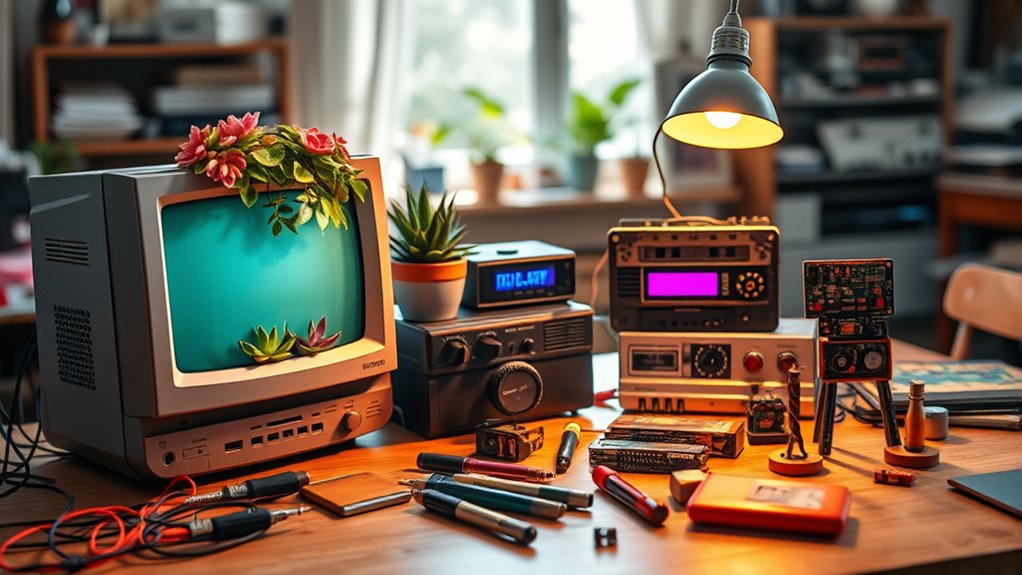
Repurposing obsolete gadgets offers a fun and inventive way to create DIY gadgets and toys that can entertain and educate. With some basic tools and creativity, you can craft DIY electronic toys that are both engaging and functional. Use recycled tech art by transforming old circuit boards, buttons, and screens into unique sculptures or interactive displays. For example, turn a stripped-down smartphone into a handheld game or an LED-lit gadget for decoration. These projects not only give new life to outdated devices but also deepen your understanding of electronics. Additionally, creating toys from recycled tech helps teach kids about technology and sustainability. Whether you’re designing a simple robot or a vintage-inspired gadget, repurposing old tech sparks innovation and fun.
Frequently Asked Questions
What Safety Precautions Should I Take When Repurposing Old Electronics?
When repurposing old electronics, you should prioritize safety by handling batteries carefully, avoiding punctures or leaks, and disposing of them properly. Always guarantee proper electrical grounding to prevent static discharge or shocks. Wear insulated gloves and work in a dry, well-ventilated area. Turn off and unplug devices before working on them, and use appropriate tools. These precautions help keep you safe while giving your gadgets a new purpose.
How Can I Ensure Compatibility Between Old Devices and New Technology?
Think of your devices as languages that need to communicate smoothly. To guarantee compatibility, start by updating firmware, which acts as a translator, making the old device understand new tech. Check that device drivers are current, like tuning instruments for harmony. If you encounter issues, research specific compatibility guides. This proactive approach helps your gadgets work together seamlessly, turning your tech collection into a symphony of functionality rather than static noise.
Are There Eco-Friendly Disposal Options for Gadgets I Can’t Repurpose?
You can find eco-friendly disposal options for gadgets you can’t repurpose through local recycling programs. Many communities offer dedicated e-waste recycling centers that safely handle electronic devices, preventing harmful materials from polluting the environment. Look for certified e-waste recyclers or manufacturer take-back programs, which guarantee your old gadgets are recycled responsibly. By choosing these eco-friendly disposal methods, you help reduce electronic waste and protect the planet.
What Tools or Software Are Recommended for DIY Tech Projects?
For your DIY tech projects, you should explore software recommendations like Arduino IDE for microcontroller programming, and free tools like Tinkercad for circuit design. As for DIY project tools, keep a multimeter, soldering iron, and basic screwdrivers handy. These tools and software will help you troubleshoot, design, and build your projects efficiently. Always start with tutorials online to get familiar with each tool’s capabilities and safety precautions.
Can Repurposed Gadgets Affect My Home’s Internet Security?
Repurposing gadgets can impact your home’s internet security if you don’t address network vulnerabilities. An outdated device may have weak encryption or outdated security protocols, making it easier for hackers to access your network. Always update device firmware, disable unnecessary services, and change default passwords. Properly securing repurposed gadgets helps minimize risk, ensuring they don’t become entry points for cyber threats, keeping your network safe and secure.
Conclusion
Now that you know these clever ideas, imagine what else your old gadgets could do. Could that broken tablet become a surprising centerpiece? Or maybe your outdated camera sparks a creative project you never saw coming? The possibilities are endless, and the best part is, your tech’s new life is just waiting to be discovered. So go ahead—dare to experiment, and see where your recycled gadgets can take you. The next great idea might be just around the corner.