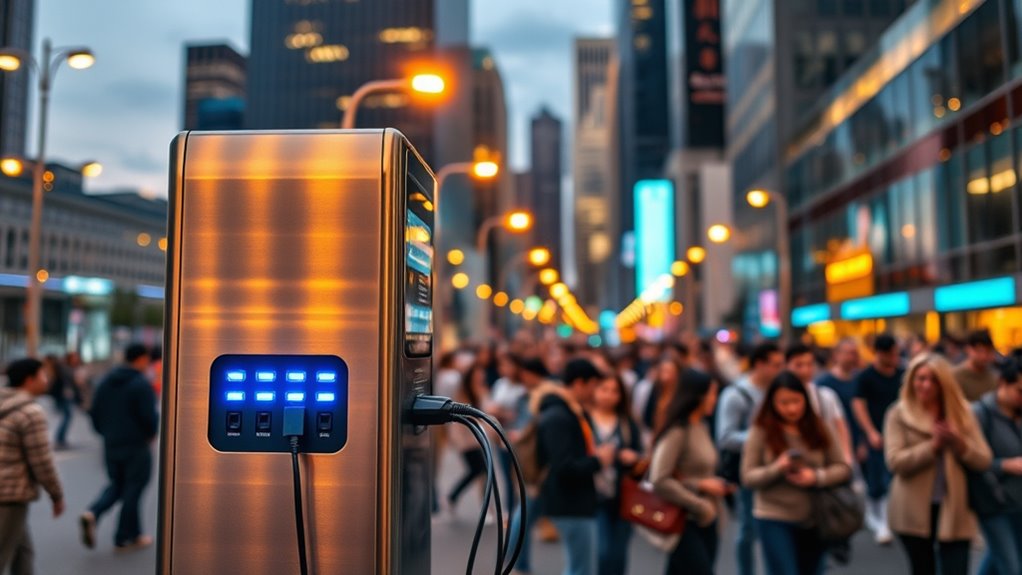

Public phone charging stations can pose significant security risks, as they may transmit malware, steal your data, or connect your device to malicious networks without you knowing. Hackers can set up fake stations to deceive you, and malicious setups might install harmful software or extract personal information. To stay safe, consider using portable chargers or data blockers. If you want to understand how to protect yourself better, keep exploring this important topic.
Key Takeaways
- Public charging stations can transmit data or connect to malicious networks, risking device security.
- Fake or compromised stations may install malware or steal personal information without user awareness.
- Using data blockers and disabling file sharing reduces the risk of data theft during charging.
- Wireless risks include data interception through wireless channels connected to public networks.
- Carrying personal power banks or portable chargers is a safer alternative to public charging stations.
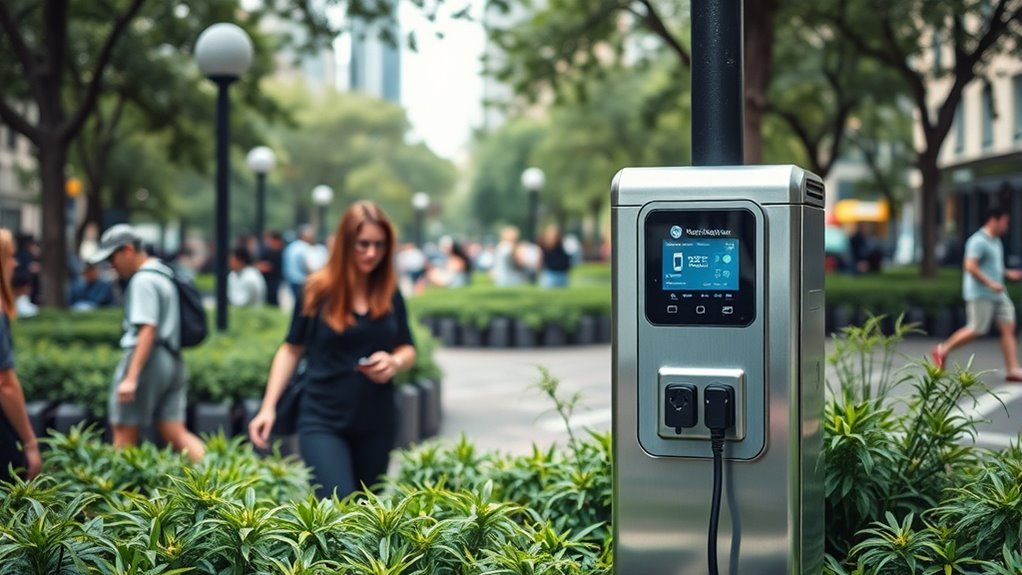
Public phone charging stations offer a convenient way to power up your devices, but it’s important to stay vigilant about safety. When you connect your phone to a public charger, you’re exposing yourself to several risks, especially concerning wireless risks and data theft. Many public charging points are designed solely for power, but some may also transmit data or be connected to malicious networks. Hackers can set up fake charging stations that look legitimate, tricking you into connecting. Once plugged in, your device might become vulnerable to cyber-attacks, enabling unauthorized access to personal information, passwords, or banking details. These wireless risks mean that even if you’re just charging, your data could be compromised without your knowledge.
One major concern is data theft. When you use a public charging station, your device may communicate with the station’s system via the USB port or charging cable. If the station is compromised or maliciously rigged, it can access your device’s data or install malware. Some bad actors might use these setups to extract sensitive information, including contacts, emails, or credentials, without your consent. This risk is particularly high if your device automatically trusts connected networks or peripherals, making it easier for cybercriminals to exploit vulnerabilities. Avoiding such threats requires caution—never assume that a public charging station is secure just because it’s available. Additionally, understanding potential security vulnerabilities associated with public stations can help you make safer decisions.
To minimize these risks, consider carrying your own portable charger or power bank. This way, you can avoid plugging into unknown stations altogether. If you must use a public charging station, use a data blocker or USB condom, which physically prevents data transfer while allowing power to flow. This simple device can stop malicious software from accessing your device’s data during charging. Also, disable file sharing and turn off Wi-Fi and Bluetooth when charging in public. These actions reduce the chances of hackers gaining control or intercepting your data through wireless channels.

Data Blocker, USB C Data Blocker Protect Against Juice Jacking, 6-pcs
- Set Includes Multiple Data Blockers: Affordable 6-piece USB C and A kit
- Protects Devices from Juice Jacking: Secure public charging with data blocker
- Supports Fast Charging: Charges up to 2.4A with high-speed tech
As an affiliate, we earn on qualifying purchases.
As an affiliate, we earn on qualifying purchases.
Frequently Asked Questions
Can Hackers Access My Personal Data Through Charging Stations?
Yes, hackers can access your personal data through charging stations by exploiting cybersecurity vulnerabilities. When you connect your device, cybercriminals might use techniques like data theft or malicious software to intercept or steal your information. To stay safe, avoid public charging stations when possible, or use your own charger and power bank. Always be cautious, as these vulnerabilities could compromise your personal data without you realizing it.
Are There Specific Signs Indicating a Compromised Charging Station?
Yes, there are signs indicating a compromised charging station. You should watch out for tampering signs like loose or damaged ports, unusual cables, or suspicious devices attached to the station. If you notice anything odd, avoid using it. These signs suggest the station might be compromised. Always prioritize safety, and consider using your own charger or a portable power bank instead of public stations to protect your data.
How Can I Protect My Device When Using Public Chargers?
You can protect your device by avoiding public chargers altogether, or by using a portable power bank, or by employing a data-blocking USB adapter. Always guarantee your device encryption is enabled, keep your charging cable quality high, and avoid connecting to suspicious stations. By staying vigilant, securing your data, and choosing safe accessories, you reduce risks and keep your device protected while charging in public.
Do All Public Charging Stations Pose the Same Security Risks?
Not all public charging stations pose the same security risks, but many do present potential public charging safety issues. Some stations may be compromised with malicious hardware or software, risking data theft or malware. To stay safe, avoid using untrusted stations, use your own charger, or employ a portable power bank. Being cautious helps minimize station security risks and keeps your device protected during public charging.
Is Using a Portable Charger Safer Than Public Charging Stations?
Using a portable charger is generally safer than public charging stations because it minimizes public charger risks. When you rely on your own device, you avoid potential malware or data theft from compromised public chargers. Portable charger safety is straightforward—just keep it charged and use it carefully. This way, you control the security, reducing the chance of exposing your device to malicious threats often associated with public charging stations.
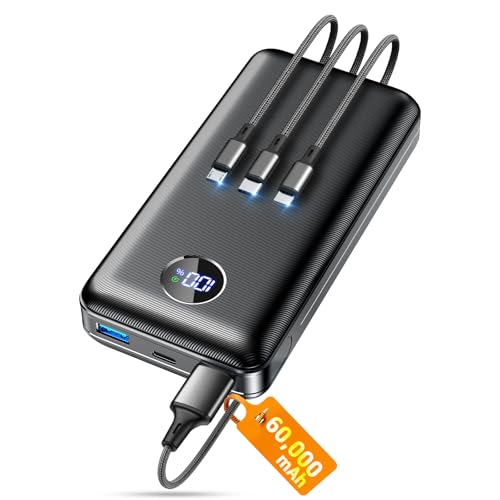
ZZI Portable Charger Power Bank 60000mAh, 22.5W PD Fast-Charge Battery Pack
- High Capacity Battery: 60000mAh power bank for multiple charges
- Simultaneous Charging: Charges 5 devices at once
- Durable Multi-Device Cable: 3-in-1 nylon braided charging cable
As an affiliate, we earn on qualifying purchases.
As an affiliate, we earn on qualifying purchases.
Conclusion
While public phone charging stations are convenient, they can pose security risks. About 20% of public chargers have been found to contain malware or malicious hardware that could compromise your data. To stay safe, use your own charging cables or portable batteries whenever possible. Remember, the convenience shouldn’t outweigh your security. Stay vigilant, and you’ll enjoy the benefits of public charging without falling victim to potential threats. Your safety is worth it!

Floor Standing Cell Phone Charging Station with Fast Charigng Cables – 8 Device Charging Dock for Office, Hotel & Public Spaces | Compatible with iPhone ipad Smartphone Tablets Android Port (Black)
- Versatile Wall Mount Design: Suitable for various public and private spaces
- 8-Device Multi-Port Charging: Supports multiple device types simultaneously
- Comprehensive Safety Features: Protects against over-voltage, over-current, and short circuits
As an affiliate, we earn on qualifying purchases.
As an affiliate, we earn on qualifying purchases.

JSAUX USB Data Blocker, USB A to USB A, Charge-Only, 4-Pack, Black
- Charge-Only Function: No data-sync, protects against breaches
- Fast Charging: Delivers up to 2.4A power
- Durable Metal Shell: Premium aluminum for protection
As an affiliate, we earn on qualifying purchases.
As an affiliate, we earn on qualifying purchases.