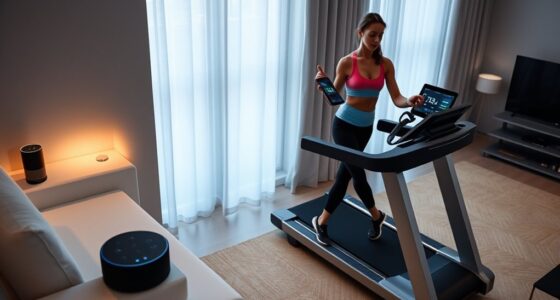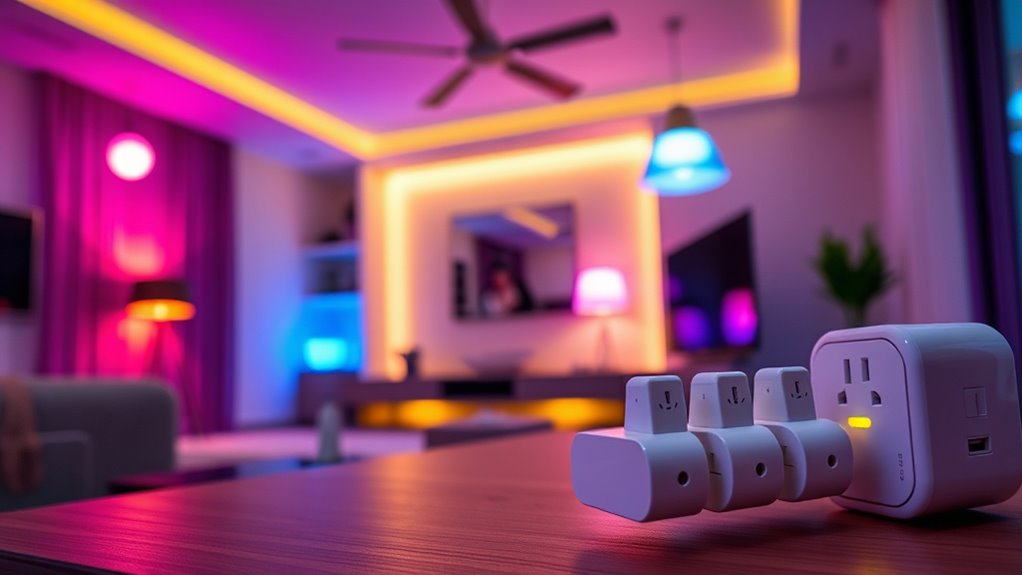

If you’re starting your home automation journey, decide if your goal is to upgrade your lighting or control existing devices. Smart bulbs are great for customizing ambiance, saving energy, and adding mood lighting, making them ideal if you want a stylish upgrade. However, smart plugs are easier to set up and allow control over more appliances without changing fixtures. To make the best choice, consider your automation goals—more about lighting or device control—and discover more insights ahead.
Listen free for 30 days with Audible
Thousands of audiobooks and originals — cancel anytime.
As an affiliate, we earn on qualifying purchases.
Key Takeaways
- Choose smart bulbs first if you want to upgrade lighting ambiance and energy-efficient lighting control.
- Opt for smart plugs initially if you want quick, flexible control of existing appliances and devices.
- Smart bulbs enhance customization and automation for lighting, while smart plugs add control without fixture replacement.
- Consider your automation goals: lighting upgrades or device control, to determine which device to prioritize.
- For overall convenience and energy savings, starting with smart plugs is often simpler and more versatile.

When deciding between smart bulbs and smart plugs, understanding their differences can help you make the right choice for your home automation needs. Both options offer unique benefits, but knowing how they impact energy efficiency and user convenience will guide you toward the best fit for your lifestyle. Smart bulbs are designed to replace traditional bulbs, giving you control over lighting directly through apps or voice commands. They allow you to customize brightness, color, and scheduling, which can considerably enhance user convenience, especially if you want to set the mood or automate lighting based on your routines. From an energy efficiency perspective, smart bulbs can be more efficient than older incandescent bulbs, especially when paired with dimming features or scheduled timers that turn lights off when not needed. However, they tend to consume more power than smart plugs because they include their own circuitry and wireless components. The color accuracy of smart bulbs can significantly enhance your viewing experience if used in a home theater setup.
Smart plugs, on the other hand, work by controlling the power supply to any device plugged into them. This means you can turn on or off lamps, fans, or even appliances remotely, simply by toggling the plug through your smartphone or voice assistant. When it comes to energy efficiency, smart plugs are excellent for reducing unnecessary power usage, especially with devices that tend to stay on or standby. For example, you can ensure your coffee maker or chargers are turned off when not in use, saving energy without needing to replace the device itself. User convenience also plays a big role here; smart plugs are generally easier to set up and use since they don’t require replacing existing fixtures or bulbs. They’re ideal if you want quick control over multiple devices without changing the existing lighting infrastructure.
Choosing which to get first depends on your priorities. If you’re looking to upgrade your lighting system for customizable ambiance and want to enhance your home’s energy efficiency through intelligent control, smart bulbs are a solid choice. They provide both convenience and improved energy savings when used with dimming and scheduling features. Conversely, if you want to add smart control to existing appliances or lamps without replacing bulbs, smart plugs offer a straightforward, flexible solution that boosts user convenience and helps cut down on wasted energy. Both options are valuable, but your decision should align with your specific automation goals—whether it’s transforming your lighting experience or simply gaining remote control over your appliances.
smart LED bulbs with color changing
As an affiliate, we earn on qualifying purchases.
As an affiliate, we earn on qualifying purchases.
Frequently Asked Questions
Can Smart Bulbs Work Without a Wi-Fi Connection?
Smart bulbs generally rely on Wi-Fi dependency to function properly, so they won’t work without an active internet connection. Due to technical limitations, if your Wi-Fi goes out, you won’t be able to control or automate your smart bulbs remotely. However, some smart bulbs with Bluetooth or Zigbee capabilities can operate locally without Wi-Fi, but their features are usually limited compared to those connected via Wi-Fi.
Are Smart Plugs Compatible With All Home Appliances?
Smart plugs suit most home appliances, simplifying your smart home setup and boosting energy efficiency. While they’re compatible with many devices, some high-powered or specialty appliances might not work perfectly. Always check the plug’s specifications and your appliances’ power ratings. Embrace effortless home automation by choosing smart plugs that suit your appliances’ needs, ensuring smooth, seamless, and secure smart home experiences without risking overloads or incompatibilities.
Do Smart Bulbs Emit Different Colors or Just White Light?
Smart bulbs often offer both white light options and color changing features, allowing you to customize your lighting ambiance. You can set them to various colors or stick with classic white light for reading or relaxing. If you want vibrant, dynamic lighting, go for smart bulbs with color changing features. However, if simple, adjustable white light suits your needs, basic smart bulbs will do just fine.
Can I Control Smart Plugs Remotely Without Internet?
Imagine flipping a switch and feeling that instant control, even when you’re offline. With smart plugs, you can’t access them remotely without internet; they need a connection for remote access. However, some smart plugs offer offline control through local networks or manual switches. So, if you want true remote access, you need an internet connection, but offline control is still possible with certain setups.
What Is the Typical Lifespan of a Smart Bulb?
A typical smart bulb lasts about 15,000 to 25,000 hours, depending on bulb durability and usage. Factors like frequent switching, power fluctuations, and the quality of the bulb influence its lifespan. To maximize your smart bulb’s lifespan, handle it carefully, avoid power surges, and choose reputable brands. Regular maintenance and proper installation also help guarantee your smart bulb stays bright and functional for years.
smart plugs with energy monitoring
As an affiliate, we earn on qualifying purchases.
As an affiliate, we earn on qualifying purchases.
Conclusion
Choosing between smart bulbs and smart plugs ultimately depends on your needs. If you want to instantly change your room’s ambiance, smart bulbs offer seamless control over lighting. But if you prefer turning non-smart devices into smart ones, smart plugs are versatile. It’s a balance: bulbs create atmosphere, plugs add convenience. Starting with one depends on whether you seek mood-enhancing illumination or broad device control—each option complements the other, but your first choice shapes your smart home journey.
Wi-Fi smart bulbs for voice control
As an affiliate, we earn on qualifying purchases.
As an affiliate, we earn on qualifying purchases.
smart home automation starter kit
As an affiliate, we earn on qualifying purchases.
As an affiliate, we earn on qualifying purchases.
Evergreen bestsellers Picks
bestsellers
As an affiliate, we earn on qualifying purchases.