Streaming services like Netflix and Spotify deliver content through advanced cloud infrastructure that guarantees seamless, on-demand access. They negotiate licensing agreements with studios and creators to secure a diverse library of movies, TV shows, or music. Their user interfaces help you find and personalize your experience, while algorithms suggest new content based on your preferences. This sophisticated combination of licensing, technology, and design makes your entertainment instant and tailored—discover how it all works below.
Key Takeaways
- Netflix and Spotify utilize cloud servers and Content Delivery Networks (CDNs) to stream content reliably to millions of users worldwide.
- They negotiate licensing agreements to access diverse content, balancing regional rights and licensing durations.
- Personalized recommendations are generated through algorithms analyzing user preferences, viewing history, and ratings.
- Their platforms feature intuitive user interfaces that facilitate easy navigation, search, and curated content browsing.
- Continuous infrastructure updates and optimized streaming protocols ensure high quality playback with minimal buffering and latency.
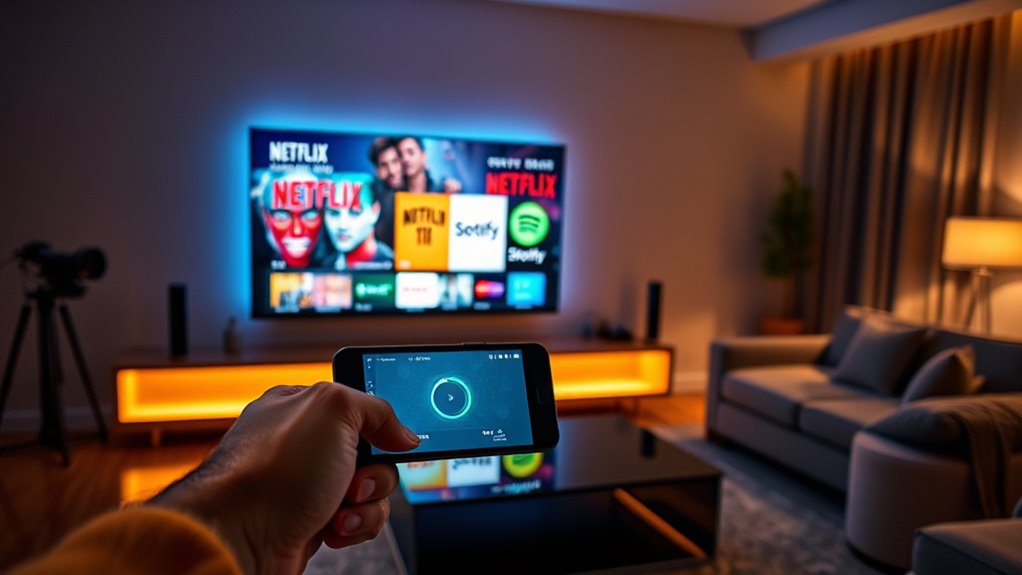
Streaming services have revolutionized how you access entertainment, offering instant access to a vast library of movies, TV shows, and original content. When you hit play, you’re tapping into a system built on complex licensing agreements and sophisticated technology. Content licensing is at the core of what makes these services possible. Providers like Netflix and Spotify negotiate rights with studios, record labels, and content creators to stream their material legally. These agreements determine what titles are available in your region and influence the diversity of content you see. The licensing process can be intricate, involving negotiations over royalties, territorial rights, and duration. This complexity means that some popular titles are available only temporarily or in certain markets, which keeps the content fresh and encourages you to explore new offerings regularly. Additionally, the infrastructure of cloud servers that supports streaming ensures reliable, scalable delivery of content to millions of users simultaneously.
Beyond licensing, the user interface is what shapes your overall experience. It’s the digital front door that guides you through endless options. A well-designed user interface makes it easy to find content that suits your tastes, whether you’re searching for a specific movie, browsing genres, or discovering curated playlists. If the interface is cluttered or confusing, it can frustrate you and make your experience less enjoyable. Conversely, a smooth, intuitive interface encourages you to stay longer, explore more, and quickly access what you want. Streaming services invest heavily in refining their user interfaces, often employing algorithms that learn your preferences to suggest personalized content. This personalization relies on your viewing history, ratings, and even time of day, making the experience feel tailored just for you.
Both Netflix and Spotify leverage their understanding of content licensing and user interface design to optimize your experience. They curate their catalogs carefully, balancing licensed titles with original content to retain your interest. Their user interfaces are constantly updated to improve navigation, add new features, and enhance usability. For example, Netflix’s interface features easy-to-browse categories, autoplay options, and tailored recommendations, all designed to keep you engaged. Spotify’s interface simplifies music discovery with curated playlists, artist radios, and smart search functions. These elements work together to deliver content seamlessly, ensuring you spend less time searching and more time enjoying. Ultimately, the combination of strategic licensing agreements and user-centric design is what allows streaming services to deliver content efficiently, making entertainment more accessible and personalized than ever before.

Content Delivery Networks: Fundamentals, Design, and Evolution
As an affiliate, we earn on qualifying purchases.
As an affiliate, we earn on qualifying purchases.
Frequently Asked Questions
How Do Streaming Services Protect User Data and Privacy?
Streaming services protect your user privacy by implementing strict data encryption, ensuring your personal information stays secure. They also follow privacy policies that limit data collection and sharing, giving you control over your info. Regular security updates and protocols help prevent unauthorized access. By using these measures, they keep your data safe, so you can enjoy your favorite content without worrying about privacy breaches or misuse of your information.
What Technologies Enable Seamless Content Delivery Worldwide?
It’s no coincidence that you enjoy smooth streaming worldwide; Content Delivery Networks (CDNs) and Adaptive Streaming make it possible. CDNs distribute content closer to your location, reducing buffering time, while Adaptive Streaming adjusts video quality based on your internet speed. Together, these technologies guarantee you experience seamless, high-quality content anywhere, anytime, without interruptions, keeping you connected and engaged no matter where you are in the world.
How Do Streaming Services Decide Which Content to Recommend?
You rely on personalized algorithms that analyze your viewing or listening habits to decide what to recommend. Streaming services use data like your watch history, ratings, and search behavior to inform content curation. They continuously refine these algorithms to better match your preferences, ensuring you see relevant suggestions. This dynamic process helps keep your experience fresh and engaging, making it easier for you to discover new favorites tailored specifically to your tastes.
What Are the Environmental Impacts of Streaming Platforms?
Like echoes in a canyon, streaming impacts the environment through significant energy consumption and an expanding carbon footprint. As you stream content, data travels through networks and datacenters, consuming electricity often derived from fossil fuels. This process contributes to greenhouse gases, deepening climate change. While convenient, your viewing habits indirectly shape the planet’s health, highlighting the need for greener energy sources and sustainable practices in digital entertainment.
How Do Streaming Services Handle Licensing and Regional Restrictions?
Streaming services handle licensing by negotiating regional licensing agreements, which determine where content can be streamed. They use content geoblocking to restrict access based on your location, ensuring compliance with these licenses. When you try to access content outside permitted regions, you encounter restrictions. This process helps platforms avoid legal issues while offering localized content, but it can also lead to frustration for users wanting seamless access across different regions.

NVIDIA Shield Android TV Pro | 4K HDR Streaming Media Player High Performance, Dolby Vision, 3GB RAM, 2X USB, Works with Alexa, Model:945-12897-2500-101
The Best of the Best. SHIELD TV delivers an amazing Android TV streaming media player experience, thanks to…
As an affiliate, we earn on qualifying purchases.
As an affiliate, we earn on qualifying purchases.
Conclusion
So, next time you binge-watch or playlist, remember that streaming services like Netflix and Spotify rely on complex data delivery systems to keep you connected. For example, a user in a rural area might experience slight delays due to server proximity, but efficient content delivery networks work tirelessly to minimize this. Ultimately, understanding these behind-the-scenes processes helps you appreciate the seamless experience you often take for granted.

Software Profit Streams(TM): A Guide to Designing a Sustainably Profitable Business
As an affiliate, we earn on qualifying purchases.
As an affiliate, we earn on qualifying purchases.
personalized recommendation engine tools
As an affiliate, we earn on qualifying purchases.
As an affiliate, we earn on qualifying purchases.