
The best indoor cycling trainer overall in this lineup is the Garmin Tacx NEO 3M, which pairs high-end ride feel with motion features for immersive training. The Wahoo KICKR CORE 2 is a more practical value choice, while the Sportneer magnetic stand suits riders who want a simpler setup without smart-trainer complexity. The main tradeoffs are ride realism, price and setup effort, plus whether you need app-controlled resistance or simply a way to ride indoors. Direct-drive models generally offer a quieter, more connected experience, while wheel-on and basic stands can be easier to store or less demanding to set up. Read on for the full breakdown and help matching a trainer to your bike, space, and riding goals.

Get workout gear delivered free with Prime
- Fast, free delivery on millions of items
- Prime Video, Amazon Music and more included
- Member-only deals all year
Complete the kit



Key Takeaways
The Tacx NEO 3M leads on premium ride immersion with built-in motion, while the Wahoo KICKR MOVE also adds movement but represents a different take on a premium connected setup.
The CORE 2 models are the lineup’s practical middle ground: one comes with an 11-speed cassette and the other with Zwift Cog and Click, so compatibility and shifting preference matter more than the shared name.
Direct-drive smart trainers dominate for structured virtual training, but the Saris M2 and Sportneer stand remain alternatives for riders who prioritize wheel-on setup or a simpler resistance approach.
Premium features are not automatically useful to every rider. Motion, broad connectivity, and advanced ride simulation matter most to frequent indoor cyclists, not occasional winter riders.
Bike compatibility can decide the purchase. Cassette versus Cog, drivetrain speeds, axle type, and available space deserve a check before comparing performance claims.
| Garmin Tacx NEO 3M Smart Trainer |  | Best Overall for Immersive Training | Trainer type: Direct-drive smart trainer | Maximum power: 2,200 watts | Power accuracy: ±1% | VIEW LATEST PRICE | See Our Full Breakdown |
| Wahoo KICKR MOVE Smart Indoor Bike Trainer |  | Best for Natural Bike Movement | Resistance mechanism: Electromagnetic | Movement: Dual-axis, with lockout | Connectivity: 2.4 GHz Wi-Fi, up to 3 Bluetooth connections, ANT+ / ANT+ FE-C, direct connect port | VIEW LATEST PRICE | See Our Full Breakdown |
| Garmin Tacx NEO 2T Smart Trainer |  | Best Quiet, Foldable Direct-Drive Pick | Resistance: Magnetic, with 32 neodymium magnets | Connectivity: ANT+, Bluetooth | Compatible operating systems: iOS, Android, macOS, Windows | VIEW LATEST PRICE | See Our Full Breakdown |
| Tacx Flux S Smart Bike Trainer | 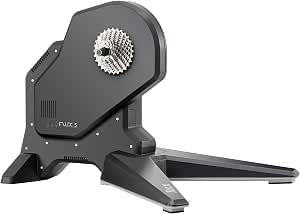 | Best for Quiet, Steady Training | Resistance type: Electromagnetic | Power accuracy: ±3% | Maximum gradient: 10% | VIEW LATEST PRICE | See Our Full Breakdown |
| Wahoo KICKR CORE 2 Smart Bike Trainer with 11-Speed Cassette |  | Best Value for Structured Training | Trainer type: Direct drive | Maximum power: 1,800 watts | Power accuracy: ±2% | VIEW LATEST PRICE | See Our Full Breakdown |
| Wahoo KICKR V6 Smart Bike Trainer with 11 Speed Cassette |  | Best for High-Power Training | Resistance mechanism: Electromagnetic | Maximum power: 2,200 W | Power accuracy: ±1% | VIEW LATEST PRICE | See Our Full Breakdown |
| ThinkRider X2Max Smart Bike Trainer |  | Best Budget-Conscious Direct-Drive Option | Resistance mechanism: Electromagnetic | Maximum power: 2,000 W | Power meter error: ±2% | VIEW LATEST PRICE | See Our Full Breakdown |
| Saris M2 Smart Indoor Electromagnetic Bike Trainer |  | Best for Keeping Your Bike Setup Simple | Trainer type: Wheel-on smart trainer | Resistance mechanism: Electromagnetic | Connectivity: ANT+ FE-C and Bluetooth | VIEW LATEST PRICE | See Our Full Breakdown |
| Garmin Tacx Nēra Indoor Smart Trainer |  | Best for Natural Ride Feel | Power and cadence accuracy: Within 1% | Connectivity: Built-in Wi-Fi | Trainer weight: 54.5 lb | VIEW LATEST PRICE | See Our Full Breakdown |
| Elite Avanti Direct Drive Smart Trainer with Zwift Cog and Click |  | Best for Zwift Virtual Shifting | Trainer type: Direct drive smart trainer | Power accuracy: ±1% | Maximum power: 2,100 W | VIEW LATEST PRICE | See Our Full Breakdown |
| Wahoo KICKR CORE 2 Smart Bike Trainer with Zwift Cog and Click Shifting |  | Best for Zwift Setup Simplicity | Trainer type: Direct-drive indoor bike trainer | Bike compatibility: 8- to 13-speed bikes | Maximum power: 1800 W | VIEW LATEST PRICE | See Our Full Breakdown |
| Sportneer Magnetic Indoor Bike Trainer Stand with 6 Resistance Levels |  | Best Budget-Friendly Basic Stand | Trainer type: Magnetic indoor bike trainer stand | Wheel compatibility: 26–28 inches or 700C | Rear axle compatibility: 4.92–6.57 inches | VIEW LATEST PRICE | See Our Full Breakdown |
| indoor cycling trainer | Connectivity | Weight | Warranty | Trainer type |
|---|---|---|---|---|
| Garmin Tacx NEO 3M Smart Train | Wi-Fi, Ethernet, ANT+, Bluetooth | 52 pounds | 1-year limited | Direct-drive smart trainer |
| Wahoo KICKR MOVE Smart Indoor | 2.4 GHz Wi-Fi, up to 3 Bluetooth connections, ANT+ / ANT+ FE-C, direct connect port | 29 kg | 1 year | — |
| Garmin Tacx NEO 2T Smart Train | ANT+, Bluetooth | 47.4 pounds | — | — |
| Tacx Flux S Smart Bike Trainer | — | 50 pounds | 2-year limited | — |
| Wahoo KICKR CORE 2 Smart Bike | Built-in Wi-Fi | 13.6 kg | 1-year manufacturer | Direct drive |
| Wahoo KICKR V6 Smart Bike Trai | Wi-Fi (2.4 GHz), Bluetooth, ANT+ | — | — | — |
| ThinkRider X2Max Smart Bike Tr | ANT+ and BLE | — | — | — |
| Saris M2 Smart Indoor Electrom | ANT+ FE-C and Bluetooth | 20 lb | — | Wheel-on smart trainer |
| Garmin Tacx Nēra Indoor Smart | Built-in Wi-Fi | — | 1-year limited warranty | — |
| Elite Avanti Direct Drive Smar | Wi-Fi 2.4 GHz, Bluetooth Smart, ANT+ FE-C | — | — | Direct drive smart trainer |
| Wahoo KICKR CORE 2 Smart Bike | Wi-Fi | 13.6 kg | 2 years | Direct-drive indoor bike trainer |
| Sportneer Magnetic Indoor Bike | — | 19.3 lb | 1 year | Magnetic indoor bike trainer stand |
More Details on Our Top Picks
Garmin Tacx NEO 3M Smart Trainer
The Garmin Tacx NEO 3M earns my top spot for riders who want an indoor session to feel less static. Its built-in multidirectional movement lets the bike shift naturally, while virtual road surfaces add texture that the Wahoo KICKR MOVE’s fore-aft motion does not replicate in the same way. ±1% power accuracy and simulation up to 25% gradients also make it a strong fit for precise workouts and steep virtual climbs. The tradeoff is its 52-pound frame, which is less convenient to move than the 29 kg KICKR MOVE, and the included cassette is only 11-speed. Riders with newer 12-speed drivetrains may need another cassette, and premium Tacx app features require a subscription.
Pros:- Multidirectional motion can be turned on or off to suit different workouts.
- Virtual flywheel simulates road textures such as cobblestone and gravel.
- ±1% power accuracy supports precise training targets.
- Pre-installed 11-speed cassette and no calibration requirement simplify setup.
Cons:- At 52 pounds, it is cumbersome to move and store.
- The included 11-speed cassette may not suit newer 12-speed bikes.
- Premium Tacx app features require a subscription.
Best for: Indoor cyclists who want realistic movement and road-surface simulation alongside accurate structured training.
Not ideal for: Riders who need to carry or store their trainer often, or who want a ready-to-go setup for a 12-speed drivetrain.
- Trainer type:Direct-drive smart trainer
- Maximum power:2,200 watts
- Power accuracy:±1%
- Maximum gradient:25%
- Included cassette:Pre-installed 11-speed
- Connectivity:Wi-Fi, Ethernet, ANT+, Bluetooth
- Weight:52 pounds
- Warranty:1-year limited
Our verdict“Choose the NEO 3M if immersive movement and precise power data matter more than portability or 12-speed setup convenience.”
Wahoo KICKR MOVE Smart Indoor Bike Trainer
The Wahoo KICKR MOVE is the movement-focused choice for riders who find a rigid indoor setup uncomfortable over long sessions. Its dual-axis motion allows fore-aft movement as you pedal, and a lockout lets you steady the platform for focused intervals. That makes its ride feel distinct from the Garmin Tacx NEO 2T, which prioritizes smooth, quiet resistance rather than a moving base. Wahoo’s ERG Easy Ramp also softens the return to a target effort after a pause, a useful touch during structured workouts. The tradeoff is substantial weight: at 29 kg, it is no easy carry between rides. Its motion can also feel distracting during hard efforts, so riders who prefer a fixed platform may get more from the Tacx Flux S.
Pros:- Dual-axis movement allows the bike to move naturally while pedaling.
- Lockout option provides a stable setup for focused efforts.
- ERG Easy Ramp eases the return to target power after a pause.
- Supports Wi-Fi, Bluetooth, ANT+ and direct connection.
Cons:- The 29 kg listed weight makes it difficult to move regularly.
- Fore-aft movement may feel distracting during focused efforts.
- The supplied details do not specify power accuracy or maximum gradient.
Best for: Road cyclists who ride long indoor sessions and want natural fore-aft movement with the option to lock the trainer in place.
Not ideal for: Riders who need a lightweight trainer for frequent storage or who want a consistently fixed platform during intervals.
- Resistance mechanism:Electromagnetic
- Movement:Dual-axis, with lockout
- Connectivity:2.4 GHz Wi-Fi, up to 3 Bluetooth connections, ANT+ / ANT+ FE-C, direct connect port
- Weight:29 kg
- Dimensions:88 × 67 × 68 in (as listed)
- Bike compatibility:Hybrid, mountain and road bikes
- Load capacity:250 kg
- Warranty:1 year
Our verdict“Pick the KICKR MOVE if comfort from natural bike movement is your priority and you have room to leave a heavy trainer set up.”
Garmin Tacx NEO 2T Smart Trainer
The Garmin Tacx NEO 2T suits riders who want a smooth, quiet direct-drive trainer without the NEO 3M’s motion system and road-surface effects. Its redesigned motor provides responsive resistance, while its foldable frame gives it a storage advantage over the heavier, less convenient-to-move Tacx Flux S. ANT+ and Bluetooth support a broad mix of phones and computers, and the included axle adapters help with several quick-release and thru-axle setups. The main compromise is that folding does not make this a light trainer: it still weighs 47.4 pounds. It also lacks the NEO 3M’s stated 25% gradient simulation and ±1% accuracy figures, so riders seeking those specific capabilities may prefer the newer model. App-based training requires compatible software.
Pros:- Responsive motor delivers smooth resistance changes.
- Designed for quiet operation with reduced vibration.
- Foldable frame is easier to store than the Tacx Flux S.
- Includes adapters for several quick-release and thru-axle setups.
Cons:- At 47.4 pounds, it remains heavy to lift and transport.
- App-based workouts require compatible training software.
- Does not list the NEO 3M’s multidirectional movement or road-surface simulation.
Best for: Cyclists who want quiet, responsive direct-drive training and need a frame that folds for storage between sessions.
Not ideal for: Riders seeking built-in movement or road-surface simulation, or anyone who needs to carry a trainer frequently.
- Resistance:Magnetic, with 32 neodymium magnets
- Connectivity:ANT+, Bluetooth
- Compatible operating systems:iOS, Android, macOS, Windows
- Foldable:Yes
- Weight:47.4 pounds
- Included accessories:Front wheel support, power cable, quick-release and thru-axle skewers, axle adapters
- Included software:1 month of Tacx Premium
- Model number:T2875.60
Our verdict“Choose the NEO 2T if quiet direct-drive training and foldable storage matter more than built-in motion or the NEO 3M’s expanded simulation features.”
Tacx Flux S Smart Bike Trainer
The Tacx Flux S is a practical pick for riders who value a quiet, planted setup over advanced movement or steep-climb simulation. Its heavy flywheel contributes to a natural-feeling ride, and the sturdy metal frame is designed to handle standing efforts. Compared with the Garmin Tacx NEO 3M, the Flux S has lower stated power accuracy and a 10% gradient ceiling, but it gives riders a simpler training proposition without built-in motion features to manage. Its ±3% power accuracy can suit general fitness and steady workouts, though riders tracking narrow power targets may want the NEO 3M’s ±1% reading. At 50 pounds, this is not a portable option; it makes the most sense if it can stay set up in one place.
Pros:- Quiet operation is suited to shared living spaces.
- Heavy flywheel provides a natural ride feel.
- Sturdy frame supports standing efforts and sprints.
- Connects with Zwift and Tacx Trainer.
Cons:- At 50 pounds, it is difficult to move or store.
- 10% maximum gradient is lower than the NEO 3M’s 25%.
- ±3% power accuracy is less precise than the NEO 3M’s ±1%.
Best for: Home cyclists who want quiet, sturdy direct-drive training for steady rides and hard efforts without paying for movement features.
Not ideal for: Riders who need to move their trainer often, simulate steep climbs, or rely on especially precise power readings.
- Resistance type:Electromagnetic
- Power accuracy:±3%
- Maximum gradient:10%
- Maximum resistance:1,500 watts
- Weight:50 pounds
- Dimensions:22.99 × 19.49 × 9.99 in
- Load capacity:300 pounds
- Compatibility:Zwift, Tacx Trainer
- Warranty:2-year limited
Our verdict“The Flux S fits riders who want a quiet, stable trainer for everyday workouts and can accept less precise power data and modest climb simulation.”
Wahoo KICKR CORE 2 Smart Bike Trainer with 11-Speed Cassette
The Wahoo KICKR CORE 2 makes sense for riders who want the benefits of direct drive and app-based workouts without paying for the movement features of the KICKR MOVE or Garmin Tacx NEO 3M. Its 1,800-watt maximum power, 16% grade simulation and ±2% accuracy cover a broad range of structured training needs. The included 11-speed cassette and spacer reduce setup work, while support for 8- to 13-speed bikes gives it flexibility across different drivetrains. Compared with the Tacx Flux S, it offers a higher stated gradient ceiling and tighter power accuracy; unlike the NEO 3M, it does not simulate road textures or multidirectional movement. The cassette still may not match every bike, and automatic updates need an active Wi-Fi network.
Pros:- Direct-drive resistance provides a smooth, road-like ride feel.
- Includes an 11-speed cassette, power adapter and spacer.
- Supports bikes with 8- to 13-speed drivetrains.
- 16% maximum grade and ±2% power accuracy suit structured workouts.
Cons:- The included 11-speed cassette may not match every bike setup.
- Automatic updates require an active Wi-Fi network.
- Does not provide the movement or road-surface simulation found on the NEO 3M.
Best for: Cyclists setting up a home training space for structured workouts who want direct drive, a cassette included and broad drivetrain compatibility.
Not ideal for: Riders who want an immersive moving platform, or whose bike needs a cassette other than the included 11-speed option and who do not want to source one.
- Trainer type:Direct drive
- Maximum power:1,800 watts
- Power accuracy:±2%
- Maximum grade:16%
- Compatible speeds:8 to 13
- Included cassette:11-speed
- Connectivity:Built-in Wi-Fi
- Weight:13.6 kg
- Warranty:1-year manufacturer
Our verdict“Choose the KICKR CORE 2 if you want a capable direct-drive trainer for structured workouts and do not need premium movement features.”
Wahoo KICKR V6 Smart Bike Trainer with 11 Speed Cassette
The Wahoo KICKR V6 suits riders who want a powerful, stable direct-drive trainer for hard intervals and steep virtual climbs. Its 2,200-watt capacity and 20% simulated grade exceed the ThinkRider X2Max’s 2,000 watts and 18%, while ±1% power accuracy and automatic calibration support consistent training data without manual calibration. Wi-Fi joins Bluetooth and ANT+ for another connection route during app-based sessions, and the KICKR AXIS feet add some side-to-side movement rather than locking the bike completely still. The tradeoff is its substantial size and 22 kg weight, which make moving it between workouts less appealing than a more compact setup. It also comes with an 11-speed cassette, so riders with 12-speed drivetrains may need an upgrade.
Pros:- 2,200-watt maximum power and simulated grades up to 20% suit demanding interval and climbing workouts.
- ±1% power accuracy with automatic calibration reduces manual setup.
- Wi-Fi, Bluetooth, and ANT+ provide flexible connections to training devices and apps.
- KICKR AXIS feet allow natural-feeling side-to-side movement.
Cons:- At 22 kg, it is cumbersome to move or store after workouts.
- Its listed 71 × 44-inch footprint takes considerable floor space.
- The included 11-speed cassette may not match a 12-speed drivetrain.
Best for: Powerful riders who train with virtual cycling apps, want a high simulated climbing grade, and can leave a heavy trainer set up.
Not ideal for: Riders with limited floor space, frequent storage needs, or a 12-speed drivetrain who want to ride without changing the included cassette.
- Resistance mechanism:Electromagnetic
- Maximum power:2,200 W
- Power accuracy:±1%
- Maximum simulated grade:20%
- Connectivity:Wi-Fi (2.4 GHz), Bluetooth, ANT+
- Flywheel weight:16 lb
- Trainer weight:22 kg
- Included cassette:11-speed
Our verdict“Choose the KICKR V6 if high power, accurate data, and a 20% climbing simulation matter more than easy storage.”
ThinkRider X2Max Smart Bike Trainer
The ThinkRider X2Max offers app-controlled electromagnetic resistance and up to 2,000 watts, making it a capable route into virtual training for riders who do not need the KICKR V6’s extra power or Wi-Fi connection. It supports ANT+ and BLE and is compatible with platforms such as Zwift, with a stated power error of ±2% and slope simulation up to 18%. Its iron frame is designed for stability, and the listed 58 dB noise level gives buyers a reference for indoor use. Compared with the Saris M2, it is a direct-drive design rather than a wheel-on trainer, so the bike’s rear tire does not sit against a resistance roller. The main setup catch is that no cassette is included; confirm drivetrain and wheel compatibility before buying, especially since the listed supported wheel size is 26 inches.
Pros:- Up to 2,000 W and 18% simulated slope support challenging app-based workouts.
- ANT+ and BLE connectivity work with compatible cycling apps and devices.
- Stated ±2% power error offers a clear accuracy specification.
- Iron I-beam frame is designed to provide a stable base.
Cons:- Cassette is not included, adding a separate compatibility and setup task.
- Listed support is for 26-inch wheels, which may limit fit for some bikes.
- Power error is less precise than the ±1% specifications of the Wahoo KICKR V6 and Elite Avanti.
Best for: Road and mountain bike riders seeking a direct-drive trainer with app-controlled resistance and ANT+/BLE connections who are comfortable sourcing a cassette separately.
Not ideal for: Riders who want a ready-to-ride bundle, need documented compatibility with wheel sizes beyond the listed 26 inches, or prioritize ±1% power accuracy.
- Resistance mechanism:Electromagnetic
- Maximum power:2,000 W
- Power meter error:±2%
- Maximum simulated slope:18%
- Connectivity:ANT+ and BLE
- Noise level:About 58 dB at 30 km/h
- Supported wheel size:26 in
- Cassette:Not included
Our verdict“Pick the X2Max if you want direct-drive virtual training and can handle the cassette and bike-fit checks yourself.”
Saris M2 Smart Indoor Electromagnetic Bike Trainer
The Saris M2 is the lineup’s wheel-on choice for riders who want to keep the rear wheel on their bike. That makes setup simpler than the direct-drive ThinkRider X2Max, which requires a separate cassette, though the M2’s wheel-on arrangement is a different training experience and lists ±5% accuracy. ANT+ FE-C and Bluetooth support connections to indoor cycling apps, while electromagnetic resistance provides app-compatible workout control. Its steel quick-release skewer is included, and the trainer’s 300-pound load capacity is higher than the ThinkRider’s listed 240 pounds. The tradeoff is sound and measurement precision: the stated noise level is 69 decibels at 20 mph, and its accuracy is looser than the ±1% figures listed for the Wahoo KICKR V6 and Elite Avanti. I’d favor it for convenience over data precision.
Pros:- Wheel-on design avoids removing the bike’s rear wheel for trainer setup.
- ANT+ FE-C and Bluetooth support connections to compatible cycling apps.
- Includes a steel quick-release skewer.
- Listed 300-pound load capacity exceeds the ThinkRider X2Max’s 240-pound limit.
Cons:- Specified ±5% accuracy is less precise than the ±1% ratings of several direct-drive options here.
- Listed noise level reaches 69 dB at 20 mph.
- Wheel-on design differs from the direct-drive setup favored by riders seeking a rear-wheel-free trainer arrangement.
Best for: Riders who want to use their existing bike with the rear wheel installed and prefer a straightforward wheel-on setup for app-guided workouts.
Not ideal for: Data-focused cyclists seeking tight power accuracy, or riders who need a quiet trainer for shared walls or late-night sessions.
- Trainer type:Wheel-on smart trainer
- Resistance mechanism:Electromagnetic
- Connectivity:ANT+ FE-C and Bluetooth
- Accuracy:±5%
- Noise level:69 dB at 20 mph
- Weight:20 lb
- Load capacity:300 lb
- Included component:Steel quick-release skewer
Our verdict“Choose the Saris M2 if keeping your bike’s rear wheel in place matters more than quiet operation or close power accuracy.”
Garmin Tacx Nēra Indoor Smart Trainer
The Garmin Tacx Nēra is aimed at riders who want movement in the trainer itself, not only resistance changes from a virtual course. Its multidirectional motion offers a more dynamic feel than a fixed setup such as the Elite Avanti, while power and cadence accuracy are specified within 1%. Built-in Wi-Fi, race mode, and smooth ERG resistance support connected racing and structured workouts without relying on Bluetooth alone. A pre-installed cassette also sidesteps the separate cassette purchase required by the ThinkRider X2Max. For storage, the foldable legs and built-in handle help, though they do not make this a lightweight unit: at 54.5 pounds, it is heavier than the Wahoo KICKR V6. Buyers should also check regional availability if they specifically want a Zwift Ready configuration.
Pros:- Multidirectional motion adds movement beyond the fixed feel of many trainers.
- Power and cadence accuracy are specified within 1%.
- Built-in Wi-Fi supports connected training and racing.
- Pre-installed cassette and folding legs simplify initial setup and storage.
Cons:- At 54.5 lb, it is heavy to carry despite its folding design.
- Some Zwift Ready options are available only in select regions.
- The listed dimensions provide length only, so buyers have limited footprint information.
Best for: Virtual riders who value multidirectional movement, accurate power and cadence data, and a cassette-ready setup for structured training.
Not ideal for: Cyclists who need a light trainer to carry frequently or who require a Zwift Ready option without regional availability uncertainty.
- Power and cadence accuracy:Within 1%
- Connectivity:Built-in Wi-Fi
- Trainer weight:54.5 lb
- Listed length:24.76 in
- Included cassette:Pre-installed
- Storage features:Foldable legs and built-in handle
- Race and workout features:Race mode and smooth ERG resistance
- Warranty:1-year limited warranty
Our verdict“Choose the Tacx Nēra if ride movement and accurate app-based training outweigh its substantial carry weight.”
Elite Avanti Direct Drive Smart Trainer with Zwift Cog and Click
The Elite Avanti stands apart for its included Zwift Cog and Click, which provide 24 silent virtual gears without relying on a conventional cassette-based shifting setup in Zwift. That makes it the most purpose-built pick here for riders focused on virtual gearing; the Wahoo KICKR V6, by comparison, comes with an 11-speed cassette and reaches a higher 20% simulated grade. Avanti’s 2,100-watt ceiling, 18% gradient simulation, and ±1% power accuracy still suit demanding indoor sessions, while Wi-Fi, Bluetooth, and ANT+ FE-C offer broad app and device connectivity. Adapters cover several road, gravel, and mountain bike setups, and a carry handle helps with repositioning. At 13 kg, it remains a substantial piece of kit, and buyers should verify that their axle size matches the listed adapters.
Pros:- Included Zwift Cog and Click provide 24 silent virtual gears.
- ±1% power accuracy supports consistent training data.
- Wi-Fi, Bluetooth, and ANT+ FE-C support a range of apps and devices.
- Adapters cover listed quick-release and 142 × 12 mm thru-axle setups.
Cons:- At 13 kg, it is not especially light for frequent carrying or storage.
- Maximum simulated gradient is 18%, below the Wahoo KICKR V6’s 20%.
- Buyers must confirm their bike’s axle standard matches the supplied compatibility range.
Best for: Zwift-focused riders who want silent virtual shifting, accurate power data, and a trainer compatible with supported quick-release or thru-axle setups.
Not ideal for: Cyclists whose bikes use axle standards outside the listed adapter sizes, or riders seeking a lighter trainer for frequent transport.
- Trainer type:Direct drive smart trainer
- Power accuracy:±1%
- Maximum power:2,100 W
- Maximum simulated gradient:18%
- Connectivity:Wi-Fi 2.4 GHz, Bluetooth Smart, ANT+ FE-C
- Virtual gears:24
- Drivetrain compatibility:8–12 speed
- Trainer weight:13 kg
- Axle compatibility:130–135 mm quick release; 142 × 12 mm thru-axle
Our verdict“Pick the Avanti if Zwift’s silent virtual shifting is your priority and your bike matches its listed axle adapters.”
Wahoo KICKR CORE 2 Smart Bike Trainer with Zwift Cog and Click Shifting
The KICKR CORE 2 with Zwift Cog and Click suits riders who want a direct-drive trainer without having to match a cassette to their bike’s gearing. Its included Cog supports 8- to 13-speed bikes, while the Click shifter gives riders a way to change gears in Zwift. The 1800 W maximum power and electronically controlled resistance make it a stronger fit for structured virtual training than the simpler Sportneer magnetic stand, which relies on tire contact and a handlebar remote. Wi-Fi supports pairing and automatic updates, though those updates depend on an active network. At 13.6 kg, it is not the easiest trainer to carry or store, and riders who do not use Zwift may get less value from the included controls. I’d choose it for convenient multi-bike compatibility, not portability.
Pros:- Included Zwift Cog and Click reduce cassette-matching needs across compatible bikes.
- Supports 8- to 13-speed bikes.
- Electronic resistance and up to 1800 W suit structured indoor efforts.
- Wi-Fi supports pairing and automatic updates.
Cons:- At 13.6 kg, it can be cumbersome to move and store.
- Wi-Fi updates require an active network.
- The Zwift-specific shifting equipment is less useful to riders who do not train in Zwift.
Best for: Zwift riders who switch among 8- to 13-speed bikes and want a direct-drive setup with included virtual shifting.
Not ideal for: Riders who need a lightweight trainer to move frequently, or cyclists who want a basic non-connected setup and will not use Zwift’s Cog and Click.
- Trainer type:Direct-drive indoor bike trainer
- Bike compatibility:8- to 13-speed bikes
- Maximum power:1800 W
- Connectivity:Wi-Fi
- Resistance:Electronic
- Weight:13.6 kg
- Dimensions:20.4 × 23 × 18.5 in
- Warranty:2 years
Our verdict“Choose the KICKR CORE 2 if Zwift compatibility and multi-bike gearing flexibility matter more to you than low weight or a no-frills setup.”
Sportneer Magnetic Indoor Bike Trainer Stand with 6 Resistance Levels
The Sportneer magnetic stand is the straightforward pick for riders who want indoor workouts without committing to a smart direct-drive trainer. Its six handlebar-controlled resistance levels let you adjust effort without dismounting, and the included front wheel block and quick-release skewer help simplify setup. Compared with the Wahoo KICKR CORE 2, it lacks electronic resistance and Wi-Fi features, so it is better suited to uncomplicated exercise than connected, automatically controlled training sessions. Tire contact also shapes the ride: road or slick tires are recommended, since tread and tire material can change noise levels. The alloy-steel frame, broad base, and adjustable anti-slip feet support stability, but this is still a wheel-on design, and bikes with thru axles need a separate compatible version and adapter. I’d pick it for basic indoor riding, not Zwift-focused training.
Pros:- Six resistance levels adjust from the handlebar remote.
- Includes a front wheel block and quick-release skewer for setup.
- Wide base and adjustable anti-slip feet support a stable stance.
- Fits 26–28-inch or 700C wheels with compatible rear axles.
Cons:- Tire tread and material can affect noise; slick or road tires are recommended.
- Does not offer smart electronic resistance or Wi-Fi connectivity like the KICKR CORE 2.
- Thru-axle bikes require a separate non-standard version with an adapter.
Best for: Road-bike owners with compatible quick-release rear axles who want a simple indoor stand for fitness rides and manual resistance changes.
Not ideal for: Riders seeking smart-app-controlled resistance, or owners of thru-axle bikes who do not want to source a separate compatible version and adapter.
- Trainer type:Magnetic indoor bike trainer stand
- Wheel compatibility:26–28 inches or 700C
- Rear axle compatibility:4.92–6.57 inches
- Resistance levels:6
- Material:Alloy steel
- Weight:19.3 lb
- Load capacity:300 lb
- Warranty:1 year
Our verdict“Choose the Sportneer if you want a basic, manually adjusted wheel-on trainer and do not need connected training features.”
How We Picked
I ranked these trainers by how well they serve distinct indoor-cycling needs, rather than treating every feature as equally valuable. My main criteria were resistance control and ride feel, app and device connectivity, setup demands, bike and drivetrain compatibility, storage practicality, and the likely maintenance burden. I also separated direct-drive smart trainers from wheel-on and basic magnetic options, since they suit different training habits.
The order gives priority to trainers that combine capable performance with broad usefulness, then places specialized or simpler options according to the riders they serve best. The NEO 3M takes the top spot for its premium feature set; the KICKR CORE 2 options rank strongly as more approachable smart-trainer choices. The NEO 2T, Flux S, and other direct-drive models remain relevant for specific needs, while wheel-on and basic stands rank lower for connected performance but can make sense for riders who value simplicity. I treat the two CORE 2 configurations separately because cassette and Zwift Cog setups change compatibility and shifting choices.
| indoor cycling trainer | Trainer type |
|---|---|
| Garmin Tacx NEO 3M Smart Train | Direct-drive smart trainer |
| Wahoo KICKR MOVE Smart Indoor | — |
| Garmin Tacx NEO 2T Smart Train | — |
| Tacx Flux S Smart Bike Trainer | — |
| Wahoo KICKR CORE 2 Smart Bike | Direct drive |
| Wahoo KICKR V6 Smart Bike Trai | — |
| ThinkRider X2Max Smart Bike Tr | — |
| Saris M2 Smart Indoor Electrom | Wheel-on smart trainer |
| Garmin Tacx Nēra Indoor Smart | — |
| Elite Avanti Direct Drive Smar | Direct drive smart trainer |
| Wahoo KICKR CORE 2 Smart Bike | Direct-drive indoor bike trainer |
| Sportneer Magnetic Indoor Bike | Magnetic indoor bike trainer stand |
Factors to Consider When Choosing Best Indoor Cycling Trainers
A trainer’s headline resistance or connectivity features matter less than whether it fits your bike, space, and weekly routine. I’d make the choice by working through the practical details first, then deciding which ride features are worth paying for.
Match the Trainer Type to Your Riding Routine
Direct-drive trainers replace the rear wheel, which usually means a more controlled setup for virtual rides and structured workouts. Wheel-on models keep the rear tire in place, which can reduce the steps involved in getting a bike onto the trainer, though tire pressure and roller contact affect consistency. A basic magnetic stand can be enough for casual spinning, but it will not offer the same app-controlled resistance experience as a smart trainer. A common mistake is buying for a rare indoor session as if it were a daily training tool. If indoor riding will be frequent, the smoother control and reduced tire wear of direct drive may justify the extra setup. For occasional use, simplicity and storage can matter more than simulation features.
Check Drivetrain, Axle, and Shifting Compatibility
Before choosing a trainer, confirm the bike’s rear axle standard, cassette range, and drivetrain speed. A trainer supplied with an 11-speed cassette may suit one bike but require parts or adjustment for another. A Zwift Cog and Click configuration offers a different route, especially for riders who want virtual shifting, but it may not match every rider’s preferred gearing or app use. Compatibility problems can turn a quick setup into a parts hunt, so check manufacturer fit information and your bike’s specifications before ordering. Also think about whether several bikes will share the trainer; a solution that fits one bike neatly may be less convenient for a household with different drivetrains. If you switch bikes often, ease of adjustment should carry real weight in your decision.
Decide How Much Ride Motion You Will Use
Motion features can make indoor riding feel less static, but they add value mainly for riders who spend long sessions training indoors. Trainers such as the Tacx NEO 3M and KICKR MOVE put movement among their differentiators, while a more conventional trainer may suit riders who prefer a stable platform. Do not assume motion automatically improves workout quality; power consistency, resistance response, and fit with your training software may matter more. If you ride at a desk or need the bike to stay planted, added movement could be an unnecessary complication. Riders focused on immersive simulation may welcome it, especially when paired with a compatible virtual training setup. Think about your own position and session length rather than buying a feature because it sounds advanced.
Plan for Noise, Floor Protection, and Storage
Noise depends on more than the trainer: tire choice, drivetrain condition, floor construction, and how the bike is maintained all contribute. Direct-drive models remove tire-on-roller noise, but they still transmit sound and vibration through the floor. A mat can protect flooring and reduce some vibration, though it will not make every setup silent. Check the trainer’s footprint and whether it folds or can be moved easily if the bike shares space with other household activities. Compact storage can matter more than small differences in ride features for apartment dwellers or multi-use rooms. Before buying, measure the riding area and the route for moving the trainer into storage.
Choose Connectivity That Matches Your Training Apps
Smart trainers can connect to training apps and devices, but the useful question is whether they work with the platforms and sensors you plan to use. Check supported wireless protocols and whether the trainer can connect to your phone, bike computer, or more than one device at a time if that matters to your setup. Some riders need automatic resistance changes for structured workouts; others only want speed and power data while following a separate plan. A connection feature has little value if it does not fit your preferred training software or device. Consider how you will control sessions before paying for connectivity you may never use. A simpler wheel-on or magnetic option may suit riders who do not need app-driven workouts.
Balance Upfront Features Against Long-Term Use
Paying more makes sense when a feature will change how often or how effectively you train, not just when it adds a longer specification list. Frequent riders may benefit from richer resistance control, improved ride feel, and a stable app connection; occasional riders may get more use from a straightforward setup. Consider ongoing needs such as cassette choice, drivetrain cleaning, and the effort involved in mounting the bike. A lower-cost trainer can require extra accessories or adjustments, so compare the complete setup rather than the trainer alone. Conversely, premium motion or simulation features may go unused if your indoor sessions are short and simple. Choose for the riding habit you expect to maintain, not an idealized training plan.
Frequently Asked Questions
Should I choose a direct-drive trainer or a wheel-on model?
I’d choose direct drive if you ride indoors often, want app-controlled resistance, or would rather avoid tire contact with a roller. A wheel-on trainer can suit occasional sessions and riders who want to leave the rear wheel in place. The tradeoff is that tire pressure and roller tension can affect consistency and noise. Also compare setup effort: direct drive requires removing the rear wheel and checking cassette compatibility. If you share the trainer among multiple bikes, factor in the time and parts needed to swap bikes.
Do I need a smart trainer to use indoor cycling apps?
No, but a smart trainer is needed for features such as automatic resistance changes during many structured workouts and interactive virtual rides. A basic or wheel-on trainer may still work with some apps for tracking or display, depending on the sensors and setup. Before buying, check what the app can do with your intended trainer and whether you need separate speed, cadence, or power sensors. If you mainly follow video workouts, smart resistance may not change your experience enough to justify the extra complexity. If you want the trainer to respond to hills or workout targets, a connected model is a more fitting choice.
What is the practical difference between the two Wahoo KICKR CORE 2 configurations?
The cassette version arrives with an 11-speed cassette, while the Zwift Cog and Click version is configured around virtual shifting. That distinction affects how you connect your bike and how you change gears during supported virtual rides. Check your bike’s drivetrain and the apps you use before selecting one; the same trainer name does not mean the setups are interchangeable for every rider. Riders who prefer familiar mechanical shifting may lean toward the cassette configuration if it matches their bike. Those interested in virtual shifting should confirm app support and understand how the Cog setup fits their riding habits.
Is a premium trainer with motion worth it for a beginner?
Usually, a beginner benefits more from straightforward setup, bike fit, and a reliable way to follow workouts than from motion features. A premium motion trainer can make long sessions feel less static, but it adds cost and may be more than a new indoor rider needs. If you are still deciding whether indoor cycling will become a regular habit, a simpler smart trainer can leave more room to learn what features you value. Riders already committed to frequent training may find motion more worthwhile from the start. I’d prioritize compatibility and the training app you plan to use before paying for movement features.
Can I use the Sportneer magnetic stand for structured training?
You can use a basic magnetic stand for indoor workouts, but it does not offer the same app-controlled resistance and connected training features as the smart direct-drive models in this roundup. Its resistance levels can provide a simple way to vary effort, while workout control may require changing the bike’s gears or adjusting the stand manually. That makes it more suitable for casual rides or riders who already have a separate training plan. If you want an app to control resistance or simulate changing terrain, choose a compatible smart trainer instead. Check the bike fit and the stand’s stability needs before using it for harder efforts.
Conclusion
For the broadest premium feature set, I’d choose the Garmin Tacx NEO 3M as best overall; riders who want a motion-focused alternative should compare it with the Wahoo KICKR MOVE. The Wahoo KICKR CORE 2 is my best value direction for connected training, with the cassette and Zwift Cog versions serving different drivetrain and shifting preferences. Beginners who want a smart setup can start with a CORE 2 configuration that matches their bike, while riders who want a simpler, less connected option can look at the Sportneer magnetic stand or Saris M2. For advanced indoor cyclists prioritizing premium ride feel, the NEO 3M, KICKR MOVE, and NEO 2T are the strongest places to focus. Before deciding, confirm bike compatibility and the setup you want; those details can matter more than another feature on the specification list.