
The best indoor cycling trainers balance realistic ride feel, reliable app connectivity, and compatibility with your bike and training setup. My best overall pick is the Wahoo KICKR V6 for its smart-trainer feature set, while the Garmin Tacx NEO 3M stands out for riders seeking a premium, immersive indoor ride and the Wahoo KICKR CORE 2 offers a more approachable smart-training route. The main tradeoffs are direct-drive convenience versus wheel-on simplicity, advanced simulation versus ease of setup, and smart features versus a more basic workout experience. Rollers and fluid trainers also suit different riding styles than app-connected trainers. Read on for the full breakdown and a guide to choosing the right trainer for your space, bike, and goals.

Get workout gear delivered free with Prime
- Fast, free delivery on millions of items
- Prime Video, Amazon Music and more included
- Member-only deals all year
Complete the kit



Key Takeaways
- Direct-drive trainers lead this lineup for connected training: the KICKR V6, Tacx NEO models, and KICKR CORE 2 are the strongest fits for riders who want app-based resistance and structured workouts.
- The NEO 3M and NEO 2T occupy the premium end for different reasons: the newer NEO 3M is the more feature-forward choice, while the NEO 2T remains a serious option for riders comparing high-end smart trainers.
- The KICKR CORE 2 is a practical middle ground: its Zwift Cog and Click package makes virtual shifting and app-based riding simpler than piecing together a setup separately.
- Not every indoor ride needs a smart trainer: the Tacx Antares rollers, Tacx Boost, and Sportneer fluid trainer favor balance practice or straightforward riding over automated app-controlled resistance.
- Compatibility deserves equal weight with trainer features: axle standards, cassette or cog setup, wheel size, app protocols, and available space can rule out a model before its performance advantages matter.
| Garmin Tacx NEO 3M Smart Trainer |  | Best Premium Trainer for Immersive Ride Feel | Trainer type: Direct-drive smart trainer | Maximum power: 2,200 watts | Measurement accuracy: Within 1% | VIEW LATEST PRICE | See Our Full Breakdown |
| Garmin Tacx Antares Indoor Bicycle Rollers, 62 cm |  | Best Non-Smart Option for Balance Practice | Type: Indoor bicycle rollers | Compatible wheel diameter: 26–29 inches | Roller diameter: 3.93–4.33 inches (100–110 mm) | VIEW LATEST PRICE | See Our Full Breakdown |
| Garmin Tacx NEO 2T Smart Trainer |  | Best for Quiet, Responsive Direct-Drive Training | Trainer type: Direct-drive smart trainer | Resistance: Magnetic, with 32 neodymium magnets | Wireless connectivity: ANT+ and Bluetooth | VIEW LATEST PRICE | See Our Full Breakdown |
| Wahoo KICKR V6 Smart Indoor Bike Trainer |  | Best for Wi-Fi-Connected Training | Trainer type: Smart indoor bike trainer | Connectivity: 2.4 GHz Wi-Fi | Maximum resistance: 2,200 watts | VIEW LATEST PRICE | See Our Full Breakdown |
| CYCPLUS T2 Smart Bike Trainer |  | Best Foldable Smart Trainer | Motor: Brushless, 85 N·m | Maximum resistance: 2,200 watts | Power accuracy: ±1% | VIEW LATEST PRICE | See Our Full Breakdown |
| ThinkRider XXPRO Smart Bike Trainer, 2500W, 25% Gradient, ANT+ and BLE |  | Best for Steep Virtual Climbs | Trainer type: Direct-drive smart trainer | Maximum power: 2,500 W | Maximum simulated gradient: 25% | VIEW LATEST PRICE | See Our Full Breakdown |
| Saris M2 Smart Indoor Electromagnetic Bike Trainer |  | Best Wheel-On Smart Trainer | Trainer type: Wheel-on smart trainer | Resistance mechanism: Electronic | Connectivity: ANT+ FE-C and Bluetooth | VIEW LATEST PRICE | See Our Full Breakdown |
| Tacx Flux S Smart Direct-Drive Bike Trainer | 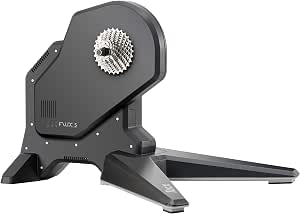 | Best for Quiet, Steady Training | Trainer type: Direct-drive smart trainer | Power accuracy: Within 3% | Maximum simulated incline: 10% | VIEW LATEST PRICE | See Our Full Breakdown |
| Garmin Tacx Boost Indoor Bike Trainer |  | Best for Simple Manual Training | Resistance mechanism: Magnetic | Resistance levels: 10 | Maximum power: 1,050 W | VIEW LATEST PRICE | See Our Full Breakdown |
| ThinkRider X2Max Smart Bike Trainer |  | Best Value Smart Direct-Drive Pick | Trainer type: Smart bike trainer | Maximum power: 2,000 W | Power meter error: ±2% | VIEW LATEST PRICE | See Our Full Breakdown |
| Wahoo Fitness KICKR CORE 2 Indoor Smart Trainer with Zwift Cog and Click |  | Best for Zwift Setup Simplicity | Brand: Wahoo Fitness | Resistance mechanism: Electronic | Number of settings: 20 | VIEW LATEST PRICE | See Our Full Breakdown |
| Sportneer Fluid Bike Trainer for 26–29-Inch and 700C Wheels |  | Best Value for Wheel-On Training | Brand: Sportneer | Model: F1 | Compatible wheel sizes: 26–29 inches and 700C | VIEW LATEST PRICE | See Our Full Breakdown |
| Wahoo KICKR V6 Smart Indoor Cycling Trainer with Zwift Click and Cog |  | Best for High-Power Structured Training | Brand: Wahoo Fitness | Connectivity: 2.4 GHz Wi-Fi | Maximum resistance: Over 2,200 watts | VIEW LATEST PRICE | See Our Full Breakdown |
| CYCPLUS R200 Smart Bike Trainer |  | Best for Flexible Power and Gradient Features | Brand: CYCPLUS | Peak power: 2200 W | Maximum torque: 80 N·m | VIEW LATEST PRICE | See Our Full Breakdown |
| indoor cycling trainer | Weight | Warranty | Resistance mechanism | Trainer type |
|---|---|---|---|---|
| Garmin Tacx NEO 3M Smart Train | 52 pounds | 1 year limited | — | Direct-drive smart trainer |
| Garmin Tacx Antares Indoor Bic | 18.7 pounds | — | — | — |
| Garmin Tacx NEO 2T Smart Train | 47.4 pounds | — | — | Direct-drive smart trainer |
| Wahoo KICKR V6 Smart Indoor Bi | 22 kg | — | Electromagnetic | Smart indoor bike trainer |
| CYCPLUS T2 Smart Bike Trainer | 17.2 kg | Two years | — | — |
| ThinkRider XXPRO Smart Bike Tr | — | 1 year | Electromagnetic | Direct-drive smart trainer |
| Saris M2 Smart Indoor Electrom | 20 lb | Limited lifetime | Electronic | Wheel-on smart trainer |
| Tacx Flux S Smart Direct-Drive | 50 lb | 2-year limited | Electromagnetic | Direct-drive smart trainer |
| Garmin Tacx Boost Indoor Bike | — | 1-year limited | Magnetic | — |
| ThinkRider X2Max Smart Bike Tr | 35.2 lb | — | — | Smart bike trainer |
| Wahoo Fitness KICKR CORE 2 Ind | — | 2 years | Electronic | — |
| Sportneer Fluid Bike Trainer f | 24.3 lb | — | Fluid | — |
| Wahoo KICKR V6 Smart Indoor Cy | 18 kg | 1 year | Electromagnetic | — |
| CYCPLUS R200 Smart Bike Traine | — | 2 years | Magnetic | — |
More Details on Our Top Picks
Garmin Tacx NEO 3M Smart Trainer
I’d put the Tacx NEO 3M first for riders who want a richly simulated indoor ride rather than a basic resistance unit. Its multidirectional movement adds side-to-side motion, while virtual road surfaces and gradients up to 25% give training apps more ways to shape the ride. Power, speed, and cadence are measured within 1%, and the 2,200-watt ceiling suits hard sprint sessions as well as climbing workouts. Compared with the Tacx NEO 2T, the 3M adds movement and road-surface simulation; the KICKR V6 also moves under load, but does not list those virtual road effects. The tradeoff is a substantial 52-pound frame, and some training features require a subscription. A pre-installed cassette and no calibration requirement simplify setup, though cassette compatibility still matters.
Pros:- Multidirectional movement can be switched on or off
- Simulates road surfaces and gradients up to 25%
- Measures power, speed, and cadence within 1%
- Pre-installed cassette and no calibration requirement simplify setup
Cons:- At 52 pounds, it is cumbersome to move and store
- Some training features require a premium subscription
- The included 11-speed cassette may not suit every bike drivetrain
Best for: Serious indoor riders who want app-based climbing, road-surface effects, and multidirectional movement in one direct-drive trainer.
Not ideal for: Riders who need to move or store their trainer often, or who want to avoid subscription-dependent training features.
- Trainer type:Direct-drive smart trainer
- Maximum power:2,200 watts
- Measurement accuracy:Within 1%
- Simulated incline:Up to 25%
- Measurements:Power, speed, and cadence
- Cassette:Pre-installed 11-speed
- Weight:52 pounds
- Warranty:1 year limited
Our verdict“Choose the Tacx NEO 3M for a feature-rich, immersive ride feel; skip it if low weight and simple ownership matter more.”
Garmin Tacx Antares Indoor Bicycle Rollers, 62 cm
The Tacx Antares rollers take a different route from the direct-drive trainers in this roundup: they train balance and pedaling smoothness without app control or a power connection. Their tapered rollers help keep the wheels centered, while the 26–29-inch fit covers many common bike setups. Unlike the Tacx NEO 3M or Wahoo KICKR V6, the Antares do not supply electronically controlled resistance or ride data, so they suit skill practice and straightforward spinning better than structured virtual workouts. They require no power and are described as maintenance-free, which keeps the setup simple. The tradeoff is that riders must balance the bike themselves, and the 53-inch maximum footprint takes meaningful floor space during use. They fold down for storage, but wheel-size compatibility is limited.
Pros:- Tapered rollers help keep wheels centered
- Requires no power connection
- Foldable for storage
- No routine maintenance is listed
Cons:- Does not provide app-controlled resistance or training measurements
- Requires the rider to balance on the rollers
- Fits only bikes with 26- to 29-inch wheels and occupies a 53 × 18.5-inch footprint when set up
Best for: Cyclists who want to practice balance, cadence, and smooth pedaling on a compatible bike without connecting to a training app.
Not ideal for: Riders seeking measured power, automatic resistance changes, or guided virtual climbs like those available on the Tacx NEO 3M.
- Type:Indoor bicycle rollers
- Compatible wheel diameter:26–29 inches
- Roller diameter:3.93–4.33 inches (100–110 mm)
- Maximum footprint:53 × 18.5 inches
- Folded dimensions:31.5 × 18.5 × 5.31 inches
- Weight:18.7 pounds
- Frame material:Metal
Our verdict“Pick the Antares for simple, power-free balance practice, not for data-driven or app-controlled indoor training.”
Garmin Tacx NEO 2T Smart Trainer
The Tacx NEO 2T is a strong fit for riders who want responsive direct-drive training without paying for the NEO 3M’s listed movement and road-surface effects. Its redesigned magnets and motor are intended to reduce noise and vibration, while the trainer responds to changes in speed and incline for a smoother app-guided session. ANT+ and Bluetooth support a broad range of devices and training setups. Compared with the rollers in this roundup, it handles resistance and virtual workouts rather than relying on rider balance; compared with the newer NEO 3M, it gives up multidirectional movement. Its 47.4-pound weight still makes it awkward to carry, and buyers need to check bike and axle compatibility before setup. The included free hub and adapter set help with common standards, but do not eliminate that fit check.
Pros:- Designed for quiet operation with reduced vibration
- Responds to changes in speed and incline
- Supports both ANT+ and Bluetooth
- Includes a free hub and axle adapter set
Cons:- Weighs 47.4 pounds, making frequent moving difficult
- Bike and axle compatibility must be checked before purchase
- Does not list the NEO 3M’s multidirectional movement or road-surface simulation
Best for: Indoor cyclists who want quiet, app-connected direct-drive training and have a compatible bike and axle setup.
Not ideal for: Riders who need a lightweight trainer to move frequently or want the NEO 3M’s listed multidirectional movement and road-surface effects.
- Trainer type:Direct-drive smart trainer
- Resistance:Magnetic, with 32 neodymium magnets
- Wireless connectivity:ANT+ and Bluetooth
- Compatible operating systems:iOS, Android, macOS, and Windows
- Weight:47.4 pounds
- Foldable:Yes
- Included components:Front wheel support, quick-release skewer, Shimano/SRAM free hub, axle adapter set, and one-month Tacx Premium software
Our verdict“Choose the NEO 2T for quiet, responsive app training if you can accommodate its weight and confirm your bike fits.”
Wahoo KICKR V6 Smart Indoor Bike Trainer
The Wahoo KICKR V6 makes the most sense for riders who want a high-power smart trainer with Wi-Fi data connectivity and automatic calibration. Its 2,200-watt resistance and stated ±1% accuracy support demanding sessions, while AXIS feet add side-to-side movement under load. Wi-Fi gives it a connection option beyond the ANT+ and Bluetooth listed for the Tacx NEO 2T, which may appeal to riders building a connected training setup. It also shares the NEO 3M’s 2,200-watt ceiling and movement-oriented approach, but the NEO 3M adds simulated road surfaces and gradients up to 25%. The KICKR V6’s listed dimensions are large, and it requires a compatible bike and setup. Its 22-kilogram weight is easier to parse than its footprint, so check the available floor space before choosing it.
Pros:- Wi-Fi connectivity sends ride data to compatible devices
- Provides up to 2,200 watts with stated ±1% power accuracy
- AXIS feet provide side-to-side movement
- Automatic calibration helps maintain power accuracy
Cons:- Requires a compatible bike and setup
- Listed dimensions of 71 × 44 × 51 inches call for a careful space check
- Does not list the NEO 3M’s simulated road surfaces or incline figure
Best for: App-based riders who want Wi-Fi ride-data transfer, automatic calibration, and a high-power trainer with some side-to-side movement.
Not ideal for: Cyclists with limited training space or those who want a trainer with the NEO 3M’s stated road-surface effects and up-to-25% incline simulation.
- Trainer type:Smart indoor bike trainer
- Connectivity:2.4 GHz Wi-Fi
- Maximum resistance:2,200 watts
- Power accuracy:±1%
- Resistance mechanism:Electromagnetic
- Weight:22 kg
- Dimensions:71 × 44 × 51 inches
- Load capacity:250 kg
Our verdict“Choose the KICKR V6 for Wi-Fi-connected, automatically calibrated training if you have room for its large listed footprint.”
CYCPLUS T2 Smart Bike Trainer
The CYCPLUS T2 stands out for riders who want smart-trainer power without leaving a full-size unit permanently set up. It folds and includes a handle for moving and storage, while its 17.2-kilogram weight is well below the 52-pound Tacx NEO 3M. The brushless motor offers up to 2,200 watts, ±1% power accuracy, and gradient simulation up to 20%, making it capable on paper for demanding app workouts. BLE and ANT+ support app connections, and the two-year warranty is longer than the one-year terms listed for the NEO 3M and KICKR V6. Its main limitation is virtual shifting: that feature requires the separately sold BC2 shifter. The stated 220-pound maximum user weight is another point to check, and its 20% gradient figure falls short of the NEO 3M’s 25% simulation.
Pros:- Offers up to 2,200 watts with ±1% power accuracy
- Simulates gradients up to 20%
- Connects to apps through BLE and ANT+
- Folds and includes a handle for moving and storage
Cons:- Virtual shifting requires the separately sold BC2 shifter
- Maximum user weight is 220 pounds
- Gradient simulation is lower than the Tacx NEO 3M’s listed 25%
Best for: Riders who need a foldable, app-connected smart trainer and want high stated resistance without the NEO 3M’s heavier frame.
Not ideal for: Cyclists above the stated 220-pound maximum user weight, or riders who want virtual shifting included rather than buying the BC2 separately.
- Motor:Brushless, 85 N·m
- Maximum resistance:2,200 watts
- Power accuracy:±1%
- Gradient simulation:Up to 20%
- Connectivity:BLE and ANT+
- Maximum user weight:220 pounds
- Weight:17.2 kg
- Warranty:Two years
Our verdict“Pick the T2 for foldable, app-connected training and a two-year warranty, provided its weight limit and separate shifter requirement suit you.”
ThinkRider XXPRO Smart Bike Trainer, 2500W, 25% Gradient, ANT+ and BLE
The XXPRO is the strongest fit here for riders who want substantial virtual climbing range: its 25% gradient simulation exceeds the Tacx Flux S’s 10% and the ThinkRider X2Max’s 18%. Its 2,500-watt ceiling also leaves more headroom for hard sprint sessions than those two alternatives. Stated ±1% accuracy without calibration is a useful advantage for riders who care about repeatable power data, while ANT+, Bluetooth, GPS devices, PCs, and Zwift offer broad connection options. Self-generating operation means the trainer can work without its included power adapter, which may simplify placement. The tradeoff is fit: the listed support for 26-inch wheels and road bikes is narrower than the X2Max’s stated mountain- and road-bike compatibility. Its 242-pound load limit also rules it out for some riders.
Pros:- 25% simulated gradient exceeds the listed climbing range of the Tacx Flux S and ThinkRider X2Max
- Up to 2,500 watts supports demanding sprint workouts
- ±1% stated data accuracy with no calibration required
- ANT+, Bluetooth, GPS device, PC, and Zwift connectivity; can operate without the power adapter
Cons:- Listed compatibility is limited to 26-inch wheels and road bikes
- 242-pound load capacity may exclude some riders
- One-year warranty is shorter than the Saris M2’s limited lifetime warranty
Best for: Road-bike riders who prioritize steep Zwift climbs, high sprint resistance, and precise stated power data.
Not ideal for: Riders whose bikes do not match the listed 26-inch wheel and road-bike fit, or whose weight exceeds the 242-pound capacity.
- Trainer type:Direct-drive smart trainer
- Maximum power:2,500 W
- Maximum simulated gradient:25%
- Data accuracy:±1%
- Connectivity:ANT+ and Bluetooth (BLE)
- Resistance mechanism:Electromagnetic
- Listed bike fit:Road bike; 26-inch wheel
- Load capacity:242 lb
- Warranty:1 year
Our verdict“Choose the XXPRO if steep virtual climbs and high stated power accuracy matter more than broad bike-fit compatibility.”
Saris M2 Smart Indoor Electromagnetic Bike Trainer
The Saris M2 suits riders who want app-connected workouts without taking off the rear wheel. That wheel-on setup is its clearest difference from the direct-drive ThinkRider XXPRO and Tacx Flux S, which require the bike to be mounted differently. ANT+ FE-C and Bluetooth support connections to Zwift and other cycling apps, while the clutch knob helps set tire-to-roller contact without relying solely on guesswork. The tradeoff is less precise stated power data: its ±5% accuracy trails the XXPRO’s ±1% and X2Max’s ±2%. It is also rated at 69 dB at 20 mph, so it is not the best pick for noise-sensitive rooms. A 300-pound capacity and limited lifetime warranty are strong practical advantages, though riders should confirm the listed wheel and bike fit before buying.
Pros:- Wheel-on design avoids removing the rear wheel
- ANT+ FE-C and Bluetooth support app connections, including Zwift
- Clutch knob helps maintain tire-to-roller contact
- 300-pound load capacity and limited lifetime warranty
Cons:- ±5% stated accuracy is less precise than the ThinkRider XXPRO and X2Max
- Specified noise level is 69 dB at 20 mph
- Wheel-on contact depends on correct tire-to-roller setup
Best for: Riders who want to keep their rear wheel installed and connect a compatible bike to indoor training apps.
Not ideal for: Power-focused riders seeking tighter stated accuracy, or people training in a room where the specified 69 dB noise level would be disruptive.
- Trainer type:Wheel-on smart trainer
- Resistance mechanism:Electronic
- Connectivity:ANT+ FE-C and Bluetooth
- Accuracy:±5%
- Noise level:69 dB at 20 mph
- Weight:20 lb
- Load capacity:300 lb
- Listed wheel size:29 inches
- Warranty:Limited lifetime
Our verdict“Pick the Saris M2 for convenient wheel-on app training, but choose a direct-drive option if quieter operation or tighter power accuracy is the priority.”
Tacx Flux S Smart Direct-Drive Bike Trainer
The Tacx Flux S makes the most sense for riders who want a direct-drive setup with app compatibility and measured power, but do not need extreme climbing simulation. Its stated accuracy within 3% sits between the ThinkRider X2Max’s ±2% and the Saris M2’s ±5%, while its 10% incline range is more modest than either ThinkRider smart trainer. A heavy flywheel is intended to give pedaling a more realistic feel, and the next-to-silent design is a strong advantage over the wheel-on Saris, which is specified at 69 dB at 20 mph. At up to 1,500 watts, it can handle many structured workouts, but it offers less sprint headroom than the X2Max or XXPRO. Its 50-pound weight also makes it a poor choice for frequent moving or storage.
Pros:- Direct-drive design is described as next-to-silent
- Power accuracy specified within 3%
- Compatible with popular training apps, including Zwift
- Heavy flywheel supports a more realistic ride feel
Cons:- 10% maximum incline is below the ThinkRider X2Max and XXPRO
- 1,500-watt maximum sprint resistance is lower than both ThinkRider models
- 50-pound weight makes moving and storage less convenient
Best for: Indoor riders who want a quiet direct-drive trainer for app-based workouts and do not need steep simulated climbs or very high sprint resistance.
Not ideal for: Riders who need a portable trainer, more than 10% incline simulation, or sprint resistance above 1,500 watts.
- Trainer type:Direct-drive smart trainer
- Power accuracy:Within 3%
- Maximum simulated incline:10%
- Maximum sprint resistance:1,500 W
- Resistance mechanism:Electromagnetic
- Weight:50 lb
- Bike type:Mountain bike
- Warranty:2-year limited
Our verdict“Choose the Flux S for quieter direct-drive workouts and app compatibility if its 10% climb range and 1,500-watt limit meet your training needs.”
Garmin Tacx Boost Indoor Bike Trainer
The Tacx Boost is the straightforward choice in this group: it uses manual magnetic resistance rather than the app-controlled smart resistance found on the ThinkRider X2Max, XXPRO, and Tacx Flux S. Ten levels adjust from a handlebar lever, giving riders quick control without needing a training app or wireless pairing. Garmin says setup takes two clicks, and the included front-wheel support doubles as a carrying handle, so this 8.5-kilogram option is easier to relocate than the 50-pound Tacx Flux S. Its 1.65-kilogram flywheel and enclosed resistance unit are designed to support a steadier, quieter indoor ride. The compromise is that resistance is not automatically matched to virtual routes, so it cannot deliver the interactive gradient changes offered by smart trainers. It is better for simple indoor sessions than data-led training.
Pros:- Ten magnetic resistance levels adjust from a handlebar lever
- Two-click setup and included front-wheel support
- Front-wheel support also serves as a carrying handle
- Enclosed resistance unit helps reduce noise
Cons:- Manual resistance does not automatically follow virtual routes
- Lacks the app connectivity and smart resistance of the ThinkRider X2Max and Tacx Flux S
- Listed for 24-inch wheels, so bike fit should be checked before purchase
Best for: Riders who want a relatively light, quick-to-set-up trainer for manually controlled indoor rides without relying on cycling apps.
Not ideal for: Zwift users who want automatic resistance changes, connected power data, or realistic virtual gradient control.
- Resistance mechanism:Magnetic
- Resistance levels:10
- Maximum power:1,050 W
- Flywheel weight:1.65 kg (3.64 lb)
- Item weight:8.5 kg
- Listed wheel size:24 inches
- Included components:Trainer, front-wheel support, documentation
- Warranty:1-year limited
Our verdict“Choose the Tacx Boost for uncomplicated manual indoor workouts, not for app-led training with automatic resistance control.”
ThinkRider X2Max Smart Bike Trainer
The X2Max offers a useful middle ground for riders who want smart direct-drive training without the XXPRO’s higher power ceiling and steeper climb range. Its 2,000-watt output, 18% simulated slope, and ±2% stated power error cover demanding indoor sessions, though the XXPRO reaches 2,500 watts, simulates 25% gradients, and claims ±1% accuracy. The X2Max’s stated support for both mountain and road bikes is broader than the XXPRO’s road-bike listing, and ANT+ plus BLE connect it with Zwift and other software. At about 58 dB at 30 km/h, it offers a defined noise specification, while its iron frame weighs 35.2 pounds. The main extra to budget for is fitment work: a cassette is not included, and the listed wheel size is 26 inches.
Pros:- ANT+ and BLE connectivity supports cycling software such as Zwift
- 18% simulated slope and up to 2,000 W cover demanding workouts
- ±2% stated power error
- Listed compatibility includes mountain and road bikes
Cons:- Cassette is not included
- Listed wheel size is 26 inches, so compatibility needs checking
- One-year warranty is shorter than the Tacx Flux S’s two-year limited warranty
Best for: Road- and mountain-bike riders seeking app-connected direct-drive training, substantial climb simulation, and stated ±2% power accuracy.
Not ideal for: Riders who need the XXPRO’s higher wattage and 25% gradient, or buyers who want a trainer supplied with a cassette.
- Trainer type:Smart bike trainer
- Maximum power:2,000 W
- Power meter error:±2%
- Maximum simulated slope:18%
- Connectivity:ANT+ and BLE
- Noise level:About 58 dB at 30 km/h
- Compatible bike types:Mountain bike and road bike
- Weight:35.2 lb
- Cassette:Not included
Our verdict“Choose the X2Max for broad stated bike-type support and strong smart-training capability, provided you supply a compatible cassette and confirm wheel fit.”
Wahoo Fitness KICKR CORE 2 Indoor Smart Trainer with Zwift Cog and Click
The KICKR CORE 2 is a strong fit for riders who want smart-trainer resistance and Zwift controls without making cassette selection the first setup hurdle. Its included Zwift Cog and Click support virtual shifting, while Wi-Fi handles pairing and automatic updates. Compared with the wheel-on Sportneer Fluid Bike Trainer, this direct-drive-style smart option is better suited to structured app training and simulated changes in effort; the Sportneer is the simpler choice for riders who prefer fluid resistance and a folding frame. The CORE 2 also accommodates both QR and thru-axle setups, broadening its fit across bikes. Its tradeoffs are a 200-pound listed load capacity and reliance on an active Wi-Fi network for automatic updates. I’d choose it for app-focused training, not maximum flexibility for offline use.
Pros:- Includes Zwift Cog and Click for virtual shifting
- Electronic resistance supports structured indoor training
- Wi-Fi enables pairing and automatic updates
- Adapters support QR and thru-axle setups
Cons:- Automatic updates require an active Wi-Fi network
- Listed load capacity is 200 pounds
- Requires a compatible bicycle
Best for: Zwift riders who want included virtual shifting, app-connected resistance, and support for both QR and thru-axle bikes.
Not ideal for: Riders over the listed 200-pound load capacity or anyone who cannot provide Wi-Fi for automatic updates.
- Brand:Wahoo Fitness
- Resistance mechanism:Electronic
- Number of settings:20
- Item weight:13.6 kg
- Load capacity:200 pounds
- Frame material:Alloy steel
- Dimensions:20.4 x 23 x 18.5 inches
- Warranty:2 years
Our verdict“Choose the KICKR CORE 2 if you want a smart trainer with Zwift controls included and your bike fits its setup requirements.”
Sportneer Fluid Bike Trainer for 26–29-Inch and 700C Wheels
For riders who already own a compatible bike and want a straightforward indoor setup, the Sportneer F1 takes a less tech-heavy route than the smart trainers in this roundup. Its fluid resistance is described as smooth and quiet, and the wide base plus dual locking system help keep the bike steady during sessions. It folds for storage, a practical advantage over the heavier, more involved Wahoo KICKR V6. The tradeoff is that this is a wheel-on trainer rather than an app-connected smart trainer: the supplied details do not list smart connectivity, power measurement, or simulated gradients. Its 24.3-pound weight also makes it less convenient to carry than its folding design might suggest. I’d pick it for basic indoor riding, not data-led virtual training.
Pros:- Fluid resistance is described as smooth and quiet
- Fits 26–29-inch and 700C wheels
- Wide base and dual locking system support stability
- Folds for storage or transport
Cons:- Requires a compatible bicycle
- At 24.3 pounds, it is not especially light to move
- Product data does not list smart connectivity or power measurement
Best for: Cyclists with a compatible road bike who want a folding wheel-on trainer for indoor workouts without needing smart-app features.
Not ideal for: Riders seeking app-controlled resistance, trainer power data, or simulated climbs and descents.
- Brand:Sportneer
- Model:F1
- Compatible wheel sizes:26–29 inches and 700C
- Resistance mechanism:Fluid
- Resistance settings:8
- Frame material:Alloy steel
- Weight:24.3 lb
- Load capacity:300 lb
- Dimensions:24 × 7.9 × 25.2 in
Our verdict“Choose the Sportneer F1 for simple, foldable wheel-on riding, but look to a smart model such as the Wahoo KICKR V6 for connected training features.”
Wahoo KICKR V6 Smart Indoor Cycling Trainer with Zwift Click and Cog
The Wahoo KICKR V6 is the more performance-focused Wahoo option here, pairing automatic calibration and Wi-Fi with power accuracy listed at within ±1% and maximum resistance over 2,200 watts. That gives riders clear support for demanding intervals and app-guided efforts. Like the KICKR CORE 2, it includes Zwift Click and Cog, but the V6 adds stated power measurement and simulated climbs and descents. The CORE 2 may suit buyers who want a simpler smart setup; the V6 makes more sense when precise training data and high resistance matter more. Its 18 kg weight is substantial, and the listed bike compatibility is limited to most 8–12-speed bikes. I’d rank it for serious training rather than easy portability, and its one-year warranty is shorter than the CORE 2’s stated two years.
Pros:- Maximum resistance listed at over 2,200 watts
- Power accuracy specified within ±1%
- Automatic calibration and 2.4 GHz Wi-Fi
- Includes Zwift Click and Cog and simulates climbs and descents
Cons:- Listed weight is 18 kg
- Compatibility is listed for most 8–12-speed bikes
- Warranty is 1 year
Best for: Dedicated indoor cyclists training with apps who want high resistance, automatic calibration, and stated power accuracy for structured workouts.
Not ideal for: Riders with bikes outside the listed 8–12-speed compatibility or those who need a lightweight trainer or a longer listed warranty.
- Brand:Wahoo Fitness
- Connectivity:2.4 GHz Wi-Fi
- Maximum resistance:Over 2,200 watts
- Power accuracy:Within ±1%
- Bike compatibility:Most 8–12-speed bikes
- Resistance mechanism:Electromagnetic
- Weight:18 kg
- Dimensions:17 x 20 x 27 inches
- Warranty:1 year
Our verdict“Choose the KICKR V6 over the CORE 2 when high resistance and stated power accuracy matter more than lower weight or a longer listed warranty.”
CYCPLUS R200 Smart Bike Trainer
The CYCPLUS R200 pairs app connectivity through BLE and ANT+ with a brushless motor rated for 2,200 W peak power and gradient simulation up to 19%. Its ±1% power accuracy gives data-focused riders a clear reason to look beyond simpler options such as the wheel-on Sportneer F1. Self-powered or plug-in operation also gives it a useful setup distinction, while the Wahoo KICKR V6 offers a similar stated ±1% accuracy and high-power focus. The R200’s main catch is the add-on path to virtual shifting: the BC2 Shifter is sold separately, virtual shifting does not work with ERG mode, and the cassette is not included. I’d shortlist it for riders who value its connectivity and gradient range, but not for anyone expecting a complete shifting setup straight from the box.
Pros:- Connects to cycling apps through BLE and ANT+
- Simulates gradients up to 19%
- Power accuracy listed at ±1%
- Supports self-powered or plug-in operation
Cons:- Cassette is not included
- CYCPLUS BC2 Shifter for virtual shifting is sold separately
- Virtual shifting is not compatible with ERG mode
Best for: App-connected riders who want ANT+ and BLE support, accurate power readings, and gradient simulation, and are prepared to supply a cassette.
Not ideal for: Buyers who want included virtual-shifting controls or who rely on virtual shifting during ERG workouts.
- Brand:CYCPLUS
- Peak power:2200 W
- Maximum torque:80 N·m
- Power accuracy:±1%
- Gradient simulation:Up to 19%
- Connectivity:BLE and ANT+
- Resistance mechanism:Magnetic
- Load capacity:250 pounds
- Warranty:2 years
Our verdict“Choose the R200 for its connectivity, power accuracy, and gradient simulation if you are comfortable sourcing a cassette and treating virtual shifting as an add-on.”
How We Picked
I compared these trainers by the job they are built to do, rather than treating every model as a direct substitute. The ranking gives greater weight to ride control, app connectivity, realistic resistance, and versatility for riders seeking a smart indoor-training setup. I also considered setup demands, bike and wheel compatibility, stability, maintenance, and whether the design suits regular training or occasional use.
That approach puts capable, adaptable smart trainers ahead of simpler wheel-on units and rollers for most buyers searching for indoor cycling trainers. It does not make the lower-ranked options poor choices: they can be a better fit for riders prioritizing basic workouts, balance practice, lower setup complexity, or a particular budget. Similar models are separated by their feature packages and intended rider, while products with limited supplied specifications are not assigned performance claims that cannot be confirmed from the listing.
| indoor cycling trainer | Trainer type | Resistance mechanism |
|---|---|---|
| Garmin Tacx NEO 3M Smart Train | Direct-drive smart trainer | — |
| Garmin Tacx Antares Indoor Bic | — | — |
| Garmin Tacx NEO 2T Smart Train | Direct-drive smart trainer | — |
| Wahoo KICKR V6 Smart Indoor Bi | Smart indoor bike trainer | Electromagnetic |
| CYCPLUS T2 Smart Bike Trainer | — | — |
| ThinkRider XXPRO Smart Bike Tr | Direct-drive smart trainer | Electromagnetic |
| Saris M2 Smart Indoor Electrom | Wheel-on smart trainer | Electronic |
| Tacx Flux S Smart Direct-Drive | Direct-drive smart trainer | Electromagnetic |
| Garmin Tacx Boost Indoor Bike | — | Magnetic |
| ThinkRider X2Max Smart Bike Tr | Smart bike trainer | — |
| Wahoo Fitness KICKR CORE 2 Ind | — | Electronic |
| Sportneer Fluid Bike Trainer f | — | Fluid |
| Wahoo KICKR V6 Smart Indoor Cy | — | Electromagnetic |
| CYCPLUS R200 Smart Bike Traine | — | Magnetic |
Factors to Consider When Choosing Best Indoor Cycling Trainers
Before choosing a trainer, I would match it to the bike and riding habits you already have. A high-end smart trainer can be the wrong purchase if it does not fit your axle, occupies too much room, or adds app features you will not use. These factors help clarify where paying for more capability makes sense—and where a simpler setup is enough.
Direct-Drive, Wheel-On, or Rollers?
These designs ask for different compromises, so decide how you want to ride before comparing individual features. Direct-drive trainers attach at the rear axle and generally suit frequent structured workouts, while wheel-on trainers keep the bike assembled but depend on tire contact with the resistance unit. Rollers let the bike move beneath you, which favors balance and smooth-pedaling practice but takes more attention than a fixed trainer. A common mistake is buying rollers expecting the same hands-off stability as a stationary unit. If you switch between indoor and outdoor riding often, the time needed to mount and remove the bike may matter more than small differences in training features.
Check Bike Fit and Compatibility First
Compatibility is more than matching a trainer to a road or mountain bike. Check the bike’s rear axle type and spacing, cassette or cog requirements, wheel size for wheel-on models, and whether the trainer includes the parts needed for your drivetrain. App connectivity is another separate check: confirm the trainer supports the connection method used by your phone, tablet, computer, or cycling app. Do not assume that two products from the same brand share identical fit requirements. I would verify the bike model and trainer documentation before buying, especially when using thru-axles, unusual gearing, or more than one bike.
Pay for Smart Resistance Only If You’ll Use It
Smart trainers can change resistance in response to a virtual route or workout, which is useful for riders who follow structured sessions or train with cycling apps. A basic trainer can still support indoor riding, but you may need to adjust resistance manually and will get a less integrated experience. Training habits should drive the feature choice: someone who rides casually while watching a screen may not benefit from paying for advanced simulation. Another common mistake is focusing on headline power or gradient figures without checking whether the training app and device setup support the intended features. Choose the simplest system that covers your actual workouts, then spend extra only for functions you expect to use regularly.
Account for Setup, Noise, and Floor Space
A trainer’s day-to-day convenience can shape how often you use it. Consider whether the bike can stay mounted, where a fan and screen will go, and whether you have room to store the trainer when it is not in use. Wheel-on models and rollers may make bike setup feel different from direct-drive designs, and tire contact can affect noise and wear. The bike, drivetrain, floor surface, and room acoustics all influence how loud an indoor session feels, so product type alone cannot promise a quiet ride. If you live with others or train early, plan for a mat and ventilation, and check how much assembly or bike swapping your routine will involve.
Spend More for a Specific Training Benefit
Higher-end models make sense when their extra capabilities solve a problem you actually have: frequent structured sessions, a richer virtual ride experience, or a more capable home-training setup. Premium features are not a substitute for fit, and a simpler trainer that matches your bike and routine can be the more useful purchase. Before paying more, list the features that would change your workouts and separate them from specifications that merely sound impressive. Riders new to indoor training may get more benefit from a straightforward setup and a regular routine than from the most feature-rich unit. If you already train indoors often, spending more can be justified when the upgrade adds a clear, compatible function rather than a minor specification bump.
Think Through Your Full Indoor Setup
The trainer is only one part of a comfortable indoor session. You may also need a device mount, a fan, a mat, an appropriate drivetrain part, and a nearby power source, depending on the trainer and how you plan to ride. Plan the complete setup before choosing between a compact basic trainer and a larger smart unit. A trainer that stays assembled may be convenient in a dedicated workout area but frustrating in a shared room. If you plan to move it often, check its storage footprint and handling requirements rather than judging compactness from photos alone.
Frequently Asked Questions
Should I choose a direct-drive trainer or a wheel-on model?
Choose based on how often you train and how much setup you want to manage. A direct-drive trainer removes the rear wheel and is generally a better fit for regular smart workouts, but you need to confirm axle and drivetrain compatibility. A wheel-on trainer keeps the rear wheel in place and can suit occasional riding or a simpler indoor setup, though tire condition and contact with the resistance unit matter. If you share one trainer among bikes, compare the effort of swapping bikes and any required adapters. The best format is the one you can set up correctly and use consistently.
Do I need a smart trainer to use cycling apps?
Not always, but the experience depends on what you expect the app to control. A smart trainer can send ride data and adjust resistance for compatible workouts or virtual routes, while a basic trainer may offer only a manual resistance setting or require separate sensors for data. Check the app’s supported devices and connection methods before purchasing. Also distinguish app connectivity from automatic resistance: a trainer may connect to an app without offering every interactive feature you want. If you mainly need a place to pedal indoors, smart control may not be worth prioritizing.
What should I verify before buying a trainer for my bike?
Start with the rear axle standard and spacing, then check whether the trainer needs a cassette, cog, or other drivetrain parts. For wheel-on models, confirm the supported wheel size and consider whether your tire is appropriate for indoor use. Check app and device compatibility separately; a physical fit does not guarantee that your preferred phone, computer, or training app will connect as expected. If you own multiple bikes, verify fit for each one rather than assuming the trainer will accommodate them all. The bike and trainer manuals are the safest sources for model-specific fit details.
Are rollers a good choice for a beginner?
Rollers can help a rider work on balance, smooth pedaling, and control, but they require more attention than a trainer that holds the bike upright. A beginner who wants to follow workouts while concentrating on effort may find a fixed trainer easier to manage. Start with the intended use: rollers suit riders who want the bike to move naturally beneath them, while a stationary trainer better supports hands-free setup and app-led sessions. If you choose rollers, allow time to get comfortable mounting, riding, and stopping safely. They are a distinct training tool, not simply a cheaper replacement for every smart trainer.
Is it worth upgrading from a basic trainer to a premium smart model?
An upgrade is most useful when it changes how you train: for example, by adding automatic resistance, richer app interaction, or features suited to frequent structured sessions. If your current routine is steady pedaling with manually chosen resistance, a premium model may add little practical value. Identify the limitation you want to fix before comparing specifications, and make sure the new trainer fits your bike and devices. Also account for the space, setup, and accessories a more connected system may require. The upgrade makes more sense when you will use its added functions often, not simply because it sits higher in a product range.
Conclusion
For most riders seeking an adaptable smart-training setup, I would start with the Wahoo KICKR V6 as best overall, then compare it with the Garmin Tacx NEO 3M as best premium if its feature-rich indoor experience fits your goals. The Wahoo KICKR CORE 2 with Zwift Cog and Click is my best value direction for riders who want a more accessible app-based setup without moving straight to the premium tier. Beginners who prefer a simpler riding experience should look first at the Tacx Boost or another straightforward wheel-on option, while riders focused on balance practice should choose the Tacx Antares rollers. For a basic, app-independent ride, the Sportneer fluid trainer serves a different need than the smart models. Before deciding, confirm bike fit, connection needs, and available space; those details can matter more than moving up one place in the ranking.
Fall Picks
fall essentials
As an affiliate, we earn on qualifying purchases.