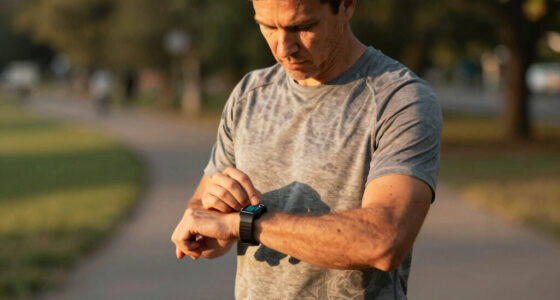
The best Garmin fitness trackers balance health insights, workout tools, fit, and ease of use. My best overall pick is the Garmin vívoactive 6, a versatile GPS smartwatch that suits everyday activity and varied workouts; the vívosmart 5 stands out for a simpler, slimmer tracker, while the Forerunner 165 is a more focused choice for runners. The main tradeoff is whether you want a discreet band, a general-purpose smartwatch, or a sport-specific watch with more training detail. Fit and screen size matter too, especially when comparing multiple sizes and finishes of the same model. Read on for the full breakdown and guidance on choosing the right Garmin for your routine.

Get workout gear delivered free — and shop member deals
- Fast, free delivery on millions of items
- Access to Prime Big Deal Days deals on October 6–7
- Prime Video, Amazon Music and more included
Complete the kit
Key Takeaways
The vívoactive 6 leads this lineup as the most balanced choice for people who want GPS workouts and everyday health tracking without choosing a specialist running or rugged watch.
The vívosmart 5 models share the same basic tracker proposition; their practical differences are band size and color, so sizing is more important than comparing finishes as separate feature tiers.
The Forerunner 165 is the more training-focused pick for runners, while a vívoactive model makes more sense for people splitting time across general fitness and daily smartwatch use.
The Lily 2 and Lily 2 Active serve different priorities: the standard Lily 2 favors a compact, style-led design, while the Active adds GPS for workouts where phone-free route tracking matters.
The lineup’s spread of small and large cases, slim bands, and rugged designs shows why wrist fit and workout type should shape the decision before color or appearance.

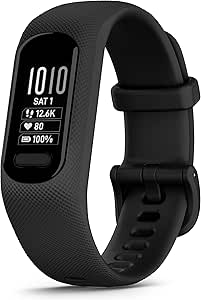


| Garmin fitness tracker | Battery life | Display | Color | Case size |
|---|---|---|---|---|
| Garmin vívosmart 5 Health and | Up to 7 days | 0.84-inch OLED, 88 x 154 resolution | Cool Mint | — |
| Garmin vívosmart 5 Health & Fi | Up to 7 days in smartwatch mode | Touchscreen; larger and brighter than vívosmart 4 | Black | — |
| Garmin vívoactive 5 GPS Fitnes | Up to 11 days in smartwatch mode | AMOLED | Black | 42 mm |
| Garmin vívoactive 5 Health and | Up to 11 days in smartwatch mode | AMOLED | Ivory | 42 mm |
| Garmin Lily 2 Stylish Smartwat | Up to 5 days | — | Coconut | 35 mm |
| Garmin vívoactive 6 Health and | Up to 11 days in smartwatch mode | AMOLED | Slate | 42 mm |
| Garmin Venu 4 GPS Smartwatch | Up to 12 days | — | — | 45 mm |
| Garmin Lily 2 Active GPS Smart | Up to 9 days | Touchscreen with patterned lens | Bone | 38 mm |
| Garmin vívosmart 5 Health and | Up to 7 days | 0.41-inch OLED, 320 × 180 | — | — |
| Garmin Instinct E Rugged GPS S | Up to 16 days | — | Charcoal | 45 mm |
| Garmin Forerunner 165 GPS Runn | — | AMOLED touchscreen | — | 43 mm |
| Garmin Venu 4 GPS Fitness Smar | Up to 12 days | Bright color display | — | 45 mm |
| Garmin vívoactive 5 Health and | Up to 11 days in smartwatch mode | AMOLED | Orchid | 42 mm |
| Garmin Venu 4 GPS Fitness Smar | Up to 10 days | Color touchscreen | Lunar Gold and Bone | 41 mm |
| Garmin vívosmart 5 Health and | Up to 7 days | Touchscreen | Black | — |
More Details on Our Top Picks
Garmin vívosmart 5 Health and Fitness Tracker, Small/Medium, Cool Mint
The vívosmart 5 in Small/Medium is the simplest fit here for buyers who want health and activity tracking without a watch-sized case. Its 24.5 g build and slim band suit all-day wear, while sleep, heart-rate, stress, and activity tracking give it more range than a basic step counter. It is also swim-friendly and lasts up to 7 days per charge. Compared with the vívoactive 5, it is smaller and less feature-rich: outdoor GPS depends on a paired phone, and there is no phone-free music playback. That tradeoff makes sense if you want a discreet tracker rather than a full smartwatch. Skip it if you need independent GPS or a large, vivid display; the OLED screen is compact, and Pulse Ox availability varies by country.
Pros:- Lightweight 24.5 g design suits continuous wear
- Tracks heart rate, sleep, stress, and a range of activities
- Swim-friendly and rated for water resistance to 1 meter
- Up to 7 days of battery life
Cons:- Outdoor GPS tracking requires a paired smartphone
- Small OLED display offers less room for metrics than the vívoactive 5
- Pulse Ox is unavailable in some countries and is not a medical device
Best for: Buyers with smaller wrists who want a lightweight, swim-friendly tracker for everyday health and activity habits.
Not ideal for: Runners who want GPS tracking without carrying a phone, or shoppers who prefer a large display and smartwatch training features.
- Size:Small/Medium
- Color:Cool Mint
- Display:0.84-inch OLED, 88 x 154 resolution
- Weight:24.5 g
- Battery life:Up to 7 days
- Water resistance depth:1 meter
- Connectivity:Bluetooth
- GPS:Uses smartphone GPS
Our verdict“Choose the Small/Medium vívosmart 5 for low-profile everyday tracking, but pick the vívoactive 5 if you want standalone GPS and broader smartwatch features.”
Garmin vívosmart 5 Health & Fitness Tracker, Large, Black
The Large vívosmart 5 keeps the straightforward tracker format but suits buyers who need the larger band size. It covers everyday essentials—sleep, heart rate, stress, respiration, and activity—and its touchscreen plus button controls give two ways to interact with a compact display. Swim-safe construction and up to seven days between charges make it practical for day-and-night wear. Compared with the Small/Medium Cool Mint vívosmart 5, the main distinction is fit, not capability; both rely on a connected phone for outdoor GPS. The vívoactive 5 is a better match for phone-free music, built-in GPS activities, and a more smartwatch-like experience, but it is a larger step up in form and features. Skip this band if independent GPS or advanced workout guidance is a priority.
Pros:- Large size offers an alternative fit to the Small/Medium vívosmart 5
- Tracks activity, sleep, heart rate, stress, and respiration
- Swim- and shower-safe for everyday wear
- Up to 7 days of battery life
Cons:- Outdoor GPS tracking requires a connected smartphone
- Some features require setup in Garmin Connect and a compatible phone
- Pulse Ox availability varies by country and readings are not medical measurements
Best for: Buyers who need a larger band fit and want basic health, sleep, and activity tracking in a slim, swim-safe device.
Not ideal for: Outdoor exercisers who leave their phone behind, or shoppers seeking built-in GPS, downloaded music, or richer training tools.
- Model:vívosmart 5
- Size:Large
- Color:Black
- Battery life:Up to 7 days in smartwatch mode
- Display:Touchscreen; larger and brighter than vívosmart 4
- Water use:Safe for swimming and showering
- GPS:Uses connected smartphone GPS
- Connectivity:Bluetooth
Our verdict“Pick the Large vívosmart 5 when fit and uncomplicated daily tracking matter more than independent GPS or smartwatch extras.”
Garmin vívoactive 5 GPS Fitness Smartwatch, 42 mm, Black
The vívoactive 5 is the most versatile pick in this group for buyers who want fitness tracking and smartwatch functions in one device. Its more than 30 sports apps, adaptive training features, and health and sleep insights give it a wider workout range than either vívosmart 5 tracker. Built-in GPS activities and phone-free music playback with compatible headphones also reduce how much you need to carry on a run. Battery life reaches up to 11 days in smartwatch mode, ahead of the vívosmart 5’s seven days. The tradeoff is a larger, more feature-dense watch rather than a slim band, and its health metrics are estimates, not clinical readings. Music downloads also depend on compatible services and setup. Choose a vívosmart instead if you value a low-profile tracker over richer sports tools.
Pros:- More than 30 indoor and GPS sports apps
- Up to 11 days of battery life in smartwatch mode
- Health, sleep, stress, and HRV status tracking
- Supports phone-free music playback with compatible wireless headphones
Cons:- Larger watch format is less discreet than the vívosmart 5
- Health metrics are estimates, not exact or medical measurements
- Music downloads require compatible accounts and setup
Best for: Fitness-minded buyers who want built-in GPS activities, broad workout options, health tracking, and phone-free music in one watch.
Not ideal for: People who want a discreet, lightweight band or expect health metrics to function as medical measurements.
- Case size:42 mm
- Color:Black
- Display:AMOLED
- Battery life:Up to 11 days in smartwatch mode
- Sports apps:More than 30 indoor and GPS activities
- Health tracking:Heart rate, sleep, stress, HRV status, menstrual cycle, and pregnancy tracking
- Music:Downloads supported from Spotify, Amazon Music, and Deezer
- Training features:Adaptive training features and preloaded workouts
Our verdict“Choose the vívoactive 5 if you want a do-more fitness watch with GPS and music, rather than the simpler, slimmer vívosmart 5.”
Garmin vívoactive 5 Health and Fitness GPS Smartwatch, 42 mm, Ivory
The Ivory vívoactive 5 brings the same broad fitness and GPS toolkit as the Black vívoactive 5, so the meaningful choice is its finish and how you use the display. It offers more than 30 indoor and GPS sports apps, health and sleep tracking, and music downloads for listening with wireless headphones. Compared with the vívosmart 5, this is the stronger training companion: it has built-in GPS activities and a vivid AMOLED screen, rather than phone-dependent GPS and a compact tracker display. Battery life is listed at up to 11 days with smartwatch use, but drops to up to five days with the display always on. That setting is a real tradeoff for buyers who want information visible at a glance. Health data is still an estimate, not a clinical measurement.
Pros:- More than 30 indoor and GPS sports apps
- Health, sleep, and recovery insights in a smartwatch format
- Music downloads support phone-free listening with wireless headphones
- Up to 11 days of battery life with the display use described for smartwatch mode
Cons:- Always-on display use reduces battery life to up to 5 days
- Health metrics are estimates rather than exact measurements
- Larger watch format is less discreet than either vívosmart 5
Best for: Buyers who want a GPS fitness smartwatch in an Ivory finish and are comfortable choosing between longer battery life and an always-on display.
Not ideal for: Anyone prioritizing the longest possible battery life with the screen always visible, or seeking a smaller band-style tracker.
- Case size:42 mm
- Color:Ivory
- Display:AMOLED
- Battery life:Up to 11 days in smartwatch mode
- Battery life with always-on display:Up to 5 days
- Sports apps:More than 30 indoor and GPS apps
- Music:Downloads supported from Spotify, Amazon Music, and Deezer
- Health features:Health monitoring, sleep insights, and recovery tracking
Our verdict“Choose this Ivory vívoactive 5 for broad GPS fitness features and an always-on display option, provided you accept shorter battery life in that mode.”
Garmin Lily 2 Stylish Smartwatch, 35 mm, Coconut
The Garmin Lily 2 is the most style-led choice here, using a 35 mm metal case and patterned lens to keep its touchscreen less watch-like when idle. It still covers a substantial set of wellness needs, including sleep score, stress, heart rate, respiration, hydration, and menstrual cycle and pregnancy tracking. Compared with the vívosmart 5, the Lily 2 puts more emphasis on jewelry-like design and a watch face; compared with the GPS-equipped vívoactive 5, it is smaller but more dependent on a phone. GPS and safety features require a compatible paired smartphone, and battery life is up to 5 days, shorter than either vívosmart 5 or vívoactive 5. Choose it for compact style and daily tracking, not phone-free outdoor workouts.
Pros:- Compact 35 mm metal case with a patterned lens and touchscreen
- Tracks sleep score, Body Battery, stress, heart rate, and other wellness measures
- Supports call, text, and calendar notifications
- Includes LiveTrack, incident detection, and Assistance when paired with a compatible smartphone
Cons:- GPS requires a compatible paired smartphone, unlike the vívoactive 5
- Up to 5 days of battery life is shorter than both vívosmart 5 models
- Safety features depend on phone setup, network coverage, and data connectivity
Best for: Buyers who want a small, polished smartwatch with broad wellness tracking and phone-connected activity and safety features.
Not ideal for: Runners who want standalone GPS or phone-free safety features, and buyers who prioritize longer battery life over compact design.
- Case size:35 mm
- Color:Coconut
- Case material:Metal
- Band material:Silicone
- Battery life:Up to 5 days
- GPS:Requires a compatible paired smartphone
- Health tracking:Sleep score, respiration, Body Battery, menstrual cycle and pregnancy tracking, hydration, stress, and heart rate
- Smart features:Call, text, and calendar notifications; LiveTrack, incident detection, and Assistance with a compatible smartphone
Our verdict“Pick the Lily 2 if compact styling is your priority and carrying a compatible phone for GPS and safety features is acceptable.”
Garmin vívoactive 6 Health and Fitness GPS Smartwatch, 42 mm, Slate
The vívoactive 6 is my strongest all-around pick for buyers who want fitness guidance and health tracking in a manageable 42 mm watch. Its AMOLED display, more than 80 sports apps, and personalized workout and recovery features make it more training-focused than the simpler vívosmart 5. It also offers a useful balance between everyday smartwatch features and structured exercise support, without the larger 45 mm case of the Venu 4.
Battery life reaches up to 11 days in smartwatch mode, though GPS and workout use can change that figure. The tradeoff is that its health metrics are estimates, not medical measurements, and its feature set may be more than a casual activity tracker buyer needs. I’d choose it for broad fitness use, not for medical monitoring.
Pros:- More than 80 indoor and GPS sports apps support a wide range of activities.
- Personalized workouts, Garmin Coach plans, and recovery guidance can help structure training.
- Up to 11 days of battery life in smartwatch mode.
- 42 mm case and AMOLED display balance visibility with a less bulky fit than the Venu 4.
Cons:- Health readings are estimates and are not a substitute for medical measurements.
- Its training and smartwatch feature set may be unnecessary for buyers who only want basic step and sleep tracking.
Best for: Fitness-focused buyers who want a mid-size GPS smartwatch with varied sports tracking, recovery guidance, and longer smartwatch battery life.
Not ideal for: People who want a slim, minimal band tracker or need medical-grade health measurements; the vívosmart 5 is simpler to wear, while this watch’s metrics are estimates.
- Display:AMOLED
- Case size:42 mm
- Color:Slate
- Battery life:Up to 11 days in smartwatch mode
- Sports apps:More than 80 indoor and GPS sports apps
- Health tracking:Wrist-based heart rate, sleep score, HRV status, stress, menstrual cycle, and pregnancy tracking
- Training features:Workout benefit, recovery time, animated workouts, and Garmin Coach plans
Our verdict“Choose the vívoactive 6 if you want one mid-size Garmin for everyday health tracking, GPS sports, and guided training.”
Garmin Venu 4 GPS Smartwatch, 45 mm, Black Silicone
The Venu 4 is the premium choice here for buyers who want a larger smartwatch with a stainless steel case, broad activity coverage, and the ability to take calls when paired with a phone. Compared with the 42 mm vívoactive 6, its 45 mm case gives it a more substantial presence, while its up to 12 days of battery life slightly exceeds that model’s stated smartwatch endurance. More than 80 sports apps and personalized training plans keep it useful beyond everyday notifications.
That larger build is also its main fit tradeoff: people with smaller wrists or a preference for a discreet tracker may find the Lily 2 Active a better match. Calls depend on smartphone pairing, and health metrics are estimates rather than medical readings. Pulse Ox availability also varies by country, so I wouldn’t choose this watch for a feature that may not be offered locally.
Pros:- Stainless steel case gives it a more substantial build than the vívoactive 6.
- Up to 12 days of battery life.
- More than 80 sports apps and personalized training plans support varied exercise.
- Can handle calls when paired with a smartphone.
Cons:- The 45 mm case may feel oversized for smaller wrists.
- Calls require a paired smartphone.
- Health metrics are estimates, and Pulse Ox availability varies by country.
Best for: Buyers who want a larger, premium-feeling Garmin smartwatch for training, health tracking, and phone-paired calls.
Not ideal for: People with smaller wrists or those who prefer a compact, understated watch; the 45 mm case is larger than the Lily 2 Active.
- Case size:45 mm
- Dimensions:45 × 45 × 12.5 mm
- Wrist circumference:135–200 mm
- Case material:Stainless steel
- Band material:Silicone
- Battery life:Up to 12 days
- Sports apps:More than 80
- Connectivity:GPS; smartphone pairing for calls
Our verdict“Pick the Venu 4 if you want a larger stainless steel Garmin with broad training tools and phone-paired calling.”
Garmin Lily 2 Active GPS Smartwatch, 38 mm, Bone
The Lily 2 Active is the compact option for buyers who want a watch-sized tracker without the larger look of the 42 mm vívoactive 6 or 45 mm Venu 4. Its 38 mm case and patterned lens put appearance first, while built-in GPS means outdoor workout tracking doesn’t depend on carrying a phone. Sleep, stress, energy, and women’s health tracking add everyday context, and Garmin Pay can make it handy for short outings.
The smaller design brings a more focused experience: it doesn’t offer the same emphasis on workout benefit, recovery time, and coaching found on the vívoactive 6. Battery life is up to 9 days, shorter than those larger watches, and smart notifications still require smartphone pairing. I’d pick it for compact style and essential fitness tracking, not for the broadest training toolkit.
Pros:- Compact 38 mm case offers a smaller alternative to the vívoactive 6 and Venu 4.
- Built-in GPS tracks outdoor workouts without relying on a paired phone for location.
- Tracks sleep, heart rate, stress, energy, respiration, and women’s health metrics.
- Garmin Pay and up to 9 days of battery life support everyday convenience.
Cons:- Up to 9 days of battery life is shorter than the vívoactive 6 and Venu 4 claims.
- Smart notifications require smartphone pairing.
- Garmin Pay depends on availability in the buyer’s country and support from their payment network.
Best for: Buyers with smaller wrists who want built-in GPS, everyday health tracking, and a compact watch with a patterned design.
Not ideal for: Training-focused users who want extensive coaching and recovery guidance; the vívoactive 6 provides more explicit training tools.
- Case size:38 mm
- Color:Bone
- GPS:Built-in
- Battery life:Up to 9 days
- Display:Touchscreen with patterned lens
- Health tracking:Sleep, heart rate, stress, energy, respiration, menstrual cycle, pregnancy, and hydration
- Payments:Garmin Pay
Our verdict“Choose the Lily 2 Active if a compact design and built-in GPS matter more to you than advanced training guidance.”
Garmin vívosmart 5 Health and Fitness Tracker, S/M, White
The vívosmart 5 suits buyers who want core health and activity tracking in a light, narrow band rather than a full GPS smartwatch. At 24.5 g, it is a more understated daily-wear option than the 42 mm vívoactive 6, and its touchscreen plus button gives a straightforward way to navigate activity and health information. It tracks heart rate, sleep, stress, and other metrics, with built-in sports profiles and up to seven days of battery life.
The key compromise is outdoor GPS: unlike the Lily 2 Active, the vívosmart 5 relies on a paired smartphone for GPS tracking. Its small OLED display also offers less room for workout information than a smartwatch screen. I’d choose it for lightweight, everyday tracking, but not if phone-free route tracking or richer on-watch training guidance is a priority.
Pros:- Lightweight 24.5 g design is less watch-like than the vívoactive 6.
- Tracks heart rate, sleep, stress, activity, and other health metrics.
- Up to 7 days of battery life.
- Water resistant to 50 meters and includes built-in sports profiles.
Cons:- GPS tracking relies on a paired smartphone.
- The 0.41-inch OLED display gives less room for workout details than a smartwatch display.
- Some features require setup and smartphone network coverage.
Best for: Buyers who want a lightweight, simple band for everyday health metrics, basic sports profiles, and smartphone notifications.
Not ideal for: Outdoor exercisers who want GPS without carrying a phone; the Lily 2 Active has built-in GPS.
- Connectivity:Bluetooth
- Band material:Silicone
- Water resistance:50 meters
- Battery life:Up to 7 days
- Display:0.41-inch OLED, 320 × 180
- Weight:24.5 g
- Band width:11 mm
- Size and color:S/M, White
Our verdict“Pick the vívosmart 5 if you want a light daily tracker and can accept phone-dependent GPS and a small screen.”
Garmin Instinct E Rugged GPS Smartwatch, 45 mm, Charcoal
The Instinct E is the outdoor-oriented pick in this group, built for buyers who value durability, navigation tools, and long battery life over a more polished fitness-watch feel. Its 10 ATM water rating and stated thermal and shock resistance suit demanding environments better than the compact Lily 2 Active. Multi-GNSS navigation, a 3-axis compass, and barometric altimeter also give it practical route and elevation tools that the more everyday-focused vívoactive 6 does not list in its supplied specifications.
At up to 16 days, its battery claim leads this group, though actual use can affect endurance. The rugged 45 mm format is less suited to buyers seeking a small, discreet tracker, and some smart features depend on a compatible phone. Health monitoring is available, but its readings are estimates, not medical measurements.
Pros:- Up to 16 days of battery life, the longest stated duration in this group.
- 10 ATM water rating and thermal and shock resistance support demanding outdoor use.
- Multi-GNSS navigation, 3-axis compass, and barometric altimeter add route and elevation tools.
- Includes wrist-based heart rate, advanced sleep monitoring, and Pulse Ox.
Cons:- The rugged 45 mm design may feel large for smaller wrists or everyday minimalist wear.
- Smart notifications and Connect IQ Store integration require a compatible smartphone.
- Health metrics are estimates, and Pulse Ox is not available in every country.
Best for: Hikers and outdoor users who want a rugged Garmin with multi-GNSS navigation, a compass, an altimeter, and extended battery life.
Not ideal for: Buyers who prioritize a compact, dress-friendly tracker or call and smartwatch features; the Lily 2 Active is smaller, while phone pairing is needed for some Instinct E features.
- Case size:45 mm
- Color:Charcoal
- Battery life:Up to 16 days
- Durability:MIL-STD-810 thermal and shock resistance
- Navigation:3-axis compass, barometric altimeter, and multi-GNSS
- Health monitoring:Wrist-based heart rate, advanced sleep monitoring, and Pulse Ox
- Connectivity:Smart notifications and Connect IQ Store integration with a compatible smartphone
Our verdict“Choose the Instinct E if ruggedness, navigation tools, and long battery life matter more than a compact everyday design.”
Garmin Forerunner 165 GPS Running Smartwatch, 43 mm, Black
The Forerunner 165 is the clearest fit here for runners who want training guidance tied to GPS-recorded workouts. Built-in GPS means you can leave your phone behind for route tracking, while wrist-based heart rate and personalized race and workout guidance help make training easier to structure. Its AMOLED touchscreen and button controls offer a useful balance: touch is convenient for everyday use, and buttons provide an alternative during exercise. Compared with the vívoactive 5, this model puts more emphasis on running plans rather than downloaded music and broad health features. Battery life reaches up to 11 days in smartwatch mode, though GPS use is rated for up to 19 hours. Skip it if you mainly want a general-purpose tracker or expect safety features to work without a compatible phone and network.
Pros:- Built-in GPS records outdoor runs without carrying a phone
- Personalized workout and race training guidance supports structured training
- AMOLED touchscreen paired with traditional button controls
- Up to 11 days of smartwatch-mode battery life
Cons:- GPS battery life is up to 19 hours, shorter than its smartwatch-mode figure may suggest
- Safety features depend on a compatible smartphone and network coverage
- Garmin Pay availability depends on country and supported payment networks
Best for: Runners who want built-in GPS, race and workout guidance, and a watch that can track outdoor sessions without a phone
Not ideal for: People seeking a slim, simple band or relying on phone-free safety features; safety functions need a compatible smartphone and network coverage
- Display:AMOLED touchscreen
- Case size:43 mm
- GPS battery life:Up to 19 hours
- Smartwatch battery life:Up to 11 days
- Activity profiles:25+
- Heart rate monitoring:Wrist-based
- Payments:Garmin Pay
- Smartphone compatibility:Android and Apple smartphones
Our verdict“Choose the Forerunner 165 if running plans and phone-free GPS tracking matter more to you than the vívoactive 5’s broader everyday and music features.”
Garmin Venu 4 GPS Fitness Smartwatch, 45 mm, Silver Gray with Silicone Band
The 45 mm Venu 4 suits buyers who want a full-featured fitness smartwatch, not just a step and sleep tracker. Its bright color display, stainless steel case, built-in GPS, and more than 80 sports apps give it broader everyday and workout coverage than the Forerunner 165, which is more focused on running guidance. Sleep coaching and health tracking add useful context between training sessions, while calls work when the watch is paired with a smartphone. Battery life is rated at up to 12 days, the longest stated figure among these five choices, but GPS use and other active features can affect real-world runtime. That larger case may also feel like too much watch on a smaller wrist. Health readings are estimates, and calling is not phone-free.
Pros:- Built-in GPS and more than 80 sports apps cover varied workouts
- Up to 12 days of stated battery life
- Stainless steel case and bright color display
- Supports calls when paired with a smartphone
Cons:- Calls require a paired smartphone rather than working independently
- Health metrics are estimates, not medical measurements
- The 45 mm case may be bulky for smaller wrists
Best for: Buyers who want a premium, larger-screen Garmin for varied sports, sleep and health tracking, and smartphone-linked calls
Not ideal for: People with smaller wrists or shoppers who want a compact tracker; the 45 mm case is larger than the 41 mm Venu 4 and 42 mm vívoactive 5
- Case size:45 mm
- Case material:Stainless steel
- Band material:Silicone
- Display:Bright color display
- GPS:Built-in
- Battery life:Up to 12 days
- Sports apps:More than 80
- Water resistance:50 meters
- Connectivity:Bluetooth
Our verdict“Pick this Venu 4 if you want the larger display, extensive sports coverage, and long stated battery life, and are comfortable wearing a 45 mm watch.”
Garmin vívoactive 5 Health and Fitness GPS Smartwatch, 42 mm, Orchid
The vívoactive 5 makes a strong case for everyday fitness buyers who want a smartwatch that can handle workouts and music without a phone in hand. It pairs built-in GPS with more than 30 sports apps, while downloadable tracks and playlists let you listen through wireless headphones during a run or walk. Its AMOLED display and up to 11 days of smartwatch-mode battery life make it more watch-like than the simpler vívosmart 5 band. Compared with the Forerunner 165, the vívoactive 5 gives more attention to health tracking and stored music than to personalized race guidance. Its tradeoff is that downloaded listening needs tracks prepared in advance, and its health metrics are estimates. Choose it for an all-rounder, not a dedicated running-plan watch.
Pros:- Built-in GPS supports outdoor activity tracking without a connected phone
- More than 30 sports apps cover indoor and GPS activities
- Downloadable music and playlists support phone-free listening
- Health tools include sleep coaching, HRV status, and recovery time
Cons:- Wireless headphone listening may require tracks to be downloaded in advance
- Health metrics are estimates rather than medical measurements
- Less focused on personalized race guidance than the Forerunner 165
Best for: Fitness-minded users who want built-in GPS, broad health tracking, and downloaded music for workouts without carrying a phone
Not ideal for: Runners who prioritize personalized race guidance or people who want streaming music without preparing downloads
- Display:AMOLED
- Case size:42 mm
- Battery life:Up to 11 days in smartwatch mode
- Sports apps:More than 30
- GPS:Built-in
- Health features:Body Battery, sleep score and coaching, HRV status, wrist-based heart rate, stress tracking, nap detection, and recovery time
- Music:Downloadable music and playlists from Spotify, Amazon Music, and Deezer
- Color:Orchid
Our verdict“Choose the vívoactive 5 if stored music and wide-ranging health features matter more than the Forerunner 165’s running-specific guidance.”
Garmin Venu 4 GPS Fitness Smartwatch, 41 mm, Bone Silicone Band
This 41 mm Venu 4 keeps much of the larger Venu 4’s fitness-and-smartwatch mix in a smaller case. Built-in GPS, more than 80 sports apps, health and sleep tracking, and personalized training plans make it a broader choice than the slim vívosmart 5, which relies on a connected phone for GPS. The color touchscreen and stainless steel case give this model a more watch-like presence, while its up to 10 days of battery life is a little below the 45 mm Venu 4’s stated 12 days. Smartphone-paired calling is available, but the phone still needs to be nearby and connected. This size is the better Venu 4 fit for smaller wrists, though buyers should know that some features, including Pulse Ox, vary by country.
Pros:- 41 mm case offers a smaller alternative to the 45 mm Venu 4
- Built-in GPS and more than 80 sports apps support varied training
- Personalized training plans pair with health and sleep tracking
- Stainless steel case and color touchscreen deliver a watch-style design
Cons:- Up to 10 days of battery life is less than the 45 mm Venu 4’s stated 12 days
- Calls require a paired smartphone
- Some features, including Pulse Ox, are not available in every country
Best for: Buyers with smaller wrists who want built-in GPS, extensive sports options, and premium smartwatch functions in a 41 mm case
Not ideal for: People who want the longest stated Venu 4 battery life or fully independent calling; the 45 mm version lists more battery life, and calls need a paired phone
- Case size:41 mm
- Case material:Stainless steel
- Band material:Silicone
- Color:Lunar Gold and Bone
- Display:Color touchscreen
- GPS:Built-in
- Battery life:Up to 10 days
- Sports apps:More than 80
- Water resistance:50 meters
Our verdict“Choose the 41 mm Venu 4 if you want the larger Venu’s broad fitness toolkit in a more compact case and can accept shorter stated battery life.”
Garmin vívosmart 5 Health and Fitness Tracker, Small/Medium, Black
The vívosmart 5 is the straightforward band in this group: it tracks daily activity, sleep, heart rate, and stress without the larger screens and smartwatch extras of the Venu 4 or vívoactive 5. Its slim tracker format may suit buyers who want a lower-profile wearable, and up to 7 days of battery life means it does not need daily charging. The key compromise is GPS. Unlike the Forerunner 165, this model uses a connected smartphone for route tracking, so it is less convenient for outdoor workouts when you want to leave your phone behind. It supports swimming and showering, plus smartphone notifications and safety features during select outdoor activities. Those connected features rely on a paired phone, and some also need network coverage.
Pros:- Tracks activity, sleep, heart rate, stress, and other health metrics
- Up to 7 days of battery life
- Suitable for swimming and showering
- Smartphone notifications and select outdoor safety features are available when paired
Cons:- GPS tracking requires a connected smartphone
- Some safety features need a paired phone and network coverage
- Offers a simpler tracker experience than GPS smartwatches such as the vívoactive 5
Best for: People who want a compact band for daily activity, sleep, and wellness tracking and usually carry their phone on walks or runs
Not ideal for: Runners who want GPS tracking without a phone or a bright smartwatch display; unlike the Forerunner 165, this tracker relies on connected smartphone GPS
- Size:Small/Medium
- Color:Black
- Display:Touchscreen
- Battery life:Up to 7 days
- GPS:Connected smartphone GPS
- Water use:Suitable for swimming and showering
- Connectivity:Bluetooth
- Compatibility:Garmin Connect app and paired smartphone
Our verdict“Choose the vívosmart 5 if you want a compact daily tracker and do not mind relying on your phone for GPS and connected features.”

How We Picked
I compared these Garmin options by how well they serve distinct fitness-tracking needs: everyday activity and health monitoring, GPS-supported workouts, running, and use in tougher outdoor settings. I also weighed usability factors that affect daily wear, including form factor, screen and controls, case size, and whether a product’s feature set seems suited to a generalist or a specific kind of training. The goal is to rank the lineup by usefulness to the broadest range of fitness tracker shoppers, not by appearance or by treating every color and size as a different technology tier.
The vívoactive 6 ranks first for its broad everyday-and-workout role. More specialized models follow where they make a stronger case for a particular buyer: the Forerunner 165 for running, the Lily 2 Active for compact GPS use, and the Instinct E for rugged outdoor wear. The vívosmart 5 options remain compelling for buyers who value a simpler band, though their shared model features offer less versatility than the GPS watches. Variants of the same model are grouped editorially by their underlying role; size and finish matter for fit and preference, not ranking.
| Garmin fitness tracker | GPS |
|---|---|
| Garmin vívosmart 5 Health and | Uses smartphone GPS |
| Garmin vívosmart 5 Health & Fi | Uses connected smartphone GPS |
| Garmin vívoactive 5 GPS Fitnes | — |
| Garmin vívoactive 5 Health and | — |
| Garmin Lily 2 Stylish Smartwat | Requires a compatible paired smartphone |
| Garmin vívoactive 6 Health and | — |
| Garmin Venu 4 GPS Smartwatch | — |
| Garmin Lily 2 Active GPS Smart | Built-in |
| Garmin vívosmart 5 Health and | — |
| Garmin Instinct E Rugged GPS S | — |
| Garmin Forerunner 165 GPS Runn | — |
| Garmin Venu 4 GPS Fitness Smar | Built-in |
| Garmin vívoactive 5 Health and | Built-in |
| Garmin Venu 4 GPS Fitness Smar | Built-in |
| Garmin vívosmart 5 Health and | Connected smartphone GPS |
Factors to Consider When Choosing Best Garmin Fitness Trackers
Garmin’s range can make a fitness tracker purchase feel like a choice between very different kinds of devices. I’d start with what you need it to do during a typical week, then narrow the shortlist by fit, training detail, and how much smartwatch functionality you want to wear all day.
Choose a band or watch based on the workouts you actually do
A slim band can be easier to wear around the clock, especially if your priority is activity and health tracking rather than viewing detailed workout data on your wrist. A GPS smartwatch is a better fit when you want workout information and route tracking on the device itself. Don’t buy a larger watch just because it has more capabilities if its size will make you leave it at home. On the other hand, a basic band may feel limiting if you regularly exercise outdoors and want GPS features. Think through a normal week, including the sessions you are most likely to track, rather than shopping around an aspirational training plan.
Decide whether built-in GPS matters to you
GPS is most useful for outdoor exercise when you want location and route information recorded by the watch rather than relying on a phone. If most of your activity is indoors or you are content to carry your phone, a GPS-equipped watch may add little value to your routine. Shoppers sometimes focus on the GPS label without checking whether they will actually use outdoor tracking. Compare models by the kind of activity you do, not by assuming that more sensors automatically mean a better tracker. For a mixed routine, a general-purpose GPS watch offers flexibility; for casual daily movement, a simpler band may be enough.
Match training tools to your main sport
A watch built around running can make workout data more useful if running is your regular focus, while a general fitness model is easier to justify when your routine varies. Before paying for a specialist device, ask whether its sport-specific tools will change how you train or simply add information you rarely check. Beginners may benefit more from straightforward activity tracking and a comfortable fit than from a dense set of training metrics. Multi-sport users should look for a device that supports the activities they do most often, not just the one they plan to try next. The right level of detail is the level you will use consistently.
Treat case size and wrist fit as core features
Case measurements affect comfort, readability, and how a watch feels during sleep and exercise. A smaller case can be easier to wear on a narrow wrist, while a larger display may make workout information easier to read at a glance. Band-size variants of one model are not separate feature upgrades, so check the fit details before comparing them as if they offer different tracking capabilities. Avoid choosing a watch only from product photos, since proportions can look different on your own wrist. If you are between a discreet band and a watch, decide whether you value low-profile comfort or on-wrist access to more workout information.
Pay for specialization only when it matches your routine
A rugged design makes more sense for outdoor use and rough handling than for someone whose tracker mainly stays at a desk or gym. A style-led compact watch can be a stronger everyday match if appearance and a smaller profile are priorities, though it may not suit buyers seeking a dedicated running tool. Paying for premium or specialized features is most sensible when they remove a real limitation in your current routine. Don’t assume the most capable watch is automatically the most useful one; extra features can also add complexity or bulk. Choose the model that fits your use case, then treat finish and color as the final preference.
Frequently Asked Questions
Which Garmin in this lineup makes the most sense if I want one device for workouts and everyday wear?
I’d start with the vívoactive 6 because this roundup ranks it as the most balanced choice across daily use and varied workouts. The vívosmart 5 is more discreet, but its band format is less suited to someone who wants a broader smartwatch-style experience. The Forerunner 165 is a stronger fit when running is the main priority rather than one activity among several. If you prefer a more premium watch or a particular case size, compare the Venu 4 variants by fit and daily comfort. Your typical week matters more than the longest feature list.
Should I choose the vívosmart 5 or a GPS smartwatch?
Choose the vívosmart 5 if you want a slimmer band for everyday health and activity tracking and do not need a smartwatch-style display for workouts. A GPS watch is a better match if you often exercise outdoors and want tracking and workout information on your wrist. Carrying a phone may cover some outdoor needs, but it changes what you need from the device itself. Also think about whether you want to glance at workout data while moving or check it later. Comfort, visibility, and how you exercise are better guides than the category label alone.
Is the Lily 2 Active a better choice than the regular Lily 2?
The choice hinges on whether you want GPS in a compact watch. The Lily 2 Active is the more suitable option when you want a small profile and GPS-supported workouts, while the standard Lily 2 is the style-led choice for buyers who prioritize a compact everyday design. Neither is a direct substitute for the Forerunner 165 if running-focused tools are your main goal. Consider how often you track outdoor sessions and whether you want that data from the watch itself. If GPS would rarely be used, the simpler choice may fit your needs better.
How should I choose between the different vívosmart 5 sizes and colors?
Compare the band sizing and wrist fit first; the listed vívosmart 5 options are size and color variants, not distinct performance tiers. Small/Medium and Large are intended to address different fits, so check the sizing guidance against your wrist measurement before choosing a finish. A secure, comfortable band is more likely to stay on for daily wear and activity tracking. Color is a personal preference, but it should not outweigh comfort. If you want built-in GPS or a watch display, compare a vívosmart 5 with the lineup’s GPS smartwatch models instead.
When should I pick the Forerunner 165 or Instinct E over a vívoactive?
Pick the Forerunner 165 when running is central to your routine and you want a watch positioned around running workouts. The Instinct E is the more relevant alternative when rugged outdoor use is a priority. A vívoactive is a more natural choice for someone who wants a general-purpose fitness smartwatch across different activities. These models serve different jobs, so a specialist is not automatically an upgrade for every buyer. Match the device to the conditions and training you repeat, rather than paying attention to model hierarchy alone.
Conclusion
For most people seeking one watch for everyday health tracking and a range of workouts, I recommend the vívoactive 6 as best overall. The vívosmart 5 is my best value-style pick for buyers who want a simpler, slim tracker and can do without a GPS smartwatch format. Newcomers who want straightforward daily tracking should start with the vívosmart 5, while the Venu 4 is the best premium direction for shoppers prioritizing a more feature-forward smartwatch experience. Runners should look closely at the Forerunner 165, and outdoor users who favor rugged construction should compare the Instinct E. For a compact design with GPS, the Lily 2 Active fills a different niche from the style-led Lily 2. Choose by your main activity and preferred fit first; finish and color can settle the final choice.
Fall Picks
fall essentials
As an affiliate, we earn on qualifying purchases.