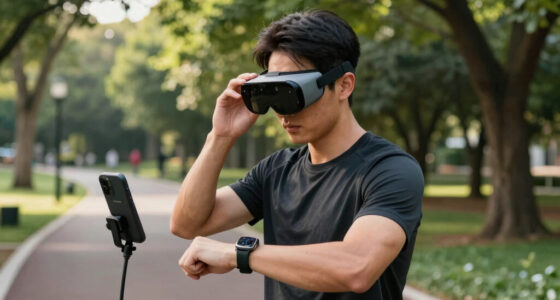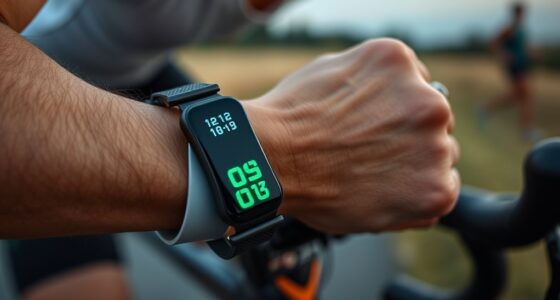
When comparing expensive and budget fitness trackers, you get much more with the higher-end models, including dedicated customer support, longer battery life, and better durability. Premium devices often feature quicker responses, live chat options, and longer-lasting batteries, making them ideal if you value reliability and long-term usability. Budget options work well for basic needs but may lack the support and durability that justify a higher investment. To find out which features suit your goals, explore the details further.
Key Takeaways
- Expensive trackers offer dedicated customer support, quicker responses, and comprehensive help resources, unlike budget models relying on FAQs.
- Higher-end devices generally have larger batteries, providing several days of use without frequent recharging, unlike budget options needing daily charges.
- Premium trackers use durable, high-quality materials for longevity, while budget models may feel less sturdy and wear out faster.
- Investing in a pricier device ensures better support, longer battery life, and durability, enhancing overall long-term satisfaction.
- Budget trackers are suitable for basic fitness tracking, whereas expensive models include advanced features and enhanced usability for serious users.

When choosing a fitness tracker, you might wonder whether investing in an expensive model is worth it or if a budget option can meet your needs. The first factor to consider is customer support. Higher-end models usually come with dedicated customer service teams, which can be invaluable if you encounter technical issues or need guidance. These premium brands often provide quicker responses, live chat options, and more detailed help resources. In contrast, budget trackers might offer limited support, often relying on FAQs or community forums. If you’re someone who values prompt assistance or plans to use your tracker intensively, investing in a more expensive option could save you frustration down the line.
Battery life is another critical aspect that varies markedly across price ranges. Expensive fitness trackers tend to have larger batteries or more efficient power management, allowing them to last several days or even a week on a single charge. This means you don’t have to worry about daily charging and can wear your device continuously without interruption. Budget models, however, often have smaller batteries, necessitating daily charging or frequent recharges. If you prefer a hassle-free experience and dislike the idea of constantly plugging in your device, a pricier tracker with longer battery life might be the better choice. Conversely, some budget options have surprisingly decent battery life, but they often come with trade-offs in other features or accuracy.
Beyond customer support and battery life, the overall durability and build quality tend to be better in more expensive models. They use higher-quality materials that withstand daily wear and tear, which can be especially important if you’re active outdoors or in demanding environments. Cheaper trackers may feel less sturdy, and their screens or straps might wear out sooner. When considering a higher-end device, you’re often paying for a more polished, long-lasting product, along with better customer service if something goes wrong.
In the end, whether you opt for an expensive or budget fitness tracker depends on your priorities. If you value reliable support, longer battery life, and durability, investing in a pricier model makes sense. But if you’re on a tight budget and your needs are basic—like step counting or sleep tracking—you can find affordable options that do the job well enough. Just remember to weigh these factors carefully, as the initial cost isn’t the only thing that matters; ongoing support and usability can considerably influence your overall satisfaction and experience. Additionally, understanding the differences in color accuracy and other core features can help you choose a device that truly meets your fitness and health goals.

Trailoom Microfiber Gym Towels, Quick Dry, Highly Absorbing, Odor-Free
HIGHLY ABSORBENT - Don’t let sweat disrupt your focus. Our fiber technology absorbs moisture instantly, making it ideal...
As an affiliate, we earn on qualifying purchases.
Frequently Asked Questions
Do Expensive Fitness Trackers Last Longer Than Budget Options?
Expensive fitness trackers generally last longer than budget options because they offer better durability and build quality. You benefit from a durability comparison showing sturdier materials and often enhanced water resistance. Additionally, they usually come with longer warranty coverage, giving you peace of mind. While the initial investment is higher, these features can make an expensive tracker more reliable over time, ensuring it stays functional longer than cheaper alternatives.
Are Premium Trackers More Accurate Than Cheaper Models?
You might think premium trackers are the accuracy champions, but the accuracy debate is often overstated. While they boast advanced sensors, cheaper models have closed the gap considerably. It’s all about the price performance ratio—sometimes, spending more doesn’t guarantee better data. So, don’t assume that a higher price automatically means superior accuracy; evaluate features carefully, and you might find a budget option that performs just as well.
Can Budget Trackers Effectively Replace High-End Devices?
Budget trackers can effectively replace high-end devices for basic fitness goals, offering affordable alternatives that track steps, sleep, and activity. However, you might face feature compromises like fewer advanced metrics, limited customization, or shorter battery life. If you only need essential data and want to save money, a budget tracker works well. But for detailed insights or specialized features, investing in a premium device might be worth it.
Do Expensive Trackers Offer Better Battery Life?
Yes, expensive trackers often have better battery life because they feature improved battery efficiency and lower power consumption. They are designed with advanced components that optimize energy use, letting you go longer between charges. High-end devices typically include smarter power management systems, meaning you get more tracking time without sacrificing performance. So, if long-lasting battery life is essential for you, investing in a pricier model can be worthwhile.
Are Advanced Health Features Only Available on Costly Models?
Advanced health features like detailed heart rate monitoring and precise GPS accuracy aren’t exclusive to costly models. You can find budget trackers that offer reliable heart rate data and decent GPS performance. However, the more expensive options often provide enhanced accuracy, additional sensors, and more all-encompassing health insights. If you prioritize precise data and advanced health metrics, investing in a higher-end model might be worthwhile, but budget options still deliver solid core features.

Acteon Microfiber Gym Towels 5 Pack, Quick Dry Silver ION Odor-Free Sweat Towel, Super Absorbent Fast Drying for Men & Women, Workout, Yoga, Running, Hiking, Travel – 16x30.5 Inch
𝐎𝐝𝐨𝐫 𝐄𝐥𝐢𝐦𝐢𝐧𝐚𝐭𝐢𝐧𝐠: Treated with silver ions, these gym sweat towels help prevent odors while wicking away moisture fast....
As an affiliate, we earn on qualifying purchases.
Conclusion
When choosing between expensive and budget fitness trackers, remember that your goals matter most. Did you know that 60% of users find budget trackers just as effective for daily activity monitoring? So, whether you spend more or less, focus on features that motivate you and fit your lifestyle. Ultimately, the best tracker is the one that keeps you moving—because staying active beats having the fanciest gadget every time.

Yoga Towel 6 Pack, Quick Dry Microfiber Gym Towels Set, 40x80cm, Multicolor
Quick-Dry Microfiber Material: Made with lightweight microfiber, these gym towels help absorb sweat during workouts and support quick...
As an affiliate, we earn on qualifying purchases.

Wuwahold Microfiber Gym Towels Bigger Size Super Soft for Exercise Fitness, Sports, Workout, 380-GSM 15-Inch x 31-Inch Quick-Drying Towels (3 Pack, Grey+Blue+Purple)
Nice Size - Each size is 15 x 31 inches, compared to other smaller towels, larger sizes and...
As an affiliate, we earn on qualifying purchases.