TL;DR
Smart fitness trackers are wearable devices that use motion and other sensors to estimate activity, sleep, and selected health measures. Their day-to-day trends can support awareness and motivation, but accuracy varies by metric, and alerts are not diagnoses. Choose for comfort, useful features, battery life, phone compatibility, privacy, and any ongoing fees.
Your watch says you walked 8,000 steps, slept seven hours, and burned 430 calories. Those numbers look precise, but a smart fitness tracker is estimating much of what you see. It collects signals such as wrist movement and light, then uses software to turn them into a readable story about your day.

Get workout gear delivered free with Prime
- Fast, free delivery on millions of items
- Prime Video, Amazon Music and more included
- Member-only deals all year
That story can be useful. You might notice that a short lunchtime walk clears your afternoon slump, or that late workouts tend to push your bedtime later. This guide explains what trackers measure, where their estimates have limits, and how to choose a watch, band, or ring that suits your habits.
You’ll also get practical ways to use the data without letting a score run your day. Think of a tracker like a kitchen timer: handy for keeping an eye on a process, but it cannot taste the soup for you.
Treat steps, heart rate, and sleep data as estimates; accuracy depends on fit, activity, and device.
Use repeated trends to guide small habit changes instead of reacting to one unusual reading.
Compare comfort, battery life, phone compatibility, water resistance, and subscription costs before choosing a model.
Use health alerts as prompts to seek appropriate advice, not as diagnoses or reassurance.
Review data-sharing, export, and deletion settings in the companion app.
What Smart Fitness Trackers Measure—and What They Estimate
Smart fitness trackers are wearable devices—usually watches, bands, or rings—that use sensors and software to estimate activity, sleep, and selected health measures. They can count motion and record signals such as wrist heart rate, then calculate displays like distance, calories, or sleep stages. Those results are helpful indicators, not a complete record of your body.
For example, a tracker may miss steps when you push a stroller because your wrist stays still, then count extra movement while you chop vegetables. Its step total is a useful estimate, yet the detail depends on fit, movement, and the activity. A brisk walk may register cleanly; a day of carrying groceries and loading a car may not.
Depending on the model, you may also see blood oxygen estimates, skin temperature, breathing patterns, stress scores, or an ECG feature. Availability and regulatory clearance vary by country and device. A heart rhythm alert is a prompt to seek appropriate advice, not a diagnosis or proof that something is wrong.
Use the number as a clue. If a tracker repeatedly shows lower activity on your desk-heavy days, that pattern can help you plan a walk. Don’t treat a single calorie estimate as an exact measure of what your body used.
Products Worth Considering

Theragun Relief Massage Gun

Garmin Forerunner 970 GPS Running and Triathlon Smartwatch, 47mm, Carbon Gray DLC Titanium with Black/Whitestone Band

Withings Body Smart Wi-Fi and Bluetooth Body Composition Scale
As an affiliate, we earn on qualifying purchases.
Which Tracker Numbers Deserve More Trust?
Smart fitness trackers are generally more useful for following broad activity and heart-rate patterns than for treating calorie burn or sleep stages as exact measurements. Accuracy shifts with the sensor, fit, skin contact, activity, and individual differences. A steady trend can still be useful, much like watching the weather change over a week instead of trusting one cloud.
Step counts can be affected by wrist movement, while optical heart-rate sensors may struggle during intense exercise when your arms move quickly or the band sits loosely. For demanding intervals, a chest strap generally gives more reliable heart-rate readings. If you use a tracker for regular walks, though, consistent readings may help you compare effort from one week to the next.
Sleep tracking estimates duration and stages from movement and physiological signals. It can show that your bedtime shifts later on weekends, but it is not equivalent to a clinical sleep study. A person who sees a low sleep score after a restless night may find the trend helpful; checking that score repeatedly can also create unnecessary worry.
| Measure | Useful for | Keep in mind |
|---|---|---|
| Steps and active minutes | Noticing everyday movement patterns | Wrist motion can skew counts |
| Wrist heart rate | Following broad trends and workouts | Fit and intense movement affect readings |
| Calories and sleep stages | Rough context over time | Estimates can be less dependable |
For instance, compare your average walk heart rate across several similar routes instead of reacting to one unusual spike. Repeated patterns are usually more informative than an isolated number.
Use Trends to Build Habits Without Chasing Scores
Smart fitness trackers can help people notice patterns and stay motivated by turning everyday behavior into reminders, goals, and progress charts. The useful part is the feedback loop: you make a small change, see what happened, and decide whether to repeat it. A tracker may support a habit, but the habit still comes from your choices.
Suppose your weekday activity dips when meetings fill the calendar. A gentle hourly prompt might nudge you to walk to refill your water bottle, and a weekly chart may show that those short breaks add up. That is more practical than trying to hit an ambitious target every day and feeling behind by lunchtime.
Try this simple sequence for a week:
- Pick one question: Do you move less on days when you work from home?
- Watch one or two signals: Look at steps or active minutes, not every available metric.
- Make a small experiment: Add a 10-minute walk after lunch on three days.
- Review the pattern: See whether the change fits your schedule and feels sustainable.
Goals, social challenges, and coaching can motivate one person and feel like pressure to another. If a streak makes you walk through pain or feel guilty on a rest day, adjust the goal or turn off the prompt. Useful feedback should support your routine, not dictate it.
Match the Device to Your Day, Not a Feature List
The best smart fitness tracker is the one whose form, battery, phone support, and features fit your real routine. A watch usually offers a screen and workout controls; a simple band can feel lighter and keep its focus on activity; a ring is compact and often emphasizes sleep and recovery. Features vary by model, so compare the specific device rather than assuming every watch or ring works the same way.
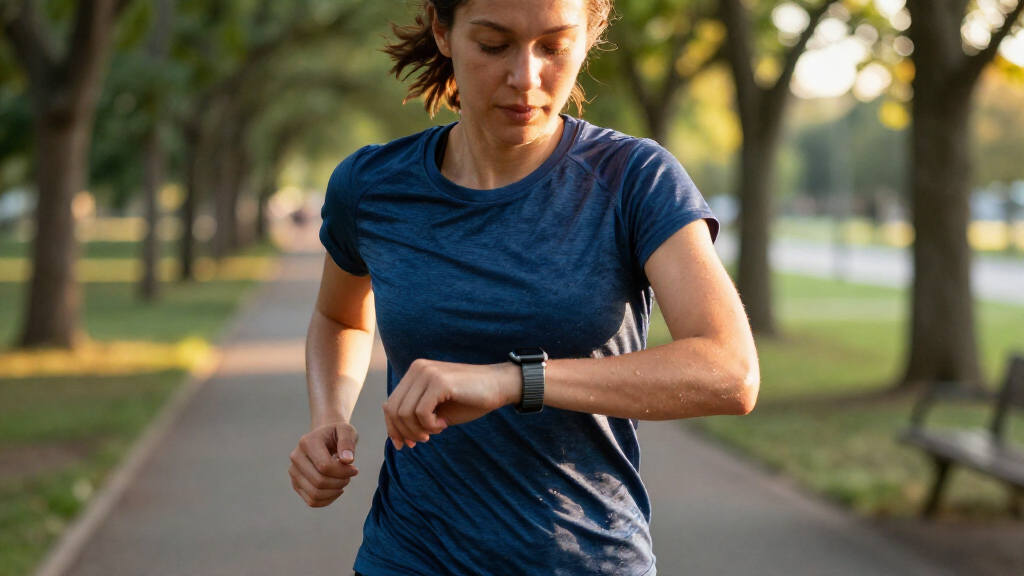
If you want to glance at pace while jogging, a readable watch screen may be worth charging more often. If you dislike wearing a watch at night, a smaller band or ring could be easier to tolerate. A person who swims should check water resistance, while someone who wants GPS maps should check whether the device has built-in GPS or depends on a phone.
Battery life ranges from about a day to multiple weeks. Bright displays, GPS, always-on screens, and frequent measurements usually use more power. Picture reaching for your tracker before a weekend hike and finding it empty because you forgot a daily charge: a longer-lasting device may suit you better than one with a feature you rarely open.
- Check compatibility: Setup, syncing, reports, or updates may require a compatible smartphone.
- Check the full cost: Coaching and detailed analytics may sit behind a subscription.
- Check comfort: Try the weight, strap, or ring fit if you can; a sensor that stays in a drawer collects no useful trends.
Think of choosing a tracker like choosing shoes: the longest feature list matters less than whether you’ll wear it on an ordinary Tuesday.
Keep Health Alerts and Personal Data in Perspective
A consumer fitness tracker can offer helpful signals, but it is not a general-purpose medical device, and health features have specific limits. Some models record an ECG or send irregular-rhythm notifications; availability, compatibility, and regulatory clearance depend on the product and country. Software updates can also change features or how a score is presented.
If an alert concerns you, treat it as a reason to contact a qualified health professional, especially if you have symptoms or a pre-existing condition. A normal-looking tracker screen cannot rule out a health problem, and an unusual reading alone cannot confirm one. For example, a runner who sees an unexpected heart-rate alert after a hard interval should consider the workout and fit, then seek professional advice if the concern persists.
Your data deserves attention too. Activity, sleep, and location information may live in a companion app or a cloud service. Before buying, read what the maker collects, how it shares information, and whether you can export or delete it. A fitness challenge with friends may be fun, but that does not mean you want every sleep detail shared by default.
More data does not automatically mean better decisions. Choose a few measures that help you act, check privacy controls, and get professional guidance for medical questions.
There is a tradeoff: sharing data with a phone health platform may make your reports easier to review, while limiting sharing may give you more privacy. Choose settings that match your comfort, then revisit them when app permissions or device features change.
Make Your First Week of Tracking Useful
Your first week with a smart fitness tracker works best as a quiet baseline, not a test you have to pass. Wear it in a way that feels comfortable, follow your usual routine, and notice which screens answer a question you care about. Starting with your normal Tuesday and Saturday gives you a more realistic picture than changing everything at once.
For example, if you want to add movement, look at your usual active minutes before setting a goal. You might find that a 12-minute walk after lunch is an easier starting point than doubling your step target. If sleep is your focus, note your bedtime and wake time alongside the tracker estimate; your own experience matters too.
Keep the process simple:
- Choose one focus, such as regular walks or a steadier bedtime.
- Let the device gather a baseline for several days without chasing a score.
- Try one modest change and see whether it fits your life.
- Keep only the feedback that helps; mute alerts that distract or pressure you.
This approach turns the tracker into a notebook on your wrist. It records clues, while you decide what they mean. If wearing it feels uncomfortable, take it off; continuous tracking is optional, and missing a night does not erase what you’ve learned.
Frequently Asked Questions
How accurate are smart fitness trackers?
Accuracy varies by device, metric, fit, and activity. Step counts and wrist heart rate can help you follow broad trends, while calorie-burn and sleep-stage estimates are less dependable. Compare similar days over time instead of treating one reading as exact.
Can a fitness tracker detect heart problems?
Some devices can record an ECG or flag a possible irregular rhythm, but they cannot diagnose a condition or rule one out. If an alert or symptom concerns you, contact a qualified health professional for guidance.
Are fitness trackers worth buying?
They can be worthwhile if reminders, workout records, or trend charts help you take actions you value. They may be less useful if you rarely check the data or tracking creates stress. A comfortable device with a few useful features can be a better fit than a feature-heavy one you stop wearing.
Do I need to wear a tracker all day and at night?
No. Wearing one more often gives you more complete trends, but continuous wear is optional. If you want sleep estimates, try wearing it at night only if it feels comfortable and charging fits your routine.
Can a tracker improve my sleep?
A tracker can help you notice patterns, such as a later bedtime after evening workouts. Its sleep duration and stage figures are estimates, not a clinical sleep study. If checking the score makes you anxious, turn off sleep alerts or focus on your own schedule and how rested you feel.
What should I compare before buying a tracker?
Compare the workouts and metrics you need, comfort, battery life, phone compatibility, water resistance, and any subscription fees. Check privacy controls too, including whether you can export or delete your data. A device that fits your daily routine is more likely to provide useful feedback.
Conclusion
Pick a tracker for the question you want it to help answer, then give it a week to show you your ordinary patterns. A few useful signals can support a walk, a steadier bedtime, or a better sense of your workout; a crowded dashboard can simply add noise.
Let the device collect the clues, and let your judgment lead. The best number is the one that helps you take a small, sensible next step.