
Taking rest days is vital because they allow your muscles to repair, reduce injury risk, and help your body recover hormones like growth hormone and testosterone. This boosts your performance and keeps you motivated. Using tech tools like sleep trackers and nutrition apps can optimize your recovery strategy, making every rest count. Want to discover more ways to recover smarter and improve your fitness journey? Keep exploring how tech can support your rest days effectively.
Open a free Amazon Business account
Business pricing, bulk buying and tax-exempt orders.
As an affiliate, we earn on qualifying purchases.
Key Takeaways
- Rest days allow tissue repair, hormonal balance, and energy replenishment, essential for optimal fitness progress.
- Scheduled rest prevents overuse injuries, burnout, and enhances long-term training consistency.
- Tech tools like sleep trackers and nutrition apps optimize recovery strategies and monitor progress.
- Proper rest boosts motivation, reduces fatigue, and supports faster muscle recovery and performance gains.
- Integrating recovery technology enables smarter, personalized rest routines tailored to individual needs.
As an affiliate, we earn on qualifying purchases.
The Science Behind Rest and Recovery

Rest and recovery are essential components of any effective fitness routine because they allow your body to repair tissues, replenish energy stores, and adapt to the stresses of training. When you rest, your muscles undergo repair processes that strengthen them, reducing soreness and preventing injury. Rest also supports hormonal balance, including the release of growth hormone and testosterone, which are crucial for muscle repair and overall recovery. These hormones help rebuild tissues and improve your performance over time. Without proper rest, your body can’t efficiently perform these processes, leading to fatigue and increased injury risk. Understanding the science behind rest highlights its importance in optimizing your training results and ensuring your body fully recovers before your next workout. Incorporating adequate rest periods can also enhance your overall training effectiveness by allowing your body to adapt and grow stronger. Additionally, utilizing technology tools such as sleep trackers and fitness apps can help monitor your recovery and optimize rest periods for better results. Moreover, being aware of bodily signals and listening to your body can prevent overtraining and promote healthier recovery habits. Recognizing the role of rest in recovery can further motivate you to prioritize sufficient downtime for optimal progress.
As an affiliate, we earn on qualifying purchases.
How Rest Days Boost Performance and Prevent Injuries

Incorporating scheduled rest days into your training plan directly enhances your performance by allowing your body to fully recover and adapt. Rest days reduce the risk of overuse injuries and help prevent burnout, keeping you consistent. Proper nutrition strategies, like protein intake and hydration, support muscle repair, while sleep optimization boosts recovery processes. These practices help your body rebuild stronger tissues and improve stamina. Additionally, understanding training recovery methods can further optimize your rest days for maximum benefits. Rest days also give your body a chance to maintain motivation, which is essential for long-term progress. Engaging in active recovery techniques, such as light stretching or low-intensity activities, can further enhance recovery without overtaxing your muscles. Recognizing the importance of auditory processing and sensory integration can assist in creating a balanced recovery plan that considers your overall well-being. Incorporating recovery technology like wearable devices can help monitor your progress and tailor your rest strategies effectively. Use this table to visualize benefits:
| Benefit | Effect |
|---|---|
| Injury Prevention | Less strain on joints and muscles, reducing injury risk |
| Performance Boost | Better energy levels and strength during workouts |
| Recovery Efficiency | Faster repair and adaptation of tissues |
As an affiliate, we earn on qualifying purchases.
Tech Tools That Support Effective Rest and Recovery
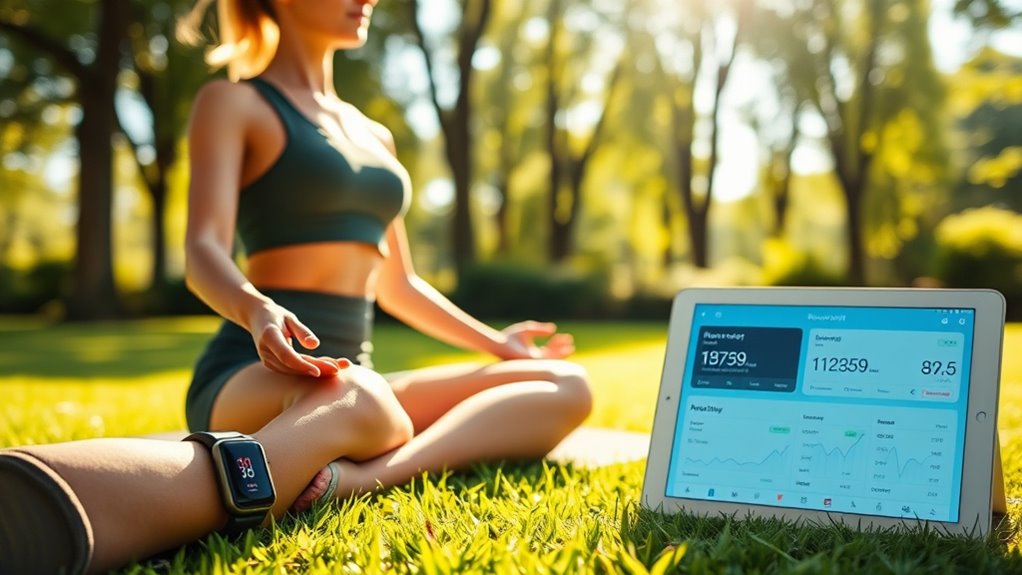
Ever wondered how technology can optimize your recovery routine? Sleep tracking devices help you monitor your sleep quality, ensuring you’re getting enough restorative rest. By analyzing sleep patterns, these tools reveal when you need to adjust your bedtime or routines for better recovery. Nutrition apps are equally valuable, guiding you to proper post-workout fueling and overall balanced diets. They provide personalized meal plans, track your nutrient intake, and remind you to stay hydrated, all essential for muscle repair and energy restoration. Incorporating sleep science and evidence-based recommendations into your tech-driven recovery routine can further enhance your results. Understanding connected home fitness concepts allows you to seamlessly integrate these tools into your overall wellness strategy. Combining sleep tracking and nutrition apps allows you to fine-tune your rest days, making them more effective. These tools utilize sleep science insights to help you understand your body’s needs better. With these tech tools, you gain insights that help you recover smarter, not just harder, supporting your long-term fitness progress.
active recovery stretching bands
As an affiliate, we earn on qualifying purchases.
As an affiliate, we earn on qualifying purchases.
Frequently Asked Questions
How Often Should I Schedule Rest Days for Optimal Results?
You should schedule rest days every 3 to 4 days to optimize training frequency and prevent injury. Listening to your body is key; if you’re feeling excessive fatigue or soreness, add an extra rest day. Incorporating tech like fitness trackers helps monitor recovery, ensuring you avoid overtraining. Regular rest improves performance and reduces injury risk, so don’t skip them—your body needs time to repair and grow stronger.
Can Active Recovery Be More Beneficial Than Complete Rest?
Active recovery can be more beneficial than complete rest because it promotes blood flow, reduces muscle soreness, and speeds up recovery. Incorporate active recovery into your rest day scheduling, like light walking or stretching, to maximize these benefits. This approach helps maintain momentum without overtaxing your body, making your fitness journey more sustainable and effective. Tech tools can help you track and optimize your active recovery days for best results.
What Are Signs I Need More Rest Days?
You might need more rest days if you experience overtraining signs like persistent fatigue, decreased performance, irritability, or trouble sleeping. Listening to your body is key. Rest day benefits include improved recovery, reduced injury risk, and increased strength. If these signs persist, taking extra rest days can help your body repair and recharge, ensuring you stay healthy and progress effectively in your fitness journey.
Do Different Sports Require Different Rest Strategies?
Think of swimming laps versus running a marathon—each sport demands different rest strategies. Cross training benefits your body by balancing intensity and recovery, preventing burnout. Rest day psychology varies; some sports require complete rest, while others thrive on active recovery. Tailor your rest days to your activity’s demands, ensuring your muscles repair and your mind stays motivated, so you stay in peak shape and avoid injury.
How Does Sleep Quality Affect Recovery and Fitness Gains?
Your sleep quality directly impacts recovery and fitness gains by regulating sleep cycles and recovery hormones. When your sleep cycles are well-structured, your body efficiently releases growth hormone and cortisol, promoting muscle repair and reducing fatigue. Poor sleep disrupts these hormones, slowing recovery and hindering progress. Using tech like sleep trackers helps you optimize sleep patterns, ensuring you get restorative rest that supports your fitness goals.
Conclusion
Remember, rest days aren’t just pauses—they’re the secret ingredients to your fitness recipe. By giving your body time to recover, you’re fueling future gains and dodging injuries like a pro. With the help of tech tools, you can tune into your body’s needs and optimize your recovery. Think of rest days as the quiet pond that keeps your fitness boat steady and moving forward—sometimes, the most powerful progress happens in the stillness.
Evergreen bestsellers Picks
bestsellers
As an affiliate, we earn on qualifying purchases.