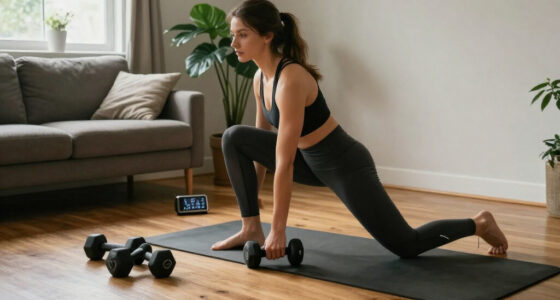
To use connected fitness for better workout timing, sync your wearable device and fitness apps to monitor your real-time data, like heart rate and sleep patterns. Use this info to identify your peak energy periods and recovery times, then schedule workouts during these ideal windows. Adjust workout intensity based on how your body feels, ensuring you avoid overtraining. Keep tracking your progress, and you’ll discover how to refine your routine for maximum results. Continue exploring to access even more personalized strategies.

Get workout gear delivered free with Prime
- Fast, free delivery on millions of items
- Prime Video, Amazon Music and more included
- Member-only deals all year
Key Takeaways
- Sync wearable devices and fitness apps to monitor real-time biometric data and identify optimal workout windows.
- Analyze sleep and activity patterns to determine your body’s peak energy and recovery times.
- Adjust workout intensity and timing based on personalized insights and current energy levels.
- Schedule challenging exercises during high-energy periods and restorative activities during low-energy phases.
- Use continuous feedback to refine your routine for sustainable, performance-enhancing workout timing.
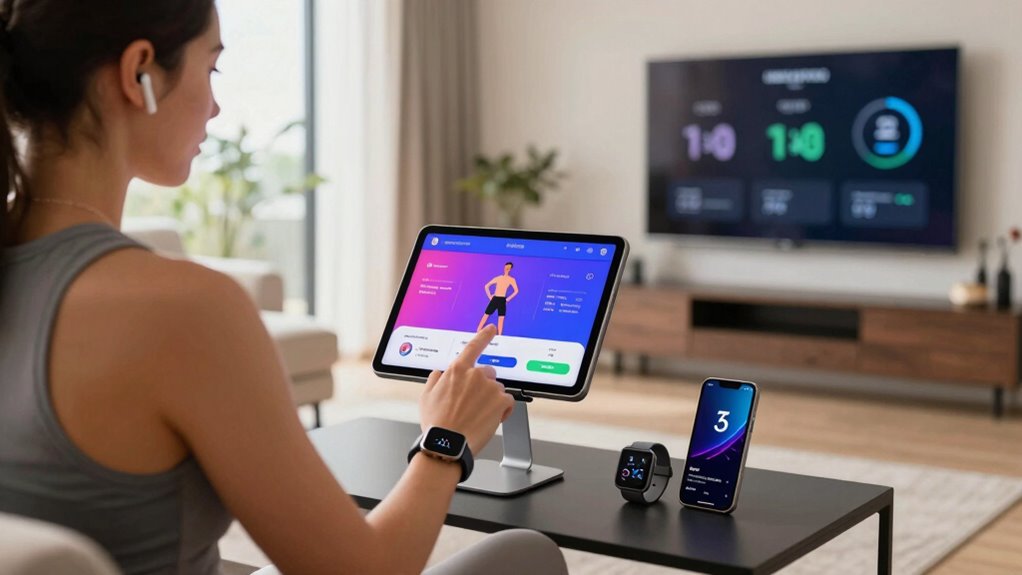
Have you ever wondered if you’re working out at the right time for maximum results? It’s a common question, especially with the rise of connected fitness. Thanks to wearable technology, you can now get real-time data about your body’s rhythms, energy levels, and recovery needs. These devices track your heart rate, sleep patterns, and activity levels, giving you insights that help pinpoint the best time to exercise. When you sync your wearable tech with fitness apps, you receive personalized recommendations that suggest ideal workout windows based on your unique data. This isn’t just about fitting in a workout; it’s about working out smarter, when your body is primed for activity and recovery.
Optimize your workouts with real-time data on your body’s rhythms and energy levels for smarter, more effective training sessions.
Using connected fitness tools, you gain access to personalized coaching that adjusts to your daily fluctuations. If your wearable device indicates your energy is low or your sleep was poor, your coach might suggest a lighter session or a restorative activity instead of pushing through a high-intensity workout. Conversely, when your data shows high energy and good recovery, you’re encouraged to tackle more challenging exercises. This tailored approach helps you avoid overtraining, reduces injury risk, and ensures you’re making the most of your efforts. Incorporating biometric data can further enhance your understanding of your physical state and optimize your workout timing. This data can reveal your natural patterns, allowing you to tailor your routines more effectively. Regularly reviewing your sleep quality and activity trends can help you fine-tune your schedule for better results.
Timing your workouts with the help of connected fitness isn’t just about convenience; it’s about maximizing your results. When you exercise during your peak energy periods, your body can perform better, burn more calories, and build strength more efficiently. Wearable technology provides continuous feedback, so you can learn your natural patterns and adapt your schedule accordingly. Additionally, understanding your biological rhythms can help you optimize your workout schedule and recovery periods more effectively. Over time, this becomes a cycle of refinement—your devices and coaching guide you toward the best moments to work out, rest, or recover. This strategy helps you develop a sustainable routine that aligns with your body’s needs, rather than fighting against them.
Ultimately, integrating wearable technology and personalized coaching into your fitness routine transforms how you approach workout timing. Instead of sticking to generic schedules, you tune into your body’s signals, making smarter choices about when to exercise. This personalized, data-driven approach not only enhances your performance but also keeps you motivated by showing tangible progress. With connected fitness, you’re empowered to maximize your workout timing, turning every session into a step toward better health and fitness.
Products Worth Considering

Withings BPM Connect Blood Pressure Monitor with Wi-Fi and Bluetooth

Withings Sleep Under-Mattress Sleep Tracking Pad

Withings BPM Vision Blood Pressure Monitor with Wi-Fi and Bluetooth
As an affiliate, we earn on qualifying purchases.
Frequently Asked Questions
How Do Connected Fitness Devices Track Workout Progress Accurately?
Connected fitness devices track your workout progress accurately through advanced sensors and real-time data synchronization. They monitor metrics like heart rate, steps, and calories burned, ensuring workout synchronization across your devices. To maintain data accuracy, make sure your devices are properly calibrated, worn correctly, and connected consistently. Regular updates also help improve tracking precision, so your workout progress reflects your true effort and performance.
Can Connected Fitness Apps Personalize Workout Timing for Individual Goals?
Yes, connected fitness apps can personalize workout timing based on your individual goals through personalized training and goal customization features. They analyze your data, such as heart rate, pace, and progress, to adjust workout durations and intensities. By tailoring sessions to your specific needs, these apps help optimize your performance and guarantee you stay aligned with your fitness objectives, making your workout more effective and engaging.
Are There Any Privacy Concerns With Connected Fitness Data Sharing?
Surprisingly, privacy concerns are real even with connected fitness. While data encryption safeguards your info, sharing personal workout details still raises eyebrows. You should provide clear user consent, but sometimes apps overlook this step, leaving you vulnerable. Ironically, in a world obsessed with fitness, your data might be more exposed than your workout routine. Stay vigilant, read privacy policies, and guarantee your data stays yours.
How Often Should I Update My Connected Fitness App or Device?
You should update your connected fitness app or device regularly, ideally when updates are available, to maintain workout motivation and address social challenges effectively. Frequent updates guarantee you access the latest features, bug fixes, and security improvements, keeping your workout experience smooth and motivating. Staying current helps you stay connected with your fitness community, overcoming social challenges, and keeps your device optimized for better timing and consistent progress.
What Features Should I Look for in a Connected Fitness Platform?
You need a connected fitness platform that blows your mind with features like unbeatable workout motivation and seamless social sharing. Look for real-time stats that push your limits, personalized plans to keep you engaged, and social tools to share your wins and stay motivated. The right platform should turn workouts into fun, motivating experiences, making it easy to stay consistent and inspired every day.
Conclusion
Now, imagine your fitness journey as a finely tuned orchestra, each beat and pause perfectly synchronized with your connected device. As you harness this technology, your workouts become more precise, efficient, and inspiring—like a dance where every move flows seamlessly into the next. With connected fitness guiding your rhythm, you’ll find yourself reaching new heights, feeling energized and confident. Embrace this harmony, and watch your progress unfold like a beautiful, unstoppable melody.