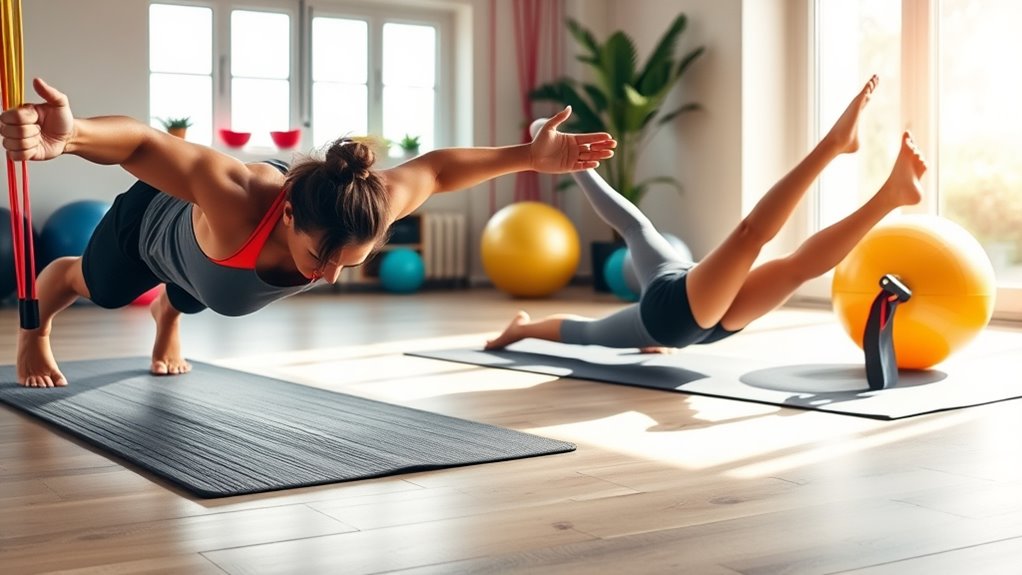

To build a stronger core at home beyond crunches, try incorporating plank variations like forearm, side, and dynamic plank with shoulder taps to engage multiple muscles. Add balance exercises such as standing on one leg or incorporating unstable surfaces to activate stabilizers. Integrate leg lifts during planks for added challenge, and focus on maintaining proper form and alignment. Keep moving and adjusting your routines—more effective exercises are waiting to unlock your core strength.

Get workout gear delivered free — and shop member deals
- Fast, free delivery on millions of items
- Access to Prime Big Deal Days deals on October 6–7
- Prime Video, Amazon Music and more included
Key Takeaways
- Incorporate plank variations like forearm, side, and dynamic planks to target multiple core muscles effectively.
- Use balance exercises such as single-leg stands and stability ball moves to activate core stabilizers.
- Add leg lifts to traditional planks for engaging lower abdominals and hip flexors.
- Perform dynamic movements like plank shoulder taps to boost core endurance and coordination.
- Focus on proper form and controlled movements to maximize core engagement and prevent injury.
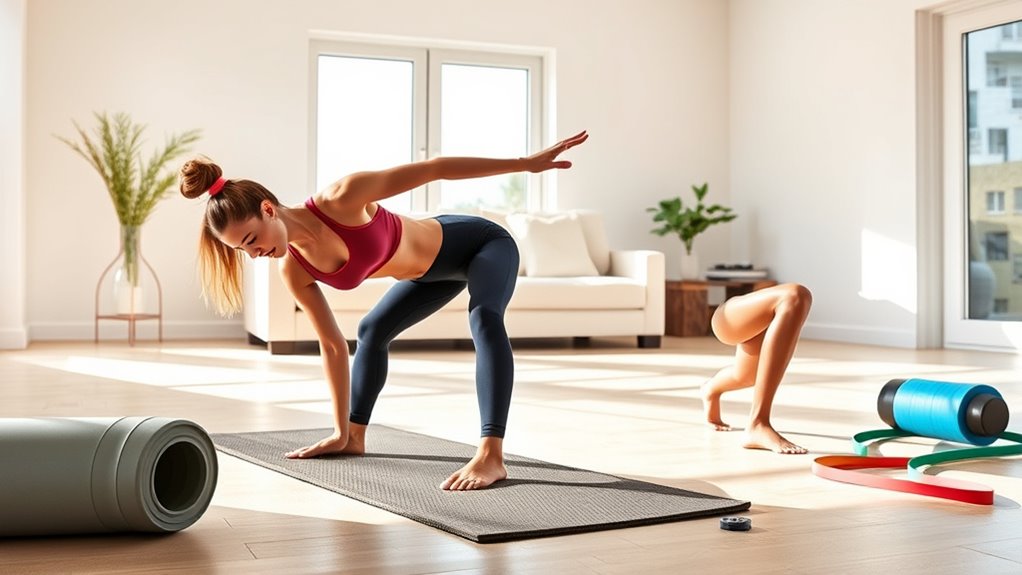
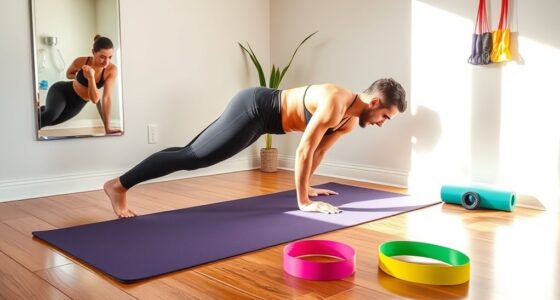
A strong core is essential for overall fitness, and you don’t need a gym to build it. You can do effective core exercises right in your living room, focusing on more than just crunches. Incorporating plank variations and balance exercises can challenge your muscles in new ways, helping you develop strength, stability, and endurance. Planks are versatile and can be modified to target different parts of your core, from traditional forearm planks to side planks, or even dynamic variations like plank with shoulder taps. These exercises engage your abdominals, obliques, and lower back, creating a solid foundation that improves posture and performance in other activities.
Build a strong core at home with versatile planks and balance exercises for lasting strength and stability.
Balance exercises are also key to strengthening your core. They force your stabilizer muscles to work harder, enhancing coordination and proprioception. Simple moves like single-leg stands or standing on unstable surfaces, such as a cushion or balance pad, can make a big difference. As you hold these positions, your core activates automatically to keep you steady. Incorporating balance exercises into your routine challenges your core in ways that traditional exercises can’t, making your muscles more responsive and resilient. Additionally, understanding the importance of core stability can motivate you to include these exercises consistently.
When doing plank variations, focus on maintaining proper form. Keep your elbows aligned under your shoulders, engage your abdominal muscles, and avoid letting your hips sag. For added challenge, try side planks, which target your obliques, or incorporate leg lifts into your plank to engage your lower body and core simultaneously. Dynamic plank exercises, like plank to push-up, increase intensity and boost your cardiovascular endurance, making your core work harder.
Balance exercises can be integrated seamlessly into your workout. For example, try standing on one leg while performing arm movements or reaching forward with the opposite hand. These movements challenge your stability and activate your core muscles. You can also add in movements like bird-dogs or stability ball exercises to further improve your balance and core strength. The goal is to challenge your muscles while maintaining control and proper alignment.
As an affiliate, we earn on qualifying purchases.
Frequently Asked Questions
How Often Should I Do Core Workouts Weekly?
You should do core workouts about three to four times a week to build core stability effectively. This frequency allows your muscles to recover while still challenging them enough to strengthen. Incorporate a variety of exercises to target different core muscles, and avoid overtraining. Consistency is key, so stick to your workout schedule and gradually increase intensity for maximum results. Remember, rest days are essential for recovery.
Can Core Exercises Help Improve Posture?
Yes, core exercises can improve your posture by enhancing core stability and muscle endurance. When you strengthen these muscles, especially your abdominals and lower back, you support proper spinal alignment. This reduces slouching and back pain, helping you stand taller and more confidently. Regularly engaging in targeted core workouts builds the necessary strength and endurance to maintain good posture throughout your daily activities.
Are There Beginner-Friendly Core Exercises for Seniors?
Yes, there are age-appropriate exercises perfect for seniors. You can start with chair-based workouts that focus on gentle core movements, making them safe and manageable. These beginner-friendly exercises help strengthen your abdominal muscles without putting strain on your joints. Incorporate slow, controlled motions, and gradually increase intensity as your strength improves. Consistent practice boosts stability, improves posture, and enhances overall confidence in daily activities.
How Long Does It Take to See Core Strength Results?
You can start noticing core muscle activation and improvements in your strength within 4 to 6 weeks of consistent exercise. The timing for results varies depending on your workout frequency and effort. If you engage in targeted exercises regularly, you’ll likely see increased stability and endurance in your core muscles within this timeframe. Stay committed, and you’ll continue to build strength and improve your overall fitness steadily.
Can Core Workouts Prevent Back Pain?
Yes, core workouts can help prevent back pain by improving core stability and supporting your spine. When you strengthen your abdominal and back muscles, you reduce the risk of injury and alleviate existing discomfort. Consistent core exercises, especially those targeting deep muscles, enhance your posture and balance, making your back less vulnerable to strain. Incorporate these workouts regularly to promote injury prevention and maintain a healthy, pain-free back.
stability ball for core exercises
As an affiliate, we earn on qualifying purchases.
As an affiliate, we earn on qualifying purchases.
Conclusion
Now that you’ve unlocked these five powerful core exercises, imagine what your body can achieve with consistent effort. But here’s the twist—there’s one secret move that could take your core strength even further. Are you ready to discover it? Stay committed, keep pushing your limits, and you might just surprise yourself with what you can accomplish. The next step could be the game-changer you’ve been waiting for—are you prepared to find out?
balance pads for stability training
As an affiliate, we earn on qualifying purchases.
As an affiliate, we earn on qualifying purchases.
As an affiliate, we earn on qualifying purchases.
Fall Picks
fall essentials
As an affiliate, we earn on qualifying purchases.