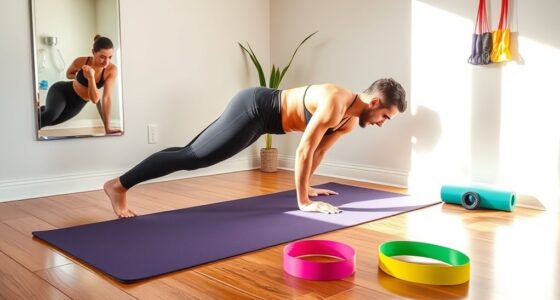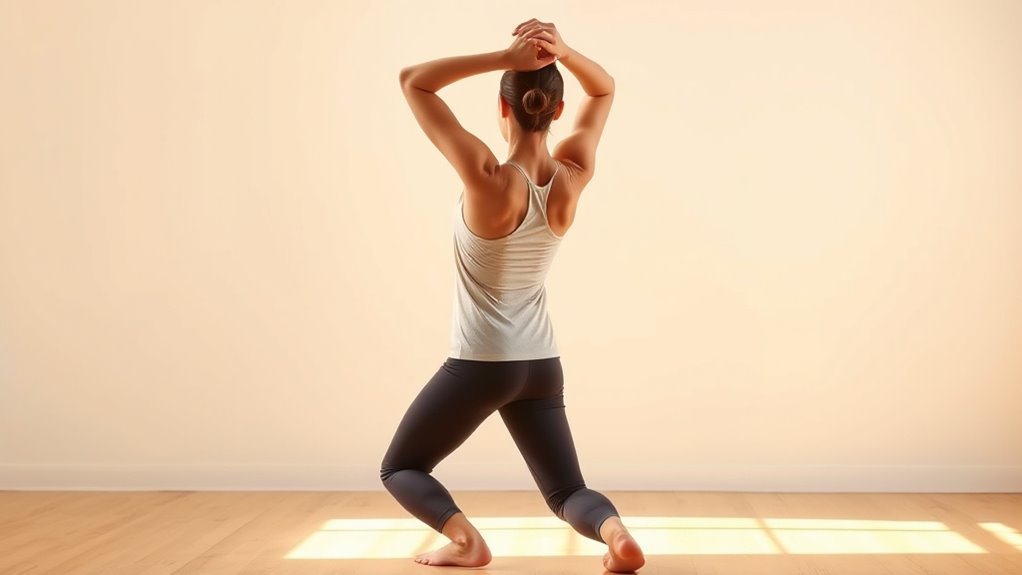

To improve your posture and undo sitting-related strain, try simple exercises like shoulder rolls to release tension and encourage shoulders back, chest stretches by clasping your hands behind your back, and neck tilts to each side. Incorporate seated spinal rotations to loosen your back muscles and maintain flexibility. Consistently practicing these moves will help reshape your habits and reduce discomfort. Keep going to discover more effective ways to stay aligned and healthy throughout the day.
Key Takeaways
- Incorporate shoulder rolls and chest stretches to counteract rounded shoulders from sitting.
- Practice neck tilts and rotations to relieve tension and improve cervical mobility.
- Use seated spinal twists and back extensions to enhance spinal flexibility and posture.
- Perform regular standing stretches, like hamstring and hip openers, to reduce lower back strain.
- Take frequent breaks to stand, stretch, and reset your posture throughout the day.
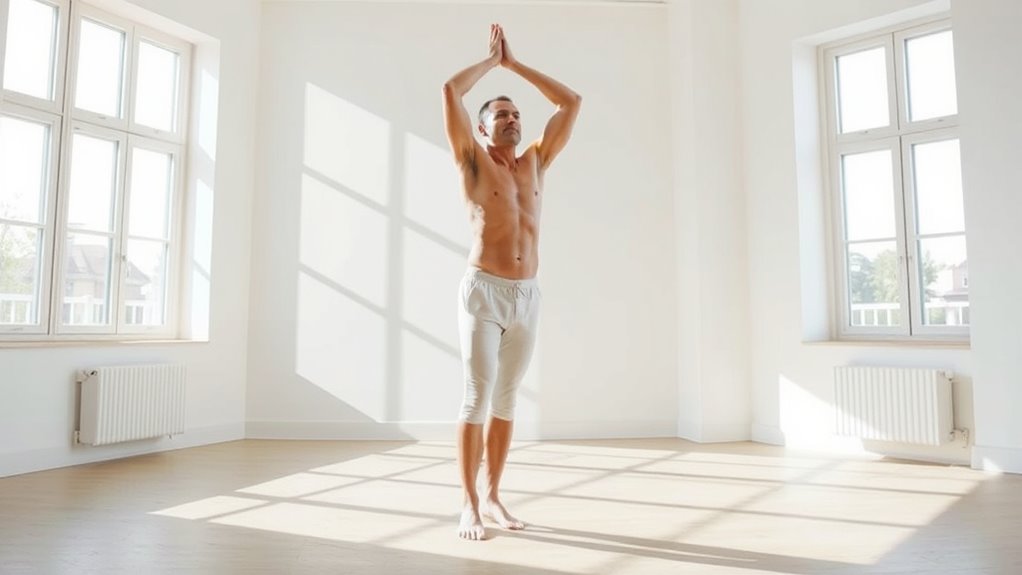
Good posture is essential for maintaining overall health and preventing discomfort, but many people struggle to keep their shoulders back and spine aligned throughout the day. Sitting for long periods, especially in poorly designed workspaces, can lead to slouched shoulders, rounded back, and neck strain. Fortunately, incorporating ergonomic tips and stretching routines into your daily routine can make a significant difference. These simple moves help counteract the effects of prolonged sitting, restore balance, and promote better alignment.
To start, focus on ergonomic tips that encourage proper posture. Set your workspace so your monitor is at eye level, your feet are flat on the floor, and your chair supports your lower back. Use a lumbar pillow if needed, and keep your keyboard and mouse within easy reach to avoid hunching forward. Take regular breaks—every 30 minutes—to stand, stretch, and reset your posture. These small adjustments prevent muscle fatigue and reduce strain, making it easier to maintain good posture throughout the day. Incorporating ergonomic principles into your workspace setup can significantly enhance your posture and comfort.
Adjust your workspace with an eye-level monitor, supportive chair, and easy-to-reach keyboard for better posture.
Stretching routines are equally crucial. They help loosen tight muscles that develop from sitting too long and strengthen those that support proper alignment. Begin with shoulder rolls; lift your shoulders toward your ears, then roll them back and down. This relieves tension and encourages your shoulders to stay back naturally. Next, incorporate chest stretches—clasp your hands behind your back and gently lift your arms while opening up your chest. This stretch counteracts the forward pull caused by slouching and encourages a more upright posture.
Don’t forget to include neck stretches. Gently tilt your head to one side, bringing your ear toward your shoulder, and hold for a few seconds. Repeat on the other side. This eases neck tension that often accompanies poor posture. Also, perform spinal twists or seated spinal rotations to improve flexibility in your back. These stretches help realign your spine and improve overall posture.
Adding these ergonomic tips and stretching routines into your daily routine can dramatically improve your posture over time. Consistency is key—make a habit of adjusting your workspace, taking breaks, and doing targeted stretches. Remember, improving posture isn’t just about looking good; it’s about reducing pain, preventing long-term injuries, and feeling more energized throughout your day. Small, deliberate steps each day lead to lasting improvements, helping you undo the effects of sitting and maintain a healthier, more aligned body.
Frequently Asked Questions
How Long Should I Hold Each Posture During Exercises?
For each posture, aim to hold it for about 15 to 30 seconds during your exercises. This holding duration allows your muscles to activate and stretch effectively without causing strain. Focus on proper exercise timing by repeating each move 2 to 3 times, resting briefly between sets. Consistency is key, so incorporate these holds into your routine daily to see the best posture improvement over time.
Can These Exercises Help With Chronic Back Pain?
Yes, these exercises can markedly help with chronic back pain! They boost your spinal flexibility and strengthen your core muscles, creating a powerhouse support system for your back. Regularly doing these moves can transform your posture, reduce pain, and prevent future issues. So, if you’re tired of that nagging backache, commit to these exercises—they’re your secret weapon for a healthier, pain-free back!
Are There Any Exercises Suitable for Pregnant Women?
Yes, there are pregnancy-safe exercises suitable for you. Focus on gentle prenatal stretches and pregnancy-safe exercises that support your changing body. These moves help improve posture, reduce discomfort, and boost your overall well-being. Always listen to your body and consult your healthcare provider before starting any new exercise routine. Incorporating these safe practices can make your pregnancy more comfortable and help you maintain good posture.
How Often Should I Perform These Posture Exercises Weekly?
Think of your posture routine like tending a garden—you’ll want consistency for the best results. For ideal routine, aim for exercise frequency of 3 to 5 times a week. This keeps your muscles engaged and helps undo sitting’s effects. Remember, regularity is key; don’t let your efforts wilt. Adjust based on how your body responds, but sticking to this schedule offers the best chance for noticeable improvements.
Can These Moves Prevent Future Postural Issues?
These moves can definitely help with posture correction and may prevent future postural issues if you incorporate them into your exercise frequency regularly. By consistently practicing these exercises, you strengthen muscles and improve alignment, reducing the risk of developing problems caused by prolonged sitting. Make a routine, ideally performing these exercises at least 3-4 times a week, to maintain good posture and support long-term spinal health.
Conclusion
By incorporating these simple exercises into your daily routine, you’ll discover the secret to standing taller than a skyscraper and feeling stronger than a superhero. Say goodbye to slouching and hello to a posture so perfect, even your mirror will do a double take. With consistent effort, you’ll transform your back into a powerhouse of strength and confidence. Get ready to conquer the world—one flawless posture at a time!