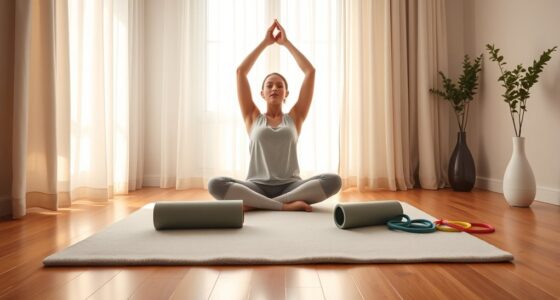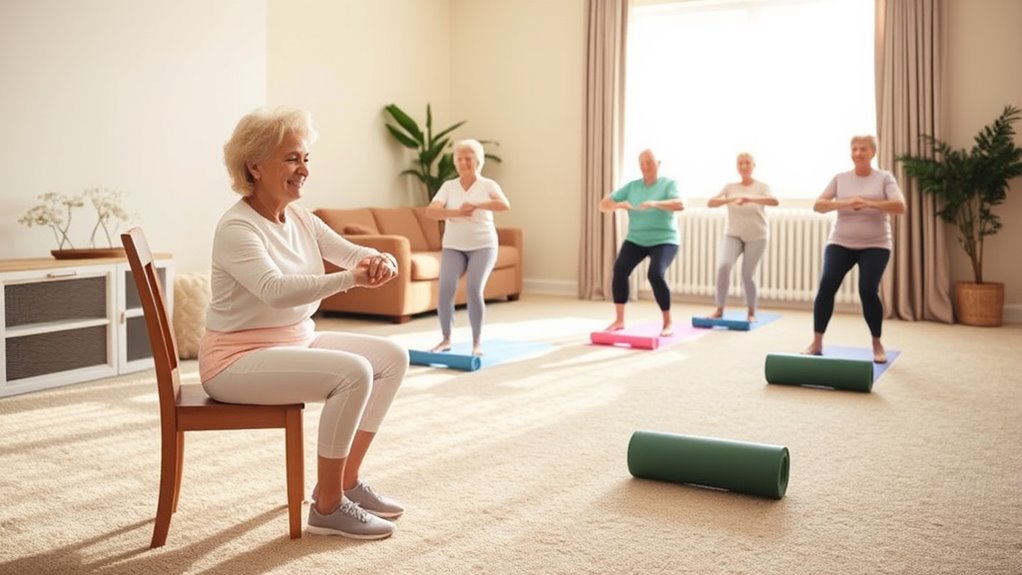

A senior-friendly home workout with gentle exercises helps boost your strength, balance, and independence while lowering fall risks. You can do simple chair exercises like leg lifts and arm circles, which are joint-friendly and easy to fit into your day. Practicing balance techniques such as standing on one foot with support also improves stability. Keep your movements controlled and stop if you feel dizzy. Continue exploring for more ways to stay active safely at home.

Get workout gear delivered free — and shop member deals
- Fast, free delivery on millions of items
- Access to Prime Big Deal Days deals on October 6–7
- Prime Video, Amazon Music and more included
Key Takeaways
- Incorporate simple chair exercises like leg lifts and arm circles to build strength without joint strain.
- Practice balance techniques such as supported one-foot stands to improve stability and reduce fall risk.
- Combine seated and standing movements for a comprehensive, low-impact workout focusing on strength and coordination.
- Use supportive furniture or walls for safety during balance exercises and modify routines as needed.
- Consult healthcare professionals to tailor exercises safely and ensure they suit individual health conditions.

Staying active is essential for seniors to maintain their strength, flexibility, and overall health, even from the comfort of home. You don’t need fancy equipment or a gym membership to keep moving; simple chair exercises and balance techniques can make a significant difference. Chair exercises are especially useful if you’re looking for low-impact ways to strengthen your muscles without putting too much strain on your joints. Sitting in a sturdy chair, you can perform leg lifts, arm circles, or seated marches to boost circulation and muscle tone. These movements help improve your overall mobility and can be done easily throughout the day, even during your favorite TV show or while chatting on the phone. Incorporating simple routines into your daily schedule can help you stay consistent and motivated. Balance techniques are equally important and can help reduce the risk of falls, which is a common concern for seniors. You can practice simple exercises like standing on one foot while holding onto a chair or countertop for support. Over time, as your confidence and strength grow, you can try balancing without support for a few seconds, gradually increasing your duration. Incorporating gentle balance exercises regularly can enhance your stability and coordination, making daily activities safer and easier. Remember, the goal is to challenge your body just enough to improve without risking injury, so always use support if needed and stop if you feel dizzy or unstable. Combining chair exercises with balance techniques creates a well-rounded approach to your home workout. For example, you might sit to do arm raises or leg lifts and then stand to practice shifting your weight from one foot to the other. This integration not only builds strength but also trains your body to maintain control during movement. Consistency is key—set aside a few minutes each day to perform these exercises, and you’ll notice gradual improvements in your strength and balance. Keep your movements smooth and controlled, focusing on proper form rather than speed. This approach minimizes strain and maximizes benefits. You don’t need to push yourself hard; gentle, regular activity is enough to support your health. Always listen to your body and modify or skip exercises that cause discomfort. If you’re unsure about your technique or have existing health issues, consulting a healthcare professional or physical therapist can provide personalized guidance. Remember, staying active at home is not just about physical health—it’s also about maintaining independence and confidence. With simple chair exercises and effective balance techniques, you can enjoy a safer, healthier, and more active lifestyle from the comfort of your own home.
As an affiliate, we earn on qualifying purchases.
Frequently Asked Questions
How Often Should Seniors Do These Gentle Exercises Weekly?
You should aim for exercise frequency of about three to five times a week to maintain workout consistency. Gentle exercises for seniors are most effective when done regularly, helping to improve strength and balance without overexertion. Listen to your body, and if you feel fatigued, take extra rest days. Consistent activity is key to gaining the benefits, so make it a part of your weekly routine for better overall health.
Are There Any Exercises to Avoid for Seniors With Joint Pain?
You should avoid high-impact, weight-bearing exercises if you have joint pain, as they can worsen discomfort or cause injury. Activities like running, jumping, or heavy lifting put extra strain on your joints. Instead, focus on low-impact options like gentle stretching, seated exercises, or swimming, which help maintain strength and balance without stressing your joints. Always consult your healthcare provider before starting or modifying your exercise routine.
Can These Workouts Be Modified for Limited Mobility?
Yes, you can adapt these workouts for limited mobility by incorporating adaptive modifications and assistive devices. For example, use chairs or walls for support, and switch to seated exercises if standing is challenging. Gentle stretches and low-impact movements help improve strength and balance safely. Always listen to your body, and consult with a healthcare professional before making significant changes to your exercise routine to guarantee safety and effectiveness.
What Equipment Is Necessary for These Home Exercises?
You don’t need much exercise equipment or safety gear to get started. A sturdy chair, light dumbbells or resistance bands, and a non-slip mat are ideal for gentle strength and balance exercises. Investing in supportive shoes and using safety gear like wrist or knee pads adds extra protection. With just these essentials, you can safely perform effective workouts at home, boosting your strength and stability comfortably.
How Can Seniors Stay Motivated to Maintain a Routine?
You can stay motivated by setting small, achievable goals and celebrating your progress. Incorporate motivation techniques like rewarding yourself after each workout. Social support is key—consider exercising with friends or joining online groups to share your journey. Remember, consistency matters more than intensity, so keep a schedule and remind yourself of the benefits. Staying connected and positive will help you maintain your routine and enjoy your workouts.
As an affiliate, we earn on qualifying purchases.
Conclusion
By incorporating these gentle exercises into your daily routine, you’re planting seeds of strength and balance that will flourish over time. Remember, progress may be slow, but like a steady river carving through stone, consistent effort leads to lasting change. Stay patient and listen to your body—each small step is a essential part of your journey toward greater vitality and independence. Embrace this routine as a nurturing garden, where your well-being blossoms with care.
As an affiliate, we earn on qualifying purchases.
stability training aids for elderly
As an affiliate, we earn on qualifying purchases.
As an affiliate, we earn on qualifying purchases.
Fall Picks
fall essentials
As an affiliate, we earn on qualifying purchases.