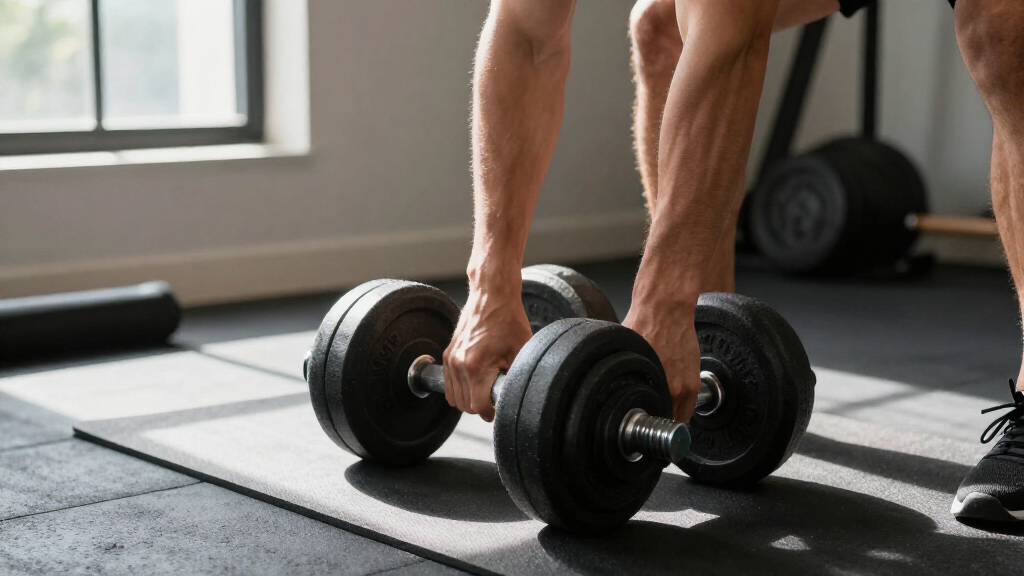
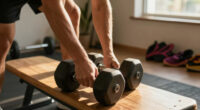
Set up your adjustable dumbbell set so you can change weights safely and begin a basic workout. This guide is for beginners and people using an unfamiliar set. You will identify the adjustment mechanism, select a starting weight, check that the plates are secured, and return the dumbbells to storage. Allow 10-20 minutes for setup, plus time to read the manufacturer’s instructions.

Get workout gear delivered free with Prime
- Fast, free delivery on millions of items
- Prime Video, Amazon Music and more included
- Member-only deals all year

2026 FDB2 Updated Adjustable Dumbbell Set of 2
- ✔ Weight settings: 5 settings
- ✔ Listed range: 4–25 lb per dumbbell
- ✔ Adjustment: One-hand dial; adjust on base

Mouldbody Adjustable Dumbbell Set Pair 25 lb or 50 lb, 10-in-1
- ✔ Weight settings: 10 listed options
- ✔ Listed options: 5.5, 11, 15, 22, 25, 31, 35, 41, 45, 50 lb
- ✔ Adjustment: One-hand dial

FITPLAM Adjustable Dumbbell Set, 5-in-1
- ✔ Configurations: Dumbbells, barbell, kettlebells, push-up stands
- ✔ Dumbbell settings: 6, 8, 10, 13, 15, 17, 22.5 lb each
- ✔ Barbell range: 7.5–45.8 lb
Difficulty: Beginner | Time: 10-20 minutes for setup; 5-10 minutes to learn the adjustment system
What You’ll Need
Tools & Materials:
- Adjustable dumbbell set with its original stand or tray, if supplied
- Manufacturer’s instruction manual
- Clear, level floor space
- Workout bench or stable chair, if your planned exercises require one
Knowledge:
- Basic familiarity with dumbbells and common lifting movements
- Ability to lift and carry the selected weight safely
Read the manual before adjusting the dumbbells. Sets use different systems, such as selector dials, removable plates, or threaded collars. Follow the instructions for your exact model; do not mix parts from different sets or exceed the stated weight limit. If the equipment is damaged or a locking part is missing, do not use it.
2026 FDB2 Updated Adjustable Dumbbell Set of 2
The FDB2 is our leading pick when the main goal is to move smoothly through a dumbbell routine without handling separate plates. Its one-hand adjustment changes between five settings from 4 to 25 pounds per dumbbell, and the weights are meant to be adjusted while resting in the included base. That makes it a more direct option for sets that alternate exercises or loads than the plate-and-nut FITPLAM, which needs more hands-on reconfiguration.Its 33 mm textured silicone grip gives this set a comfort-focused point of difference, while the cast-iron plates have a PE outer layer. The automatic plate lock is intended to engage when the handle is lifted, but users still need to place the dumbbell in its base to change settings. At 25 pounds per dumbbell, the range may also feel limiting for stronger lifters or anyone progressing toward heavier presses and rows. Compared with Mouldbody, the FDB2’s stated per-dumbbell range is clearer, but Mouldbody lists more settings and a higher top number.We rank it first for its specific combination of quick selection, compact storage, and a defined dumbbell range. It is less versatile than FITPLAM and does not offer the heavier top setting described by Mouldbody, but for buyers seeking a dedicated pair of adjustable dumbbells, that focused setup is a practical advantage.
Pros:
- One-hand dial changes among five settings from 4 to 25 pounds per dumbbell.
- 33 mm textured silicone grip is designed to improve hold during sweaty workouts.
- Storage box keeps the plates organized between sessions.
- Cast-iron plates have a PE outer covering.
Cons:
- The listed maximum of 25 pounds per dumbbell may constrain stronger lifters.
- Weight changes require the dumbbell to be seated in its base.
- It is a dumbbell-focused set rather than a multi-configuration kit.
Best for: Home lifters who want quick changes between five moderate dumbbell weights and a comfortable, textured grip.
Not ideal for: Lifters who need more than 25 pounds per dumbbell or want one kit to convert into barbell and kettlebell configurations.
Bottom line: Choose the FDB2 for a compact, quick-adjusting dumbbell pair with a clearly stated moderate range.
“Choose the FDB2 for a compact, quick-adjusting dumbbell pair with a clearly stated moderate range.”
Mouldbody Adjustable Dumbbell Set Pair 25 lb or 50 lb, 10-in-1
Mouldbody’s 10-in-1 dial system stands out for the number of listed increments: 5.5, 11, 15, 22, 25, 31, 35, 41, 45, and 50 pounds. That sequence offers more steps than the FDB2’s five settings and a higher listed ceiling, so it may appeal to lifters who want more room to increase resistance. The listing describes a pair and offers a 25-pound or 50-pound version, however, without clearly stating whether the ten numbers are per dumbbell or for the pair. Buyers should confirm the selected version and how its range is measured before relying on those maximums.Like the FDB2, Mouldbody uses a one-hand dial and locking mechanism, and it includes a storage tray to keep equipment together. That gives it a faster workout flow than FITPLAM’s removable plates, but the listing says users should listen for a click and check that the number aligns before lifting. This safety step is simple, though it makes correct selection part of each change. The product information identifies a non-slip rubber handle and steel plates, but offers less detail on grip dimensions and plate covering than FDB2.We give Mouldbody the range-focused role rather than the top spot because the maximum-weight description is less precise and its adjustment still depends on alignment and locking. Compared with FDB2, it has more listed settings; compared with FITPLAM, it keeps the workout centered on dumbbell exercises and avoids plate swapping. It makes the most sense when its confirmed version matches your target loads.
Pros:
- Ten listed weight options provide more increments than the FDB2’s five settings.
- One-hand dial is intended to make weight changes quick.
- Storage tray helps keep the pair organized.
- Listing describes steel plates and a non-slip rubber handle.
Cons:
- The supplied description does not clearly say whether the listed maximum is per dumbbell or per pair.
- Users need to check the dial alignment and locking click before lifting.
- No listed grip diameter or clear plate-covering detail for comparison.
Best for: Lifters who want many dial-selected increments and a tray, after confirming the weight configuration of the version they intend to buy.
Not ideal for: Buyers who need an unambiguous per-dumbbell maximum or want convertible barbell and kettlebell equipment.
Bottom line: Mouldbody is the range-focused choice if the selected version’s weight capacity suits your training and is confirmed before purchase.
“Mouldbody is the range-focused choice if the selected version’s weight capacity suits your training and is confirmed before purchase.”
FITPLAM Adjustable Dumbbell Set, 5-in-1
FITPLAM is the most adaptable kit in this comparison if “adjustable dumbbells” means building several kinds of home workouts from one collection of parts. The set can be assembled as dumbbells, a barbell, kettlebells, or push-up stands, with weight plates also included. That makes it more flexible than either dial set for exercises such as barbell-style squats or kettlebell movements. Its listing gives individual dumbbell settings from 6 to 22.5 pounds and a barbell range from 7.5 to 45.8 pounds; those figures help explain its reach across formats, though they do not make it a straightforward substitute for heavier fixed dumbbells.The tradeoff is setup. FITPLAM uses plates secured with dual-lock nuts, so changing load or switching formats involves more handling than turning the dial on FDB2 or Mouldbody. The extra locking layer is designed to limit shifting and loosening, and the bars have textured grips. A foam-covered steel connector adds padding for barbell movements, while PE-wrapped iron-sand plates are intended to reduce rattling and protect floors. These materials and parts add options, but the assembled pieces also require more attention to storage and secure tightening.We place FITPLAM third because its strongest advantage is format versatility, not the fastest dumbbell adjustment or the clearest route to progressive dumbbell loading. It may be the right pick for a buyer who values a single configurable kit and has room for its components. For someone focused on alternating dumbbell exercises, either dial model is simpler to use; for someone seeking the highest clear per-dumbbell capacity, the supplied FITPLAM details call for careful comparison.
Pros:
- Converts to dumbbells, barbell, kettlebells, and push-up stands.
- Dual-lock nuts are designed to reduce plate shifting and loosening.
- Foam-covered steel connector adds padding for barbell exercises.
- Textured grips and PE-wrapped plates are intended for stable, quieter home use.
Cons:
- Plate changes and format conversions take more handling than dial adjustment.
- Listed individual dumbbell settings top out at 22.5 pounds.
- The kit has multiple components to assemble and store.
Best for: Apartment and home-gym users who want one plate-loaded kit for dumbbell work plus barbell, kettlebell, and push-up stand configurations.
Not ideal for: Lifters who prioritize rapid weight changes, a clearly stated heavy per-dumbbell maximum, or a minimal number of parts to assemble and store.
Bottom line: Choose FITPLAM when exercise-format versatility matters more than fast dumbbell changes or a clearly higher per-dumbbell limit.
“Choose FITPLAM when exercise-format versatility matters more than fast dumbbell changes or a clearly higher per-dumbbell limit.”
As an Amazon Associate we earn from qualifying purchases.
Before You Start
Place the stand or tray on a firm, level surface with enough room to lift the dumbbells in and out without striking furniture or other equipment. Keep children and pets away while adjusting weights. Check the dumbbells, handles, plates, selector parts, and collars for cracks, loose components, or signs of wear. Start with a light load while learning the mechanism. If you feel pain, dizziness, or unusual shortness of breath during exercise, stop.
Step-by-Step Instructions
Step 1: Identify the adjustment system
Read the manual and locate the parts that secure the plates. For a dial system, find the weight selector and the indicators that show the chosen load. For removable plates, identify the plate sizes and the collars or locking pins that hold them in place. Check whether the handle must sit in a specific position in the tray before you turn a selector or remove a plate.
Tip:Do not force a dial, pin, or collar. Resistance can mean the dumbbell is out of position or the mechanism has not released.
Check: You can name the parts that adjust the load and describe how your model locks the plates in place.
Step 2: Position the stand and dumbbells
Set the stand or tray on level flooring and place each dumbbell fully in its designated slot. Leave clear space around the stand so you can grasp the handles without leaning over clutter. If your model has separate left and right cradles or marked positions, place each dumbbell in the correct one.
Tip:Keep the selector and plate labels visible while you work so you can confirm the chosen weight.
Check: The stand does not rock, and both dumbbells sit flat and fully in their cradles.
Step 3: Choose a light starting weight
Select a load you can lift with control through the full range of your planned movement. If you are new to strength training, begin with the lightest available setting or a weight recommended by a qualified trainer. Choose a load that lets you practice the movement without swinging, shrugging, or holding your breath. Adjust separately for each exercise if your set allows it.
Tip:The same weight can feel very different across exercises. Start lighter for movements that involve smaller muscles or require more balance.
Check: You have selected a weight that feels manageable for several controlled practice repetitions.
Step 4: Set the weight using the model’s method
For a dial system, return the handle to the tray, turn the selector to the desired marked setting, and confirm the indicator aligns with that setting. For removable plates, keep the dumbbell supported, add or remove plates according to the manual, and secure the collars or pins fully. Match the weight on both dumbbells for exercises that use a pair, unless your plan specifically calls for different loads.
Tip:Never adjust a loaded dumbbell while holding it. Set it down in the tray or on a stable surface first.
Check: The chosen setting or plate combination matches the target weight, and all required locking parts are engaged.
Step 5: Check the plates and locks
With the dumbbell supported over its tray, inspect both ends and confirm each plate is seated in the intended position. Check that collars are tightened as directed, pins are fully inserted, or the dial system has engaged all selected plates. Lift the handle only a few centimeters above the tray and gently test for movement without shaking or dropping it. Return it to the tray if anything shifts or rattles.
Tip:A selector dial can appear to be set correctly even when a plate has not engaged. Use the manual’s engagement check and do not rely on the dial alone.
Check: No plate moves out of position during the gentle check, and the locking mechanism appears fully engaged.
Step 6: Practice one controlled repetition
Stand with your feet stable, grip the handle firmly, and lift the dumbbell from the tray using a smooth motion. Keep your wrist aligned with your forearm. Perform one slow repetition of a familiar movement, such as a curl, then return the dumbbell to the tray with control. Keep the load close to your body when carrying it.
Tip:If the handle feels unbalanced, a plate shifts, or the grip feels slippery, stop and place the dumbbell down safely.
Check: You can lift, control, and return the dumbbell without the plates shifting or your posture breaking down.
Step 7: Use the dumbbells for your workout
Follow a planned routine and use a controlled pace. Keep the area around you clear, avoid dropping adjustable dumbbells, and rest them on the floor or rack between sets as the manufacturer permits. When a set feels too heavy to complete with good form, stop rather than forcing extra repetitions. Increase the load only when you can perform the planned repetitions steadily.
Tip:Write down the selected weight and repetitions for each exercise. This makes it easier to choose a sensible load next time.
Check: You complete the planned work with steady movement and return each dumbbell to a stable resting place between sets.
Step 8: Return the set to storage
Put each dumbbell back in its correct cradle before changing its setting or storing it. Return selector dials to the storage position specified by the manual, if your model requires it. Wipe sweat from the handles and tray with a suitable cloth, then leave the equipment in a dry place. Keep loose plates and collars together so they do not go missing.
Tip:Do not store the dumbbells where they can roll, fall from a shelf, or be reached by children.
Check: Both dumbbells are seated securely, adjustment parts are accounted for, and the storage area is dry and clear.
Common Mistakes to Avoid
- Turning a selector or removing plates while the dumbbell is not fully seated. — Return the handle to its matching cradle and follow the manual’s adjustment sequence before changing the load.
- Lifting the dumbbell before all selected plates have engaged or locked. — Inspect both ends and perform the gentle supported check before each use, especially after changing the weight.
- Choosing a load that causes swinging or loss of control. — Start light, practice the movement, and increase weight gradually only when your form remains steady.
- Dropping the dumbbells or leaving them loose on the floor. — Set them down with control on a stable surface and return them to the stand after use.
Troubleshooting
Problem: The selector dial will not turn.
Solution: Set the handle fully into the tray and check that the dial is at its starting position. Confirm the plates are aligned and follow the model’s release sequence. Do not force it; stop using the set if the dial remains stuck.
Problem: A plate stays in the cradle when you lift the handle.
Solution: Set the handle back down immediately. Recheck the selected setting, plate alignment, and engagement instructions in the manual. Do not use the dumbbell until every selected plate lifts with it.
Problem: The dumbbell rattles or feels uneven.
Solution: Return it to the tray and inspect the plates, collars, and pins. Reseat and secure the components as directed. If the rattle continues or a part looks damaged, contact the manufacturer or stop using that dumbbell.
Problem: The weight feels too heavy during the exercise.
Solution: End the repetition safely and set the dumbbell down. Reduce the load before continuing. Use a lighter setting or choose a simpler movement, and seek qualified coaching if you are unsure how to perform the exercise.
What Success Looks Like
The dumbbells are on a stable stand, the chosen weight matches the selector or plate setup, and each plate is secured according to the manufacturer’s instructions. You can lift and return the dumbbells with control, complete your planned repetitions without losing form, and store the equipment safely afterward.
Next Steps
Record the exercises, weights, and repetitions you completed. At your next session, repeat the same load if it still challenges you while allowing controlled movement. Increase weight in small available increments only after you can perform the planned repetitions with steady form. Inspect the handles, plates, and locking parts regularly, and follow the manufacturer’s care guidance.
Frequently Asked Questions
How do I know what weight to start with?
Choose a light setting that lets you complete the planned repetitions with control and without swinging. The right starting load depends on the exercise and your current strength, so use a lighter weight when you are learning a movement.
Can I use different weights on each dumbbell?
Use different loads only if your model permits independent adjustment and your workout calls for it. For most two-hand exercises, match the weights so each side receives a similar load.
Can adjustable dumbbells be dropped?
Do not drop them unless the manufacturer explicitly says that the model is built for it. Dropping can damage the adjustment mechanism, plates, floor, or stand.
What should I do if a locking part is missing?
Do not use the affected dumbbell. Contact the manufacturer for the correct replacement part, and resume use only after the plate system locks as specified in the manual.