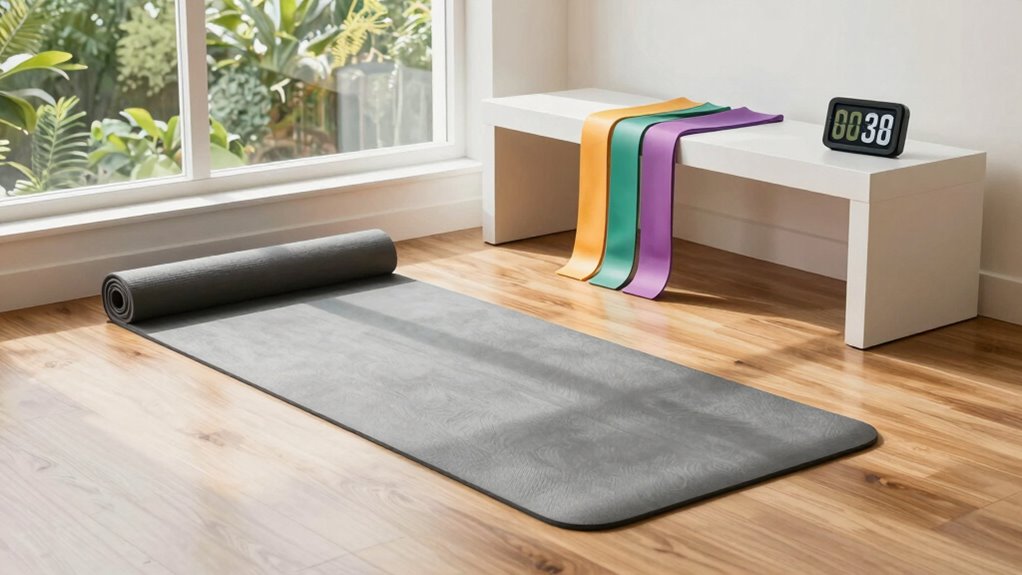

To structure a smart weekly fitness plan without overdoing it, balance intense workouts with low-impact activities like walking or yoga, and include at least one full rest day for recovery. Focus on setting realistic goals and tracking progress to stay motivated. Pay attention to nutrition and hydration, and listen to your body to prevent burnout or injury. Want to learn how to customize your routine for long-term success? Keep exploring for more tips.
Key Takeaways
- Incorporate a mix of high- and low-impact workouts to balance intensity and prevent overtraining.
- Schedule at least one full rest day weekly to promote recovery and mental reset.
- Set realistic, achievable goals and track progress to stay motivated without pressure.
- Vary exercise types to maintain engagement and avoid plateaus, ensuring sustainable progress.
- Listen to your body’s signals, adjusting routines to avoid pain, fatigue, and burnout.

Creating a balanced weekly fitness plan is essential for making steady progress without risking burnout or injury. When you’re planning your week, it’s crucial to think about both your physical and mental health. Incorporating the right nutrition tips can support your workouts and help you recover faster, while also boosting your mood and energy levels. Focus on fueling your body with a mix of lean proteins, whole grains, healthy fats, and plenty of fruits and vegetables. Hydration is equally important—drink enough water throughout the day to stay energized and prevent fatigue. Avoid crash diets or skipping meals, as these can drain your mental resilience and make sticking to your plan more difficult.
A balanced fitness plan supports progress, mental well-being, and proper recovery through nutrition, hydration, and mindful activity.
As you structure your weekly routine, consider how different types of workouts impact your mental health. Exercise releases endorphins, which can lift your mood, but overdoing it can lead to stress and exhaustion. Balance high-intensity sessions with lower-impact activities like walking, yoga, or stretching. These not only give your body a break but also help clear your mind and reduce anxiety. Remember, rest days are critical; they allow your muscles to recover and prevent mental burnout. Incorporate at least one full rest day per week, and listen to your body—if you’re feeling especially fatigued, don’t push through pain or exhaustion. Instead, opt for gentle movement or relaxation techniques to reset both your body and mind. Proper planning is key to maintaining a sustainable routine and avoiding overtraining. Including a variety of exercise types can also help keep your routine engaging and prevent plateaus. Additionally, paying attention to your training intensity ensures you don’t push beyond your limits and helps maintain mental clarity. Being mindful of your mental health can further enhance your overall well-being and improve your adherence to your fitness routine.
Balancing physical activity with mental well-being involves understanding how different workouts affect your mood and stress levels. Engaging in mindful movement practices like yoga or tai chi can enhance mental clarity and emotional resilience, complementing your physical routine. Keep track of your progress to stay motivated, but don’t obsess over every detail. Flexibility is key—if something doesn’t go as planned, adjust without guilt. Your mental health benefits from a positive outlook and a sense of control, so set realistic goals that motivate rather than discourage you.
Ultimately, a smart fitness plan balances activity, rest, and proper nutrition, ensuring you stay healthy physically and mentally. When you prioritize your well-being and listen to your body, you’ll find it easier to stick with your routine and enjoy the journey toward better fitness.

CIGOCIVI Instructional Travel Yoga Mat with 75 Asanas Poses & Exercises – Exercise Mat for Home Workout, Includes Carrying Bag, 68"x24"x0.25" (Purple/Blue)
Christmas Gifts for Wife and Girls: If you are struggling with what Christmas gift to give to your…
As an affiliate, we earn on qualifying purchases.
As an affiliate, we earn on qualifying purchases.
Frequently Asked Questions
How Do I Track Progress Effectively Without Becoming Obsessive?
To track progress effectively without becoming obsessive, focus on a balanced approach. Keep a simple journal to note your workouts, nutrition balance, and sleep quality, but avoid overanalyzing every detail. Celebrate small improvements and listen to your body. Use metrics like energy levels and mood as guides, rather than fixating on every number. This way, you stay motivated and healthy without stressing over constant data.
What Are Signs I’M Overtraining or Undertraining?
You’re overtraining if you notice persistent muscle soreness that doesn’t improve or energy dips that disrupt your daily routine. These signs indicate your body isn’t recovering properly. Conversely, undertraining may leave you feeling unchallenged, with little progress or fatigue. Pay attention to how your body responds—if soreness lasts too long or energy drops frequently, scale back to prevent injury. Balancing activity and recovery keeps your fitness journey safe and effective.
How Can I Adapt My Plan for Unexpected Schedule Changes?
Think of your plan as a flexible bamboo that bends without breaking. When unexpected schedule changes occur, adapt with flexible scheduling by swapping workout days or shortening sessions. Keep emergency workouts handy—quick, effective routines you can do anytime. This way, you stay consistent without feeling overwhelmed. Remember, it’s about progress, not perfection, so stay adaptable and listen to your body to keep your fitness journey on track.
Should I Include Rest Days or Active Recovery Days?
You should include both rest days and active recovery days in your plan. Rest days allow your muscles to recover, while active recovery boosts circulation without overexertion. To support this, follow nutrition tips like proper hydration and balanced meals. Sleep strategies are essential too; aim for quality sleep to enhance recovery and performance. Balancing rest and activity ensures steady progress without risking burnout or injury.
How Do I Stay Motivated Over the Long Term?
Like Odysseus facing endless challenges, you stay motivated by cultivating mental resilience and celebrating small victories. Focus on nutrition tips that fuel your body and mind, making workouts enjoyable rather than burdensome. Set realistic goals and track progress, reminding yourself of your ‘why.’ Surround yourself with supportive people and vary your routine to keep things fresh. These strategies help you maintain long-term commitment and stay inspired, no matter the obstacles.

Fitness Workout Journal for Women & Men, A5(5.5" x 8.2") Workout Log Book Planner for Tracking, Progress, and Achieving Your Wellness Goals – Green
Track Your Workouts – Stay organized and record your gym workouts with this comprehensive fitness planner. It provides…
As an affiliate, we earn on qualifying purchases.
As an affiliate, we earn on qualifying purchases.
Conclusion
By designing a balanced weekly plan, you’re more likely to stay consistent and avoid burnout. Remember, over 60% of people who overtrain experience setbacks, so listen to your body and prioritize rest. A smart, well-structured routine helps you stay motivated, see progress, and enjoy your fitness journey. Keep it manageable, stay committed, and celebrate small wins along the way. Your sustainable routine is the key to long-term success.
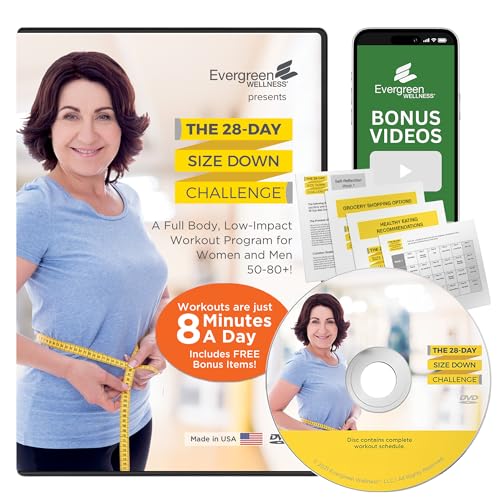
Exercise DVD for Seniors – 28 Day Size Down Challenge Low Impact DVD Exercise for Seniors Over 60 – Less Than 10 Minute Strength Training for Just 8 Minutes Per Day for Women/Men 50-80+
Challenge Accepted – Size down with this 28 Day low impact, fun fitness dvd for seniors program to…
As an affiliate, we earn on qualifying purchases.
As an affiliate, we earn on qualifying purchases.

Amazon Basics High-Density Foam Roller for Exercise and Recovery, 18 Inches, Black
High-density foam roller in Black
As an affiliate, we earn on qualifying purchases.
As an affiliate, we earn on qualifying purchases.