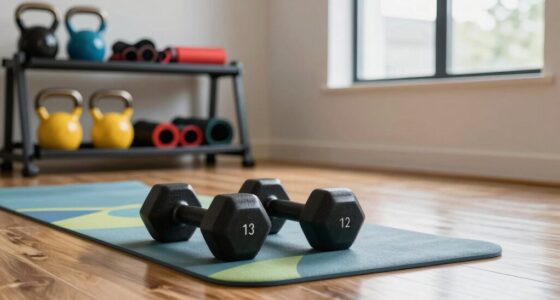
To strengthen your shoulders at home without heavy weights, focus on bodyweight exercises like pike push-ups, elevated push-ups, or wall-assisted handstand push-ups to activate your deltoids effectively. You can also use household items like water bottles or resistance bands for added resistance. Maintaining proper form, ensuring good lighting, and progressively increasing difficulty will boost your results. Keep exploring for more tips to keep your shoulder workouts challenging and effective.

Get workout gear delivered free — and shop member deals
- Fast, free delivery on millions of items
- Access to Prime Big Deal Days deals on October 6–7
- Prime Video, Amazon Music and more included
Key Takeaways
- Perform bodyweight exercises like pike push-ups and wall-assisted handstands to target shoulder muscles effectively.
- Use household items such as water bottles or resistance bands to add resistance and variety to shoulder workouts.
- Elevate your feet during push-ups to increase difficulty and muscle engagement in shoulder strengthening exercises.
- Incorporate dynamic variations like handstand push-ups to prevent plateaus and promote continuous progress.
- Maintain proper form and consistent practice to maximize gains and prevent injuries during at-home shoulder training.

Looking to build stronger, more defined shoulders without leaving home? You’re in the right place. You don’t need fancy gym equipment or heavy weights to target your shoulder muscles effectively. There are plenty of exercise variations and equipment alternatives that can help you reach your fitness goals right in your living room. The key is to focus on proper form, consistency, and using what you have available.
Start by exploring exercise variations that challenge your shoulders without requiring bulky equipment. Bodyweight exercises like pike push-ups are excellent for activating your shoulder muscles, especially the anterior deltoids. To make these more challenging, elevate your feet on a sturdy surface, increasing the angle and resistance. Another effective move is the handstand push-up, which targets your shoulders intensely. If a full handstand push-up isn’t feasible, try wall-assisted versions or pike push-ups to build strength gradually. These variations keep your workout dynamic and engaging, preventing plateaus and ensuring continuous progress.
When it comes to equipment alternatives, don’t underestimate the power of everyday household items. Water bottles, canned goods, or backpacks filled with books can serve as makeshift weights for shoulder presses or lateral raises. Resistance bands are another versatile option; they’re inexpensive, portable, and offer adjustable tension, making them perfect for shoulder exercises like banded shoulder presses, front raises, or reverse flies. If you don’t have resistance bands, you can also use a sturdy towel or a long piece of fabric to simulate resistance exercises by pulling against it. These equipment alternatives allow you to customize your workout intensity and keep your muscles guessing. Additionally, understanding factors like contrast ratio can help you optimize your workout environment by ensuring good lighting and visibility, making your exercise sessions more effective and safe. Mixing these exercise variations prevents boredom and ensures balanced shoulder development.
resistance bands for shoulder exercises
As an affiliate, we earn on qualifying purchases.
As an affiliate, we earn on qualifying purchases.
Frequently Asked Questions
Can I Build Shoulder Muscle Without Any Equipment?
Yes, you can build shoulder muscle without equipment by using bodyweight exercises like pike push-ups and handstand push-ups. Incorporate household items such as water bottles or canned goods to add resistance. Focus on controlled movements and gradually increase reps to challenge your muscles. Consistency and proper form are key—combine these exercises for effective shoulder strengthening at home, even without traditional weights.
How Often Should I Do Shoulder Workouts at Home?
Don’t put all your eggs in one basket; instead, aim for consistency. You should do shoulder workouts 2-3 times a week, giving your muscles time to recover and grow stronger. Stick to this exercise frequency, and you’ll see progress faster. Remember, workout consistency is key—skipping sessions can slow your gains. So, stay dedicated, listen to your body, and make your shoulder routine a regular part of your week.
Are There Any Risks of Injury With Bodyweight Shoulder Exercises?
Yes, there’s a risk of injury with bodyweight shoulder exercises if you don’t maintain proper form. To prevent injuries, focus on controlled movements and avoid overextending or straining your shoulders. Warm up before exercising and listen to your body. Proper form is key to injury prevention, so start with gentle exercises and gradually increase intensity, ensuring you engage your muscles safely and effectively.
What Are the Best Stretches to Prevent Shoulder Soreness?
To prevent shoulder soreness and improve shoulder flexibility, you should incorporate stretches like cross-body shoulder stretches, doorway stretches, and overhead triceps stretches. These help loosen tight muscles, increase joint mobility, and reduce injury risk. Make sure to hold each stretch gently for 20-30 seconds and breathe deeply. Consistent stretching not only enhances flexibility but also acts as a key injury prevention strategy during your at-home shoulder workout routine.
How Can I Increase the Intensity of My Shoulder Workouts?
Think of your muscles as a fire needing more fuel—progressive overload is your answer. Increase intensity by adding more reps, sets, or resistance gradually. Incorporate plyometric training like explosive shoulder presses or throws to boost power. This keeps your workouts challenging and prevents plateaus, ensuring continuous growth. Remember, small, consistent increases are key to safely intensify your shoulder workouts without risking injury.
adjustable water bottle weights for workouts
As an affiliate, we earn on qualifying purchases.
As an affiliate, we earn on qualifying purchases.
Conclusion
Now that you know how to strengthen your shoulders at home without heavy weights, you’re all set to start. Did you know that regular shoulder exercises can reduce injury risk by up to 30%? Consistency is key—incorporate these moves into your routine, and you’ll see improvements in strength and mobility. No gym needed, just your body and determination. Get moving today, and enjoy the benefits of healthier, stronger shoulders tomorrow!
wall-mounted handstand push-up equipment
As an affiliate, we earn on qualifying purchases.
As an affiliate, we earn on qualifying purchases.
shoulder workout resistance bands
As an affiliate, we earn on qualifying purchases.
As an affiliate, we earn on qualifying purchases.
Fall Picks
fall essentials
As an affiliate, we earn on qualifying purchases.