When choosing between OLED and QLED TVs, consider your priorities. OLED offers perfect blacks, stunning contrast, and precise colors, making it ideal for cinematic experience. However, its organic materials can be prone to burn-in over time. QLED TVs are brighter, more durable, and perform better in well-lit rooms, but may not achieve the same pitch-black levels. To understand which technology suits your viewing habits and environment best, continue exploring the details.
Key Takeaways
- OLED screens offer perfect blacks and infinite contrast due to pixel-level light control, while QLEDs produce brighter images with higher peak brightness levels.
- OLED uses organic compounds that can degrade over time, making it more prone to burn-in; QLEDs are more durable with inorganic components resistant to screen wear.
- QLED displays typically achieve higher brightness, enhancing HDR performance and visibility in bright rooms, whereas OLED excels in contrast and black levels.
- OLED’s pixel-level control provides better color accuracy and deeper blacks, ideal for cinematic viewing; QLED offers a broader color spectrum, especially in well-lit environments.
- QLEDs are generally more resistant to static image retention, making them suitable for gaming and static content, while OLED is preferred for perfect contrast and black levels.
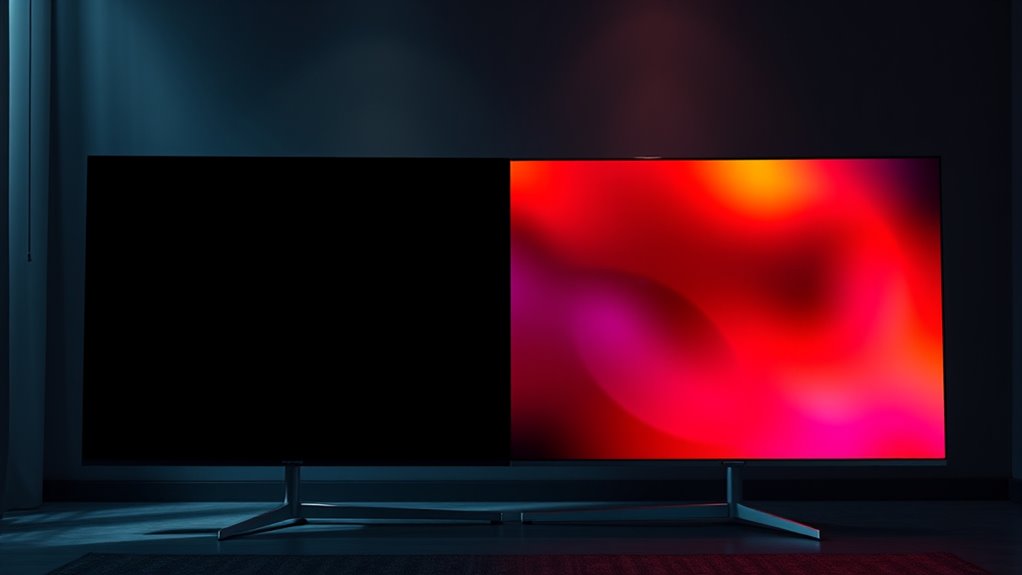
When choosing between OLED and QLED TVs, understanding their fundamental differences is essential. These two display technologies each have unique strengths that can impact your viewing experience, especially in areas like screen durability and color accuracy. Knowing how they compare helps you select a TV that fits your needs and preferences.
OLED screens are made with organic compounds that emit light when an electric current passes through them. This structure allows each pixel to turn on and off independently, producing perfect black levels and an infinite contrast ratio. Because of this precise control, OLED displays excel in delivering exceptional color accuracy. Colors appear vibrant and true-to-life, which enhances everything from movies to gaming. However, their screen durability can be a concern. The organic materials used in OLED panels are more susceptible to burn-in and image retention over time. If static images are displayed for long periods, you might notice ghosting or permanent marks, reducing the overall lifespan of the screen. That said, manufacturers have made strides in reducing burn-in risks, but it remains a factor to consider if you plan to use your TV for static content or gaming. Advancements in technology continue to improve the lifespan and reliability of OLED displays, making them more viable for everyday use.
QLED TVs, on the other hand, are based on quantum dot technology combined with LED backlighting. They use a layer of tiny semiconductor particles called quantum dots that produce precise colors when illuminated by an LED backlight. This results in a broader color spectrum and high color accuracy, especially in bright environments. QLEDs are generally more durable than OLEDs, thanks to their inorganic components, making them less prone to burn-in or screen degradation over time. If you prioritize a TV that can handle static images or extended use without worry, QLED might be the better choice. Additionally, QLEDs tend to deliver higher brightness levels, which enhances HDR performance and makes them ideal for well-lit rooms. This brightness advantage also helps maintain vivid color accuracy even in challenging lighting conditions.
Ultimately, your decision should weigh your viewing habits and environment. If you want perfect blacks, exceptional contrast, and are willing to accept some risk of burn-in, OLED is the way to go. But if you prefer a more durable display with vibrant colors that perform well in bright settings, QLED offers compelling advantages. Both technologies provide impressive picture quality, but understanding their differences in screen durability and color accuracy helps you pick the right TV for your specific needs.

LG 83-Inch Class OLED evo AI 4K G5 Series Smart TV w/Dolby Atmos, Dolby Vision, HDR10, AI Super Upscaling 4K, Filmmaker Mode, Wow Orchestra, Alexa Built-in (OLED83G5WUA, 2025)
- Brightness Booster Max: Enhanced brightness for vivid details
- Bright Room Ready: Glare-free performance in any lighting
- Alpha 11 AI Processor Gen2: Personalized picture and sound quality
As an affiliate, we earn on qualifying purchases.
As an affiliate, we earn on qualifying purchases.
Frequently Asked Questions
How Do OLED and QLED Screens Perform in Bright Sunlight?
In bright sunlight, OLED screens struggle with outdoor visibility due to their lower peak brightness, making it harder to see details. QLED screens perform better because they offer higher peak brightness and glare resistance, enhancing outdoor visibility. If you watch outside often, QLEDs are a better choice for glare resistance and clear outdoor viewing, while OLEDs are more suited for indoor environments with controlled lighting.
Which Technology Offers Better Longevity and Lifespan?
You’ll find that QLED TVs generally offer better longevity and durability compared to OLEDs. They resist burn-in issues and tend to last longer with less maintenance. OLEDs, while offering superior picture quality, can experience burn-in and have a shorter lifespan due to organic material degradation. If durability is your priority, a QLED might be the better choice, but keep in mind maintenance considerations like avoiding static images to prolong your TV’s lifespan.
Are OLED or QLED TVS More Energy-Efficient?
If you’re looking for an energy-efficient TV, QLEDs usually consume less power than OLEDs, making them a better choice for reducing your environmental impact. While OLEDs offer stunning picture quality, they tend to use more energy, especially at higher brightness levels. Think of it as a bit like using a vintage lamp versus LED lighting—QLEDs save power and help you cut down on electricity costs while still providing vibrant visuals.
Can OLED or QLED Displays Be Repaired Easily?
You might find that repairing OLED or QLED displays can be challenging due to repair challenges and screen durability issues. OLED screens are more delicate and prone to damage, making repairs often complex and costly. QLED screens are generally more durable but still pose repair difficulties if the panel or backlight fails. Overall, both types require professional expertise, and repairs can be expensive, so prevention and careful handling are your best strategies.
How Do Screen Sizes and Prices Compare Between OLED and QLED?
Think of screen sizes and prices as a journey through a landscape. OLEDs often offer more compact, premium sizes with higher prices, symbolizing luxury and intimacy. QLEDs provide a broader range of screen size options, from smaller to large, generally at more accessible prices, representing variety and value. Your choice depends on whether you seek exclusive, high-end visuals or versatile, budget-friendly options tailored to your space.

Hisense 65" E6 Cinema Series Hi-QLED 4K UHD Smart Fire TV (65E6QF) -AI Light Sensor, Dolby Vision · Atmos, Voice Remote with Alexa, Motion Rate 120, HDR 10+ Adaptive, Game Mode Plus
- Vibrant Hi-QLED Color: Rich, true-to-life colors and shades
- Comprehensive HDR Support: Dolby Vision, HDR 10+, HLG, Adaptive
- Dolby Vision & Atmos: Enhanced cinematic picture and sound
As an affiliate, we earn on qualifying purchases.
As an affiliate, we earn on qualifying purchases.
Conclusion
So, whether you choose OLED or QLED, just remember: one offers perfect blacks while the other promises dazzling brightness. It’s like debating whether to date the mysterious artist or the flashy show-off. Either way, your TV’s just trying to make your Netflix binge look good—so pick your fighter and enjoy the pixel-powered party. After all, who knew choosing a screen could be this entertaining? Happy watching!

TCL 65" T7 4K QLED Google TV with 144Hz Gaming (65T7)
- Resolution: 4K UltraHD for detailed images
- Display Technology: QLED with Quantum Dot Technology
- Refresh Rate: 144Hz for smooth motion
As an affiliate, we earn on qualifying purchases.
As an affiliate, we earn on qualifying purchases.

Samsung 55-Inch Class OLED 4K S85D Series HDR Smart TV w/Dolby Atmos, Object Tracking Sound Lite, Contour Design, Motion Xcelerator, Real Depth Enhancer, Alexa Built-in (QN55S85D, 2024 Model)
- OLED Technology: Vivid colors and deep blacks
- Contour Design: Elegant wave-inspired look
- OLED HDR: Bright contrast with illuminated pixels
As an affiliate, we earn on qualifying purchases.
As an affiliate, we earn on qualifying purchases.