TL;DR

Get workout gear delivered free with Prime
- Fast, free delivery on millions of items
- Prime Video, Amazon Music and more included
- Member-only deals all year
A Fit&Well personal trainer reported that her mid-back pain was nearly gone after nine days of a two-week routine of offset child’s pose. The account describes one person’s experience and does not establish that the stretch treats back pain generally.
A personal trainer writing for Fit&Well said her nagging mid-back pain was nearly gone after nine days of a two-week routine involving offset child’s pose, a gentle floor stretch held on each side. Her report describes an individual experience, not a clinical study, so it cannot show that the stretch will relieve other people’s back pain.
The writer said her discomfort had been flaring when she picked up her toddler-aged son and that she had recently neglected flexibility work. She chose offset child’s pose because it was simple and gentle, and tried it daily for two weeks to see whether it affected her pain. She began with 30-second holds on each side, increased to 45 seconds as the position became more comfortable, and reached 60 seconds per side during the final three days.
At the start, she practiced twice a day. Around the midpoint, she said her back felt better and she reduced the routine to once daily. She reported improved range of motion after a few days and said that by day nine her mid-back pain was “pretty much gone.” She also said she could sit more comfortably, carry her son more easily and lift heavier weights during chest presses. These outcomes are her observations; the report does not describe a standardized pain measure or comparison group.
Physical therapist Dr. Michael Nula, quoted in the report, said the position lengthens muscles along the mid and lower back while moving the hips and knees through a comfortable range. He said it may help relieve muscle tension and reduce joint compression. Nula also cautioned against forcing the position. If the hips do not reach the heels, he advised using a pillow so the pose can be adjusted to the person’s range of motion.
A Personal Result, Not a Treatment Trial
The report offers a practical example of how one person incorporated a brief stretch into her routine and tracked changes in comfort and movement. That may interest readers looking for a low-equipment mobility exercise, particularly because the writer described progress in ordinary activities such as sitting and lifting her child.
But a single-person account cannot establish that the stretch caused the improvement. The writer did not report a controlled comparison, clinical assessment, or a validated pain score, and other factors could have contributed. The takeaway is limited: one trainer said she felt better after practicing the stretch, while its effectiveness for other people remains untested by this report. Persistent, worsening or concerning back pain warrants advice from a qualified health professional rather than reliance on a stretching routine alone.
Products Worth Considering

Oura Ring 4 Smart Ring – Silver – Size 8

Oral-B iO5 Rechargeable Electric Toothbrush with 5 Cleaning Modes

Coway Mighty AP-1512HH(W) Air Purifier, White
As an affiliate, we earn on qualifying purchases.
How the Two-Week Routine Worked
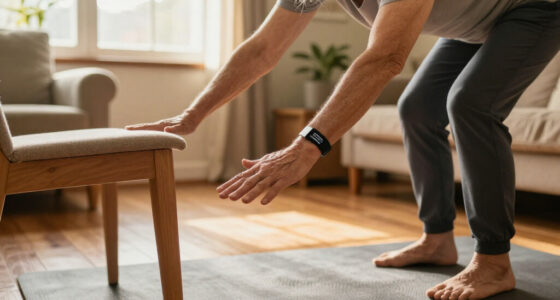
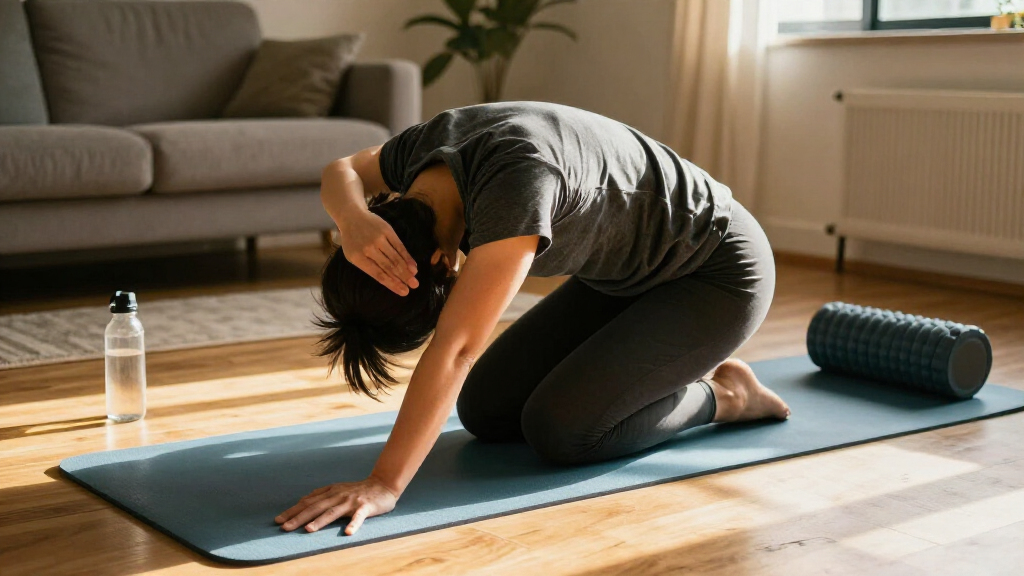
Offset child’s pose starts on hands and knees. The practitioner widens the knees, brings the toes together and moves the hips back toward the heels, then reaches both arms to one side and holds before repeating on the other. The Fit&Well report describes 30 to 60 seconds per side, with one or two sets listed as the suggested routine. The writer started at the shorter end and increased the hold as the stretch became more comfortable.
Nula said people should not force their hips to their heels. A pillow can support the position if the body does not comfortably reach that point. The report says the pose is suitable for most people but notes that some medical conditions or injuries may make it inappropriate; it advises readers with concerns to consult a physician. The article does not identify specific conditions or injuries, so readers should seek individualized guidance when unsure.
What One Account Cannot Establish
The report does not say when the experiment took place or provide details such as the writer’s age, medical history, exact pain severity, or whether she received other care during the two weeks. It also does not include a clinician’s assessment of the cause of her pain. Those gaps limit interpretation of why her symptoms improved.
No controlled study, participant group or longer follow-up is described, and it is unclear whether the improvement lasted after the trial. The account cannot establish that offset child’s pose is safe or effective for every person, or that the stretch alone produced the change. Readers with injuries, relevant medical conditions or uncertainty about the movement should get professional guidance before trying it.
The Writer Plans Ongoing Practice
The writer said she intends to keep offset child’s pose in her fitness routine, aiming to practice it several times a week, though she acknowledged she may not stretch every day. Fit&Well’s account does not report a planned follow-up or further measurement of her symptoms. For readers, the next step is not to treat this result as a guarantee: any attempt should stay within a comfortable range, and ongoing or worsening pain should be discussed with a health professional.
Key Questions
What stretch did the Fit&Well writer try?
She practiced offset child’s pose, reaching both arms to one side while sitting her hips back, then repeating on the other side.
How long did she hold the stretch?
She began with 30 seconds per side, moved to 45 seconds as it became more comfortable, and held it for 60 seconds per side during the final three days.
Did the stretch cure her mid-back pain?
The writer said her pain was “pretty much gone” after nine days. That is a personal observation, not proof of a cure or evidence that the stretch will work for others.
Should everyone with back pain try this pose?
No. Fit&Well’s report says some medical conditions or injuries may make the pose unsuitable and advises consulting a physician if unsure. Nula cautioned against forcing the position; readers with persistent or worsening symptoms should seek professional advice.
Source: fitandwell.com