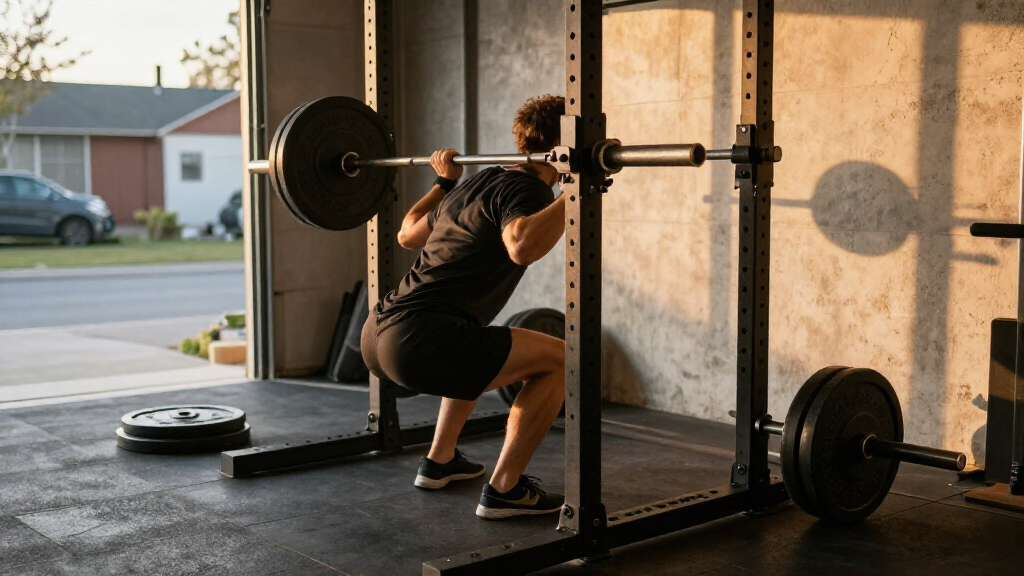

Portable squat racks for home gyms range from simple adjustable stands to larger power racks, and the best overall pick is the Verse Agile Rack for buyers who want a rack-and-bench setup without committing to a full-size frame. The Streamnova foldable rack stands out when storage space is tight, while the CAP Power Rack Stand adds a pull-up bar for broader training. The main tradeoff is between compact storage and the stability, capacity, and safety features of a larger rack. I compare all 12 options by fit, adjustability, construction, and how well each suits home use. Read on for the full breakdown and help matching a rack to your room and training needs.

Get workout gear delivered free with Prime
- Fast, free delivery on millions of items
- Prime Video, Amazon Music and more included
- Member-only deals all year
Complete the kit


Key Takeaways
- Rack format shapes the choice: The lineup includes separate stands, a foldable option, rack-and-bench configurations, and full-size frames, so portability does not mean the same thing across all 12 picks.
- Storage-first buyers have a distinct option: Streamnova’s foldable design is aimed at reclaiming floor space, while a full-size rack such as Sunny Health & Fitness prioritizes a more permanent training station.
- Published capacity is not the whole stability story: Capacity claims vary across the adjustable stand pairs, but base width, footprint, floor surface, and setup also affect how secure a rack feels during use.
- Versatility often costs space: The CAP rack’s pull-up bar and the Verse rack-and-bench format add exercise options, but simpler stand pairs are easier to move and store.
- Barbell fit deserves an early check: FLYBIRD SR1 is specified for 6-foot and 7-foot barbells, while buyers should confirm bar length and sleeve clearance against any rack before ordering.
| Yaheetech Adjustable Squat Rack Pair for Home Gyms |  | Best for Barbell Versatility | Quantity: 2 racks | Material: Alloy steel | Frame type: H-frame | VIEW LATEST PRICE | See Our Full Breakdown |
| Verse Agile Rack Portable Squat Rack and Bench Press Rack |  | Best for Frequent Storage and Transport | Material: 16-gauge structural-grade carbon steel | Frame type: Rectangular | Weight capacity: Up to 700 lb | VIEW LATEST PRICE | See Our Full Breakdown |
| ANT MARCH Adjustable Squat Rack Stands, Pair, 40–66 in |  | Best for Lower Setup Heights | Quantity: 2 stands | Material: Alloy steel | Frame type: Rectangular | VIEW LATEST PRICE | See Our Full Breakdown |
| K KiNGKANG Adjustable Squat Rack, 600 lb Capacity |  | Best for Adjustable Width | Model: 120 | Material: Alloy steel | Frame type: Rectangular | VIEW LATEST PRICE | See Our Full Breakdown |
| Adjustable Steel Squat Rack Stands, Pair, 41–66 Inches |  | Best for Simple Home-Gym Setup | Quantity: 2 stands | Material: Alloy steel | Frame design: H-shaped base | VIEW LATEST PRICE | See Our Full Breakdown |
| FLYBIRD SR1 Squat Rack, Adjustable Power Rack for 6FT/7FT Barbells |  | Best Overall for a Portable Home Gym | Material: 2 × 2-inch commercial-grade steel | Stated weight capacity: 950 lb | Height adjustments: 22 positions | VIEW LATEST PRICE | See Our Full Breakdown |
| Streamnova Adjustable Foldable Squat Rack |  | Best for Compact Storage | Material: Carbon steel | Stated weight capacity: 550 lb | Height settings: 5 | VIEW LATEST PRICE | See Our Full Breakdown |
| JupiterForce Adjustable Squat Rack Stands, Pair, 550 lb Capacity |  | Best for Independent Stand Placement | Quantity: 2 stands | Material: Alloy steel | Frame tubing: 50 × 50 × 2 mm | VIEW LATEST PRICE | See Our Full Breakdown |
| CAP Power Rack Stand with Pull-Up Bar |  | Best for a More Complete Station | Material: Alloy steel | Recommended maximum capacity: 500 lb | Dimensions: 45.67 × 50.79 × 85.43 in | VIEW LATEST PRICE | See Our Full Breakdown |
| CANPA Adjustable Squat Rack and Barbell Stand, 600 lb Capacity |  | Best for Barbell Storage | Material: Alloy steel | Stated weight capacity: 600 lb | Height adjustment: 6 levels, 50–57 in | VIEW LATEST PRICE | See Our Full Breakdown |
| F2C Adjustable Squat Rack Pair, 550 lb Capacity |  | Best Lightweight Adjustable Pair | Material: Steel | Maximum weight capacity: 550 lb | Height adjustment: 40–66 in | VIEW LATEST PRICE | See Our Full Breakdown |
| Sunny Health & Fitness Full-Size Power Rack |  | Best for Multi-Exercise Training | Model: SF-XF9931 | Material: Alloy steel | Dimensions: 38 × 53 × 87 in | VIEW LATEST PRICE | See Our Full Breakdown |
| portable squat racks for home gym | Material | Item weight |
|---|---|---|
| Yaheetech Adjustable Squat Rac | Alloy steel | 40.8 lb |
| Verse Agile Rack Portable Squa | 16-gauge structural-grade carbon steel | 67.5 lb |
| ANT MARCH Adjustable Squat Rac | Alloy steel | — |
| K KiNGKANG Adjustable Squat Ra | Alloy steel | 17.51 kg |
| Adjustable Steel Squat Rack St | Alloy steel | — |
| FLYBIRD SR1 Squat Rack | 2 × 2-inch commercial-grade steel | — |
| Streamnova Adjustable Foldable | Carbon steel | — |
| JupiterForce Adjustable Squat | Alloy steel | 40 lb |
| CAP Power Rack Stand with Pull | Alloy steel | — |
| CANPA Adjustable Squat Rack an | Alloy steel | — |
| F2C Adjustable Squat Rack Pair | Steel | 18.5 lb |
| Sunny Health & Fitness Full-Si | Alloy steel | 83 lb |
More Details on Our Top Picks
Yaheetech Adjustable Squat Rack Pair for Home Gyms
The Yaheetech pair is a practical choice for a home gym that needs separate stands for both squats and bench presses without a fixed rack. Its 44–70-inch height range gives it more overhead reach than the ANT MARCH stands, which top out at 66 inches, while compatibility with standard and Olympic-sized bars makes it flexible if your equipment changes. Safety pins and anti-skid feet add useful safeguards, though separate stands demand careful positioning before loading the bar. At 40.8 pounds, it is movable, but not a lightweight option to carry frequently. I would also treat the stated capacity cautiously: the supplied product information lists both 441 and 550 pounds. That uncertainty makes the Verse Agile Rack a clearer choice for buyers prioritizing a stated higher capacity and fold-flat storage.
Pros:- 14 height positions per post cover a broad range of squat and pressing setups.
- Compatible with standard and Olympic-sized bars.
- Safety pins and anti-skid feet add support and help limit floor movement.
- Separate stands can be repositioned for different exercises.
Cons:- Product information gives conflicting maximum-capacity figures of 441 and 550 pounds.
- Assembly nuts need a wrench for proper tightening.
- Separate stands require careful spacing and alignment before each lift.
Best for: Home lifters who want adjustable, separate stands for squats and bench presses and may use either standard or Olympic-sized barbells.
Not ideal for: Buyers who need a clearly consistent load rating, a rack that folds compactly, or a setup that avoids assembly and tool tightening.
- Quantity:2 racks
- Material:Alloy steel
- Frame type:H-frame
- Height adjustment:44–70 in
- Adjustment positions:14 per post, spaced 2 in apart
- Listed weight capacity:550 lb; source also lists 441 lb
- Item weight:40.8 lb
- Bar compatibility:Standard and Olympic-sized bars
Our verdict“Choose the Yaheetech pair if bar compatibility and a wide height range matter more than compact folding or an unambiguous capacity figure.”
Verse Agile Rack Portable Squat Rack and Bench Press Rack
The Verse Agile Rack earns its place for people who need a rack that can leave the workout area between sessions. Unlike the Yaheetech and ANT MARCH pairs, it arrives assembled and folds to 46.5 × 9 × 8 inches, so it takes up far less floor space when stored. Its freestanding frame deploys without tools, and the listed capacity of up to 700 pounds is higher than the other standalone options in this group. The tradeoff is portability by footprint, not by carry weight: at 67.5 pounds, it may be awkward to move often. Bar choice is another constraint, since it fits bars 72–86 inches long. Compared with the foldable K KiNGKANG, this model has defined folded dimensions and a faster no-tool setup, but it is heavier to handle.
Pros:- Folds to a slim 46.5 × 9 × 8-inch package for storage or transport.
- Arrives assembled and deploys without tools in under two minutes.
- Freestanding design needs no wall mounting.
- Listed capacity of up to 700 pounds exceeds the other standalone options here.
Cons:- At 67.5 pounds, it can be cumbersome to carry despite its folded shape.
- Barbell compatibility is limited to bars 72–86 inches long.
- Its deployed footprint is 50 × 41 inches, which still needs dedicated workout space.
Best for: Home gym users who must clear their workout space after training or want a freestanding rack they can transport without assembling it each time.
Not ideal for: Anyone who needs a light rack to carry regularly or owns a barbell outside the specified 72–86-inch length range.
- Material:16-gauge structural-grade carbon steel
- Frame type:Rectangular
- Weight capacity:Up to 700 lb
- Item weight:67.5 lb
- Deployed dimensions:50 × 41 × 65 in
- Folded dimensions:46.5 × 9 × 8 in
- Barbell compatibility:Standard or Olympic bars, 72–86 in long
- Setup:Fully assembled; deploys without tools in under 2 minutes
- Included component:Push-up bar
Our verdict“Pick the Verse if fast setup and compact folded storage matter more than low carry weight or broad barbell-length compatibility.”
ANT MARCH Adjustable Squat Rack Stands, Pair, 40–66 in
The ANT MARCH stands suit lifters who need a lower starting range for bench work or a more compact rack height: adjustment begins at 40 inches, below the Yaheetech pair’s 44-inch minimum. They still reach 66 inches and include safety spotters, while rubber feet help reduce sliding and protect the floor. The format is familiar and straightforward—two separate stands rather than the folding, assembled Verse Agile Rack—so buyers can place them around a bench or clear them away when finished. The compromise is that the 550-pound figure is a stated maximum, not a reason to overlook setup and loading discipline; the stands also require assembly. Compared with Saturnpower’s similar 41–66-inch pair, ANT MARCH starts one inch lower, but the supplied details give less information about adjustment positions.
Pros:- 40–66-inch height range starts lower than the Yaheetech and Saturnpower pairs.
- Safety spotters support squat and bench-press use.
- Non-slip rubber feet help stabilize the stands and protect flooring.
- Listed for squats, bench presses, dips, and overhead lifts.
Cons:- Assembly is required before use.
- The stated 550-pound maximum is a load limit, not a substitute for careful setup.
- Separate stands need accurate spacing and alignment under the bar.
Best for: Home lifters who need adjustable independent stands with a low 40-inch minimum for bench presses and varied barbell exercises.
Not ideal for: Buyers who want a rack that folds or arrives ready to use, or who prefer detailed adjustment-position specifications before choosing.
- Quantity:2 stands
- Material:Alloy steel
- Frame type:Rectangular
- Height range:40–66 in
- Maximum load capacity:550 lb
- Dimensions:20 × 18 × 66 in
- Features:Adjustable height, safety spotters, non-slip rubber feet
- Assembly:Instructions and mounting hardware included
Our verdict“Choose ANT MARCH if a 40-inch minimum height is useful and you prefer a simple pair of adjustable stands over a folding frame.”
K KiNGKANG Adjustable Squat Rack, 600 lb Capacity
The K KiNGKANG is the lineup’s most adaptable choice for changing the distance between supports: its width adjusts from 27.9 to 47.2 inches, alongside a 33.85–64.9-inch height range. That makes it a better fit than fixed-spacing stand pairs such as Saturnpower when bar length or exercise setup calls for a different width. It also folds for storage, although the supplied details do not give a folded size, so it is harder to plan around than the Verse Agile Rack with its stated compact dimensions. The capacity needs caution: the description says 600 pounds while the specifications say 690. It is listed as one rack, rather than a pair of independent stands, and assembly is required. Buyers should check the included configuration and capacity information before making it their main barbell station.
Pros:- Adjustable width from 27.9 to 47.2 inches accommodates different setups.
- Height adjusts from 33.85 to 64.9 inches.
- Foldable design can reduce storage demands.
- Steel frame and locking mechanisms are designed to support stable use.
Cons:- Capacity is inconsistent across the supplied information: 600 pounds in the description and 690 in the specifications.
- Assembly is required.
- No folded dimensions are provided, making storage planning less certain.
Best for: Home gym owners who need to adjust support width for different barbell setups and want a foldable frame rather than fixed-width stands.
Not ideal for: Buyers who need a clearly stated capacity, documented folded dimensions, or a pair of independently positioned stands.
- Model:120
- Material:Alloy steel
- Frame type:Rectangular
- Adjustable width:27.9–47.2 in
- Adjustable height:33.85–64.9 in
- Listed maximum load capacity:600 lb in description; 690 lb in specifications
- Item weight:17.51 kg
- Design:Foldable; listed as 1 rack
- Warranty:180 days for manufacturing defects
Our verdict“Pick the K KiNGKANG if adjustable width is your priority, but verify the delivered configuration and load information before relying on it.”
Adjustable Steel Squat Rack Stands, Pair, 41–66 Inches
Saturnpower keeps the design straightforward: a pair of H-base steel stands with 14 height positions per column and adjustable spotters. The 41–66-inch range covers common squat and pressing setups, while rubber feet help protect floors. Compared with the ANT MARCH pair, it starts one inch higher but gives a specified number of adjustment holes, which helps buyers gauge how finely they can set the bar height. It is also lighter than the 67.5-pound Verse Agile Rack, though it does not fold into a compact transport package. Assembly is required, and the barbell and dumbbells are not included, so this is a stand-only purchase rather than a ready-to-train bundle. Its stated 550-pound capacity should be treated as a maximum limit when planning use.
Pros:- 14 adjustment holes per column provide defined height settings.
- H-shaped bases and steel construction are designed for stable placement.
- Rubber feet help limit slipping and protect floors.
- At 40 pounds, it weighs less than the Verse Agile Rack.
Cons:- Assembly is required.
- Barbell and dumbbells are not included.
- Does not offer the compact folding and transport format of the Verse Agile Rack.
Best for: Home lifters who want a conventional pair of adjustable stands with defined height positions and already own a compatible barbell.
Not ideal for: Buyers who want a ready-to-use folding rack, need a lower minimum height than 41 inches, or expect weights to be included.
- Quantity:2 stands
- Material:Alloy steel
- Frame design:H-shaped base
- Height range:41–66 in
- Adjustment positions:14 holes per column
- Weight capacity:550 lb
- Product weight:40 lb
- Dimensions:17 × 20.1 × 41–66 in
- Included:1 pair of stands; barbell and dumbbells not included
Our verdict“Choose Saturnpower if you already have a barbell and want a simple, adjustable stand pair with specified height positions.”
FLYBIRD SR1 Squat Rack, Adjustable Power Rack for 6FT/7FT Barbells
The FLYBIRD SR1 is the strongest fit here for lifters who want a compact rack that can do more than hold a barbell. Its 39 × 41.3-inch footprint, adjustable width for 6- and 7-foot barbells, and 22 height positions make it more adaptable than the fixed-width CAP Power Rack Stand. The 16.7-inch safety arms give solo lifters a catch point, while the pull-up bar, landmine attachment, and band pegs add training options without requiring separate stations. The stated 950-pound capacity is also the highest among these five picks. The tradeoff is that it remains a freestanding rack, not an enclosed cage, and its many attachments and adjustments may be unnecessary for someone seeking the simplest setup. I’d choose it for a space-conscious home gym that needs broad exercise versatility.
Pros:- Adjustable width accommodates most 6- and 7-foot barbells.
- 22 height positions make it easier to set up for different lifts and users.
- Safety arms provide a catch point for solo training.
- Pull-up bar, landmine attachment, and resistance-band pegs broaden workout options.
Cons:- Freestanding half-rack design does not enclose the lifter like a power cage.
- The added attachments and adjustment options may be more setup than basic training requires.
Best for: Home lifters who want adjustable barbell training, safety arms, and pull-up or landmine work in a compact footprint.
Not ideal for: Buyers who want a fully enclosed power cage or only need a basic pair of barbell stands.
- Material:2 × 2-inch commercial-grade steel
- Stated weight capacity:950 lb
- Height adjustments:22 positions
- Barbell compatibility:Most 6- and 7-foot barbells
- Safety arm length:16.7 in
- Footprint:39 × 41.3 in
- Overall height:83 in
- Included features:Pull-up bar, landmine attachment, and 6 resistance-band pegs
Our verdict“Choose the FLYBIRD SR1 if you want a compact, highly adjustable rack with safety arms and multiple workout attachments.”
Streamnova Adjustable Foldable Squat Rack
The Streamnova Adjustable Foldable Squat Rack is the clearest choice when putting equipment away matters as much as setting it up. Its foldable design and five width settings make it more storage-friendly than the CAP Power Rack Stand, which has a larger fixed footprint and is not described as foldable. Five height settings cover basic squat and press setups, and rubber footpads help limit floor scuffs and sliding. The stated 550-pound capacity suits moderate home training, but it sits well below the FLYBIRD SR1’s 950-pound claim and its 38.98–47.24-inch height range is narrower than the JupiterForce stands’ listed adjustment range. This is a straightforward space-saving pick, not a feature-rich station: the supplied details do not list safety arms, a pull-up bar, or extra attachments. Assembly is required, and heavier lifters should look elsewhere.
Pros:- Foldable construction supports more compact storage than a fixed rack.
- Five width settings help accommodate different barbell and workout setups.
- Rubber footpads help protect floors and reduce slipping.
- Steel frame has a stated 550-pound capacity.
Cons:- Its stated capacity is lower than the FLYBIRD SR1’s, limiting its appeal for heavier training.
- Only five height settings are specified, fewer than the JupiterForce stands’ 14 main positions.
- Assembly is required, and the supplied details do not specify safety spotters.
Best for: Apartment or shared-space lifters who need an adjustable barbell rack that can be folded for storage between workouts.
Not ideal for: People training with heavy loads or seeking safety spotters, a pull-up bar, or a wider range of rack height.
- Material:Carbon steel
- Stated weight capacity:550 lb
- Height settings:5
- Height range:38.98–47.24 in
- Width settings:5
- Width range:24.8–38.58 in
- Dimensions:17.5 × 35 × 44 in (D × W × H)
- Storage and feet:Foldable; non-slip rubber footpads
Our verdict“Pick the Streamnova if fold-away storage is your main priority and your training loads fit its stated capacity.”
JupiterForce Adjustable Squat Rack Stands, Pair, 550 lb Capacity
The JupiterForce pair suits lifters who want to set each stand independently around a bench or barbell rather than work within a joined frame. Its 14 main height positions and six-position safety spotters offer more adjustment choices than the Streamnova rack’s five height settings, while the separate H-shaped bases can be repositioned to fit a particular workout layout. The spotters give a secondary bar-resting point, a useful distinction from the Streamnova, whose supplied details do not list safety arms. That flexibility has a tradeoff: these stands do not connect to hold a fixed width, so careful placement matters when setting up. The 550-pound stated capacity also makes the FLYBIRD SR1 a better match for lifters seeking a higher-capacity frame. At 40 pounds for the pair, this is a practical option for adaptable layouts, not a compact fold-away solution.
Pros:- Independent stands can be spaced to suit different bench and barbell setups.
- 14 main height positions support a range of lifters and exercises.
- Six-position safety spotters provide an adjustable secondary bar-resting point.
- H-shaped bases and rubber end caps support stability and floor protection.
Cons:- The stands do not connect, so they do not maintain a fixed width as a joined rack would.
- The stated 550-pound capacity is below the FLYBIRD SR1’s 950-pound claim.
- The pair weighs 40 pounds, which may be less convenient to move than lighter standalone equipment.
Best for: Home lifters who change bar and bench spacing between exercises and want adjustable safety spotters on separate stands.
Not ideal for: Those who want a connected rack frame, a foldable storage solution, or a stated capacity above 550 pounds.
- Quantity:2 stands
- Material:Alloy steel
- Frame tubing:50 × 50 × 2 mm
- Stated weight capacity:550 lb
- Main height adjustment:14 positions, 40.5–66.1 in
- Safety spotter adjustment:6 positions, 18.9–28.7 in
- Base footprint:20.1 × 17.7 in per stand
- Item weight:40 lb
Our verdict“Choose JupiterForce if independent placement and adjustable safety spotters matter more than a connected frame or foldable storage.”
CAP Power Rack Stand with Pull-Up Bar
The CAP Power Rack Stand is the most station-like option in this group, combining J-cup catches, a pull-up bar, and weight storage in one steel frame. That integrated setup is a better fit than the JupiterForce independent stands for buyers who prefer a fixed arrangement with storage built in. Its 45.67 × 50.79-inch footprint, however, is substantially larger than the FLYBIRD SR1’s 39 × 41.3-inch footprint, so it asks more of a garage or spare room. The stated 500-pound maximum is also lower than the FLYBIRD and CANPA figures. Double-gusseted uprights, powder coating, and zinc hardware are aimed at a durable home setup, but the supplied description does not list adjustable safety arms. I’d favor CAP when an integrated pull-up and storage station matters more than minimizing floor space or choosing the highest stated capacity.
Pros:- Combines a pull-up bar, J-cup catches, and weight storage.
- Double-gusseted uprights are designed to support rack stability.
- Powder-coated finish and zinc hardware are specified for durability.
- Fixed-frame format offers a more integrated station than independent stands.
Cons:- Its 45.67 × 50.79-inch footprint is larger than the FLYBIRD SR1’s.
- The recommended maximum capacity of 500 pounds is lower than the FLYBIRD and CANPA figures.
- The supplied product details do not list safety arms for catching a failed lift.
Best for: Home-gym owners with room for a fixed rack who want a pull-up bar, J-cups, and weight storage in one station.
Not ideal for: Small-room lifters, buyers prioritizing a higher stated load capacity, or solo trainers specifically seeking listed safety arms.
- Material:Alloy steel
- Recommended maximum capacity:500 lb
- Dimensions:45.67 × 50.79 × 85.43 in
- Weight:54 lb
- Features:Pull-up bar, weight storage, and J-cup catches
- Uprights:Double-gusseted
- Finish:Powder coat
- Hardware:Industrial zinc
Our verdict“Choose the CAP if you have room for a fixed station and value built-in pull-up and weight-storage features over a compact footprint.”
CANPA Adjustable Squat Rack and Barbell Stand, 600 lb Capacity
The CANPA adjustable rack makes a practical case for home gyms where keeping the barbell and rack in one organized area matters: it includes two barbell storage holders alongside adjustable height and width. Its stated 600-pound capacity exceeds the Streamnova and JupiterForce figures, though it remains below the FLYBIRD SR1’s 950-pound claim. The 35.1–41.8-inch width range gives it flexibility that the fixed-width CAP Power Rack Stand does not offer, while the safety locking system and non-slip feet add useful setup and floor-protection details. The listed height range is 50–57 inches, yet overall dimensions give a 59.5-inch height, so the product data is inconsistent on that measurement. Assembly also calls for two wrenches to tighten the nuts securely. I’d choose CANPA for adjustable, storage-minded training, not for the simplest assembly or the clearest height specification.
Pros:- Adjustable width accommodates different barbell and exercise setups.
- Two storage holders help keep a barbell organized between workouts.
- Safety locking system and non-slip feet add useful setup and floor-protection features.
- Stated 600-pound capacity is higher than the Streamnova and JupiterForce figures.
Cons:- Product data lists a 50–57-inch height range but gives an overall height of 59.5 inches.
- Nuts require two wrenches for secure assembly.
- Its stated capacity is lower than the FLYBIRD SR1’s 950-pound figure.
Best for: Home lifters who want adjustable rack width, a stated 600-pound capacity, and built-in places to store a barbell.
Not ideal for: Buyers who need clearly consistent height measurements, tool-light assembly, or the highest stated capacity in this group.
- Material:Alloy steel
- Stated weight capacity:600 lb
- Height adjustment:6 levels, 50–57 in
- Width range:35.1–41.8 in
- Overall dimensions:23.54 D × 41.8 W × 59.5 H in
- Barbell storage:2 holders
- Safety features:Safety locking system, inner non-slip washers, and non-slip feet
- Frame type:Rectangular
Our verdict“Choose CANPA if adjustable width and built-in barbell storage suit your home setup and you can work around its height-spec discrepancy.”
F2C Adjustable Squat Rack Pair, 550 lb Capacity
The F2C Adjustable Squat Rack Pair suits home lifters who want separate stands they can move or store without dedicating floor space to a full cage. At 18.5 pounds, it is far easier to reposition than the 83-pound Sunny Health & Fitness Full-Size Power Rack, though that larger rack adds pull-up capability and built-in plate storage. F2C’s 13 safety-arm positions give you room to set catches for different lifts, and the 40–66-inch adjustment range accommodates varied rack heights. Its 550-pound listed capacity and compatibility with standard and Olympic barbells make it a flexible choice, but the open pair design does not provide the same enclosed setup as a power rack. You’ll also need a wrench to fully tighten the connections, and the listed overall height is 66.5 inches despite the 66-inch adjustment maximum.
Pros:- Light 18.5-pound pair is easier to reposition than a full-size rack.
- 13 safety spotter positions per side allow flexible catch-height setup.
- 550-pound stated capacity supports a range of home barbell work.
- Fits standard and Olympic barbells and adjusts from 40 to 66 inches.
Cons:- Separate stands do not provide an enclosed power-rack setup.
- Connections require a wrench for full tightening.
- Listed overall height of 66.5 inches exceeds the stated 66-inch adjustment maximum.
Best for: Home lifters who need movable, height-adjustable stands for squats and bench presses and have limited space for permanent equipment.
Not ideal for: Lifters who want an enclosed rack for pull-ups, integrated plate storage, or the added structure of a full-size power rack.
- Material:Steel
- Maximum weight capacity:550 lb
- Height adjustment:40–66 in
- Base dimensions:17.7 × 20.1 in
- Item weight:18.5 lb
- Safety spotter positions:13 per side
- Barbell compatibility:Standard and Olympic
- Overall dimensions:20.1 × 17.7 × 66.5 in (D × W × H)
Our verdict“Choose the F2C pair if portability and adjustable stands matter more to you than the pull-up and storage features of a full-size rack.”
Sunny Health & Fitness Full-Size Power Rack
The Sunny Health & Fitness Full-Size Power Rack is the broadest training setup in this pair of picks: it combines barbell stations with an angled pull-up bar and two plate holders. Its 18 J-hook positions and adjustable spotter arms let you tailor the rack for different lifts, while the 87-inch height adds overhead pull-up space. That versatility comes at a portability cost: at 83 pounds and 38 × 53 inches, it is far less convenient to move than the compact F2C stands. Listed capacities are 300 pounds for the J-hooks, spotter arms, and pull-up bar, so the F2C’s stated 550-pound capacity may suit buyers prioritizing heavier listed barbell support. This rack also requires assembly, and compatible attachments are sold separately, so it is less appealing if you want a simple, easily stored pair of stands.
Pros:- Combines barbell training, pull-ups, and resistance-band exercise options.
- 18 J-hook positions provide varied bar placement.
- Includes safety spotter arms and two plate holders.
- Angled pull-up bar has eight adjustment positions.
Cons:- At 83 pounds and 38 × 53 inches, it is less portable than separate squat stands.
- J-hooks, spotter arms, and pull-up bar each have a listed 300-pound capacity.
- Requires assembly, and compatible attachments are sold separately.
Best for: Home gym owners with a dedicated training area who want one rack for squats, presses, pull-ups, resistance-band work, and plate storage.
Not ideal for: Apartment lifters or anyone who needs equipment they can quickly move and store, or lifters whose training needs exceed the listed 300-pound capacities.
- Model:SF-XF9931
- Material:Alloy steel
- Dimensions:38 × 53 × 87 in
- Item weight:83 lb
- J-hook capacity:300 lb
- Safety spotter arm capacity:300 lb
- J-hook adjustment:18 positions
- Pull-up bar capacity:300 lb
- Plate holders:2; 100 lb capacity per holder
Our verdict“Pick this rack if you have a dedicated home gym and want pull-ups and plate storage alongside barbell lifts, rather than a lightweight setup you can move easily.”
How We Picked
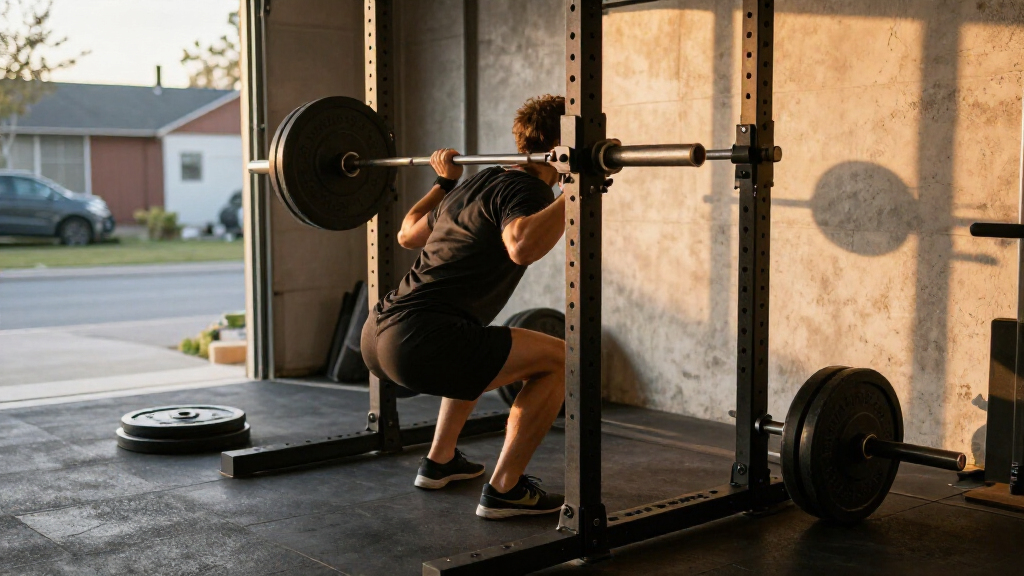
I ranked these portable squat racks by how well their design fits real home-gym constraints: available floor space, storage between workouts, adjustability, stated load capacity, barbell compatibility, and useful exercise options. I also weighed the difference between independent stands and connected or full-size rack structures, since those formats offer different balances of mobility and support. Product claims such as capacity and compatibility are useful comparison points, but they do not replace careful assembly, sound flooring, or safe lifting practices.
The order favors options with a clear role and a practical balance of usability and versatility, then places more specialized choices where their benefits matter most. A foldable rack earns attention for compact storage, while a larger frame ranks well for buyers who value a more fixed setup and added functions. Stand pairs remain compelling for simpler, movable training stations, but their lighter footprint can be a compromise for lifters who want a more enclosed or connected structure.
Factors to Consider When Choosing Portable Squat Racks For Home Gyms
Before choosing, decide what “portable” needs to mean in your home: easy to move after each session, collapsible for storage, or simply less imposing than a permanent power rack. These differences can matter more than small variations in listed capacity. I’d start with your room, barbell, and workout routine, then compare the safety and convenience features that fit those limits.
Choose a Format That Matches Your Storage Routine
Separate squat stands are generally the most flexible choice when you need to move equipment around or store it in pieces. A foldable rack may take less effort to put away, but folding hardware and the space needed to open it still matter. A full-size rack can be harder to relocate yet may be the better fit if it will stay assembled in a dedicated corner. Measure both the rack’s working footprint and the path through doorways or hallways. A common mistake is measuring only the storage spot and forgetting the room needed to load a bar and step back safely. Pick based on how you will actually clear the room after training, not just on the word “portable.”
Treat Capacity as One Part of Stability
A stated weight capacity helps narrow options, but it does not describe every aspect of how a rack behaves under load. Base width, stand spacing, frame connections, floor grip, and even uneven flooring all affect setup stability. Independent stands can be convenient to position, but they require deliberate alignment and may shift more readily than a connected structure if set up poorly. Check whether the manufacturer’s capacity applies to the whole rack and follow the assembly and use instructions. Do not assume two products with similar capacity claims will feel equally secure. If your training includes heavy unracking or forceful re-racking, give stability and safety features priority over easy storage.
Confirm Barbell Length and Clearance
Rack compatibility is not just about whether a bar can rest on the hooks. The bar must have enough usable shaft length to sit securely, with sleeves clear of uprights or other parts of the rack. Shorter bars can suit compact rooms but may not fit every stand or full-size rack, while longer bars need extra room for loading plates. Check bar length, the distance between supports, and the space needed to load both ends. Measure with the plates you plan to use, since plate diameter can affect clearance near walls or uprights. A quick measurement before buying can prevent a rack-and-bar mismatch that limits exercise choices.
Decide Which Safety Features Your Lifting Needs
J-hooks hold the bar between sets, but they are not the same as safety arms or a power rack’s catch system. If you often lift alone, think through how you would safely exit a failed squat or bench press before choosing a compact stand. Safety arms need to be set at the right height and should be compatible with the rack; never assume an accessory will fit because it looks similar. A larger frame may provide more options for controlled solo lifting, though it takes more room and is less convenient to move. Newer lifters may benefit from practicing with manageable loads and a spotter while learning setup and bailout technique. Let your training habits, not just your available space, guide this decision.
Pay for Versatility Only If You Will Use It
Features such as pull-up bars, bench compatibility, and multiple adjustment positions can make one rack serve more of your routine. They can also add height, bulk, setup steps, or limits on where the rack fits. If squats and standing presses are your main lifts, a straightforward pair of stands may meet your needs with less equipment around it. If you want a broader station for pull-ups or bench work, a more involved design may save you from buying separate equipment later. Make a short list of the movements you perform now and those you genuinely expect to add. Avoid choosing extra attachments solely because they appear to offer more value on paper.
Check Adjustability and Assembly Details
Height adjustment affects more than squat setup: it also determines whether the rack can serve for presses and whether the bar is easy to rerack. Look for a useful adjustment range and a locking method you can operate confidently, rather than focusing only on the number of settings. Assembly affects portability too; a rack that is awkward to disassemble may not be convenient to put away after every workout. Review the frame dimensions, adjustment mechanism, and included hardware before deciding where it will live. For shared home gyms, an easy-to-change setup can matter more than an unusually broad range that takes longer to adjust. Keep the assembled rack on a level surface and check fasteners periodically according to the maker’s instructions.
Frequently Asked Questions
Are independent squat stands a good choice for lifting alone?
They can work for solo training, but independent stands do not automatically provide the same protection as a power rack with compatible safety arms. Check whether the chosen model supports safety attachments and whether those attachments can be set to catch the bar below your range of motion. Set the stands on a level, nonslip surface and align them carefully before loading the bar. If you are still learning bailout technique or expect to lift near your limits, a spotter or a rack with suitable safeties is a safer choice. Do not rely on a capacity figure alone to judge solo-lifting safety.
Should I choose a foldable rack or a pair of squat stands for a small room?
Choose based on how you store equipment and how often you need to clear the floor. A foldable rack can reduce the effort of putting a structure away, while separate stands may be easier to carry or reposition individually. Compare the folded footprint with the space needed to unfold the rack, load plates, and move around it during a workout. Also account for nearby furniture and wall clearance, since a compact stored shape does not guarantee a compact lifting area. If you plan to move the rack after every session, test the whole setup routine against your room layout before deciding.
Can I use a 6-foot barbell with any portable squat rack?
No. A rack’s support spacing and the usable shaft length of the bar must match, and plates need enough room to load without hitting the uprights. FLYBIRD SR1 specifically lists compatibility with 6-foot and 7-foot barbells, but that does not establish fit for every other rack in this roundup. Check the rack’s dimensions and the bar’s shaft and sleeve layout before purchase. Include the plates you will use when measuring, particularly if the room is narrow. If the manufacturer does not state compatibility, ask for the relevant dimensions rather than guessing from product photos.
Is a listed 600-pound capacity enough to compare two racks?
It is a useful starting point, not a complete measure of rack security or suitability. Capacity claims may describe different loading conditions, and they do not tell you how stable the rack will be on your floor or during a hard rerack. Compare the frame layout, base, connections, adjustment locks, and the maker’s stated use instructions alongside the number. Also account for your barbell and plates, then leave room for sensible progression rather than choosing only by the largest claim. When details are unclear, verify what the capacity covers before relying on it for your training.
When does a full-size power rack make more sense than portable stands?
A full-size rack makes more sense when you have a dedicated training area and want a more permanent station with room for additional functions. The Sunny Health & Fitness Full-Size Power Rack and CAP Power Rack Stand with Pull-Up Bar illustrate the added scope available beyond basic squat stands. That extra structure can be useful for varied workouts, but it takes more floor space and is less convenient to store between sessions. If your workouts are limited to squats and presses in a shared room, separate stands may be easier to live with. Choose a larger rack when its added features and setup suit your routine, not just because it looks more substantial.
Conclusion
For the best overall balance, I’d start with the Verse Agile Rack, especially if a rack-and-bench setup fits your routine. The Streamnova Adjustable Foldable Squat Rack is the best match for buyers who need to reclaim floor space, while the CAP Power Rack Stand with Pull-Up Bar suits lifters who want pull-up training in the same station. For a broader, more permanent setup, consider the Sunny Health & Fitness Full-Size Power Rack; it is the premium-style choice here for buyers with room for a larger frame, not a pick for frequent storage. The adjustable stand pairs—including the Yaheetech, ANT MARCH, K KiNGKANG, JupiterForce, CANPA, and F2C options—are the value-oriented route for straightforward barbell work, with the right choice depending on fit and setup details. For beginners, I’d favor a rack that is simple to adjust and compatible with the safety setup they need; compare those details before settling on a stand pair. The right pick is the one that fits your bar, your lifting habits, and the space you can reliably dedicate to training.