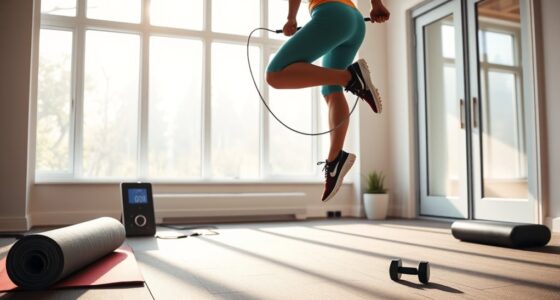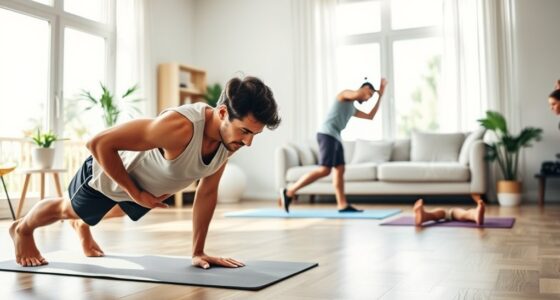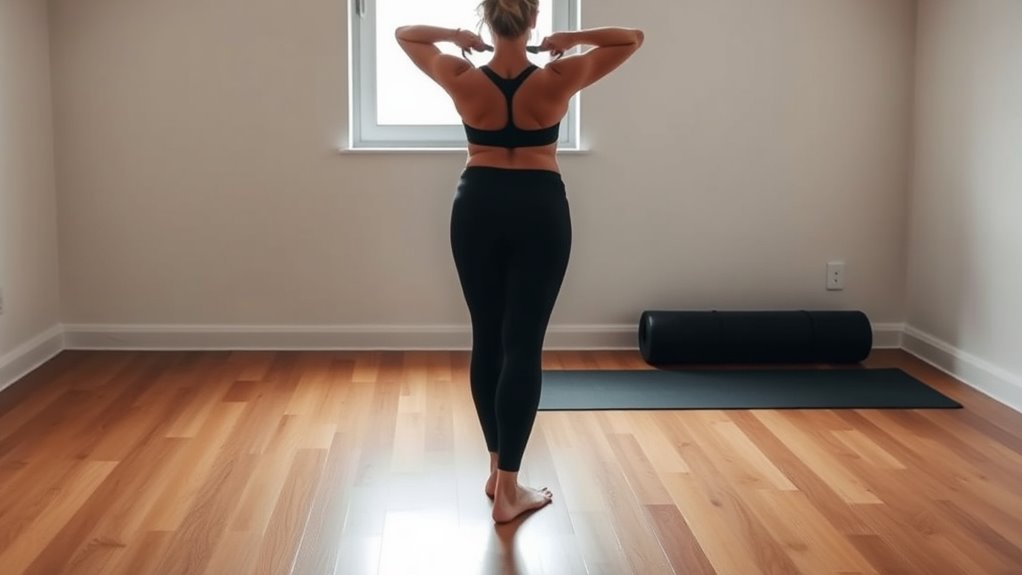

To strengthen your back at home with minimal equipment, focus on bodyweight exercises like planks, side planks, and bird-dogs, which build core stability and support your spine. Incorporate gentle stretches like cat-cow and child’s pose to improve flexibility and mobility. Consistency is key, so perform these routines a few times each week to see long-term benefits. Keep going, and you’ll discover simple ways to achieve a strong, resilient back without needing fancy gear.
Key Takeaways
- Focus on bodyweight exercises like planks, bird-dogs, and side planks to build back strength without equipment.
- Incorporate flexibility stretches such as cat-cow and child’s pose to improve back mobility.
- Structure routines with warm-up, core stability exercises, and post-workout stretches for balanced back health.
- Consistently practice these simple exercises a few times weekly to enhance posture and prevent injury.
- Prioritize core activation and flexibility to support your back and promote long-term resilience at home.
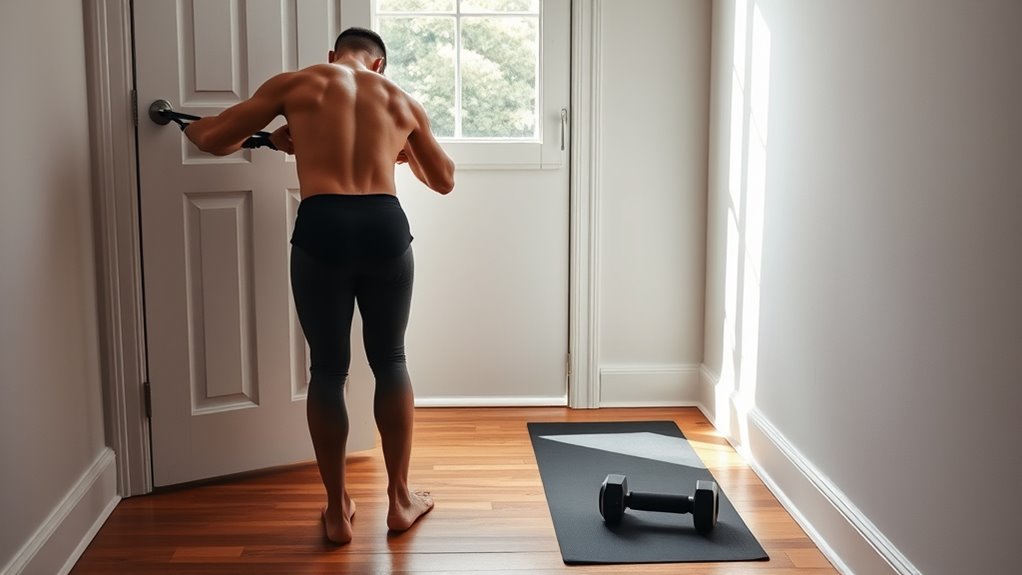
Working out your back at home is a convenient way to build strength and improve posture without needing a gym. You don’t require fancy equipment—just your body, some space, and a little motivation. A strong back supports your entire body, helps prevent injuries, and enhances everyday movements. To get the most out of your routine, focus on exercises that promote core stability and flexibility. These two elements are essential for a balanced, resilient back.
Build a stronger, healthier back at home with simple exercises focusing on core stability and flexibility.
Core stability lays the foundation for a healthy back. When your core muscles—those around your abdomen, hips, and lower back—are strong, they support your spine and reduce strain on your back muscles. Incorporating core stability exercises into your workout can make a significant difference. Planks are a fantastic starting point; hold your body in a straight line from head to heels, engaging your core throughout. Side planks target your obliques, improving lateral stability. Bird-dogs are also effective: on all fours, extend one arm forward and the opposite leg back, keeping your hips level. These exercises activate your deep core muscles, which helps improve posture and prevents injuries. Additionally, understanding how contrast ratio affects your viewing experience can help you better appreciate visual details during your workouts, especially if you’re watching instructional videos.
Flexibility exercises complement strength training by increasing the range of motion in your back and preventing stiffness. Gentle stretches, such as cat-cow pose, are excellent for loosening up the spine. Start on your hands and knees, alternate between arching your back towards the ceiling (cat) and dipping it towards the floor (cow). This movement improves spinal flexibility and relieves tension. Additionally, child’s pose stretches your lower back and hips, providing a relaxing way to enhance flexibility. Incorporating these stretches after your workout helps maintain mobility and reduces the risk of muscle tightness.
You can combine core stability and flexibility exercises into a simple, effective routine. For example, start with a few minutes of dynamic stretches like arm circles or gentle twists to warm up. Then, move into core exercises like planks and bird-dogs, focusing on proper form. Follow this with static stretches such as the cobra pose or child’s pose to cool down and stretch your back muscles. Doing this regularly, even a few times a week, can dramatically improve your back strength, posture, and overall flexibility.
Working out your back at home doesn’t need to be complicated or time-consuming. By emphasizing core stability and flexibility exercises, you’ll develop a stronger, more resilient back that supports your daily activities and long-term health. Keep consistency in mind, and you’ll notice improvements in both strength and mobility over time.

MERACH Incline Treadmill with Incline 6%-15%, 7-Layer Belt 300LBS Capacity Tredmill Foldable Handle Running Treadmills for Home, 0.5-7.5MPH 3.0HP Incline Folding Treadmill LED with APP Threadmill
【Engineered for Quiet & Durable Performance】 Powered by a 2.5 HP powerful and quiet mo tor, the MERACH...
As an affiliate, we earn on qualifying purchases.
Frequently Asked Questions
Can I Do Back Exercises Without Any Equipment?
Yes, you can do back exercises without equipment by using bodyweight alternatives and household item exercises. Try superman holds, where you lift your arms and legs off the ground to engage your back muscles. You can also use a sturdy chair or table for incline rows or back extensions. These options effectively strengthen your back without needing any gym gear, making it easy to work out at home.
How Often Should I Perform Back Workouts Weekly?
You should aim for back workouts 2-3 times weekly, just like how consistent nutrition tips support your progress. When you find yourself thinking about equipment alternatives, it’s a reminder that dedication matters more than gear. Balance your workouts with proper rest and mindful eating. This coincidence shows that regular effort, whether with minimal or no equipment, builds strength and resilience over time.
Are There Specific Stretches to Prevent Back Injuries?
Yes, you should do stretches like cat-cow, child’s pose, and spinal twists to boost spinal flexibility and prevent back injuries. These stretches help loosen tight muscles, improve posture, and increase mobility, reducing strain during daily activities or workouts. Incorporate them into your routine regularly to support injury prevention. Remember to move gently, listen to your body, and never push into pain for ideal back health.
What Are Signs of Overtraining My Back Muscles?
Did you know that overtraining can increase injury risk by 30%? You’ll notice signs like muscle fatigue and persistent soreness that doesn’t improve after rest. If your back muscles feel unusually tired, tight, or you experience lingering pain, it’s a clear sign you need to take a break. Pushing through these signals can lead to strains or more serious injuries, so listen to your body and recover properly.
How Can I Modify Exercises for Back Pain?
If you experience back pain during exercises, you can modify them by incorporating ergonomic modifications, like adjusting your posture or using supportive surfaces. Try alternative stretches that gently target your back without strain, such as cat-cow or child’s pose. Always listen to your body, and if pain persists, consult a healthcare professional. These adjustments help you stay active safely while minimizing discomfort.

BORGUSI Treadmill with 12% Auto Incline and Bluetooth Speaker - 300 lb Capacity, 3.0HP Folding Electric Treadmill Up to 8.5 MPH Speed, Running Machine with 17.5" Wide Tread Belt for Home Use
【Widened Double Shock-Absorbing Deck】BORGUSI 45.3" x 17.5" large running track to fit different users‘ stride lengths. The stability...
As an affiliate, we earn on qualifying purchases.
Conclusion
Remember, your back is the backbone of your strength—like a sturdy tree rooted deep in the ground. With consistent effort and minimal equipment, you can nurture it into a resilient foundation. Every rep is a seed planted, growing stronger with time. Just as a tree bends but doesn’t break in storms, your back can withstand life’s challenges. Keep tending to it, and you’ll stand tall, unwavering, and ready to face anything that comes your way.

Treadmill with Speaker, 6-in-1 7.5MPH Foldable Treadmill for Home with App Compatible, Walking Pad with 10% Incline, LED Display, 3.0HP Brushless Drive, 350 LB Weight Capacity, 12 HIIT Programs
KALWOL: Craftsmanship Meets Quality! With 18 years of dedicated fitness equipment manufacturing, we prioritize precision and durability in...
As an affiliate, we earn on qualifying purchases.

16% Treadmills for Home with Handle, 3 in 1 Portable Treadmill with Incline, Foldable Treadmill with Three Screen, 12 Preset Programs, 400LBS
【16% Treadmill with Incline】This incline treadmill features a 3-level incline system (0%-10%-16%) to simulate uphill training at home....
As an affiliate, we earn on qualifying purchases.