
TL;DR
Researchers at UC San Diego, with Google support, are building a low-carbon cloud platform from 2,000 repurposed smartphones. This initiative aims to reduce hardware manufacturing emissions while providing affordable computing resources for research and education, launching in Fall 2026.
Researchers at the University of California San Diego, supported by Google, are building a 2,000-phone computing cluster from retired smartphones to create a low-carbon cloud platform, aiming to reduce the environmental impact of hardware manufacturing and provide affordable resources for research and education.
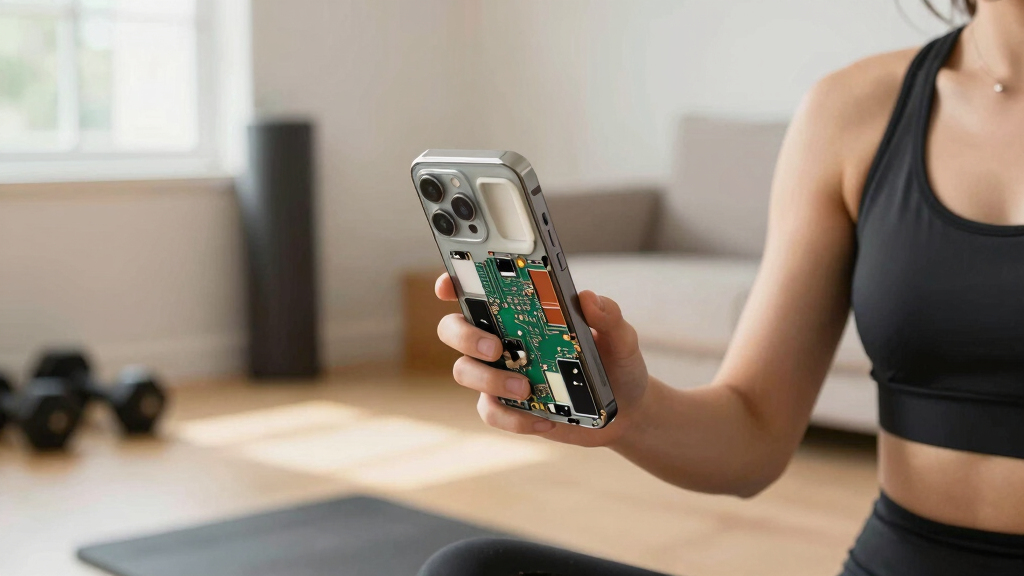
The project involves extracting motherboards from discarded smartphones, primarily Pixel devices, and reconfiguring them into a large-scale computing cluster. The core compute functionality resides on the motherboard, which contains approximately 50% of the device’s embodied carbon. To deploy these phones as a cloud platform, the Android operating system is replaced with a Linux distribution, and the phones are organized into self-managing clusters using Kubernetes.
Early experiments with smaller clusters of around 20 phones have demonstrated that such setups can support computing tasks comparable to small cloud instances, like those used in university courses or research projects. The full deployment, planned for Fall 2026, aims to support hundreds of classes and research applications simultaneously, providing equivalent compute power to traditional servers at a fraction of the cost and environmental footprint.
Potential Impact on Sustainable Cloud Computing
This initiative could significantly reduce the carbon footprint associated with cloud computing by repurposing existing hardware instead of manufacturing new servers. It offers a scalable, cost-effective alternative for educational institutions and research organizations, potentially transforming how low-cost, low-carbon cloud resources are deployed globally. Additionally, it provides a testbed for evaluating the reliability of consumer-grade hardware under sustained use, influencing future hardware recycling and reuse strategies.

Google Pixel 7 5G, 128GB, Obsidian – Unlocked (Renewed)
- Durable Aluminum Camera Housing: Refined aluminum design for durability and style
- Tensor G2 Chipset: Enhances AI, speech, translation, and photography
- Cinematic Blur Mode: Creates professional depth-of-field in videos
As an affiliate, we earn on qualifying purchases.
As an affiliate, we earn on qualifying purchases.
Background on Smartphone Recycling and Cloud Sustainability
The environmental impact of digital infrastructure is increasingly scrutinized, with operational carbon from energy use and embodied carbon from hardware manufacturing being major contributors. Smartphones, replaced roughly every four years by consumers, often still possess functional computing components. Reusing these devices for cloud applications addresses both waste reduction and emissions associated with new hardware production. Previous efforts have focused on extending device lifespan, but this project pioneers a large-scale, cluster-based approach to repurpose retired phones for data center workloads, supported by recent research from UC San Diego and industry backing from Google.
“Repurposing retired smartphones into a computing cluster offers a promising pathway to reduce the environmental footprint of cloud infrastructure while providing affordable computing resources.”
— UC San Diego researcher

Learn How to Use Linux, Linux Mint Cinnamon 22 Bootable 8GB USB Flash Drive – Includes Boot Repair and Install Guide Now with USB Type C
- Linux Mint 22 on USB: Bootable 8GB USB Type C drive
- Learn Linux without OS removal: Boot and load Linux without uninstalling current OS
- Includes install guide: Easy-to-follow installation instructions included
As an affiliate, we earn on qualifying purchases.
As an affiliate, we earn on qualifying purchases.
Uncertainties Around Hardware Reliability and Scalability
It is not yet clear how consumer-grade smartphones will perform under continuous, large-scale use in a data center environment. Questions remain about hardware durability, maintenance, and the ability to manage failures across thousands of devices. The effectiveness of the proposed Kubernetes-based orchestration at scale is also still being evaluated, and the project’s long-term operational stability remains uncertain.
smartphone cluster for cloud computing
As an affiliate, we earn on qualifying purchases.
As an affiliate, we earn on qualifying purchases.
Next Steps Toward Deployment and Evaluation
The UC San Diego team plans to complete the full-scale deployment of the 2,000-phone cluster by Fall 2026. During this period, they will conduct extensive testing to assess hardware reliability, energy efficiency, and performance. The project will also explore the environmental benefits compared to traditional data centers and evaluate the practicality of scaling this approach for broader use. Results from these tests will inform potential wider adoption and further research into hardware reuse strategies.
Kubernetes-compatible smartphone server
As an affiliate, we earn on qualifying purchases.
As an affiliate, we earn on qualifying purchases.
Key Questions
How will the phones be repurposed for cloud computing?
The smartphones’ motherboards will be extracted, cleaned, and configured with a Linux operating system. They will then be organized into clusters managed by Kubernetes to run cloud applications, replacing the original consumer hardware with a scalable, low-carbon data processing platform.
What are the environmental benefits of this approach?
This method aims to reduce embodied carbon from manufacturing new hardware and operational emissions by utilizing existing devices, potentially lowering the overall carbon footprint of cloud computing infrastructure.
What types of applications can run on these clusters?
Applications suitable for small, resource-constrained environments—such as educational tools, research simulations, and lightweight cloud services—can be supported. The project is testing the capability to handle tasks comparable to small cloud instances used in universities.
Will this system be reliable for long-term use?
The reliability of consumer-grade smartphones under continuous operation is still being evaluated. The project is conducting experiments to understand hardware durability and failure management before broader deployment.
Could this approach be scaled globally?
While promising, scaling would depend on further testing, hardware availability, and cost-effectiveness. The project aims to serve as a proof of concept that could influence future sustainable data center designs.
Source: Hacker News