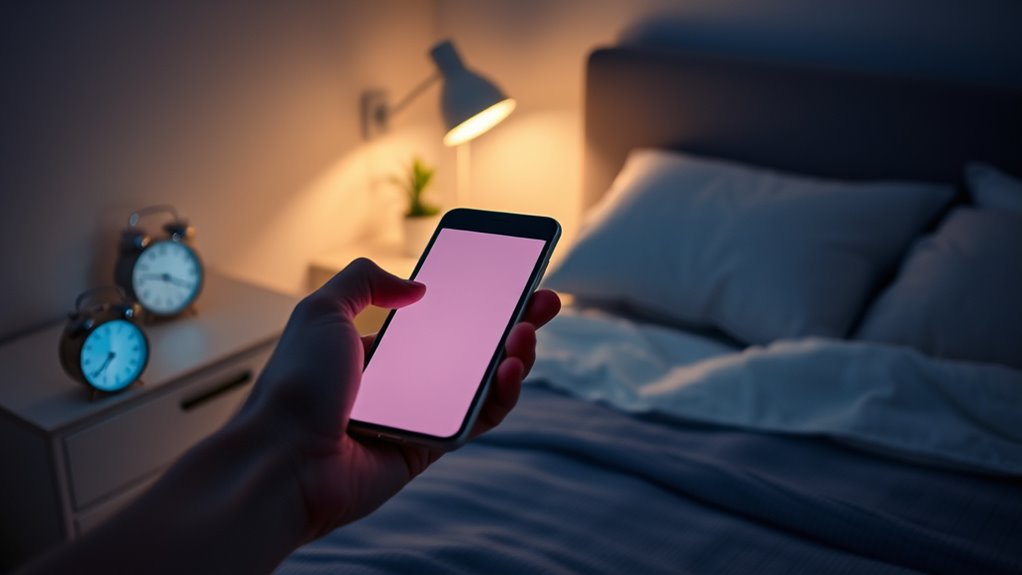

Technology can disrupt your sleep by exposing you to blue light and overstimulating your mind before bed, making it harder to fall asleep and get restful rest. To improve your sleep, reduce screen time at least an hour before bed, use blue light filters, and create a tech-free bedroom environment. Incorporating sleep trackers and relaxation apps can also help. Keep going to discover simple ways to harness technology for better, healthier sleep.
Key Takeaways
- Limit screen time at least one hour before bed and use blue light filters to reduce melatonin suppression.
- Create a tech-free bedroom environment to minimize distractions and blue light exposure during sleep.
- Use sleep-tracking apps and devices to monitor habits and optimize your sleep routine effectively.
- Incorporate relaxing tech tools like guided meditation or white noise apps to promote unwinding before sleep.
- Establish consistent sleep schedules and avoid overstimulating activities on devices close to bedtime.
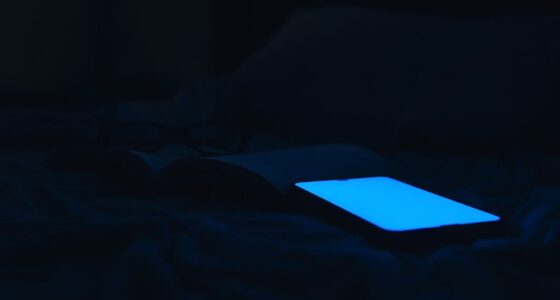
In today’s digital age, technology can both disrupt and support your sleep. While screens and gadgets are woven into your daily routine, they can interfere with your ability to fall asleep and stay rested. One major factor is blue light, a type of high-energy visible light emitted by smartphones, tablets,, and computer screens. Blue light tricks your brain into thinking it’s daytime, suppressing melatonin—the hormone responsible for signaling sleep. When you scroll through your phone late at night, you may find it harder to drift off, feeling more alert than sleepy. To protect your sleep hygiene, it’s essential to limit screen time before bed. Experts recommend turning off electronic devices at least an hour before sleeping to allow melatonin levels to rise naturally. If you must use screens, consider enabling blue light filters or night mode, which reduce blue light emissions and lessen its impact on your circadian rhythm.
Your sleep hygiene—the set of habits and practices that promote quality sleep—can be compromised by technology if you’re not mindful. Checking emails, social media, or news feeds close to bedtime can keep your mind overly active, making it difficult to relax. Notifications and alerts act as interruptions, disrupting your wind-down routine and fragmenting your sleep cycles. To improve your sleep hygiene, establish a calming pre-sleep routine that excludes screens. Instead, try reading a book, practicing relaxation techniques, or listening to soothing music. Creating a consistent sleep schedule also helps regulate your internal clock, making it easier to fall asleep and wake up refreshed. Keep your bedroom a tech-free zone—removing devices from your sleeping area reduces temptation and minimizes blue light exposure during the night. Incorporating sleep-friendly technology into your routine can also be beneficial when used thoughtfully.
Furthermore, using technology strategically can enhance your sleep quality. Sleep-tracking apps and devices can give you insights into your sleep patterns, helping you identify habits that may be harming your rest. By monitoring your sleep, you can adjust your routines and create healthier habits. Setting a regular bedtime and wake-up time, even on weekends, stabilizes your circadian rhythm. Utilizing smart alarms that wake you during light sleep phases can make waking up feel less groggy. Additionally, many apps offer guided meditation, relaxation exercises, or white noise to help you unwind. Just ensure that these tools are used mindfully and don’t become sources of distraction or overstimulation. When integrated thoughtfully, technology can support better sleep rather than hinder it, provided you prioritize blue light management and good sleep hygiene practices.
Frequently Asked Questions
Can Using Blue Light Glasses Improve Sleep Quality?
Yes, wearing blue light glasses can improve your sleep quality by blocking blue light emitted from screens. This helps reduce melatonin suppression, making it easier for you to fall asleep and enjoy restful sleep. When you use blue light glasses in the evening, you’re protecting your natural sleep cycle and promoting better overall sleep. Incorporate them into your nightly routine to see positive effects on your sleep quality.
Are Sleep Tracking Apps Accurate and Reliable?
They say you should take sleep tracking apps with a grain of salt, and that’s true. While they can give helpful insights into sleep patterns and dream analysis, they aren’t always 100% accurate, especially if you’re experiencing sleep deprivation. Use them as a general guide, not gospel. Relying solely on these apps can lead you astray, so combine their data with good sleep habits for the best rest.
What Are the Best Tech-Free Bedtime Routines?
You should try tech-free bedtime routines that promote relaxation, like practicing meditation techniques such as deep breathing or guided imagery. Incorporate aromatherapy benefits by diffusing calming scents like lavender or chamomile to create a soothing environment. Avoid screens at least 30 minutes before bed, and focus on calming activities that help you unwind. These routines can improve your sleep quality without relying on technology.
How Does Technology Affect REM Sleep Cycles?
You might think that technology’s harmless, but it’s actually a wolf in sheep’s clothing when it comes to REM sleep cycles. Digital sleep disruption and REM cycle interference happen because screen time before bed exposes you to blue light, which suppresses melatonin. This disturbance can delay or shorten REM sleep, leaving you less rested. To protect your sleep, limit screen use at least an hour before bed.
Are There Any Gadgets That Can Naturally Promote Sleep?
Yes, there are gadgets that can naturally promote sleep. You can try sound machines or white noise devices to improve your sleep environment, creating a calming atmosphere. Light therapy lamps help regulate your circadian rhythm, while smart sleep trackers monitor your rest patterns. Pair these gadgets with relaxation techniques like deep breathing or meditation to enhance your sleep quality and establish a restful routine.
Conclusion
Remember, you hold the power to turn off your gadgets and reclaim restful nights. By setting boundaries and using tech intentionally—like nightly blue light filters or relaxing playlists—you can transform your sleep from a nightmare into a dream come true. Don’t let your devices be the modern equivalent of a siren’s call. With a little discipline, you’ll soon be snoozing as peacefully as a knight in his stone castle, even in this digital age.