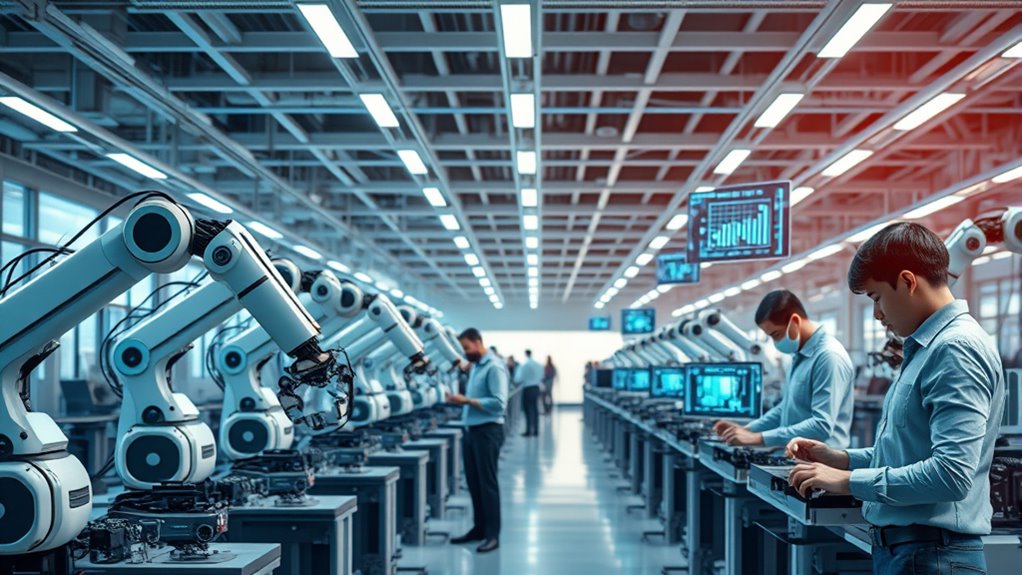

AI is transforming the workplace by automating routine tasks and creating new opportunities, but it also challenges job security. You may find some roles change or disappear, yet new roles are emerging that need your skills in managing AI, strategic thinking, and emotional intelligence. To thrive, you should adapt by updating your skills and staying informed about technological trends. Continue exploring to discover how you can turn AI into an advantage in your career.
Key Takeaways
- AI will automate routine tasks, but jobs requiring critical thinking and emotional intelligence will remain vital.
- Embracing continuous learning and skill development helps workers adapt to AI-driven changes.
- Ethical deployment of AI ensures fair decision-making and protects employee rights in the workplace.
- Opportunities exist to work alongside AI tools, manage systems, and focus on strategic or interpersonal roles.
- Staying informed about AI trends and developing niche expertise can enhance job security and growth prospects.
Artificial intelligence is transforming the workplace by automating tasks that once required human effort, leading to both opportunities and challenges. As AI takes on repetitive and routine tasks, you might wonder what this means for your job security and future prospects. One of the key issues to consider is the ethical implications surrounding AI deployment. Companies now face questions about transparency, fairness, and accountability in how AI systems make decisions that affect employees. For example, if AI is used to evaluate performance or determine promotions, you need to be aware of potential biases embedded in these systems. Ensuring ethical standards are maintained becomes essential to prevent discrimination and protect employee rights. At the same time, the rapid rise of AI emphasizes the need for skill adaptation. To stay relevant, you must continuously update your skill set, focusing on areas that AI can’t easily replicate, such as critical thinking, creativity, emotional intelligence, and complex problem-solving. This shift demands a proactive approach—embracing lifelong learning and seeking opportunities to develop new competencies. Many organizations are offering training programs to help employees navigate into roles that leverage human strengths, but it’s up to you to take advantage of these resources. The transition may feel intimidating, especially if your current role is heavily automated, but it also opens doors to new opportunities. You might find yourself working alongside AI tools, managing and fine-tuning their outputs, or focusing on strategic and interpersonal tasks that require a human touch. The key is to view AI not just as a threat but as a tool that can augment your abilities when wielded correctly. As you adapt, you’ll need to stay informed about technological trends and understand how AI influences your industry. This knowledge will empower you to make strategic career decisions, whether it’s shifting to a new role, acquiring additional certifications, or developing niche expertise. Recognizing the importance of home theatre projectors and related technologies can also inspire new pursuits or side projects aligned with future trends. Remember, the ethical implications tied to AI mean you should also be an advocate for responsible use within your organization. By pushing for transparent AI practices and fair treatment, you can help shape a workplace where technology enhances human work rather than diminishes it. Ultimately, your ability to navigate the evolving landscape depends on your willingness to learn, adapt, and engage critically with the ethical challenges that come with AI integration. The future of work might be uncertain, but with the right mindset and skills, you can turn automation into an opportunity for growth rather than a threat to your livelihood.
Frequently Asked Questions
How Will AI Impact Creativity and Artistic Professions?
AI generated art transforms your creative process, offering new tools for innovation. It can inspire you and open fresh avenues for artistic expression. You’ll find opportunities for creative collaboration with AI, blending human intuition with machine precision to produce unique works. While AI may automate some tasks, it enhances your creativity, allowing you to experiment more freely and push artistic boundaries, ultimately enriching your profession rather than replacing it.
Can AI Improve Job Quality and Worker Safety?
AI can improve your job quality and worker safety by focusing on safety enhancements and supporting your well-being. It identifies hazards faster, reduces manual risks, and alerts you to potential issues, allowing you to work more confidently. Additionally, AI-driven tools can optimize workloads and monitor health data, ensuring a safer environment. Embracing these innovations helps protect your safety and enhances overall job satisfaction.
What Skills Will Be Most Valuable in an Ai-Driven Workplace?
Your most valuable skills in an AI-driven workplace are soft skills and emotional intelligence—these are game-changers. As machines handle routine tasks, your ability to communicate, empathize, and adapt will set you apart. Mastering emotional intelligence helps you collaborate effectively and navigate complex problems. Stay flexible, develop these skills, and you’ll thrive amid automation, turning what seems like a robotic future into a human-driven success story.
How Will AI Affect Income Inequality and Social Mobility?
AI can widen income disparity by favoring high-skilled workers while leaving low-skilled workers behind. This could hinder social mobility, making it harder for you to climb the economic ladder. However, if you adapt by developing new skills and embracing lifelong learning, you may find new opportunities. Ultimately, proactive policies and education will determine whether AI exacerbates or reduces social inequality.
Are There Ethical Concerns Related to AI Decision-Making in Jobs?
Yes, ethical concerns exist with AI decision-making in jobs. You might worry about privacy concerns, as AI systems can access sensitive data, and accountability issues, since it’s unclear who’s responsible when errors occur. These concerns push you to demand transparent algorithms and clear accountability standards, ensuring that AI supports fair decisions rather than causing bias or harm. Addressing these issues helps protect your rights and promotes ethical use of automation.
Conclusion
While AI may replace some tasks, history shows technology creates new jobs too. The theory that automation only destroys jobs isn’t entirely true; it shifts roles and demands new skills. Embrace change, upgrade your abilities, and stay adaptable. The future of work isn’t about AI taking over but partnering with it. By staying proactive, you can thrive alongside automation, turning challenges into opportunities rather than threats.