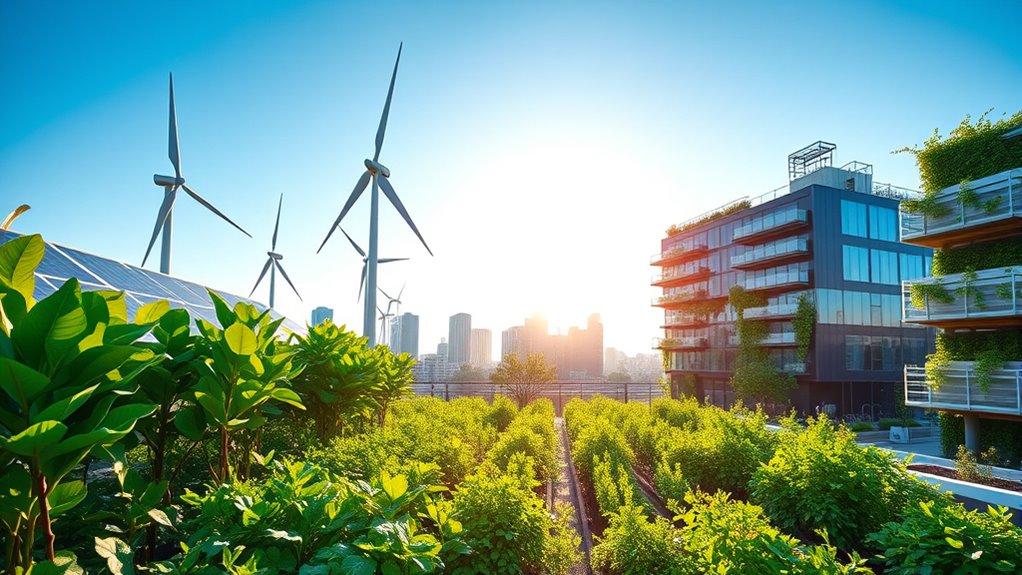

Green tech innovations are revolutionizing how you can help the environment. By using renewable energy sources like solar and wind, you reduce reliance on fossil fuels, cutting pollution and greenhouse gases. Eco-friendly materials, such as recycled metals and bamboo, make products more sustainable. Smart technologies enable you to monitor and lower your energy use efficiently. Supporting these innovations helps protect the planet—stick around to discover more ways technology is shaping a greener future.
Key Takeaways
- Renewable energy technologies like solar and wind reduce greenhouse gas emissions and decrease reliance on fossil fuels.
- Eco-friendly materials such as recycled metals and bioplastics lower environmental impact in construction and manufacturing.
- Smart energy management systems optimize electricity use, reducing waste and improving efficiency.
- Innovations in green electronics and high-efficiency devices cut overall energy consumption.
- Supporting green tech advances promotes sustainable development and helps combat climate change.
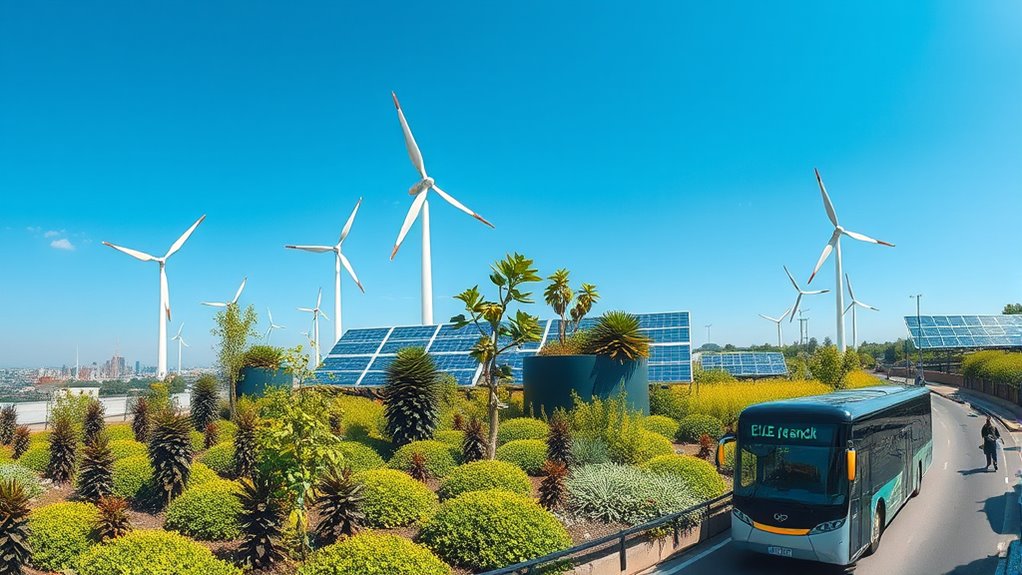
Have you ever wondered how technology can help protect our planet? It’s a question more people are asking as environmental concerns grow. Fortunately, advancements in green tech are paving the way for a cleaner, more sustainable future. One of the key ways technology is making an impact is through the development and adoption of renewable energy sources. Solar panels, wind turbines, and hydroelectric systems are now more efficient and affordable, allowing individuals and businesses to generate power without relying on fossil fuels. These renewable energy solutions markedly reduce greenhouse gas emissions and lessen our carbon footprint. As solar panels become more durable and capable of capturing sunlight even in less sunny regions, you can harness natural energy more effectively than ever before. Wind turbines, both large-scale and small-scale, are expanding access to clean power, especially in windy areas. This shift toward renewable energy not only cuts pollution but also encourages energy independence, giving you more control over your energy use.
Alongside renewable energy, eco-friendly materials are transforming how we build and consume. Traditional construction materials like concrete and steel have a heavy environmental toll due to their energy-intensive production processes. Green tech innovations now focus on alternatives such as recycled metals, bamboo, and bioplastics, which are much more sustainable. These eco-friendly materials help reduce waste and lower the environmental impact of manufacturing. For instance, using recycled materials in construction projects can cut down on landfill waste and decrease the demand for virgin resources. You might also find that furniture, packaging, and everyday products increasingly incorporate biodegradable or renewable components, making it easier to live sustainably without sacrificing quality or convenience. These materials often come with the added benefit of being healthier for indoor environments, reducing exposure to toxins found in some traditional products. Furthermore, the adoption of high-efficiency projectors and other eco-conscious electronics supports the overall goal of reducing energy consumption and environmental impact.
The integration of renewable energy and eco-friendly materials isn’t just about new inventions; it’s about rethinking how we approach everyday choices. Smart technology, for example, allows you to monitor and manage energy consumption more efficiently, ensuring you use only what’s necessary. Companies are also innovating with sustainable supply chains, reducing waste from production to delivery. As a consumer, your choices—such as opting for products made from eco-friendly materials or supporting renewable energy projects—directly contribute to environmental preservation. These innovations demonstrate that tech isn’t just about convenience; it’s about creating solutions that help protect our planet for future generations. The more you embrace and support these green technologies, the closer we get to a world where sustainability and progress go hand in hand.
Frequently Asked Questions
How Affordable Are Green Tech Solutions for Everyday Consumers?
Green tech solutions are becoming increasingly affordable for everyday consumers. The cost analysis shows that initial investments may be higher, but long-term savings on energy bills make them worthwhile. Affordability factors include government incentives, product availability, and your energy consumption habits. As technology advances, prices continue to drop, making eco-friendly options more accessible. You can now find cost-effective green tech solutions that benefit both your wallet and the environment.
What Are the Biggest Challenges in Implementing Green Tech Globally?
Implementing green tech globally is like steering a maze with many dead ends. You face technological barriers that slow down innovation and policy inconsistencies that hinder widespread adoption. These obstacles make it tough to coordinate international efforts, and differing regulations often stall progress. Overcoming these challenges requires global cooperation, consistent policies, and advancements in technology to make sustainable solutions accessible and effective worldwide.
How Does Green Tech Impact Job Markets and Employment Rates?
Green tech impacts your job market by driving green job creation and causing employment shifts. You’ll find more opportunities in renewable energy, energy efficiency, and sustainable practices. As industries adapt, traditional roles may decline while new green roles emerge. This progression can boost economic growth and innovation, but it also requires you to reskill or upskill to stay relevant in evolving job landscapes fueled by green technology advancements.
Are Green Tech Innovations Scalable for Developing Countries?
You might think green tech innovations aren’t scalable for developing countries, but that’s not entirely true. While scalability barriers exist, such as funding and infrastructure gaps, innovation transfer can help overcome these challenges. By adapting technologies to local needs and fostering international collaboration, developing nations can harness green innovations effectively. This approach enables sustainable growth, reduces environmental impact, and proves that green tech can be widely accessible and beneficial worldwide.
What Policies Support the Adoption of Green Technology Worldwide?
You can support green technology adoption worldwide through policies like international agreements and subsidy programs. International agreements foster global cooperation, setting shared goals and commitments for reducing environmental impacts. Subsidy programs incentivize businesses and consumers to invest in eco-friendly tech, making it more affordable. By backing these policies, you help accelerate the shift to sustainable solutions, ensuring green tech becomes accessible and impactful across all countries, including developing ones.
Conclusion
By embracing green tech innovations, you help reduce pollution, conserve resources, and protect our planet. You support renewable energy, promote sustainable practices, and drive positive change. You inspire others to join the movement, create a healthier environment, and build a better future. With every step you take, you contribute to a cleaner, greener world. Together, through technology and determination, you can make a real difference—because saving the planet starts with you.