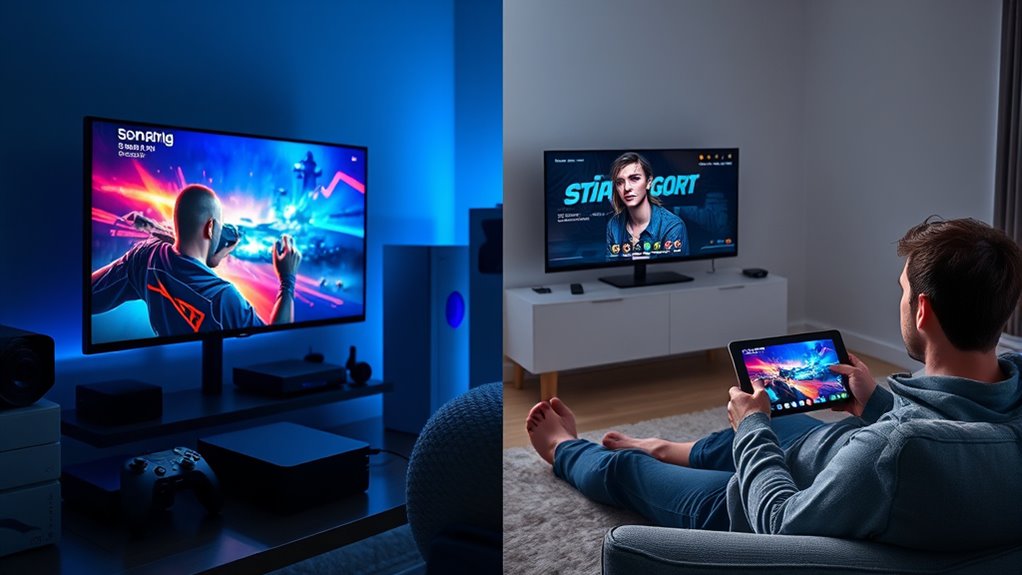

Cloud gaming offers a flexible and accessible way to play without owning expensive hardware, streaming games directly from remote servers, which means you don’t need powerful devices. However, it relies heavily on a stable internet connection and can face lag or server issues. Traditional gaming gives you full control and ownership but requires costly hardware. Both models are evolving, so if you want to explore the future of play, there’s much more to discover beyond this overview.

Get workout gear delivered free with Prime
- Fast, free delivery on millions of items
- Prime Video, Amazon Music and more included
- Member-only deals all year
Key Takeaways
- Cloud gaming offers flexibility and lower upfront costs but depends heavily on internet stability and server reliability.
- Traditional gaming provides full control, ownership, and consistent performance without internet dependency.
- Cloud gaming reduces hardware requirements, making high-quality gaming accessible to more users.
- Limitations like latency, lag, and disconnections can impact the gaming experience in cloud-based services.
- Both models are evolving, with cloud gaming emphasizing convenience and traditional gaming focusing on control and ownership.
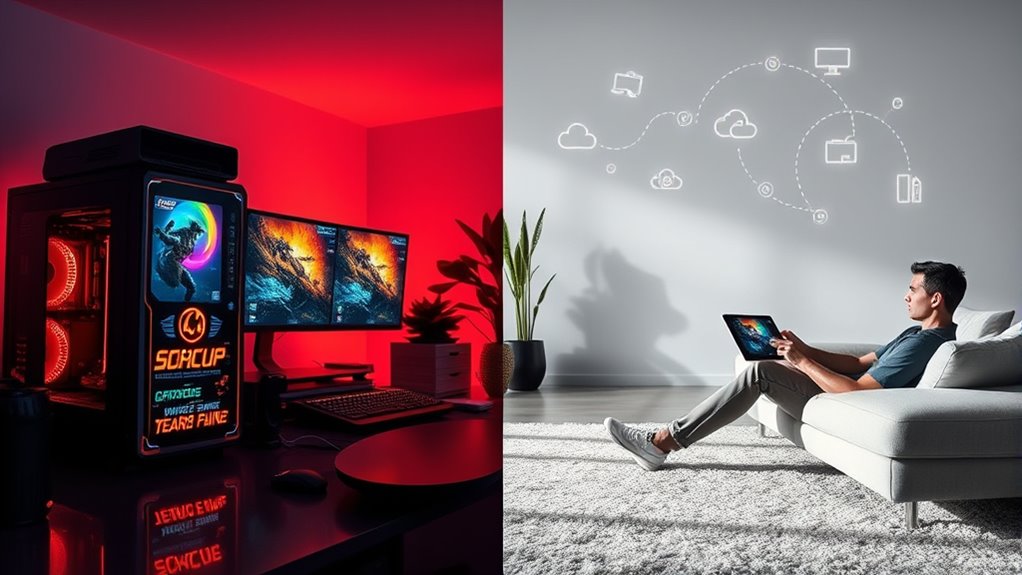
As technology advances, gamers now have two main options: cloud gaming and traditional gaming. Each offers a distinct way to experience your favorite titles, and understanding the differences can help you decide which suits your style best. One key aspect to contemplate is game subscription services, which have become a cornerstone of cloud gaming. These services, like Xbox Game Pass or PlayStation Plus, give you access to a vast library of games for a monthly fee. They change the way you consume games, allowing you to try out new titles without buying each one individually. With a subscription, you can jump into a game instantly, streamlining your gaming experience and reducing the need for physical copies or downloads. This model makes gaming more accessible and flexible, especially if you enjoy variety or multiplayer titles.
Game subscription services like Xbox Game Pass and PlayStation Plus offer instant access to vast game libraries, making gaming more flexible and accessible.
However, while game subscriptions are appealing, they highlight one of the main differences between cloud and traditional gaming: hardware dependency. Traditional gaming relies heavily on your own hardware—console, PC, or gaming rig. You need a powerful system to run games at high settings, which can be costly and require regular upgrades. The investment in hardware can feel like a barrier, especially if you’re not ready to spend hundreds or thousands of dollars. But on the plus side, owning your hardware means you have complete control over your gaming environment. You don’t depend on an internet connection for every session, and you’re not limited by the availability of a game library. Plus, physical copies or digital downloads give you ownership, ensuring you can play a game anytime, regardless of server status or subscription changes.
Cloud gaming, on the other hand, minimizes hardware dependency. Since the games run on remote servers, your device acts more like a screen and controller. This means you don’t need the latest hardware to enjoy demanding titles; a decent internet connection and a compatible device are enough. It’s a more flexible setup if hardware upgrades are out of reach. But cloud gaming isn’t without its pitfalls. A stable, fast internet connection becomes essential, as lag or disconnections can disrupt gameplay. Additionally, your gaming experience can be affected by server issues or latency, which isn’t a concern with traditional gaming.
In the end, the choice hinges on your priorities—whether you value owning your hardware and having full control, or prefer the convenience of game subscriptions and lower initial costs. Both models are evolving and shaping the future of play, making gaming more accessible and adaptable than ever before.
As an affiliate, we earn on qualifying purchases.
Frequently Asked Questions
How Does Cloud Gaming Affect Game Developers’ Revenue?
Cloud gaming can boost your game monetization and developer revenue by reaching a wider audience without needing physical distribution. You can offer subscription models, in-game purchases, or ads more easily, increasing income streams. However, it might reduce revenue from traditional sales and require sharing profits with cloud platforms. Overall, cloud gaming‘s impact on your revenue depends on how effectively you adapt your monetization strategies to this new delivery method.
Are There Any Health Concerns Linked to Prolonged Cloud Gaming Sessions?
Like a modern-day Leonardo da Vinci, you should know that prolonged cloud gaming sessions can cause health concerns, especially eye strain and motion sickness. Sitting for hours without breaks may lead to discomfort or fatigue. To stay safe, take regular pauses, adjust screen settings, and maintain good posture. Remember, even in the age of digital innovation, balance is key to enjoying gaming without risking your health.
Can Cloud Gaming Replace VR and AR Gaming Experiences?
Cloud gaming can’t fully replace VR and AR experiences because it lacks the immersive VR immersion and seamless AR integration you get with dedicated hardware. While cloud gaming offers convenience and access to many games, VR and AR provide a deeper, more interactive experience that transports you into virtual worlds or overlays digital info onto real environments. For the most engaging gameplay, consider combining cloud gaming with VR and AR technologies.
What Are the Environmental Impacts of Cloud Gaming Infrastructure?
Imagine streaming your favorite game through cloud services; this requires massive data centers, which substantially increase energy consumption. These centers often rely on non-renewable energy sources, contributing to carbon emissions. Additionally, the rapid upgrade cycle of servers and hardware generates electronic waste. So, cloud gaming’s environmental impact includes high energy use and electronic waste, which could worsen climate change without greener infrastructure and recycling efforts.
How Secure Is User Data in Cloud Gaming Platforms?
You can trust that your user data is quite secure on cloud gaming platforms, thanks to strong data encryption methods and protocols designed to protect your privacy. Developers and providers prioritize safeguarding your information, regularly updating security measures to counter threats. However, it’s always smart to stay vigilant by using strong passwords and enabling two-factor authentication, ensuring your user privacy remains protected while enjoying cloud gaming.
gaming subscription service cards
As an affiliate, we earn on qualifying purchases.
As an affiliate, we earn on qualifying purchases.
Conclusion
As you consider both options, it’s interesting how technology’s evolution seems almost serendipitous, shaping your gaming experience in unexpected ways. Whether you favor the convenience of cloud gaming or the tangible thrill of traditional gaming, the lines between them blur with each advancement. Coincidentally, your next great gaming moment could come from either, reminding you that the future of play isn’t just about choice but about how seamlessly these worlds intertwine to redefine what gaming means to you.
As an affiliate, we earn on qualifying purchases.
high-speed internet router for gaming
As an affiliate, we earn on qualifying purchases.
As an affiliate, we earn on qualifying purchases.
Halloween Picks
halloween
As an affiliate, we earn on qualifying purchases.