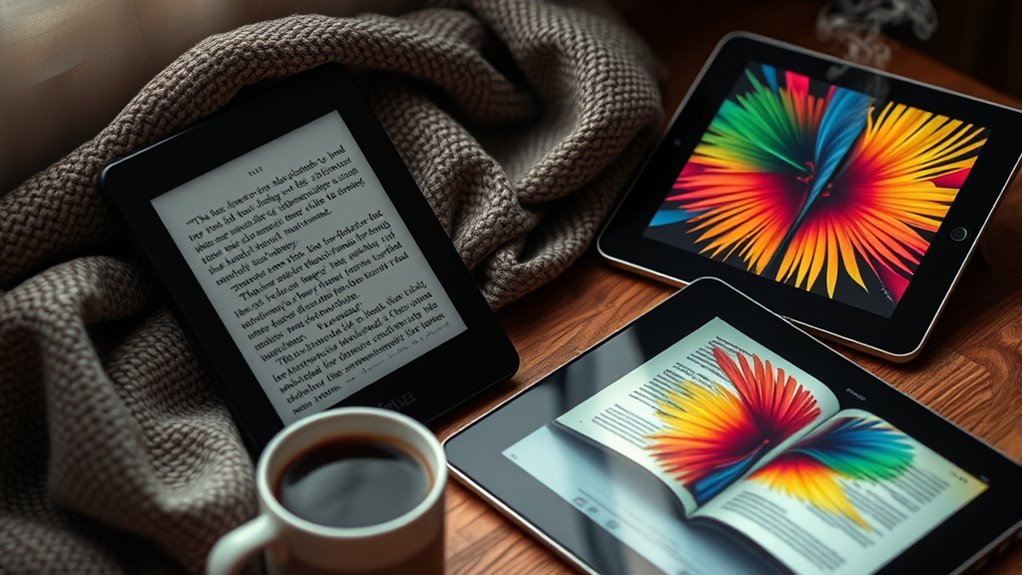

If you’re a book lover, an e-reader is the best choice for outdoor reading and long battery life, thanks to glare-free screens and efficient power use. It offers a comfortable, strain-free experience for extended sessions. While a tablet provides versatility for browsing and multimedia, it may cause eye fatigue and needs frequent recharging. For more details on which device suits your needs best, keep exploring the options to find your perfect match.
Key Takeaways
- E-readers provide glare-free screens ideal for outdoor reading, unlike tablets which reflect sunlight and cause glare.
- Longer battery life makes e-readers suitable for extended reading sessions without frequent recharging.
- E-ink screens reduce eye strain and are more comfortable for prolonged reading compared to backlit tablet screens.
- Tablets offer multi-functionality, including browsing and multimedia, but may compromise reading comfort and battery longevity.
- The choice depends on whether a user prioritizes dedicated reading, outdoor usability, or multi-purpose device features.
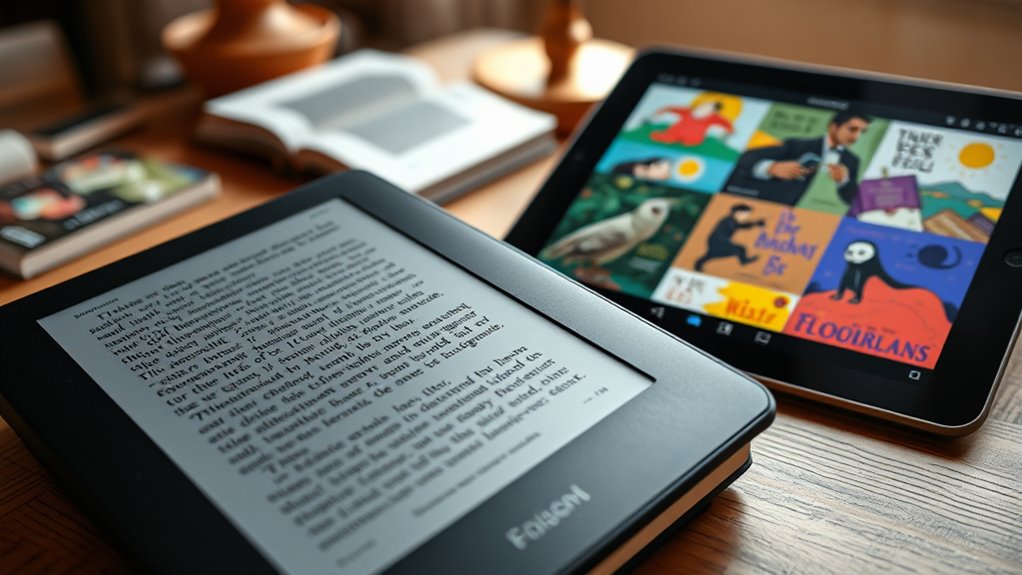
Are you trying to decide between an e-reader and a tablet for your digital reading needs? It’s a common dilemma for book lovers, and understanding the key differences can help you make the right choice. One of the most noticeable distinctions is how each device handles screen glare. E-readers are designed with e-ink screens that mimic the appearance of ink on paper, so they don’t produce glare like traditional screens. This means you can read comfortably even in bright sunlight without straining your eyes or squinting. In contrast, tablets have glossy screens that can reflect sunlight, making it harder to see the text clearly outdoors. If you enjoy reading outside or in well-lit environments, an e-reader’s screen glare advantage can be a significant factor in your decision.
E-readers reduce glare with e-ink screens, perfect for outdoor reading without eye strain.
Battery life is another critical aspect to contemplate. E-readers typically have a much longer battery life because their screens only consume power when changing pages. You can usually get weeks of use from a single charge, which is perfect if you’re someone who travels frequently or forgets to charge devices often. Tablets, on the other hand, have more power-hungry displays and additional features like apps, videos, and internet browsing, which drain the battery more quickly. Expect to recharge a tablet every day or every few days, depending on your usage. If long-lasting battery life is important to you, especially during trips or extended reading sessions, an e-reader’s efficiency offers a clear advantage. Additionally, e-ink technology reduces eye strain and is better suited for prolonged reading sessions compared to the backlit screens of tablets.
Beyond glare and battery life, think about how you prefer to read. E-readers excel for dedicated reading; they’re lightweight, easy on the eyes, and designed solely for reading books. Tablets are versatile, allowing you to switch from reading to browsing the web, watching videos, or using apps. If you like having multiple functionalities in one device, a tablet might be more appealing despite some compromises in reading comfort and battery longevity. However, if your primary focus is reading without distractions, an e-reader’s minimalistic design and optimized e-ink display will likely serve you better.
Ultimately, your choice depends on how you read and where you do it most. If you prioritize comfortable, glare-free outdoor reading and long battery life, an e-reader is probably your best bet. But if you want a device that can do everything—read, surf, stream, and browse—a tablet offers flexibility, even if it means sacrificing some reading-specific benefits. Consider your reading habits, environment, and what features matter most to you before making your decision.
Frequently Asked Questions
Which Device Has Better Battery Life for Reading Sessions?
You’ll find that e-readers have better battery longevity for reading sessions because they consume less power. Their specialized screens use minimal energy, even during extended use, making them ideal for long reading periods. Tablets, on the other hand, have higher power consumption due to their multi-functionality and bright screens. So, if you want a device that lasts longer between charges, an e-reader is your best choice for conserving battery during your reading sessions.
Can Tablets Reduce Eye Strain Compared to E-Readers?
Yes, tablets can reduce eye strain better than e-readers if they feature blue light reduction and anti-glare screens. You can enable blue light filters or night mode settings to lessen eye fatigue during long reading sessions. Additionally, adjusting screen brightness and using matte or anti-glare screen protectors helps minimize glare. These features make tablets more comfortable for your eyes, especially if you read for extended periods.
Are E-Readers More Environmentally Friendly Than Tablets?
E-readers are more environmentally friendly than tablets because they often involve sustainable manufacturing practices and have longer-lasting batteries, reducing waste. Plus, their recyclability concerns are generally lower, as e-readers use less energy and fewer resources over time. You’ll find they leave a smaller ecological footprint, making them a smarter choice if you’re mindful of sustainability and want to minimize environmental impact.
Do Tablets Support More File Formats Than E-Readers?
Think of tablets as your Swiss Army knife for reading—they support more file formats than e-readers, making them highly versatile. With better file compatibility and format versatility, tablets can handle EPUB, PDF, MOBI, and many more. This means you can enjoy a broader range of books and documents. If you want flexibility and variety, a tablet’s support for diverse formats makes it the better choice for your reading needs.
Which Device Offers Better Customization for Reading Preferences?
You’ll find tablets offer better customization for your reading preferences. You can easily adjust font customization, changing size, style, and spacing to suit your comfort. Plus, with adjustable screen brightness, you can read in various lighting conditions without straining your eyes. Tablets also support a wide range of apps, giving you more control over your reading experience, making them ideal if you want personalized settings for every book.
Conclusion
So, which device truly suits your reading style? If you crave a lightweight, glare-free experience that mimics paper, an e-reader might be your best bet. But if you prefer versatility—access to apps, media, and internet—then a tablet could be more your speed. Ultimately, it comes down to what matters most in your reading journey. Isn’t the perfect device really the one that makes every page turn feel just right?